
 By admin
The Citi® / AAdvantage® Executive World Legend Mastercard® and the Citi® / AAdvantage® Globe™ Mastercard® represent the pinnacle of American Airlines’ co-branded credit card portfolio, yet they serve vastly different niches within the travel market. Choosing between them is not merely a matter of comparing annual fees; it requires a deep dive into your personal travel frequency, your pursuit of elite status, and how much you value the sanctuary of an airport lounge. With annual fees of $695 and $350, respectively, the stakes are high. A $345 price gap necessitates a rigorous analysis of whether the premium perks of the Executive card justify the nearly $700 investment, or if the Globe’s more balanced approach to everyday spending and occasional luxury is the smarter financial move.
To understand these cards, one must first understand the current state of the American Airlines AAdvantage program. In recent years, American shifted to a "Loyalty Points" system, where status is earned not just by flying, but through credit card spending and the use of partner portals. This transition has made co-branded credit cards more than just tools for earning miles; they are now essential engines for status qualification. Both the Executive and the Globe cards are designed to accelerate this journey, but they do so through different mechanisms tailored to different types of flyers.
The welcome offers for these cards provide the first major point of differentiation. For a limited time, the Citi / AAdvantage Executive card offers a staggering 125,000 bonus miles after spending $15,000 on purchases within the first five months of account opening. Based on current industry valuations, these miles are worth approximately $1,813, making this one of the most lucrative introductory offers in the history of the AAdvantage program. However, the $15,000 spending requirement is a significant hurdle that requires a monthly burn rate of $3,000. For high-spending households or business owners, this is an exceptional opportunity to seed a dream vacation.

In contrast, the Citi / AAdvantage Globe card offers a more accessible 60,000 bonus miles after spending $4,000 on purchases in the first three months. Valued at roughly $870, this offer is half the size of the Executive’s, but it requires less than a third of the spending. This makes the Globe card far more attractive to the average consumer who may not have five-figure expenses lined up but still wants to earn enough miles for a round-trip domestic first-class ticket or a one-way international economy flight. It is important to note Citi’s "48-month rule," which dictates that you cannot receive a welcome bonus if you have earned one for that specific card in the past four years.
When analyzing the annual fees, the $695 price tag of the Executive card can be jarring. However, the primary justification for this cost is the complimentary Admirals Club membership. For a traveler without elite status, an individual Admirals Club membership costs $850 annually. By holding the Executive card, you effectively receive a membership at a $155 discount before even considering the other perks. This membership allows the cardholder and up to two guests (or immediate family) access to nearly 50 Admirals Club locations and select partner lounges worldwide. For the frequent traveler who spends dozens of hours in terminals each year, the value of reliable Wi-Fi, snacks, and a quiet environment is immeasurable.
The Globe card takes a more metered approach to lounge access. Instead of a full membership, it provides four one-time-use Admirals Club passes each year. With day passes typically retailing for $79 each, these four passes represent $316 in value. For the "semi-frequent" flyer who travels once a quarter, this is often the perfect amount of access. It provides the luxury of the lounge when you really need it—perhaps during a long layover or a delayed flight—without forcing you to pay for a membership you won’t fully utilize. Furthermore, the Globe card features an annual "Splurge" credit of up to $120, which can be applied toward various travel-related expenses, effectively bringing the "net cost" of the card down to $230.
Beyond the lounges, day-of-travel perks provide significant "soft" value. Both cards offer a free first checked bag for the primary cardholder and up to eight companions on the same reservation, which can save a family of four $280 on a single round-trip domestic flight. Where they diverge is in boarding priority. The Executive card grants Group 4 boarding, while the Globe card provides Group 5. While this may seem like a minor distinction, Group 4 is the first group of "general" boarding, often ensuring that overhead bin space is still available. Group 5, while still ahead of the main cabin, carries a higher risk of having to gate-check a carry-on bag on crowded flights.
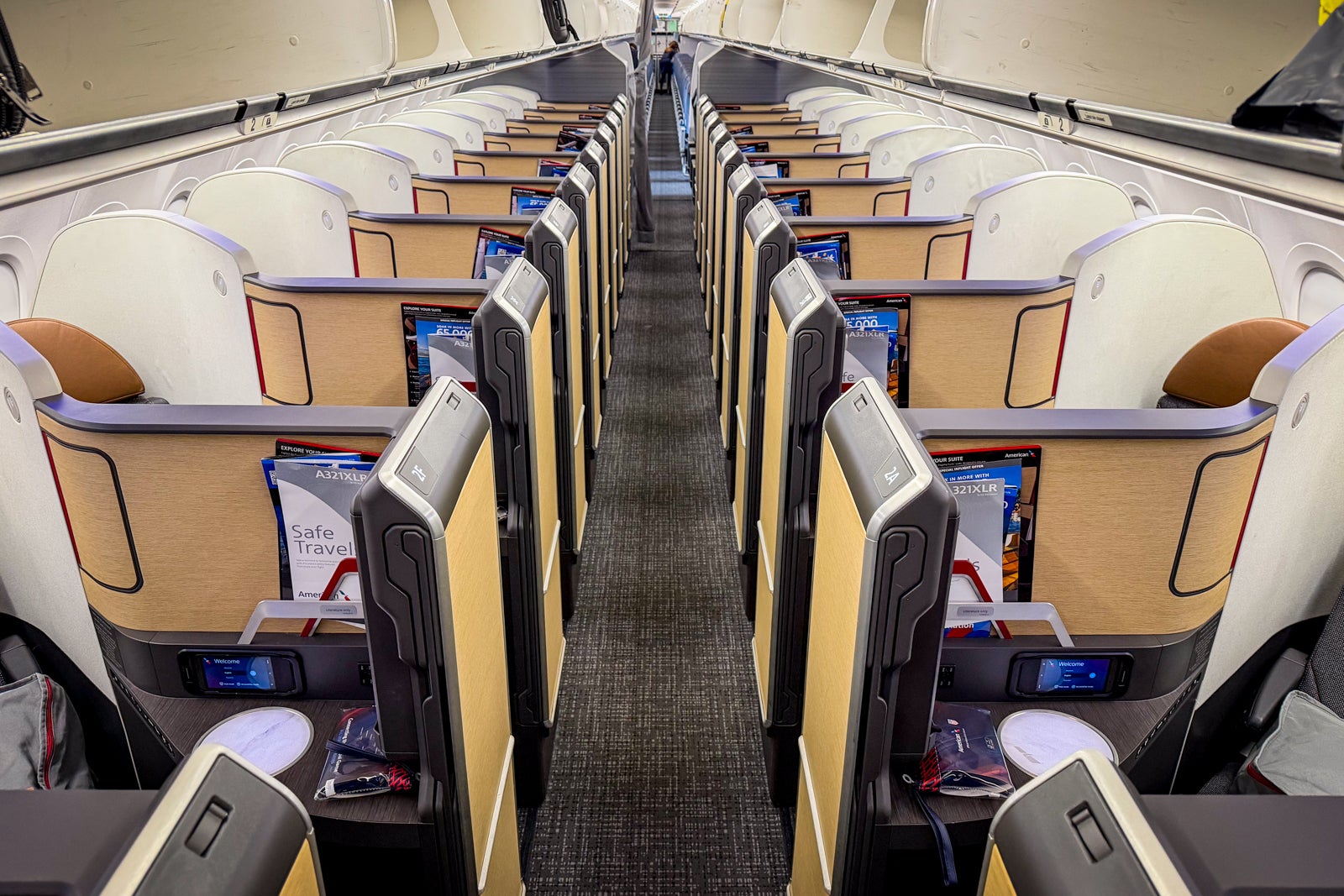
The earning structures of these cards reveal their intended use cases. The Citi / AAdvantage Globe is the superior "daily driver" for those looking to accumulate miles quickly through diverse spending. It offers enhanced multipliers on categories such as dining and gas stations—areas where the average household spends a significant portion of its budget. This makes it a versatile tool for the long-term accumulation of AAdvantage miles. The Executive card, meanwhile, is more focused. It earns 4x miles on American Airlines purchases (increasing to 5x after spending $150,000 in a calendar year), but only 1x on most other purchases. This suggests that the Executive card is best used for high-value airline tickets and then perhaps tucked away in favor of a card with better everyday rewards, unless you are chasing status.
Status chasing is where the Executive card truly shines. It offers a path to AAdvantage elite status through "Loyalty Point boosts." Cardholders receive a 10,000-Loyalty Point bonus after reaching 40,000, 50,000, and 90,000 Loyalty Points in a qualification year. These boosts can be the difference between remaining a general member and hitting Gold or Platinum status. The Globe card offers a different incentive: 5,000 bonus Loyalty Points for every four qualifying American Airlines flight segments flown, up to a maximum of 15,000 bonus points per year. This rewards the "road warrior" who flies frequently on short hops, whereas the Executive card rewards the "big spender" who uses the card for major transactions.
Statement credits are another area of complexity. The Executive card includes up to $120 in back for American Airlines Vacations bookings, up to $120 in Avis or Budget car rental credits, and a monthly $10 Lyft credit (after taking three rides in a month). While these can add up to $360 in value, they require specific behaviors to unlock. The Lyft credit, in particular, has been criticized by many as being "break-even" at best, given that it requires spending money on three separate rides to trigger a small discount. The Globe card’s credits, including the aforementioned Splurge credit, are generally viewed as more flexible and easier to maximize for the average user.
For families, the authorized user policy is a critical factor. The Executive card charges $175 for the first three authorized users. While this is an added expense, those authorized users do receive their own Admirals Club access (though not a full membership, they can enter the club with their own guests when traveling on American or its partners). This makes the card an excellent "family" card for households with adult children or frequent travel companions. The Globe card allows authorized users for $0, but they do not receive additional lounge passes; they merely help the primary cardholder earn miles faster.

Ultimately, the choice between the Citi / AAdvantage Executive and the Citi / AAdvantage Globe comes down to a calculation of frequency and intent. If you fly American Airlines ten or more times a year and value the lounge as an extension of your office or living room, the Executive card’s $695 fee is a justifiable business or lifestyle expense. The massive 125,000-mile bonus and the Loyalty Point boosts make it the definitive choice for those aiming for Executive Platinum status.
However, if you are a more casual traveler who wants the "American Airlines experience"—free bags, priority boarding, and the occasional lounge visit—without the high-end price tag, the Globe card is the clear winner. Its $350 fee is more palatable, and its earning rates on dining and gas ensure that you are earning miles even when you aren’t in the air. By offering four lounge passes, it provides a "taste of the high life" exactly when you want it. Regardless of which path you choose, both cards serve as powerful entries into the Oneworld alliance, opening up a world of redemption possibilities from the flagship suites of Qatar Airways to the regional networks of Qantas and British Airways. Carefully audit your travel calendar for the coming year; the data suggests that for the right traveler, either of these cards can pay for itself many times over.
