
 By admin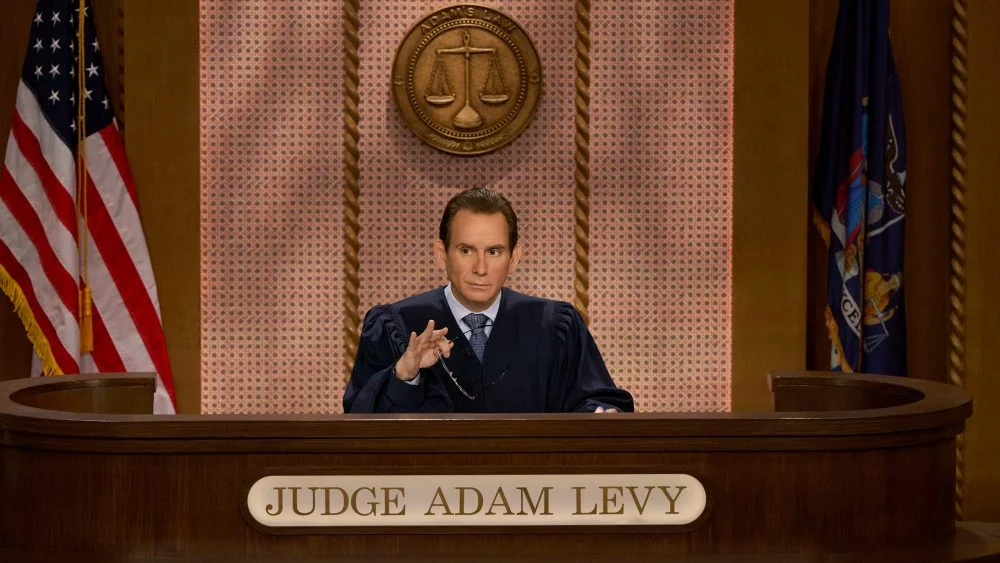
The nascent courtroom drama series, "Adam’s Law," has quickly carved out a distinctive niche in the competitive daytime television landscape, establishing an unofficial motto that resonates with its direct and unvarnished approach to justice: "Don’t lie and don’t cry." This sentiment, born from the show’s initial week on air, signals a departure from more emotionally driven courtroom proceedings, emphasizing instead a commitment to truth and factual adjudication. The syndicated series, which premiered on September 14th, represents a bold wager by CBS that the enduring appeal of the court-show genre can still accommodate fresh perspectives and authoritative figures.
At the helm of "Adam’s Law" is Judge Adam Levy, a 57-year-old jurist who brings a formidable television pedigree and a robust legal background to the bench. Levy is no stranger to the screen, having previously captivated audiences for several seasons on Amazon Prime Video’s "Tribunal Justice." His professional career, however, was forged in the trenches of real-world legal battles. For years, Levy served as a no-nonsense prosecutor and district attorney in Putnam County, New York, honing his skills in the adversarial arena. This extensive experience was further amplified by numerous cases handled during his time in private practice, providing him with a comprehensive understanding of diverse legal disputes.
Adding a layer of familial legacy to his television presence, Adam Levy is the son of one of America’s most recognizable legal figures, Judith Sheindlin, universally known as Judge Judy. This familial connection, however, has not defined Levy’s career trajectory. He pursued his legal education and professional aspirations with unwavering determination, undeterred by his mother’s significant presence as a family court judge in Manhattan and her subsequent rise to national television stardom. The legal lineage extends even further, as Levy’s stepfather, Jerry Sheindlin, is also a distinguished lawyer who himself served on the bench for "The People’s Court" for three seasons between 1999 and 2001.
Despite the undeniable "nepo baby" label that some might readily apply, Adam Levy is quick to assert that he brings his own distinct style and a fundamentally different approach to settling the familiar disputes that populate the courtroom drama genre. These cases typically revolve around contentious landlord-tenant disagreements, complex employment conflicts, fractured business partnerships, and the inevitable fallout from romantic entanglements gone awry. Levy’s judicial persona is characterized by a no-compromise demeanor and a sharp, incisive tongue. This was vividly demonstrated in an early episode where he admonished a plaintiff who had sued a woman over cash payments made via CashApp, which the defendant claimed were in exchange for sexual favors. Levy’s pointed remark, "You were stupid enough to sue her for it," underscored his impatience with frivolous or poorly conceived legal actions, and the plaintiff ultimately lost the case.
The debut of "Adam’s Law" coincides with a significant moment for Judith Sheindlin, as she formally passes the gavel to her son and steps back from on-camera work. However, Sheindlin remains an active force behind the scenes, notably serving as an executive producer on "Adam’s Law." Her illustrious career in television, which has left an indelible mark on popular culture, is being honored with a special CBS program titled "Judge Judy: Unfiltered, Unforgettable," airing on Tuesday night.
In an interview with Variety, Levy addressed any potential skepticism regarding his family ties, stating, "Despite all of the naysayers who will cast aspersions simply because I am the son of a famous person, it doesn’t bother me." He elaborated on his confidence in his abilities, emphasizing his extensive courtroom experience: "I’ve tried many cases. I know I was good at it. I have the skill set to do this job." Levy also articulated a grounded perspective on his ambitions, asserting, "I haven’t put in place these unrealistic expectations for myself, like becoming more famous or better than Judy was – ever. We’re different. If I can have just a small piece of the success she had, I’d be thrilled."
Levy’s judicial methodology on "Adam’s Law" diverges significantly from his mother’s established process. A key distinction lies in his meticulous preparation for each case. He dedicates days to thoroughly researching the circumstances and scrutinizing the evidence presented by both litigants. This contrasts with Sheindlin’s preference for spontaneity, where she aimed to be surprised by the evidence and individuals to maintain a natural on-camera presence. Levy, however, adopts an entirely different strategy, believing that thorough preparation is paramount.
"No other court shows do that," Levy pointed out regarding his extensive pre-case research. "That was my requirement if I was going to do this type of a show, where the litigants were waiving their right to proceed in small-claims court in order to have me adjudicate the case. I had to make sure that my adjudication was based upon facts." This commitment to factual accuracy underscores his belief that the integrity of the judicial process, even in a televised format, must be upheld.
Levy found himself comfortably navigating the demanding schedule of a Monday-Friday series. The technical aspects of television production proved to be relatively straightforward for him, provided he was adequately prepared on the cases he was to hear. "Adam’s Law" is filmed at studios located in Stamford, Connecticut, a hub for television production. The pace of filming is intense, with Levy explaining, "We tape anywhere between five and eight cases a day."
The structure of each segment is akin to a mini-trial. Levy typically begins with a brief opening statement, outlining the core issues of the case. This is followed by direct examination, where Levy actively assists in eliciting the narrative from the litigants. He employs open-ended questions such as, "What happened, where were you, what did you see, what did you say?" to encourage detailed responses. The proceedings then move to cross-examination, a crucial phase designed to test the veracity of the plaintiff’s or defendant’s statements against independent evidence. Finally, Levy summarizes the case and delivers his verdict. In a typical week, the show produces approximately 20 such adjudications.
Beyond the entertainment value, Levy believes that "Adam’s Law," much like "Judge Judy" before it, serves a significant educational purpose. "The audience will have an opportunity watching ‘Adam’s Law’ to see how cases really should be tried, whether it’s a small-claims court or in any court," Levy stated. "My decisions are based upon facts, not feelings." This emphasis on objective decision-making is a cornerstone of his judicial philosophy.
Levy attributes his keen ability to discern truth from deception and to accurately assess character to his upbringing in New York City during the challenging decades of the 1980s and 1990s. As a teenager, it became apparent to him that a career in the fields of mathematics or science was not his destined path. Looking back, his decision to pursue a Juris Doctor degree was a natural evolution for someone who grew up immersed in legal discussions at the dinner table.
"The law was just a natural path for me to take," Levy reflected. "When it came to debates and logical thinking and two-step process thinking, that’s how my brain already worked. Having common sense and sizing up people was part of growing up in New York City. You had to size people up relatively quickly to know that if you were in danger or not. I found that law was a perfect place for me." This formative experience instilled in him a practical understanding of human behavior and a predisposition for analytical reasoning.
If there is one overarching message that Adam Levy hopes viewers will internalize from watching "Adam’s Law," it is the importance of respecting the sanctity of the court. He implores viewers to refrain from lying to any officer of the court, emphasizing that such deception invariably leads to unfavorable outcomes. Furthermore, he encourages litigants to forgo emotional displays, stating that tears do not sway his judgment.
"I want to show America that if you find yourself in a position of being a litigant, plaintiff or a defendant – there are do’s and don’ts," Levy advised. "The dos are: Be prepared, get your evidence together to help the court make a decision in your favor. The don’ts are: come in unprepared, exaggerate your claim, whether you’re the plaintiff or whether you’re the defendant, and most certainly: don’t lie." This clear articulation of expectations aims to guide potential litigants toward more productive and honest engagement with the legal process.
Levy has long cultivated a resilient demeanor, capable of withstanding emotional appeals from defendants in court. He firmly believes that if an individual is in the wrong, regretful tears will not alter the judge’s decision. "When a litigant starts crying, that doesn’t work with me. I’m immune from that," Levy asserted. "I care about facts – I could care less about your feelings. What I care about is that you come to court and you tell the truth. You don’t exaggerate. You don’t manipulate. You don’t say things that are designed to inflame someone’s emotions. I don’t have emotions when it comes to trying cases." This unwavering focus on factual evidence and truthfulness forms the bedrock of his judicial philosophy and the defining characteristic of "Adam’s Law."
"Adam’s Law" airs on weekdays in national syndication, and viewers are encouraged to check local listings for specific broadcast times in their respective regions.
