
 By Lina Irawan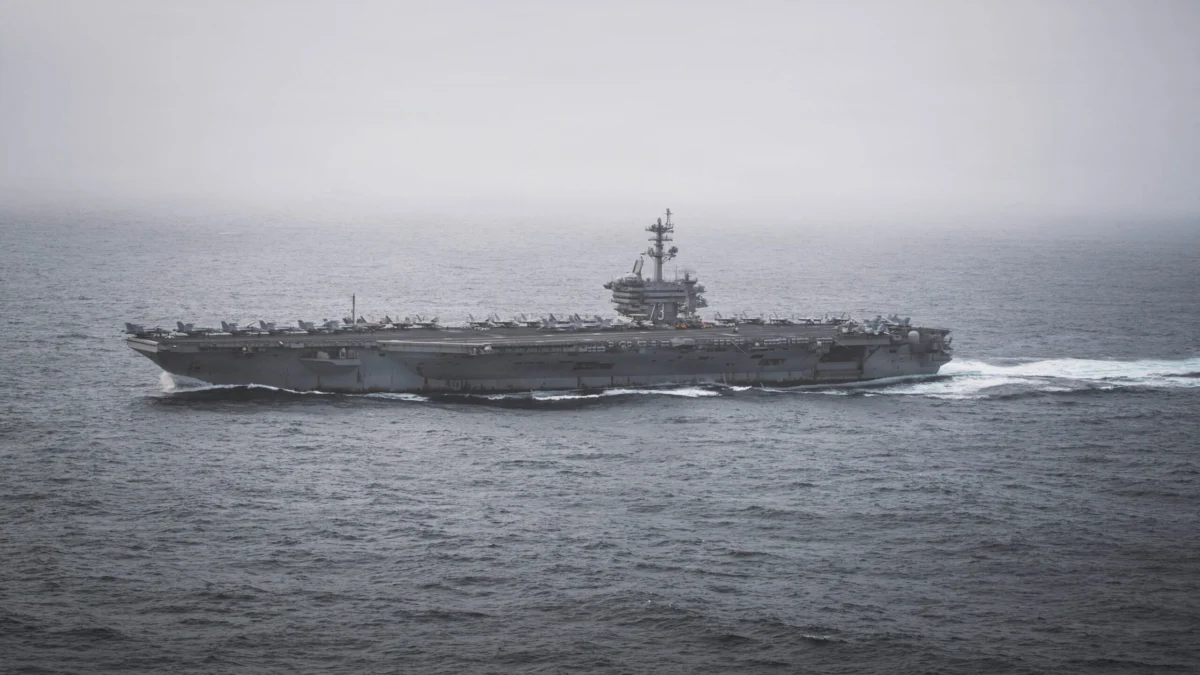
The seemingly dismissive characterization by the U.S. President now rings hollow as the long-simmering tensions in the Persian Gulf have erupted into a dangerous new phase of direct confrontation, moving far beyond the proxy skirmishes and tit-for-tat disruptions that defined the conflict for months. What began as a strategic chess match for control and influence over a critical global artery has morphed into a high-stakes gamble, with both Washington and Tehran appearing increasingly willing to take calculated risks that could unravel into a full-blown regional conflagration.
For an extended period, the narrow waterway of the Strait of Hormuz has been the primary crucible of this undeclared economic and military struggle. Iran’s military, primarily the naval arm of its Islamic Revolutionary Guard Corps (IRGC), has repeatedly attempted to assert its dominance and disrupt commercial shipping, leveraging its strategic position at the mouth of the Persian Gulf. Their objective has been clear: to demonstrate the vulnerability of global oil supplies and exert geopolitical leverage, primarily in response to crippling U.S. sanctions. However, these efforts have largely failed to completely close off the waterway, as a robust and unwavering U.S. naval presence has consistently shepherded more oil tankers through, albeit under constant threat. This sustained U.S. escort operation has slowly but steadily eroded Tehran’s ability to fully weaponize the strait as a choke point, mitigating some of its geopolitical influence.
Conversely, the U.S. military, despite its overwhelming technological superiority and significant naval deployments, has similarly failed to completely restore the strait to its pre-conflict state of unfettered commercial traffic. Iranian attacks on commercial vessels, whether through limpet mines, missile strikes, or seizure attempts, have created an undeniable climate of risk and uncertainty for international shipping. Insurers have raised premiums, shipping companies have rerouted vessels, and the overall volume of traffic has remained below historical levels. This persistent disruption has had a tangible economic consequence, contributing to elevated global oil prices—a double-edged sword that, while benefiting some oil-producing nations, also adds to inflationary pressures worldwide and offers a degree of economic leverage for Iran.
The strategic deadlock in the Strait of Hormuz, however, was merely a symptom of a deeper, more profound struggle: the U.S. "maximum pressure" campaign designed to cripple Iran’s economy and force a change in its regional behavior and nuclear ambitions. This campaign, initiated by the Trump administration following its withdrawal from the Joint Comprehensive Plan of Action (JCPOA), or Iran nuclear deal, has imposed an unprecedented array of sanctions targeting Iran’s oil exports, banking sector, and other vital industries. The naval blockade, both explicit and implicit, has been a potent extension of this economic warfare, severely strangling Iran’s ability to export its crude oil—the lifeblood of its economy. Revenue from oil exports, which once sustained the Iranian government and its regional proxies, has plummeted from over 2.5 million barrels per day before sanctions to a mere fraction, estimated by some analysts to be as low as 200,000-300,000 bpd. This drastic reduction has had catastrophic consequences, leading to rampant inflation, currency devaluation, widespread unemployment, and increasing social unrest within Iran. Faced with an economy on the brink and mounting domestic pressure, Tehran was widely expected to try changing the strategic equation with a fresh cycle of more direct and audacious attacks—and it did.
The escalation began in earnest earlier this week with Iran launching missiles at U.S. bases strategically positioned around the Persian Gulf. While initial reports did not specify the exact targets, these bases, such as Al Asad Air Base in Iraq or others in Kuwait and the UAE, represent critical hubs for U.S. operations in the region. Such attacks, even if causing minimal damage or casualties, are a significant departure from previous indirect actions through proxy groups. They signal a willingness by Tehran to directly challenge U.S. military assets on sovereign territory. The true shockwave, however, came on Saturday when Iran dramatically escalated its aggression by launching missiles directly at a U.S. Navy aircraft carrier and a destroyer operating in the region. While the U.S. military has not identified the specific vessels, the targeting of a capital ship like an aircraft carrier—a symbol of American power projection—and its accompanying destroyer represents an unprecedented act of aggression against the U.S. Navy in decades. The attempt, though reportedly unsuccessful, underscored Iran’s increasing desperation and its readiness to cross what many analysts considered a critical red line. The potential for a successful strike on such a vessel, which could result in significant casualties and an immediate, overwhelming U.S. military response, brought the region to the precipice of an all-out war.
This audacious Iranian move prompted a swift and decisive U.S. military response. In a targeted counter-strike, U.S. forces struck and destroyed three Iranian oil tankers that were identified as operating within a "shadow network" dedicated to funneling illicit oil revenues to the regime’s Islamic Revolutionary Guard Corps (IRGC). This clandestine network, utilizing flags of convenience, ship-to-ship transfers, and opaque financial transactions, has been Iran’s primary method for circumventing international sanctions and funding its military and regional proxy activities. The U.S. strike was not merely a punitive measure but a strategic blow aimed at the IRGC’s financial lifeline.
Admiral Brad Cooper, chief of U.S. Central Command (CENTCOM), issued a stark warning following the retaliatory strikes. "Let the message to the IRGC be clear: If you shoot at two of our ships, we will impose an even higher economic cost — taking out three of yours," he declared in a statement released by CENTCOM. The Admiral’s words were unambiguous, signaling a direct correlation between Iranian military aggression and heightened economic pain. He further added, "We will not hesitate to defend American forces, and if necessary, destroy Iran’s limited and exposed oil fleet." This statement not only confirmed the U.S. commitment to protecting its assets but also indicated a willingness to escalate economic warfare by directly targeting Iran’s remaining oil infrastructure, even its maritime assets involved in illicit trade.
For Hamidreza Azizi, a senior Iran analyst at the International Crisis Group, the recent surge in fighting definitively represents a new and profoundly dangerous phase of escalation. Until now, Iran’s military strategy in the Gulf had largely focused on disrupting commercial shipping and targeting oil tankers, predominantly around the Strait of Hormuz itself. These actions, while provocative, maintained a degree of separation from direct military engagement with U.S. warships. Similarly, Iran’s direct attacks on U.S. forces had primarily been confined to missile or drone strikes on bases around the broader Gulf region, often via proxy groups or with a degree of plausible deniability.
"Attempting to strike U.S. warships enforcing the blockade therefore crosses a different threshold," Azizi elaborated in a post on X, highlighting the qualitative shift in Iran’s tactics. "The attempt failed, but there is no reason to assume the next one will. A successful strike — especially one causing significant U.S. casualties — could rapidly transform the conflict." Azizi’s warning underscores the immense peril of such direct engagements. A successful hit on a U.S. warship, resulting in American fatalities or severe damage, would almost certainly trigger a massive and disproportionate U.S. retaliation, potentially involving direct strikes on Iranian military installations or even strategic targets within mainland Iran. Such a scenario could swiftly ignite a full-scale regional war, drawing in other regional actors and having catastrophic implications for global energy markets and international security.
Adding another layer of complexity and potential danger to this volatile situation is a recent report in the Financial Times which revealed that Russia is secretly aiding Iran in the development of supersonic cruise missiles. This alleged cooperation, if confirmed, would represent a significant technological leap for Iran’s military capabilities and a major shift in the regional power balance. The report specifically mentioned a ramjet propulsion system, a cutting-edge technology that would enable missiles to travel at several times the speed of sound, making them incredibly difficult to detect, track, and intercept by existing missile defense systems. Such advanced weapons would likely power both anti-ship and land-attack cruise missiles, drastically enhancing Iran’s offensive reach and lethality.
The strategic implications of Iran acquiring such weaponry are profound. A supersonic anti-ship missile would force U.S. Navy ships and aircraft to operate much farther away from Iranian coastlines, effectively pushing them out of the critical choke points of the Gulf and breaking the naval blockade that has been so instrumental in strangling Iran’s economy. This capability would significantly degrade the U.S. Navy’s ability to project power, enforce sanctions, and protect commercial shipping in the region, fundamentally altering the calculus of deterrence and defense. For Russia, providing such technology would be a strategic move to undermine U.S. influence, create a persistent distraction for Washington, and solidify its growing alliance with Tehran, especially as both nations face extensive Western sanctions.
For now, however, the naval blockade and the broader U.S. "maximum pressure" campaign have undeniably proved to be potent economic weapons. Iranian officials themselves have openly admitted that domestic economic conditions are dire. Reports from Tehran have spoken of unprecedented levels of inflation, shortages of essential goods, and a collapsing currency, with some officials suggesting that "time is running out" for the regime to address the crisis. The economic squeeze is palpable, and it is the primary driver behind Iran’s increasingly desperate and risky military actions.
The U.S. Treasury Department has also vowed to inflict an "economic D-Day" on Iran, signaling a new offensive in financial warfare. This strategy entails expanding sanctions beyond direct Iranian entities to target countries, companies, and individuals worldwide that facilitate Iran’s illicit oil trade and other financial transactions. The goal is to further isolate Iran from the global financial system, cutting off every possible avenue for revenue generation and making it virtually impossible for Tehran to fund its military, nuclear program, and regional proxies.
However, Azizi offered a crucial caveat to this strategy of increasing economic pressure. He warned that adding more economic pressure will not necessarily make Iran more cautious. On the contrary, especially if Tehran perceives the pressure as unsustainable and existential, it is likely to lead to further, rather than fewer, acts of aggression. This implies that the recent U.S. attacks on Iranian oil tankers, while a direct response to military aggression, will likely spark even more escalation from a cornered regime.
"The greater the squeeze on Iran, the greater the incentive to act," Azizi wrote, articulating a core tenet of the security dilemma playing out in the Gulf. "And the more Tehran comes to see that pressure as existential, the more likely it is to conclude that it has less to lose — and that increasingly risky actions are worth attempting." This chilling assessment highlights the dangerous feedback loop currently in motion: U.S. pressure aims to compel Iran, but Iran’s response to that pressure is to escalate, making the entire region a tinderbox where a single miscalculation could ignite a devastating conflict. The "small potatoes" dismissed by President Trump are rapidly growing into a geopolitical crisis of monumental proportions, demanding urgent attention and a re-evaluation of strategies to avert a regional catastrophe.
