
 By admin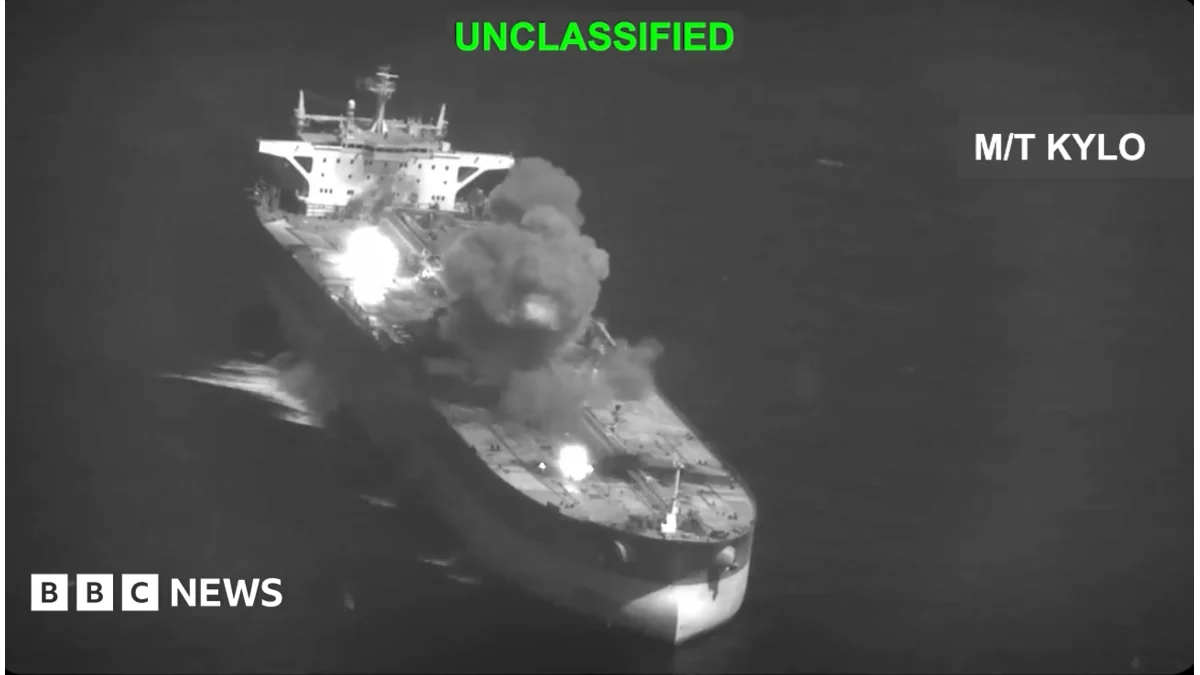
In a significant escalation of regional tensions, the United States military announced on Saturday that it had conducted targeted strikes against three oil tankers linked to Iran, a decisive response to Iran’s launching of ballistic missiles towards two American Navy warships operating in the strategically vital Persian Gulf and Gulf of Oman. U.S. Central Command (Centcom) detailed in a Saturday statement that its forces had “permanently disabled” one tanker in the vicinity of Kharg Island, a critical hub for Iranian oil exports, and another near the port city of Jask. A third tanker, located within the Gulf of Oman, was reported to have been “completely destroyed.”
The aggressive posture was underscored by remarks from U.S. Defense Secretary Pete Hegseth, who posted on social media, “It’s simple: if Iran shoots at US ships, we will destroy (and sink) their oil tankers.” This direct declaration signals a clear intent by Washington to impose severe economic consequences on Iran for any perceived aggression against American naval assets in the region.
Iranian state media outlets subsequently confirmed that U.S. forces had indeed struck three of its oil tankers, explicitly mentioning the vessel near Kharg Island. This confirmation, while acknowledging the strikes, presented a somewhat different narrative regarding the immediate aftermath. Iranian state media outlet IRIB reported that the attack on the tanker near Kharg Island resulted in no casualties, and that footage suggested the vessel’s cooling system successfully extinguished the resulting fire within an hour. The report further elaborated that the crews aboard the two tankers attacked in the Gulf of Oman were safely evacuated to shore via lifeboats. It was noted that one of these vessels was empty, while the other was carrying a cargo of oil. Tehran, however, did not immediately issue an official acknowledgment of Iranian attacks on U.S. ships, a common practice that allows for strategic ambiguity.
The geographical significance of Kharg Island cannot be overstated in understanding the context of these strikes. This small, rocky outcrop, situated a mere 15 nautical miles (approximately 24 kilometers) off the coast of Iran, serves as the linchpin of Iran’s crude oil exports. An astounding ninety percent of Iran’s crude oil production is processed and transported through a sophisticated terminal located on the island, with the oil arriving via an extensive network of pipelines from the mainland. The targeting of a tanker near this critical infrastructure highlights the U.S. military’s intent to disrupt Iran’s primary source of revenue.
Centcom’s official statement detailed the sequence of events, asserting that its forces had “successfully evaded” multiple attack attempts originating from the Islamic Revolutionary Guard Corps (IRGC). These IRGC-launched attacks, according to Centcom, were specifically directed at a U.S. aircraft carrier and a guided-missile destroyer. Crucially, Centcom reported that no American service members sustained any injuries during these engagements.
Admiral Brad Cooper, the commander of Centcom, issued a stern warning in his Saturday statement, articulating the strategic rationale behind the retaliatory strikes. "Let the message to the IRGC be clear: If you shoot at two of our ships, we will impose an even higher economic cost – taking out three of yours," Admiral Cooper declared. He further emphasized, "We will not hesitate to defend American forces, and if necessary, destroy Iran’s limited and exposed oil fleet." This statement underscores a policy of proportional response, aimed at inflicting disproportionate economic damage on Iran for any aggression.
Centcom, which holds the operational oversight for U.S. military activities across the Middle East, also provided further justification for the strikes, claiming that the three Iranian oil tankers were “part of a multi-billion-dollar shadow network that funds the IRGC and its regional proxies.” This assertion suggests that the targeted tankers were not merely commercial vessels but were actively involved in financing Iran’s military and paramilitary operations, including those of its allied groups in the region. Such a claim, if substantiated, would elevate the strikes from a punitive measure to a strategic effort to cripple Iran’s illicit financial networks.
These recent confrontations mark a significant uptick in hostilities, occurring less than a week after a renewed exchange of attacks between the U.S. and Iran. This period of heightened tension follows a prior phase of relative calm that had been observed between the two adversaries. The U.S. had resumed its offensive actions on Sunday, stating that it had struck two rocket launchers. The stated objective of these strikes was to prevent the launchers from being used to deploy naval mines in the Strait of Hormuz, a narrow waterway that is a critical chokepoint for global oil shipments.
The underlying geopolitical context of these events is crucial for a comprehensive understanding. The Strait of Hormuz, a vital maritime artery, is where a significant portion of the world’s oil supply transits daily. Iran has historically threatened to disrupt shipping in this strait, and the U.S. maintains a strong naval presence to ensure freedom of navigation. The IRGC, a powerful branch of Iran’s military, has been designated a foreign terrorist organization by the United States, and its activities, along with those of its proxy forces across the Middle East, are a constant source of concern for American policymakers.
The targeting of oil tankers is a tactic that has been employed by various actors in the region throughout recent history, often as a means of exerting economic pressure and signaling resolve. For Iran, its oil industry is its economic lifeblood, and any disruption to its export capacity has immediate and severe repercussions. Conversely, for the U.S., protecting its allies and ensuring the unimpeded flow of oil through critical maritime routes is a cornerstone of its regional security strategy.
The current dynamic reflects a broader pattern of proxy warfare and strategic competition between Iran and the United States, often playing out through their respective allies and proxies in countries like Yemen, Syria, and Iraq. The recent missile attacks on U.S. Navy warships represent a direct confrontation, a departure from the more indirect methods of conflict that have characterized much of the recent tension. The U.S. response, by directly targeting Iran’s oil assets, signals a willingness to engage in a more direct economic confrontation.
Experts in Middle Eastern security have expressed concerns that this latest escalation could lead to a dangerous cycle of retaliation, potentially drawing in other regional actors and further destabilizing an already volatile region. Dr. Evelyn Reed, a senior fellow at the Institute for International Security Studies, commented, "The direct targeting of naval vessels, followed by retaliatory strikes on critical economic infrastructure, represents a significant escalation. The risk of miscalculation and unintended consequences is now considerably higher. The focus for both sides must be on de-escalation, but the current trajectory suggests a hardening of positions."
The operational capabilities of both the U.S. military and the IRGC are considerable, though they operate within different strategic frameworks. The U.S. military, with its advanced technological superiority and global reach, possesses the capacity for precision strikes and sustained operations. The IRGC, on the other hand, has demonstrated proficiency in asymmetric warfare, including the use of drones, missiles, and maritime mines, often leveraging its network of proxies to project power and influence across the region.
The economic implications of this confrontation are also significant. Global oil prices are highly sensitive to geopolitical events in the Middle East. Any sustained disruption to Iranian oil exports, or the broader threat of conflict in the Strait of Hormuz, could lead to significant price volatility, impacting global markets and consumers. The U.S. Treasury Department has previously imposed sanctions on Iranian oil exports, aiming to curb the flow of revenue to the Iranian regime. The current strikes appear to be an extension of this economic pressure, executed through military means.
Looking ahead, the immediate focus will be on whether Iran retaliates further, and how the U.S. responds to any subsequent actions. The diplomatic channels, while strained, will remain crucial in managing the crisis. However, the recent rhetoric and actions suggest that a period of heightened military activity and economic pressure is likely to continue. The international community will be watching closely, hoping for a de-escalation that avoids a wider regional conflict. The stakes, as demonstrated by the direct engagement between naval forces and the subsequent targeting of vital economic assets, are exceptionally high. The narrative of an "endless war" in the Middle East, often discussed in abstract terms, has now manifested in a very concrete and dangerous confrontation, with tangible economic and security implications for the entire world.
