
 By admin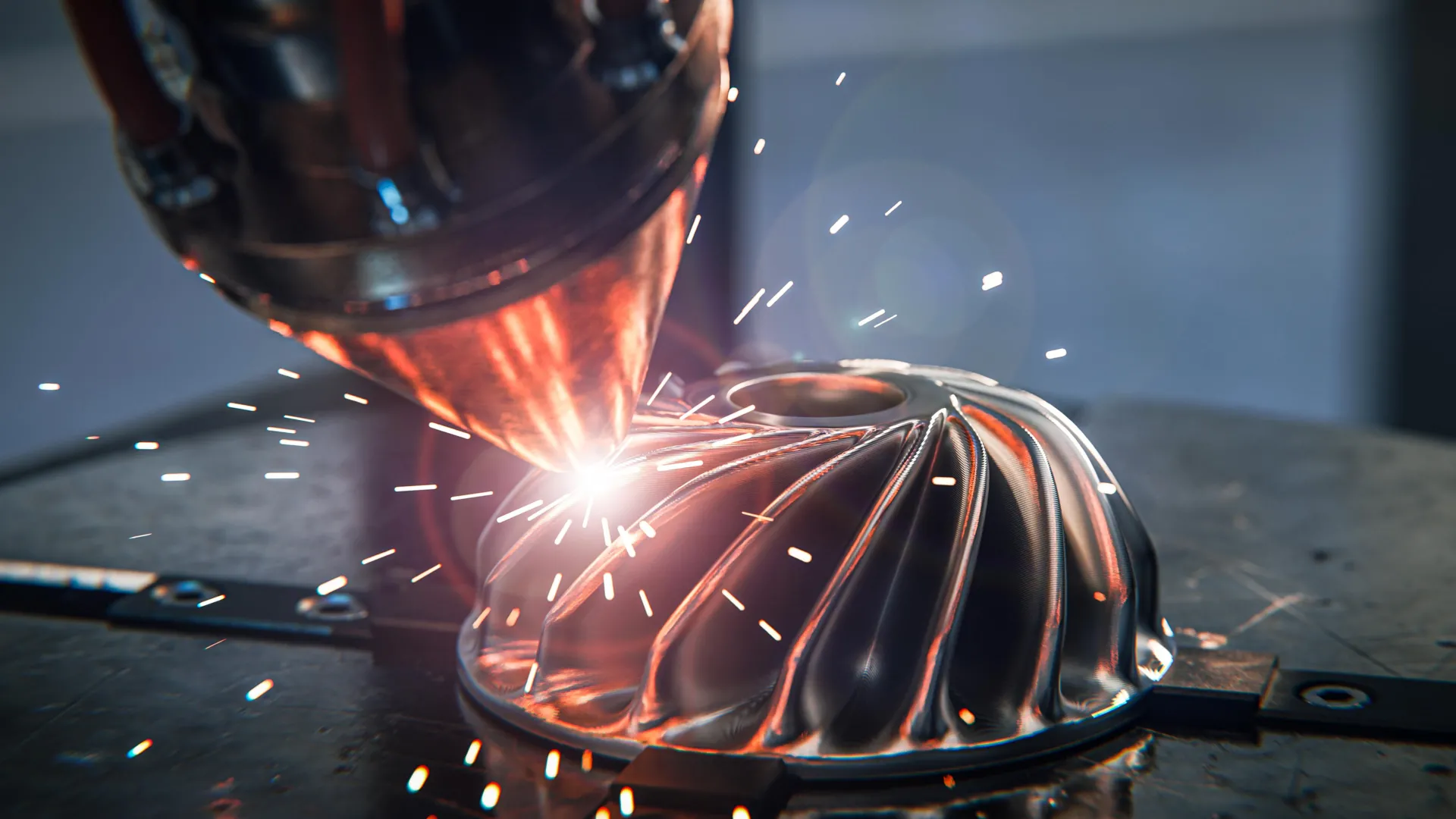
This groundbreaking achievement from Washington State University marks a significant leap forward in additive manufacturing, specifically for advanced materials critical to high-stakes applications like aerospace. By leveraging the power of artificial intelligence, a multidisciplinary team of researchers has not only streamlined the notoriously complex process of 3D printing a specialized metal alloy but has also made it accessible to a much broader range of commercial equipment, effectively "democratizing" its production. This innovation could dramatically accelerate material development and deployment across various industries, while also serving as a blueprint for tackling other complex scientific challenges characterized by vast experimental search spaces.
The core of this breakthrough lies in overcoming the immense practical hurdles associated with optimizing 3D printing parameters for advanced metal alloys. The traditional approach, often a laborious and prohibitively expensive process of trial and error, involves testing countless combinations of settings to achieve a successful print. For GRCop-42, the high-performance alloy at the heart of this research, the sheer number of possible configurations exceeded 100 million, rendering manual exploration utterly impractical. The WSU team, comprising experts from the School of Electrical Engineering and Computer Science and the School of Mechanical and Materials Engineering, successfully navigated this colossal search space using an AI-driven strategy. Their work, published in the Proceedings of the AAAI Conference on Artificial Intelligence, also earned them the prestigious Innovative Deployed Application Award at the organization’s annual conference, underscoring the real-world impact and novelty of their methodology.
"Ninety percent of commercial printers cannot print this metal alloy, so given that we were able to find these feasible process parameters, it allows us to use those commercial printers, and we are essentially democratizing the printing of this alloy," explained Jana Doppa, Huie-Rogers Endowed Chair Professor of Computer Science and Berry Distinguished Professor in Engineering, who led the research. This democratization is not merely an academic achievement; it promises to unlock new possibilities for innovation in smaller laboratories, universities, and companies that previously lacked the specialized, high-power equipment required for such materials.
GRCop-42: A NASA Alloy Built for Extreme Heat and Demanding Environments
The material in question, GRCop-42, is a highly specialized alloy composed primarily of copper, chromium, and niobium. Its development by NASA was driven by the critical need for materials capable of performing reliably in the most demanding environments, particularly those requiring both exceptional heat resistance and highly efficient heat transfer. In the context of liquid rocket engine combustion chambers, for instance, components are subjected to incandescent temperatures, extreme pressures, and corrosive fuel mixtures. Traditional materials often struggle to maintain structural integrity under such conditions while simultaneously facilitating the rapid dissipation of heat, which is crucial for preventing material failure and ensuring engine efficiency.
GRCop-42 excels precisely because it marries high thermal conductivity—a characteristic often associated with pure copper—with the strength and stability typically found in high-temperature superalloys. This unique combination makes it indispensable for applications where thermal management is paramount. Its ability to maintain structural integrity and strength at extreme temperatures, even exceeding 800°C, while effectively conducting heat away from critical areas, directly translates to enhanced performance, longevity, and safety in aerospace systems. Beyond rocket engines, its properties suggest broader potential in other high-performance thermal applications, such as advanced heat exchangers, high-power electronics, and components for concentrated solar power systems, where efficient heat transfer under extreme conditions is a persistent challenge.
However, despite its desirable properties and vast potential, the production of GRCop-42 has historically been hampered by the inherent difficulties and high costs associated with its 3D printing. The process, typically relying on laser powder bed fusion (LPBF) or selective laser melting (SLM) techniques, demands precise control over a multitude of parameters. For GRCop-42, the challenge is compounded by its unique metallurgical characteristics, which necessitate substantial laser power and energy to achieve proper melting and fusion of the metal powder without introducing defects like porosity, cracking, or undesirable microstructures.
The Intractable Challenge of Traditional 3D Printing Optimization
Previous attempts to print GRCop-42 using the lower wattages available on more common commercial machines had largely met with failure. The resulting parts were often structurally compromised, lacked the required mechanical properties, or simply melted into unusable forms. This highlighted the stark reality that successful parameter sets for this alloy were exceedingly rare.
The conventional method for optimizing 3D printing parameters involves a tedious and resource-intensive trial-and-error process. Engineers manually adjust variables such as laser power, scan speed, hatch spacing (the distance between laser passes), layer thickness, and pre-heat temperature, then print samples, and rigorously test their properties. This iterative cycle is not only time-consuming but also incredibly expensive. Each printing attempt consumes costly specialized metal powder, which for advanced alloys like GRCop-42 can cost hundreds or even thousands of dollars per kilogram. Moreover, operating specialized 3D printing equipment carries significant hourly costs, and the subsequent analysis of finished samples—involving sophisticated techniques like scanning electron microscopy (SEM), X-ray diffraction (XRD), and mechanical property testing (e.g., tensile strength, fatigue life)—can take several days of skilled labor and specialized instrumentation.
Considering a parameter space with over 100 million possible configurations, the impracticality of manual testing becomes glaringly obvious. To put this into perspective, even if a single print and analysis cycle could be compressed to a mere hour (an unrealistic estimate), exploring all 100 million options would take over 11,400 years and incur astronomical costs in materials and labor, far beyond any reasonable research budget. "Sometimes they printed a certain configuration, and the product just melted," recalled Azza Fadhel, first author of the paper and a PhD student in computer science. "It wasn’t really printable, and even with time and money, they wouldn’t be able to try all 100 million options. What we were doing in our collaboration is to apply the AI so that we efficiently choose candidates from this very large search space."
AI Searches More Than 100 Million Possibilities with Unprecedented Efficiency
The WSU team’s innovative approach centered on developing an intelligent, data-driven strategy to navigate this daunting search space. They initiated their AI model with a modest dataset: information from 37 printing configurations that had previously failed in earlier experiments conducted within the School of Mechanical and Materials Engineering. These initial failures, rather than being mere setbacks, became valuable learning points for the AI.
Using these results, the researchers developed a sophisticated machine learning model—likely employing techniques similar to Bayesian Optimization or active learning—that could estimate the likelihood of success for any untested combination of printing settings. This predictive capability allowed the AI to move beyond blind guessing, making informed decisions about which new configurations to explore. Crucially, the AI model was designed to recommend small groups of new configurations to test, balancing two essential priorities:
- Exploitation: Focusing on configurations that appeared especially promising based on the current understanding, aiming to quickly converge on successful parameters.
- Exploration: Investigating less certain parts of the search space, even if they seemed less likely to yield immediate success. This "exploratory" behavior was vital for gathering new information, refining the model’s understanding of the parameter landscape, and avoiding getting trapped in suboptimal local solutions.
This dynamic balance between exploration and exploitation is a hallmark of efficient active learning strategies, allowing the AI to learn rapidly and guide the experimental process with maximal information gain at each step. The collaborative nature of the project was key to its success. Nathaniel Zuckschwerdt, Susmita Bose, and Amit Bandyopadhyay from the School of Mechanical and Materials Engineering worked closely with the AI team, physically printing GRCop-42 samples using the configurations recommended by the AI and then meticulously evaluating the finished parts. Aryan Deshwal from the University of Minnesota also collaborated on the project, contributing to the computational aspects.
The iterative feedback loop was central to the AI’s learning process. "They would give me back the results, and I liked all of them—even if they failed—because every result improved our AI model," Fadhel noted, highlighting how even negative outcomes provided crucial data points for the AI to refine its predictive capabilities and navigate closer to success.
Lower Power Could Expand Access and Reduce Costs
The successful printing of GRCop-42 with significantly less laser power than previously thought possible carries profound implications across several fronts. Firstly, it offers tangible economic and environmental advantages. Reducing laser power directly translates to lower energy consumption during the printing process, contributing to a smaller carbon footprint and reduced operational costs for manufacturers. Secondly, operating lasers at lower power levels decreases wear and tear on expensive printing equipment, extending the lifespan of critical components and reducing maintenance overheads. Thirdly, achieving successful prints at lower power might also lead to less internal stress in the printed parts, potentially simplifying or reducing the intensity of subsequent post-processing steps like heat treatments or stress relief, which are often costly and time-consuming.
Most significantly, this breakthrough addresses the critical issue of accessibility. By enabling GRCop-42 to be printed using 500-watt laser systems—a power level commonly found in many commercial and research-grade LPBF machines—the WSU team has effectively lowered the barrier to entry for this advanced material. Universities, smaller research laboratories, and startup companies that do not possess the highly specialized, multi-kilowatt laser systems previously deemed necessary can now explore and utilize GRCop-42. This expansion of access is expected to foster broader innovation, accelerate research into new applications for the alloy, and potentially bring down the overall cost of GRCop-42 components by making its production less reliant on niche, high-cost manufacturing facilities.
The inherent difficulty of this problem for AI models cannot be overstated. The researchers were searching for "needles in a haystack," where successful settings were extremely rare within a colossal parameter space. The AI model primarily received a binary signal—success or failure—making it challenging to discern nuanced relationships between parameters and outcomes. "It’s a very challenging case for AI," Doppa acknowledged. "Every time you try, you basically get a binary success or failure signal, and you are trying to minimize the number of tries that you have so that you get to those successful needles very quickly."
Despite these formidable odds, the team achieved remarkable success. Over a period of just three months, and by conducting a mere 40 experiments in total (a fraction of the 100 million possibilities), they identified six distinct successful configurations for 3D printing GRCop-42 at various laser power levels. Crucially, for the first time, they successfully printed GRCop-42 using a laser power of only 500 watts, a monumental achievement that validates their AI-driven approach and opens the door to widespread adoption.
A Broader Tool for Scientific Discovery
The implications of this research extend far beyond the specific case of GRCop-42 and 3D printing. The researchers firmly believe that the same AI-guided approach can be readily adapted to identify workable processing conditions for a myriad of other metal alloys and additive manufacturing systems. The methodology provides a robust framework for optimizing complex manufacturing processes where empirical testing is prohibitively expensive or time-consuming.
More broadly, this AI-driven method offers a powerful new tool for scientists tackling problems in virtually any domain where successful results are uncommon, the number of possible experiments is enormous, and testing every option would be prohibitively expensive. Such "needle in a haystack" scenarios are pervasive in scientific discovery. Consider, for example:
- Drug Discovery: Screening billions of potential chemical compounds for specific biological activity against a disease target.
- Catalyst Design: Identifying optimal compositions and structures for catalysts to accelerate chemical reactions with high efficiency and selectivity.
- Battery Materials: Discovering new electrolyte or electrode compositions that offer higher energy density, faster charging, and longer cycle life.
- Advanced Coatings: Optimizing deposition parameters to achieve specific properties (e.g., hardness, corrosion resistance, optical properties) for new materials.
In each of these fields, the experimental space is vast, the cost of each experiment (material, time, labor) is significant, and successful outcomes are rare. The WSU team’s AI strategy provides a generalizable framework for intelligent exploration, significantly reducing the number of experiments required to achieve breakthroughs. This represents a paradigm shift from traditional hypothesis-driven or brute-force experimental methodologies to a more efficient, AI-augmented approach to scientific discovery.
"There’s always uncertainty when you are deploying something where real people, materials, and physical costs are involved," Doppa reflected, underscoring the high stakes of their research. "We didn’t know whether we would succeed or not, and there is always that risk. There are real stakes. I was very surprised that we were able to do this so well." This element of risk and the ultimate success highlight not only the robustness of their AI methodology but also the immense potential for artificial intelligence to fundamentally transform how scientific research is conducted, accelerating the pace of innovation across a multitude of disciplines. The WSU team has not just found a new way to print an alloy; they’ve demonstrated a powerful new blueprint for discovery itself.
