
 By admin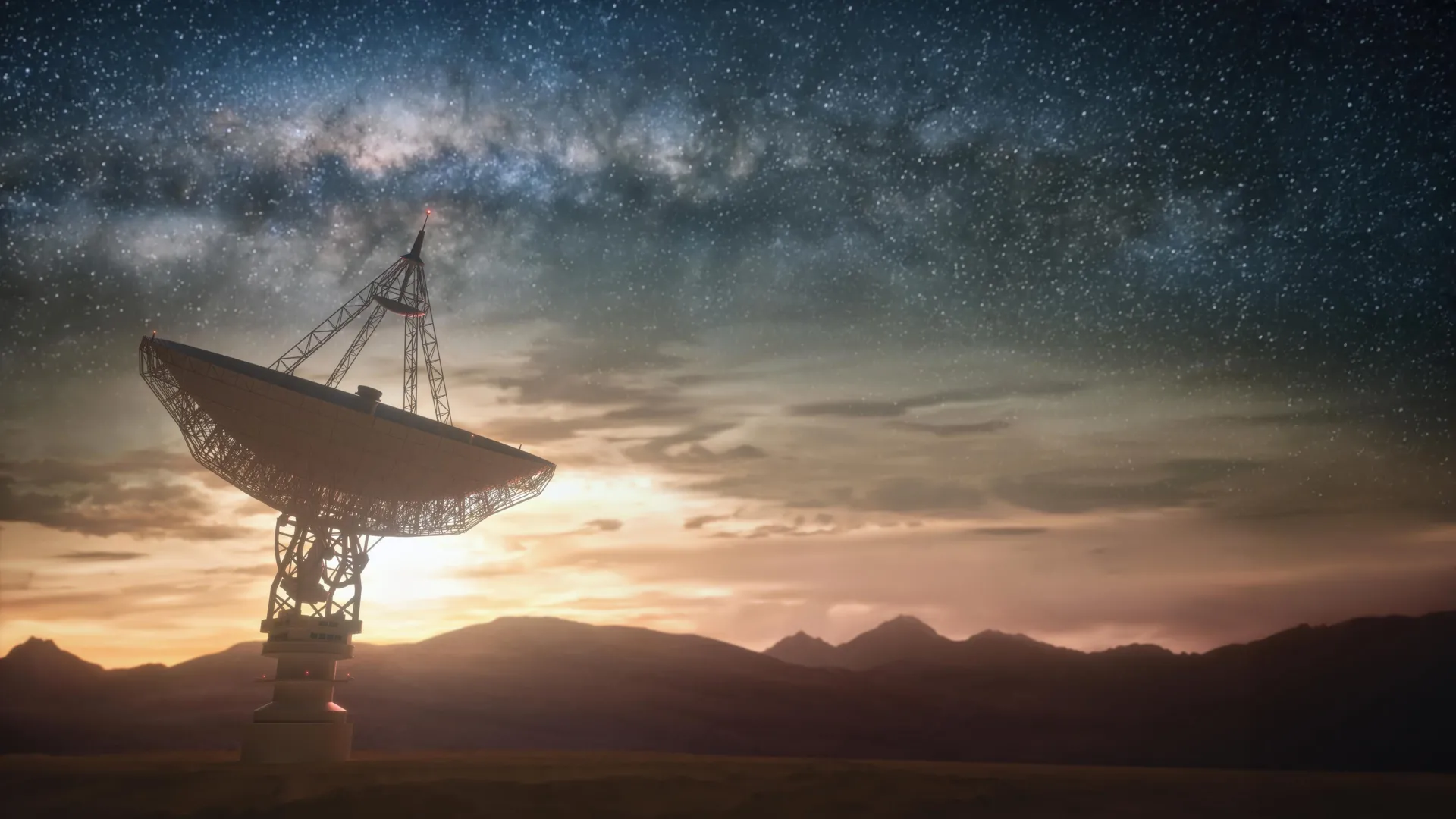
The traditional approach to radio SETI has predominantly targeted frequencies nestled between 1.42 and 1.66 GHz. This particular range earned its evocative moniker, the ‘water hole,’ because it lies precisely between the fundamental radio emissions of atomic hydrogen (at 1.42 GHz, or the 21-centimeter line, a ubiquitous element in the universe) and the hydroxyl radical (OH, emitting around 1.66 GHz). Together, hydrogen and hydroxyl are the chemical precursors to water, a molecule universally associated with life as we know it. The rationale behind focusing on this region was compelling: it is a relatively ‘quiet’ part of the radio spectrum, meaning it experiences less natural astrophysical noise compared to other frequencies. This quietness, combined with the universal significance of hydrogen and water, led researchers to theorize it would be a logical and universally recognizable ‘meeting place’ for any advanced civilization attempting to broadcast their existence or listen for others. Pioneering SETI projects, dating back to Project Ozma in 1960 and continuing through various iterations of the Allen Telescope Array and portions of the Breakthrough Listen initiative, have diligently scanned this cosmic water hole, hoping to catch a whisper from the stars.
However, the universe is vast, and the assumptions guiding past searches, while logical, might be limiting. New research, presented recently at the Royal Astronomical Society’s National Astronomy Meeting in Birmingham, posits that higher radio frequencies could present an equally, if not more, valuable frontier for detecting technological signals from distant civilizations. This paradigm shift encourages a broader, more comprehensive approach to SETI, acknowledging that our anthropocentric biases might be inadvertently narrowing our cosmic net.
At the forefront of this re-evaluation is Louisa Mason, a PhD researcher at the University of Manchester. Mason’s innovative work involved utilizing archived observations from the Atacama Large Millimeter/submillimeter Array (ALMA) in Chile, effectively conducting the telescope’s inaugural SETI survey. ALMA is not just any telescope; it is an astronomical marvel, an international collaboration comprising 66 high-precision antennas located at an altitude of 5,000 meters in the Atacama Desert. Its unprecedented sensitivity and resolution at millimeter and submillimeter wavelengths allow astronomers to peer into the coldest, most distant, and darkest regions of the universe, observing the formation of stars, planets, and the very first galaxies. Before Mason’s work, ALMA’s primary mission had been focused on observing phenomena like protoplanetary disks, star-forming regions, and distant galaxies – not the direct search for alien signals.
What makes Mason’s methodology particularly noteworthy is her approach to acquiring data. Instead of submitting proposals for new, dedicated telescope time – a highly competitive and resource-intensive process – she meticulously examined observations that had already been collected for entirely unrelated astronomical research. This ingenious strategy of ‘data mining’ existing archives offers a highly cost-effective and efficient way to expand SETI efforts without demanding new, expensive observational campaigns. Within this treasure trove of data, Mason specifically searched for narrowband radio signals. These signals, characterized by their confined frequency range, are often considered a hallmark of artificial technology. Natural astrophysical phenomena, such as pulsars, quasars, or molecular clouds, typically produce broadband emissions spread across a much wider range of frequencies, making narrowband signals a potential ‘smoking gun’ for intelligence.
Mason eloquently articulated the motivation behind her unconventional approach: "For decades, SETI searches have concentrated on a relatively small part of the radio spectrum. We wanted to ask what might happen if we looked somewhere very different." She underscored the vast, unexplored territory that the millimeter and submillimeter bands represent for SETI, emphasizing that her research "is really about opening up a new area of parameter space to search." This exploration into higher frequencies is significant because these wavelengths offer potential advantages. While atmospheric absorption becomes more pronounced at these frequencies, requiring observatories like ALMA to be located at extreme altitudes, they also allow for extremely high data transmission rates and potentially more focused, directional beams, which an advanced civilization might employ for efficient interstellar communication.
ALMA’s formidable capabilities, though initially deployed for other astrophysical pursuits, are now demonstrating their unexpected utility in the SETI landscape. Mason’s survey examined two specific narrow frequency ranges within ALMA’s Band 3 observations. Band 3 covers a frequency range of approximately 84 to 116 GHz – significantly higher than the traditional ‘water hole.’ Despite the immense potential, this initial search, limited to only four archived ALMA observations, did not yield any candidate technosignatures (alien signals) above the survey’s detection thresholds. While a null result might seem discouraging, Mason asserts that these findings are far from a dead end. Instead, they serve as a powerful proof of concept, demonstrating that telescopes operating at these higher radio frequencies, particularly those with ALMA’s unparalleled sensitivity, could become indispensable tools in future SETI endeavors. The initial absence of a signal in such a limited dataset is merely a starting point, not a definitive conclusion about the presence or absence of life.
Beyond the exploration of new frequency regimes, Mason’s study illuminated another often-overlooked aspect of radio astronomy: the concept of ‘stellar bycatch.’ When a powerful telescope like ALMA is meticulously aimed at a specific celestial object of interest, its field of view often encompasses numerous additional stars in the surrounding cosmic neighborhood. These unintentionally observed stars, frequently beyond the primary target, are aptly described as ‘stellar bycatch.’ Traditionally, astronomers have relied on comprehensive star catalogues, such as the European Space Agency’s Gaia mission, to estimate the number of stars inadvertently captured in an observation. Gaia, with its unprecedented precision, has mapped over a billion stars in our galaxy, providing invaluable data on their positions, distances, and motions. However, even Gaia has limitations; it may not include every single star in a given field, especially those that are extremely faint, exceptionally distant, or challenging to identify with absolute certainty due to obscuration or technical constraints.
To overcome these limitations and provide a more complete census of observed stars, Mason employed a sophisticated computational tool: the Besançon Galactic Model. This highly detailed simulation is designed to estimate the distribution, characteristics, and evolution of stars throughout the Milky Way galaxy. By integrating physical models of stellar populations, star formation rates, and galactic structure, the Besançon model can predict the likely number and types of stars present within any given line of sight, even those that might escape direct observational detection in existing catalogues. Applying this advanced modeling technique allowed Mason to calculate a far more accurate and comprehensive number of stars likely captured within each ALMA observation, including countless objects that do not appear in conventional observational catalogues.
The impact of this refined estimation method is staggering. When the Besançon Galactic Model was applied to re-evaluate an earlier, separate SETI survey that involved 1,327 distinct telescope pointings, the estimated number of stars included in the search soared dramatically. Where Gaia data had identified approximately 288,000 stars, the galactic model suggested that more than 6.1 million stars may have actually been observed within those same fields of view. This represents an increase of over twenty-fold, profoundly altering our understanding of the scope and reach of past SETI efforts.
According to Mason, this new, significantly higher estimate offers a far more complete and nuanced picture of how much of the Milky Way has already been implicitly examined for technosignatures. "One of the most exciting things about this work is realizing that we’ve surveyed many more stars than initially thought," she remarked. This revelation has profound implications for SETI strategy, suggesting that even seemingly limited observations can, in fact, contain a wealth of information about a vast array of stellar systems. "Even a very small observation can contain a huge number and diversity of stars that we might never have intended to study," Mason added. "By combining high-frequency observations with galactic simulations, we can better understand exactly what we’ve searched and where we should look next." This improved understanding allows for more efficient allocation of future telescope resources and a more informed strategy for targeting promising regions of the galaxy.
It is crucial, Mason cautions, that the absence of a detected signal in her initial ALMA survey should not be misconstrued as evidence against the existence of intelligent life elsewhere. The search covered an exceedingly small number of archived observations and explored only two very limited frequency windows within ALMA’s vast operational range. Finding no candidate signal within these specific, narrow parameters is merely a data point, not a universal conclusion. The universe is immense, and the potential ‘channels’ for communication are practically infinite.
Instead, Mason hopes her pioneering work will serve as a powerful impetus, encouraging astronomers to broaden the scope of SETI surveys across a much wider and more diverse portion of the electromagnetic spectrum. Her research also powerfully demonstrates the immense potential of reusing and re-analyzing existing telescope archives – a strategy that allows for the search for possible signs of technology without the monumental effort and cost associated with entirely new observing campaigns. This approach maximizes the scientific return on existing investments in astronomical infrastructure and opens up exciting avenues for citizen science and data analytics.
The collaboration, which included Professor Michael Garrett, Dr. Andrew Siemion, and Dr. Kelvin Wandia, underscores the interdisciplinary nature of modern SETI research, bringing together expertise in radio astronomy, signal processing, and galactic modeling. The poster detailing this significant work, titled ‘Strategies Utilising High-Frequency Interferometric Data to Explore SETI Parameter Space,’ was presented as part of the Statistical Challenges for Next-Generation Astronomical Surveys session at NAM2026. As humanity continues its profound and enduring quest for cosmic companionship, projects like Mason’s are not just about finding a signal; they are about continually refining our search methodologies, challenging our assumptions, and expanding the very boundaries of where and how we listen for the echoes of other civilizations in the vast silence of space. The cosmic water hole may just be one of many watering holes where life might gather, and by exploring new pastures, we significantly increase our chances of making contact.
