
 By admin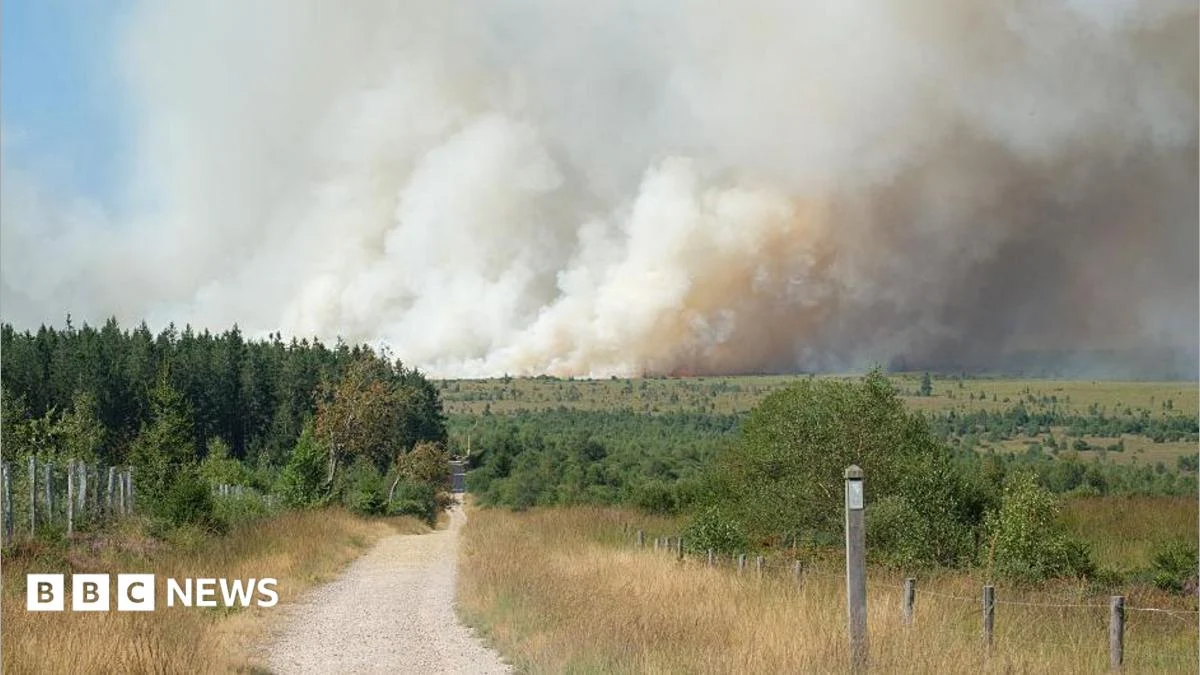
A catastrophic wildfire, described as Belgium’s most severe in recent memory, has ravaged the High Fens, the nation’s largest and most ecologically significant nature reserve, forcing the evacuation of residents from two nearby villages and consuming an alarming third of this precious natural landscape. The inferno, which ignited on Friday, continued its relentless advance on Saturday, prompting urgent warnings from local officials that the flames could soon threaten homes situated on the periphery of the sprawling park. In a desperate bid to contain the escalating crisis, water-bombing aircraft and helicopters, dispatched from across the European continent, joined the heroic efforts of firefighters battling the blaze near the nature reserve’s eastern border with Germany.
This devastating event in Belgium is symptomatic of a wider European struggle against a surge in wildfires, exacerbated by a prolonged period of extreme heat. Across the continent, other nations are also grappling with similar blazes. In south-western France, a separate forest fire compelled hundreds of residents to abandon their homes, highlighting the pervasive and interconnected nature of the current environmental crisis. As of Saturday afternoon, Belgian authorities confirmed that the High Fens wildfire remained stubbornly out of control, a stark testament to the ferocity of the flames and the challenging conditions faced by emergency responders.
Nicolas Yernaux, a spokesperson for the regional authorities in Wallonia, characterized the fire as the country’s "largest in recent history," underscoring the unprecedented scale of the disaster. His grave pronouncements were accompanied by a stark warning: "There is a risk that the fire could reach homes, but we are deploying all available resources to protect them." In a swift response to the immediate threat to human safety, a nearby gymnasium was rapidly transformed into an emergency shelter, ready to accommodate the villagers forced to flee their residences. The logistical and tactical challenges confronting the firefighting efforts were compounded by a trifecta of adverse factors: volatile weather conditions, the unique and often treacherous terrain of the High Fens, and the sheer intensity of the blaze.
The High Fens, a UNESCO World Heritage site and a vital peatland ecosystem, presents a particularly difficult environment for firefighting. Its landscape is characterized by bog-like territories, vast expanses of moorland, and dense forests, all of which provide ample fuel for the rapidly spreading flames. Yernaux explained the strategic decisions being made in light of these challenges: "Firefighters had ‘allowed parts of the heathland to burn because the area is very difficult to access.’" This approach, while seemingly counterintuitive, is often employed in such situations to prevent firefighters from being exposed to unnecessary risks in inaccessible areas, focusing instead on containing the fire’s perimeter and protecting more vulnerable zones.
Gregory Melotte, a dedicated firefighter on the front lines of this arduous battle, shared his harrowing account with Belgian broadcaster RTBF, painting a vivid picture of the relentless struggle: "We managed to calm the fire coming from the plain, to prevent it from spreading into the fir forest. We still succeeded in our mission, but it’s not over yet." His words, though tinged with a measure of success in containing immediate threats, also conveyed the ever-present danger and the precariousness of the situation. "The flames are coming towards us, the wind has shifted twice, once in our favour, once against us," he added, illustrating the unpredictable nature of the wildfire and the constant need for vigilance and adaptation by the emergency crews. The capricious shifts in wind direction can dramatically alter the fire’s trajectory, transforming a contained section into a renewed threat.
Recognizing the gravity of the situation and the need for immediate and substantial assistance, Belgium activated the European Union’s civil protection mechanism. This crucial step facilitated the deployment of reinforcements from other member states, a testament to the solidarity and collaborative spirit within the EU in times of crisis. European Commissioner Hadja Lahbib confirmed the arrival of vital international support, announcing that "two Swedish water-bombing aircraft and two helicopters, one from the Czech Republic and one from the Netherlands, were on their way." This infusion of specialized equipment and personnel is critical in bolstering the capabilities of the overwhelmed Belgian emergency services.
Meanwhile, the unfolding crisis in the High Fens is mirrored by similar events elsewhere in Europe. In the Landes region of south-western France, another significant wildfire forced the evacuation of 650 residents from their homes. This blaze, which initially began on Thursday, regrettably reignited on Saturday, necessitating the deployment of over 500 firefighters to combat its resurgence. The persistence and recurrence of these fires underscore the deep-seated issues of climate change and land management that are making such events more frequent and intense.
The broader context of these wildfires is the alarming trend of increasingly severe fire seasons across Europe, driven by a prolonged summer of extreme heat. Since Friday, reports of forest fires have emerged from Croatia, Spain, and Serbia, painting a grim picture of a continent struggling to cope with the escalating threat. These blazes have transformed swathes of land into infernos or left them scorched and barren, a stark visual representation of the environmental damage being inflicted.
The scientific data corroborates the severity of the situation. The EU’s climate monitoring service, Copernicus, has definitively confirmed that western Europe experienced its hottest June-to-July period on record. This record-breaking heatwave, a direct consequence of anthropogenic climate change, has created tinderbox conditions across the continent, making natural landscapes highly susceptible to ignition and fueling rapid fire propagation. The High Fens, with its peat soils, can burn underground for extended periods once ignited, making them notoriously difficult to extinguish and posing a long-term threat to the ecosystem and surrounding areas. The unique biodiversity of the High Fens, home to rare plant and animal species adapted to its specific wetland environment, is now under existential threat. The destruction of this natural heritage has far-reaching implications for ecological balance, water management, and the intrinsic value of preserving such pristine natural landscapes. The economic impact, while secondary to the immediate human and ecological concerns, also warrants consideration, with potential losses to tourism, agriculture, and infrastructure. The long-term recovery of the High Fens will undoubtedly be a monumental undertaking, requiring sustained effort and investment. The psychological toll on the evacuated residents, who have been displaced from their homes and livelihoods, is also a significant aspect of this disaster, highlighting the human cost of climate-induced environmental catastrophes. The Belgian government and international partners face a multi-faceted challenge, encompassing immediate fire suppression, long-term ecological restoration, and support for affected communities. The events unfolding in the High Fens serve as a stark and urgent reminder of the profound and escalating impacts of climate change, demanding immediate and decisive global action.
