
 By Lina Irawan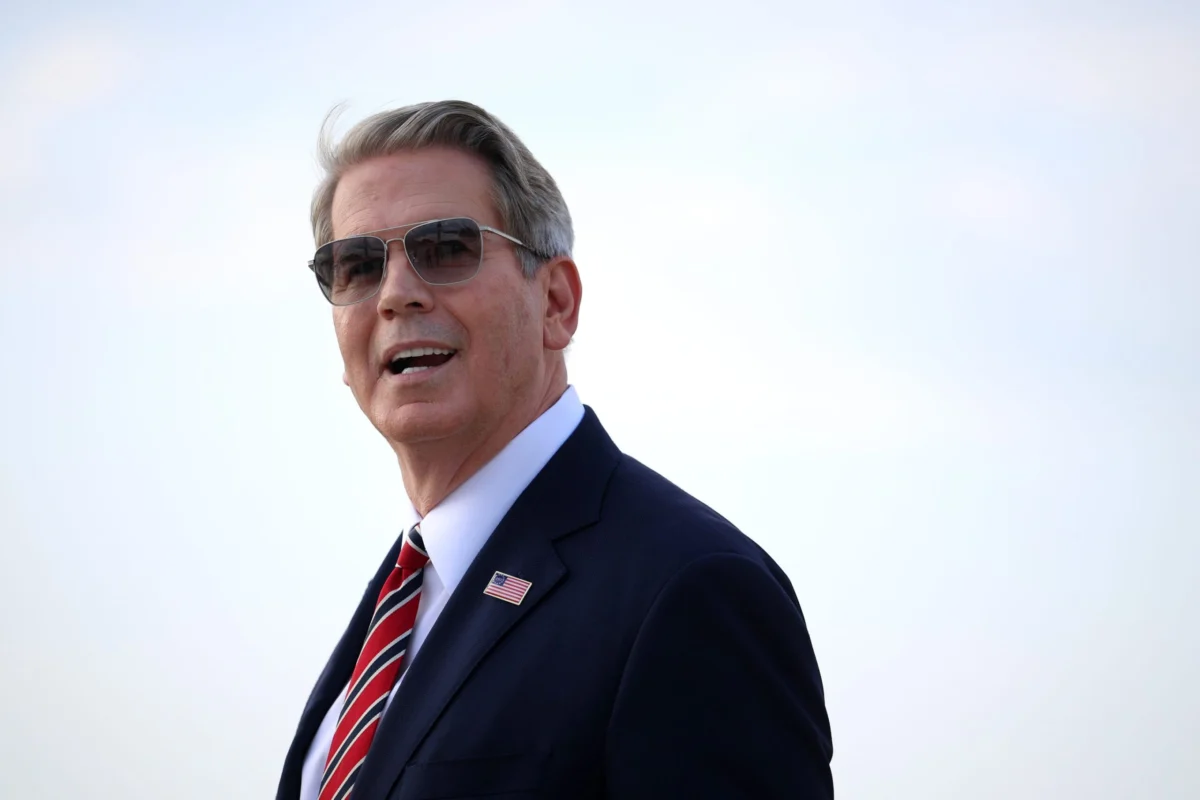
For years, Iran has navigated a complex web of sanctions targeting its oil exports, banking sector, industrial capabilities, and individuals associated with its government and military. The existing framework includes measures from the United Nations, the European Union, and particularly, the United States, which has consistently ratcheted up pressure since its withdrawal from the Joint Comprehensive Plan of Action (JCPOA), also known as the Iran nuclear deal, in 2018. The current naval blockade, reportedly in effect since late February, would represent a significant escalation of physical containment, aimed at crippling Iran’s maritime trade and further isolating its economy. In this context, critics question how much more economic leverage the US truly possesses without incurring substantial blowback on its own economy or that of its allies.
While the Trump administration has remained tight-lipped about the specific mechanisms it plans to deploy, Treasury Secretary Bessent’s statement signals an intent to explore avenues that, despite the existing pressure, could still inflict further economic pain on Tehran. The main challenge, as acknowledged by analysts, lies in identifying and targeting these remaining pressure points without triggering undesirable consequences for the global economy, particularly concerning the intricate relationship between the US and China.
"Unless the president decides to prioritize addressing the Iran threat over all other issues, and namely China, it’s unlikely any action they take is going to materially change Iran’s calculus," commented Chris Kennedy, a Bloomberg Economics analyst. Kennedy’s assessment highlights the core dilemma: the most impactful new sanctions would invariably involve China, a major economic power and Iran’s primary trading partner, creating a direct conflict of interest with other US foreign policy and economic objectives. The ongoing "war against Iran" since late February adds another layer of urgency and complexity, suggesting that economic measures are now part of a broader, active conflict strategy rather than solely a pre-emptive or deterrent one.
Below is a detailed look at potential options the administration could pursue, acknowledging that these are not exhaustive, and officials might combine several measures or opt for an entirely different approach. Each option carries its own set of risks and potential rewards, demanding careful strategic calculation.
I. Targeting China’s Economic Lifeline to Iran
China remains the single most critical economic lifeline for Iran, purchasing more than 90% of Iran’s illicit oil exports. This trade provides Tehran with billions of dollars in much-needed revenue, sustaining its economy despite widespread international sanctions. The US has already initiated actions against some Chinese "teapot refineries" – smaller, independent refiners – and various firms involved in facilitating these purchases since the onset of the "war against Iran in late February." However, the US has so far stopped short of directly targeting the major Chinese state-owned banks and financial institutions that ultimately finance this massive trade.
The hesitation stems from significant geopolitical and economic considerations. Escalating sanctions to include major Chinese banks would risk severely worsening already strained tensions with Beijing, particularly ahead of a planned meeting between President Donald Trump and Chinese leader Xi Jinping. Such a move could be perceived by China as an act of economic warfare, potentially leading to retaliatory measures and undermining delicate negotiations on other fronts, such as trade and technology. Moreover, there’s a substantial economic tradeoff: curtailing Iranian crude from the global market would remove a significant source of discounted oil, potentially lifting already elevated oil prices worldwide. This could exacerbate inflationary pressures in the US and globally, harming consumers and businesses alike.
In May, Beijing unequivocally responded to US pressure, ordering domestic companies not to comply with US sanctions on five specific Chinese refiners. This directive placed China’s biggest banks in a precarious position, caught between Beijing’s explicit instructions to maintain trade with Iran and the existential risk of losing access to the US financial system, a cornerstone of global commerce. The prospect of these banks being cut off from dollar-denominated transactions and international clearinghouses represents a nuclear option in financial sanctions, one that could trigger widespread instability in global financial markets. The US Treasury would need to weigh the potential impact on global energy markets, the integrity of the international financial system, and the broader US-China relationship against the desired effect on Iran.
II. Disrupting Financial Flows via Exchange Houses
Even after Iran sells its oil, it faces the complex challenge of repatriating those funds, often received in Chinese yuan or other non-convertible currencies, into currencies Tehran can actually use to purchase goods and services or fund its activities. A network of informal and formal exchange houses in countries like the United Arab Emirates (UAE), Turkey, and even within Iran itself, plays a crucial role in converting these payments. These entities act as intermediaries, allowing Iran to bypass traditional banking channels and move money outside the formal financial system.
The Treasury Department has already demonstrated its awareness of this vulnerability, targeting several Iranian exchange houses as part of Secretary Bessent’s "Economic Fury" campaign. These actions, including sanctions on Iranian digital exchanges in early August, were reportedly for allegedly helping to launder billions of dollars in foreign currency for the Iranian regime. By sanctioning these intermediaries, the US aims to make it harder for Iran to access and utilize its oil revenues, effectively trapping its wealth in less liquid or less desirable forms.
However, this approach faces significant challenges. Iran has spent years, if not decades, building sophisticated alternative channels to move money, often relying on ancient hawala systems, shell companies, and more recently, digital assets and cryptocurrencies. While sanctioning individual exchange houses might disrupt specific pathways, the highly adaptable nature of these networks means transactions are likely to simply shift to new intermediaries, different currencies, or emerging digital assets. This "whack-a-mole" game makes comprehensive enforcement extremely difficult, as new avenues for illicit finance constantly emerge, requiring continuous monitoring and adaptation from sanctions enforcers. The effectiveness hinges on the ability to not just identify and sanction, but also to proactively anticipate and block new methods of financial circumvention.
III. Broadening Secondary Sanctions to Trading Partners
A more aggressive approach would involve threatening secondary sanctions on any entity, regardless of nationality, that conducts even limited business with Iran. This strategy mirrors the approach the Trump administration took toward North Korea in 2017, where foreign companies and banks were effectively forced to choose between doing business with North Korea and retaining access to the lucrative US financial system. Such a move could significantly extend Washington’s leverage well beyond entities directly involved in Tehran’s oil trade, effectively isolating Iran from a much broader segment of the global economy.
Implementing such comprehensive secondary sanctions would undoubtedly put additional pressure on major trading partners like Russia and China, both of whom maintain significant economic ties with Iran and have often served as conduits for trade and financial transactions. But the impact would also ripple across countries around Iran’s borders, including US partners like Turkey, which has historically maintained substantial commercial relations with Tehran, particularly in energy and trade. These countries would face immense pressure to sever or drastically reduce their economic engagement with Iran, risking their own access to the US market and financial system if they failed to comply.
President Trump has previously floated a version of this extreme approach, threatening 25% tariffs on countries conducting business with Iran, as early as January. While he hasn’t followed through on this specific threat, the notion highlights the administration’s willingness to use broad economic tools to enforce its foreign policy objectives. The diplomatic ramifications of such a move would be severe, potentially alienating key allies and driving countries like Turkey further into the orbit of rivals like Russia and China. It would also raise questions about the extraterritorial reach of US law and could provoke international condemnation for imposing US policy preferences on sovereign nations.
IV. Confiscating Overseas Assets
Beyond merely freezing Iranian government assets held under US jurisdiction, the administration could explore more extreme measures, such as attempting to confiscate them outright. This would be a significant escalation, drawing on a precedent set by the Bush administration after the 2003 invasion of Iraq, when it moved to seize Iraqi state assets. Confiscation implies a permanent transfer of ownership, rather than a temporary suspension of access.
However, the practical application of this option against Iran faces substantial limitations. The pool of Iranian state assets actually within direct US reach or control may be relatively limited, as Iran has long taken measures to safeguard its wealth from US seizure. Much of Iran’s overseas wealth is held in third countries, outside immediate US jurisdiction. Confiscating these assets would be a legally and diplomatically far more complicated undertaking than simply freezing them. It would require the explicit cooperation of foreign governments, who would need to agree to seize and transfer Iranian funds held within their financial systems. Such cooperation is far from guaranteed, especially from countries that might view such an act as a violation of international law or a dangerous precedent.
Legal challenges from Iran would be almost certain, potentially tying up assets in protracted international litigation. Furthermore, the act of confiscation could trigger retaliatory measures from Iran or its allies, potentially targeting US assets abroad or increasing the risks for American citizens and businesses operating internationally. The ethical and legal implications of seizing sovereign assets without clear international consensus or judicial process are profound, potentially undermining the very international legal framework the US often champions.
V. Intensifying the "Shadow Fleet" Crackdown
While the US naval blockade, reportedly in place since late February, has undoubtedly reduced legitimate maritime traffic to Iran’s ports, Iran has long relied on a sophisticated "shadow fleet" to circumvent sanctions and continue its oil exports and other trade. This fleet comprises older tankers, often operating under flags of convenience, with obscured ownership, frequently engaging in illicit ship-to-ship transfers at sea to hide the origin and destination of cargoes, and manipulating their Automatic Identification System (AIS) transponders to avoid detection.
The US may consider a more comprehensive effort to dismantle this shadow fleet. This would involve not just sanctioning individual vessels, but also targeting the entire ecosystem that enables these shipments: the companies that own and operate the vessels, the terminals that load and unload the illicit cargo, the insurance providers that cover them, the classification societies that certify their seaworthiness, and the various intermediaries that facilitate the trade. The US has already sanctioned a number of vessels and some entities involved in this shadow network, but a "comprehensive effort" would imply a far broader and more aggressive campaign.
Enforcement of such a comprehensive crackdown is extremely challenging. The global shipping industry is vast and complex, with layers of ownership and opaque financial structures that make it difficult to identify the ultimate beneficiaries. Furthermore, the constant evolution of evasive tactics employed by the shadow fleet – such as frequent flag changes, disabling AIS, and using dark voyages – requires equally sophisticated and adaptive intelligence gathering and enforcement capabilities. International cooperation from port states, flag states, and maritime authorities would be crucial for effective interdiction and enforcement, but such cooperation is often fragmented or politically difficult to secure. The potential for maritime incidents or confrontation also increases with a more aggressive interdiction strategy, particularly given the ongoing "war against Iran."
The path ahead for the Trump administration’s "unprecedented economic pressure" on Iran is fraught with complexity, significant economic risks, and uncertain outcomes. While the US undoubtedly possesses powerful economic tools, the most impactful remaining options carry substantial potential for blowback, particularly concerning the delicate balance of US-China relations and the stability of global oil markets. The efficacy of these measures in materially altering Iran’s "calculus," especially in the context of an active military conflict since late February, remains highly debatable. Iran has demonstrated remarkable resilience and ingenuity in circumventing sanctions over the years, pushing its economy further into informal networks and non-Western trading blocs. The decision to escalate pressure further could force Tehran deeper into the arms of adversaries like China and Russia, while simultaneously risking further global economic instability and diplomatic isolation for the United States.
