
 By admin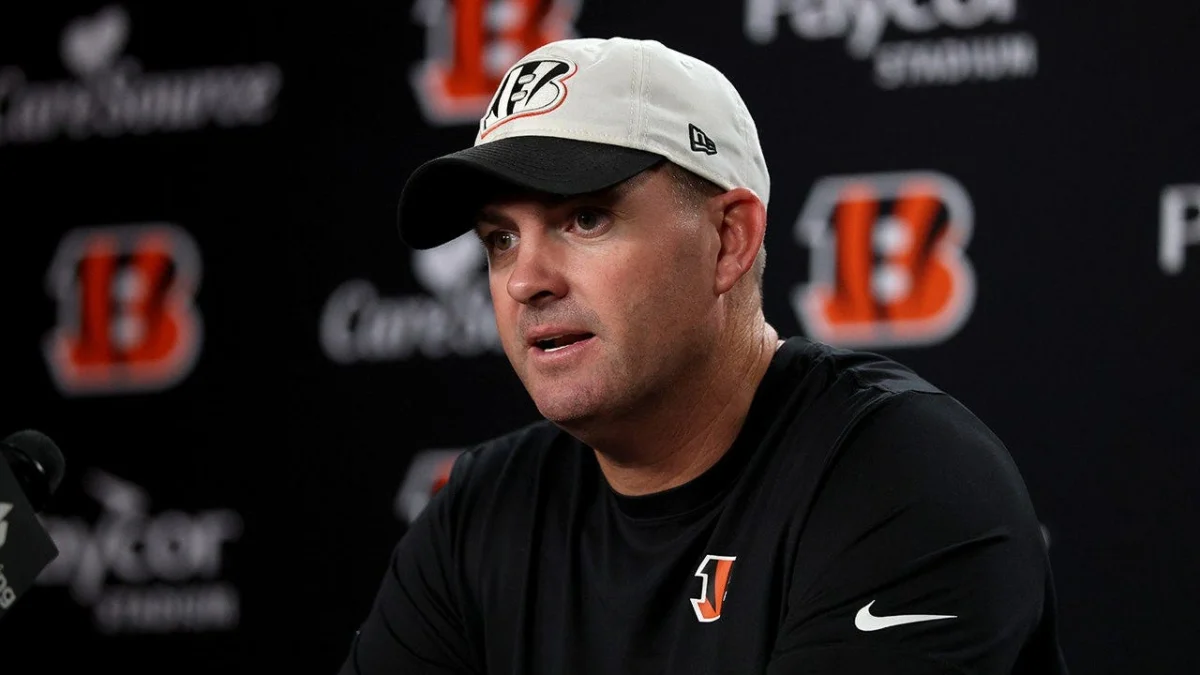
The National Football League is set to implement a subtle yet significant rule adjustment for the 2026 season, granting head coaches the authority to delegate the crucial task of using the red challenge flag to another member of their coaching staff. However, for Cincinnati Bengals head coach Zac Taylor, this forthcoming change is less of a novel development and more of a formalization of a practice he has unofficially, and unknowingly, adhered to for the past eight years. Taylor candidly admitted during a recent press conference that he has technically been operating outside the established NFL regulations regarding challenge flags since he took the helm of the Bengals in 2019.
Historically, the responsibility for initiating a challenge—the act of throwing the red flag onto the field to request a review of a questionable play—has rested solely with the head coach. This direct line of command ensured that the head coach, the ultimate decision-maker on the sidelines, was also the arbiter of when to question an officiating call. However, the new rule, which will be in effect starting in 2026, allows for a pregame designation, enabling the head coach to empower another staff member to wield this pivotal authority during live game action. This shift aims to provide coaches with more flexibility and potentially allow them to focus on other critical aspects of game management without the immediate pressure of identifying and executing a challenge.
For Zac Taylor, this new rule is not a paradigm shift but rather an acknowledgment of his established operational procedure. He revealed that since his appointment as the Bengals’ head coach in 2019, it has not been him, but rather his chief of coaching staff, Doug Rosfeld, who has been the one to throw the challenge flag. This arrangement, Taylor explained, has been his consistent method of managing this particular facet of his responsibilities, and remarkably, it has never drawn the attention or disapproval of the league officials.
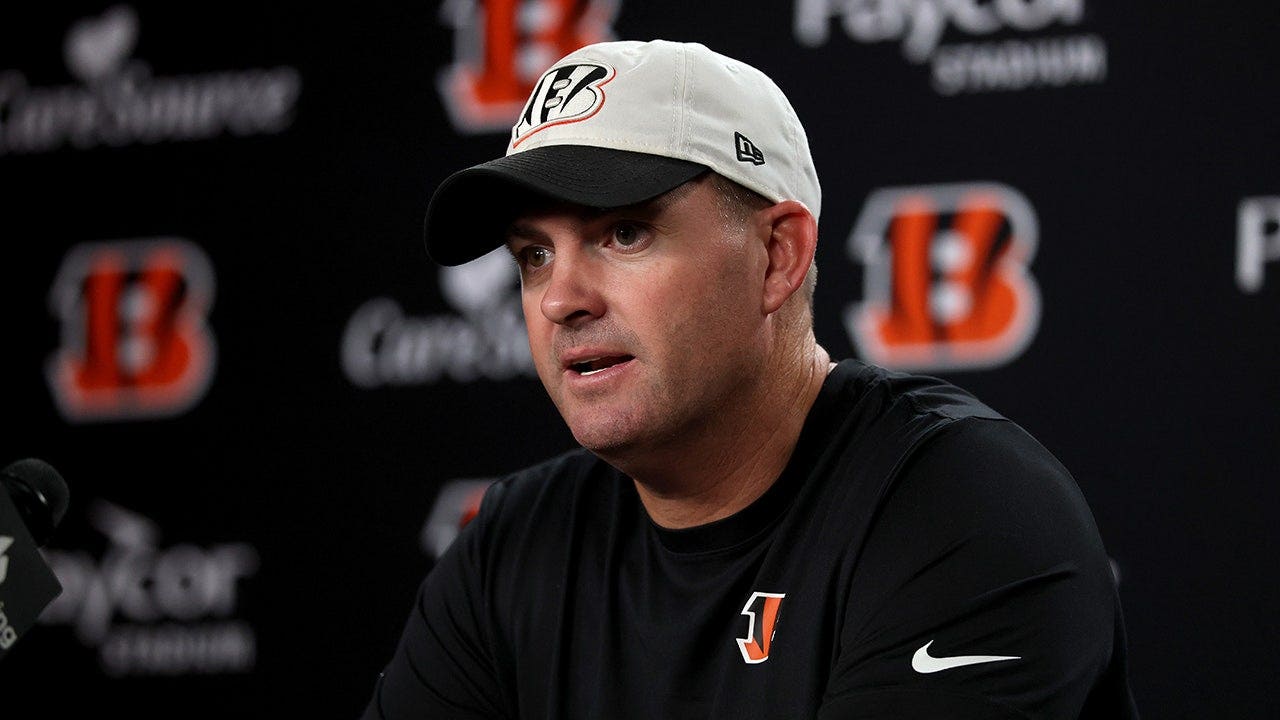
"We’ve been breaking that rule for eight years because I’ve never thrown a challenge flag," Taylor stated with a candid smile, acknowledging the irony of the situation. He further elaborated that this delegation was a matter of practicality and efficiency for him. "They ask you that in pregame, who’s got the flag," Taylor recalled. "It’s never been an issue. I didn’t even know it was frowned upon. I know there’s other coaches in the league, I’m not the only one who’s done that. I saw they implemented a new rule, so maybe we’ll get a retroactive fine or something." His lighthearted remark about a potential fine underscores his perspective that the practice, while technically against the letter of the law, was never detrimental to the game or its integrity.
The NFL’s decision to formalize the delegation of the challenge flag authority reflects a broader trend in professional sports towards optimizing coaching staff roles and enhancing on-field decision-making. In a sport as complex and fast-paced as American football, where split-second decisions can dramatically alter the course of a game, coaches often rely on specialized personnel to manage specific responsibilities. The challenge flag, while seemingly a simple act, requires keen observation, strategic assessment, and immediate action. By allowing head coaches to designate a "challenge designee," the league is recognizing that not all head coaches are the most effective individuals to fulfill this role, especially when they are intensely focused on play-calling, managing player communications, or strategizing for the next series.
The practice of coaches carrying the challenge flag has varied widely across the league. Some coaches, like the famously stoic Bill Belichick, were known to keep the flag tucked away in their socks, a testament to their deep immersion in the game and their readiness to challenge any perceived injustice. Others might keep it in a pocket or a dedicated pouch. The physical act of retrieving and throwing the flag, while brief, can interrupt a coach’s flow of thought and sideline communication, particularly during critical moments of offensive or defensive drives.
Taylor’s rationale for delegating this duty to Rosfeld is rooted in his own focus during game situations. "It’s easier for me," Taylor explained, highlighting the moments immediately following the conclusion of an offensive series. During these transitions, Taylor is often engaged in detailed discussions with his offensive players, providing feedback and adjustments. In such scenarios, having a dedicated observer like Rosfeld to meticulously review plays and make the call on whether to challenge becomes invaluable. Rosfeld, as the chief of coaching staff, is inherently involved in game strategy and possesses a comprehensive understanding of the team’s objectives and the nuances of officiating. His role as the "eyes and ears" for challenges ensures that crucial opportunities are not missed due to the head coach’s immediate tactical engagements.
The league’s decision to implement this rule change is likely a response to the increasing specialization within coaching staffs and the recognition that effective game management often involves distributing responsibilities. While many coaches may continue to carry their own flags out of habit or personal preference, the new rule provides a standardized framework for those who, like Taylor, find greater efficiency in delegation. This move could lead to more strategic and less impulsive challenges, as the designated individual might have a slightly different perspective or be less emotionally invested in a particular play than the head coach directly involved in calling it.
Taylor’s consistent practice over eight years, coupled with the apparent lack of any formal reprimand from the league, suggests that the spirit of the rule—ensuring a coach is present and making informed decisions about challenges—was being met. However, formalizing the process provides clarity and avoids any ambiguity for officials and other teams. The pregame designation ensures that both the officiating crew and the opposing team are aware of who is authorized to throw the flag, preventing any potential misunderstandings or controversies during a game.
The NFL’s officiating, particularly in recent years, has come under increased scrutiny, with a growing demand for accuracy and fairness. The challenge system, introduced to provide a mechanism for correcting clear and obvious errors, is a vital component of this pursuit. By allowing coaches to delegate this responsibility, the league is implicitly acknowledging that the effectiveness of the challenge system can be enhanced by ensuring that the decision-maker is in the optimal position to observe and assess plays. For a head coach like Taylor, who is deeply involved in play-calling and player communication, having a trusted lieutenant like Rosfeld monitor the game for potential challenges allows him to remain fully engaged in his primary coaching duties.
The historical context of the challenge flag rule is also worth noting. When the challenge system was first introduced, the expectation was that the head coach, as the ultimate authority, would be the one to initiate the review. This was a straightforward approach that aligned with the traditional hierarchy of coaching. However, as the game has evolved and coaching staffs have expanded and specialized, the rigid adherence to this singular responsibility has become less practical for some. The new rule acknowledges this evolution and provides a modern solution to an age-old game management challenge.
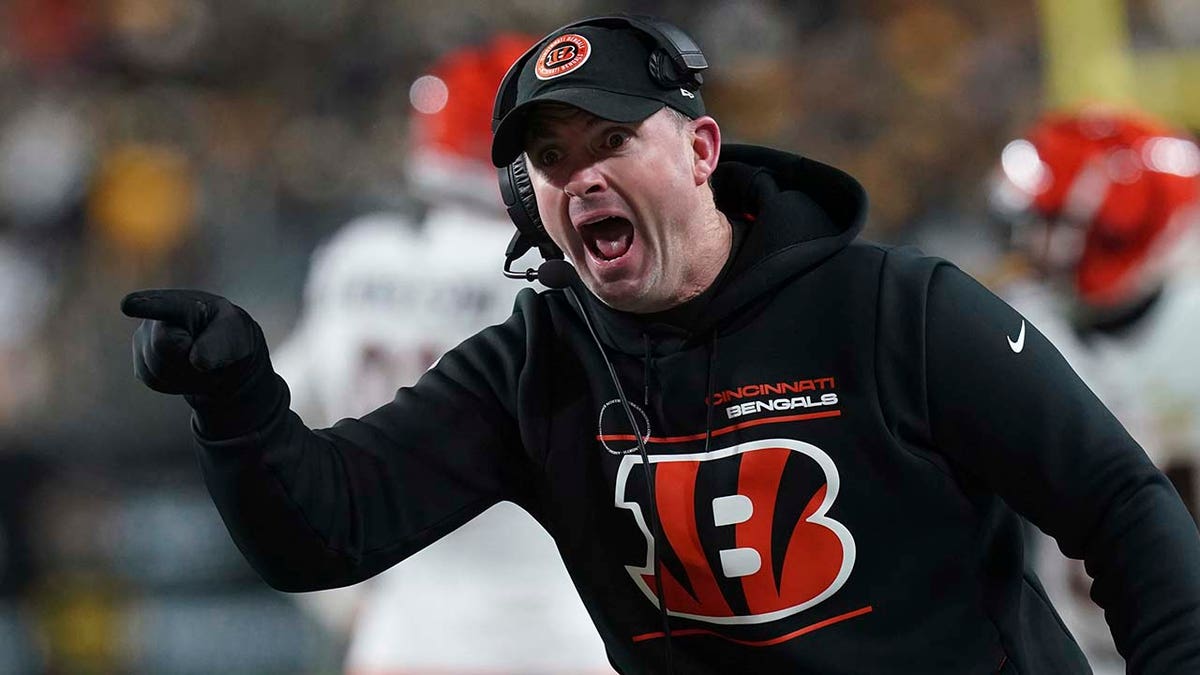
Taylor’s revelation also sheds light on the informal communication that exists between coaches and officials. The fact that he would inform referees pregame about who was carrying the flag, and that this was never questioned, indicates a level of understanding and flexibility within the league’s operational framework. While the rulebook may have been specific, the practical application often involved a degree of tacit agreement. The new rule essentially codifies this practical approach, bringing it into formal alignment with league regulations.
The implications of this rule change extend beyond just Zac Taylor and the Cincinnati Bengals. It opens the door for other head coaches who may have been operating in a similar fashion to formalize their own practices. It also encourages a strategic approach to challenge flag usage. Instead of the head coach potentially feeling obligated to throw the flag out of instinct or frustration, a designated individual might be more inclined to conduct a brief, objective assessment before making the decision. This could lead to more judicious use of challenges, preserving them for situations where the potential impact of a successful review is significant.
Ultimately, Zac Taylor’s confession serves as an amusing anecdote that highlights a subtle but important shift in NFL coaching dynamics. His eight-year "rule violation" underscores his focus on efficient game management and his trust in his coaching staff. As the league officially adopts the delegation of challenge flag authority, it reinforces the idea that effective coaching in the modern era is a collaborative effort, where specialized roles and clear lines of responsibility are paramount to success. For Taylor and the Bengals, this upcoming rule change is not a disruption but rather a formal endorsement of a system that has already been working effectively for them. The slight adjustment in the rulebook will simply bring their operational procedure into official alignment, allowing them to continue their strategic approach to game management without any ambiguity.
