
 By Titik Puspa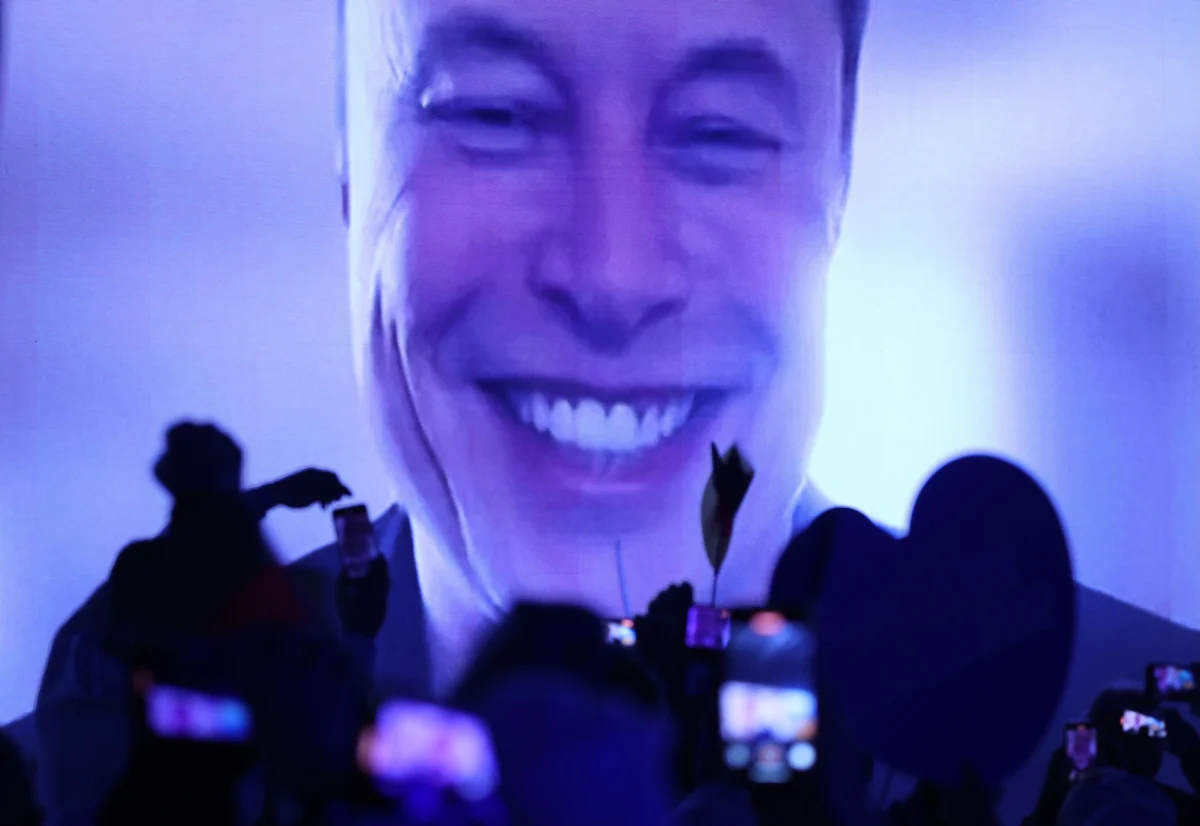
Elon Musk, the visionary behind SpaceX, recently orchestrated the company’s inaugural earnings call, a landmark event that served as a potent illustration of his characteristic penchant for "out-of-this-world" pronouncements, juxtaposed with the more measured, Earth-bound explanations offered by his executive team. This dynamic, now thrust into the public spotlight as SpaceX navigates its trajectory as a publicly accessible entity, offers a compelling preview of what investors can anticipate from the company that rockets to the stars, leases computing power, and blankets the globe with satellite-based telecommunications. The call, held on Tuesday, underscored a recurring theme that has defined Musk’s leadership across his ventures: his tendency to articulate grand, futuristic aspirations, which his senior executives then labor to translate into tangible, digestible narratives for the investment community. This pattern is strikingly similar to what has been observed at Tesla, where a recent analysis by TechCrunch highlighted how Musk increasingly dedicates significant portions of earnings calls to discussions of advanced robotics and artificial intelligence, while his colleagues focus on the fundamental business of vehicle sales.
One of the most striking assertions from Musk during the call was his projection that SpaceX’s Starlink satellite internet service will, within a decade, "deliver a majority of the world’s internet." This bold statement was made in the context of SpaceX’s preparation for the launch of the first "V3" iterations of its Starlink satellites, which boast substantially enhanced bandwidth capabilities compared to their predecessors. Musk elaborated on this vision, stating, "It’s kind of hard for people to wrap their minds around this, but like, it’s not out of the question that at some point, Starlink will deliver a majority of the world’s internet, at least in countries where we’re allowed to operate, which is the vast majority of countries. So this is, you know, important to bear in mind, and it’s not in like the infinity future. It’s, you know, less than 10 years."
In stark contrast to Musk’s expansive claim, Chief Operating Officer Gwynne Shotwell offered a more tempered, yet still ambitious, perspective just minutes later. Her statement, carefully worded to manage expectations, emphasized the practical implications of the V3 satellites: "The significant amount of capacity we’re able to add to the Starlink constellation from the V3 satellites will enable us to continue providing even better service – and it’s pretty great already – but to do so while serving more and more customers over the world. In fact, in the years ahead, we expect Starlink will represent a significant portion of global internet traffic, which Elon also talked about." Shotwell’s phrasing, "significant portion," while still ambitious, represents a more legally defensible and incrementally achievable target than Musk’s declaration of "a majority." This careful calibration of language is crucial for public companies, particularly in the volatile tech sector, where precise financial and operational forecasts are subject to intense scrutiny and regulatory oversight.
The divergence in communication styles was not limited to Starlink. Another instance where Musk’s exuberance outpaced the more structured financial reporting occurred when Chief Financial Officer Bret Johnsen presented one of the few concrete financial targets discussed during the call. Johnsen was detailing the burgeoning success of SpaceX’s relatively new venture into renting out computing power to artificial intelligence companies, a business that has rapidly generated billions in revenue. He carefully articulated the company’s financial outlook: "Looking ahead, we continue to see robust demand in all three of our business segments, but in particular in our cloud services arrangements. We see increasingly favorable economics with each agreement we sign, and as Elon mentioned, we expect the supply-demand imbalance in the compute market to continue. The current economics have translated into a less than one-year payback on our new capital deployments for compute. For example, in the first few weeks of the third quarter, we’ve already contracted an additional $6.7 billion of cloud services revenue over a six-month period that begins ramping starting in October of this year. We believe this puts us on a trajectory, including contribution from Cursor, to reach $100 billion of ARR, or annualized revenue run rate by the end of this year, based on our expected revenue in the month of December of this year." Johnsen’s statement was meticulously crafted, employing phrases like "we believe this puts us on a trajectory" and "based on our expected revenue," which provide a degree of flexibility should the company fall short of the precise target. This hedging is a standard practice designed to mitigate legal risk and manage investor expectations in the face of ambitious projections.
However, a mere twenty minutes later, Musk effectively disregarded Johnsen’s carefully constructed forecast, immediately amplifying it with his characteristic conviction. He declared, "To be clear, the $100 billion ARR in December is not a question mark. That’s… that’s what we would achieve if we basically did nothing. So like, you know, I think it may be higher than that. It probably will be higher than that." Musk’s pronouncements, while undeniably exciting, can create a challenging narrative for executives tasked with providing grounded financial guidance. This direct contradiction, or at least significant inflation, of a previously stated financial target highlights the inherent tension between Musk’s visionary leaps and the operational realities of managing a publicly traded company.
Musk also provided an ambitious update on SpaceX’s overall revenue projections, accelerating a goal previously outlined in the company’s IPO filings. He stated, "It’s probably also worth mentioning that our internal projections for reaching a trillion dollars in revenue, not ARR, but revenue, have moved up from 2031 to 2030. So prior to the IPO, the financial projections we had were reaching a trillion dollars in revenue in 2031. We now expect that to be in 2030. And there’s a non-zero chance of that being in 2029." This upward revision of a multi-trillion-dollar revenue target, even by a single year, signals a heightened level of confidence in SpaceX’s growth trajectory, driven by the synergistic expansion of its various business segments.
This pattern of Musk painting grand visions, with executives subsequently offering more constrained, albeit still impressive, interpretations, recurred throughout the call. When a shareholder inquired about the progress of the "human landing system" – the Starship-based vehicle SpaceX is developing for NASA’s Artemis moon missions – Musk implied that a prototype rocket would be ready to transport humans by the close of the following year. He further elaborated that SpaceX would be conducting Starship flights as frequently as once daily, "or possibly more," by this time next year.
Following Musk’s assertive timeline for human lunar missions, Shotwell once again stepped in to provide a more grounded perspective. She clarified that SpaceX’s immediate focus remained on fulfilling NASA’s mandated milestones, offering a less definitive, but still aspirational, goal: "we want to put boots on the ground, boots on the moon, in 2028." This deliberate recalibration underscores the company’s strategic approach to balancing Musk’s ambitious forward-looking statements with the practical, step-by-step execution required to achieve complex spaceflight objectives.
The realization of these ambitious goals, particularly concerning human spaceflight and frequent Starship operations, hinges critically on SpaceX’s ability to demonstrate the reliability and, crucially, the full reusability of its Starship system. A pivotal element in achieving reusability is the heat shield, essential for protecting the Starship upper stage from the extreme temperatures encountered during atmospheric re-entry. The company recently observed its most promising results to date with an improved heat shield design during its latest Starship test flight, which concluded with a successful splashdown in the Indian Ocean and the recovery of the intact stage. Despite this encouraging development, Musk was quick to declare, "I’d consider the heat shield problem solved at this point." This assessment, while perhaps prematurely optimistic, reflects Musk’s characteristic tendency to declare milestones achieved once significant progress has been made, often before all potential challenges are fully mitigated.
Musk has a history of making bold predictions about SpaceX’s capabilities that have not materialized as initially envisioned. For instance, in 2016, he stated his intention to land humans on Mars within six years. The critical difference now, however, is that SpaceX is a publicly traded entity. This transition subjects the company and its executives to a higher degree of regulatory scrutiny and the potential for penalties if they are found to have made knowingly misleading statements or promises.
However, the landscape of corporate enforcement presents its own set of complexities. The Securities and Exchange Commission (SEC) has, in recent years, scaled back its aggressive pursuit of corporate violations, particularly against public companies. Similarly, the Department of Justice has also indicated a reduction in its focus on prosecuting corporate crime. Furthermore, should SpaceX fail to meet Musk’s expansive claims, investors may find limited recourse in civil litigation. This is largely due to the company’s incorporation in Texas, a jurisdiction that may offer enhanced protections against certain types of shareholder lawsuits, effectively inoculating the company against some of the more common avenues for legal recourse available to investors. This strategic legal positioning, coupled with the evolving regulatory environment, creates a unique context for investors engaging with SpaceX, requiring a keen understanding of both its visionary leadership and the intricate corporate and legal frameworks within which it operates.
Sean O’Kane is a reporter with a decade of experience covering the dynamic business and technology of the transportation industry, with a particular focus on companies like Tesla and the numerous startups vying for attention in Elon Musk’s orbit. His recent tenure at Bloomberg News saw him contribute to breaking stories on significant EV SPAC failures. Prior to that, at The Verge, he covered consumer technology, hosted video content, and engaged in product and editorial photography. He can be reached at [email protected] or via encrypted message on Signal at okane.01.
