
 By Lina Irawan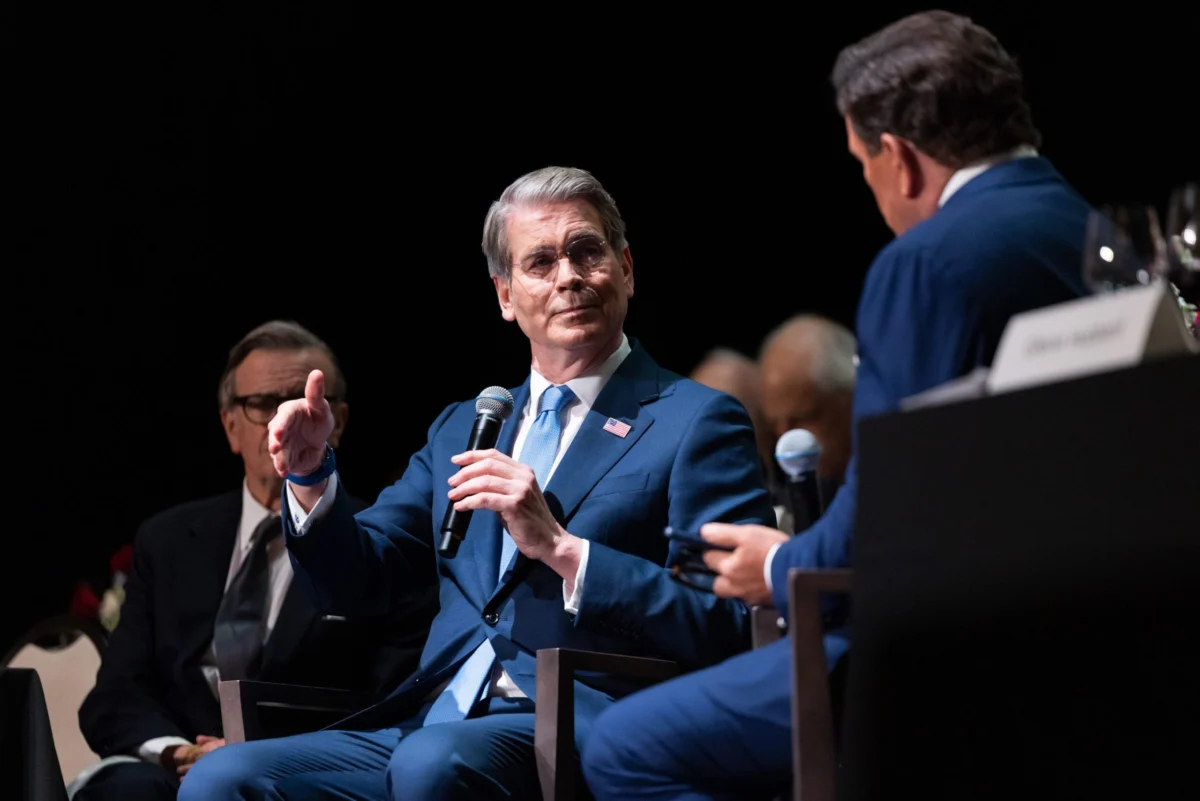
The Federal Open Market Committee (FOMC) convenes its September meeting under intense scrutiny, navigating a complex economic landscape where its dual mandate of achieving maximum employment and maintaining price stability appears increasingly at odds. Recent economic indicators paint a picture of resilience in the labor market, with the latest jobs report significantly exceeding expectations, signaling robust demand for labor. Simultaneously, inflation continues its stubborn persistence, hovering notably above the central bank’s long-term target of 2%, challenging the very core of its price stability mandate. This confluence of strong employment and elevated inflation presents Chairman Warsh and the FOMC with a formidable decision, one that carries profound implications for the U.S. economy and the Fed’s institutional credibility.
The dilemma for the Fed is multifaceted. While the immediate drivers of some inflationary pressures, particularly in the energy sector, are clearly supply-side shocks—like the volatility in global oil prices—the question of whether the Fed can afford to "look through" such temporary spikes is hotly debated. The argument for looking through suggests that monetary policy, which primarily influences demand, is ill-equipped to resolve supply-side constraints. Raising interest rates in response to supply shocks, proponents argue, would only dampen overall economic activity and risk a recession without directly addressing the root cause of the inflation, potentially leading to unnecessary job losses.
However, a strong counter-argument centers on the Fed’s credibility. If the central bank is perceived as hesitant or unwilling to act decisively against persistent inflation, even if partially supply-driven, it risks unanchoring inflation expectations. Once the public and markets begin to believe that the Fed is tolerant of higher inflation, these expectations can become self-fulfilling, embedding higher prices into wage demands and pricing strategies across the economy, making the task of bringing inflation back down significantly more challenging and potentially requiring even more aggressive future tightening. The fear is that inaction could be interpreted as shying away from its primary responsibility, thereby jeopardizing its hard-won reputation as an independent and effective inflation fighter.
The bond market’s reaction following the conclusion of the June FOMC meeting earlier this year offered a stark preview of this credibility challenge. Despite a seemingly hawkish narrative emerging from the Fed, which included projections for future rate hikes and firm language regarding inflation concerns, there was a noticeable lack of immediate monetary policy follow-through in terms of an actual rate increase. This dissonance was not lost on investors. Longer-dated Treasury yields, which reflect investors’ expectations for future inflation and economic growth, surged higher. This upward movement in yields, occurring without a corresponding hike in the central bank’s base rate, sent a clear signal: the market absorbed the hawkish rhetoric but demanded concrete action.
The relationship between the central bank’s base rate and bond yields is generally synchronous over time, as both are influenced by economic fundamentals and monetary policy expectations. When bond yields spike while interest rates remain flat, it suggests that investors are perceiving significant risks in the economy that policymakers are not yet adequately addressing. These risks could include rising inflation expectations, concerns about future economic instability, or a lack of confidence in the Fed’s resolve. Such a divergence can complicate the transmission mechanism of monetary policy, making it harder for the Fed’s signals to translate into desired economic outcomes. For example, higher long-term yields increase borrowing costs for businesses and consumers, regardless of the Fed’s short-term rate, potentially slowing investment and consumption.
Adding another layer of complexity is the subtle, yet potent, influence of the executive branch. Treasury Secretary Scott Bessent has previously articulated the White House’s cautious approach regarding the bond market, acknowledging its immense power even when a hold or hike in the base rate might be politically unpalatable. Speaking at the prestigious Economic Club of New York in June, Bessent was directly pressed on whether Chairman Warsh was facing increasing pressure from the executive branch to cut interest rates, despite economic data suggesting the opposite course of action. This question underscored perennial concerns about political interference in monetary policy.
Bessent’s response was carefully crafted, emphasizing both the Fed’s independence and the administration’s understanding of market dynamics. He stated, "I am confident that the Fed chair will optimize the path for both inflation and economic growth." This phrase itself highlights the delicate balancing act Warsh must perform, aiming to achieve both mandates without unduly sacrificing one for the other. Bessent further reinforced the Fed’s autonomy by recalling the President’s remarks at Chair Warsh’s swearing-in ceremony, where he affirmed Warsh’s independence, stating he "should do what he wants."
Perhaps most strikingly, Bessent delivered a powerful aphorism that resonated deeply within financial circles: "Look, the president understands—he and I have talked about it quite a bit—the bond market has taken out more governments than howitzers. So I believe that he has complete confidence in the Fed chair to do the right thing." This memorable quote, often attributed to James Carville, underscores a profound truth in economic governance: financial markets, particularly the bond market, possess an extraordinary capacity to influence, and even unseat, governments that are perceived as fiscally irresponsible or whose policies undermine economic stability. Historical examples, such as the 1992 run on the British pound or the European sovereign debt crisis, serve as stark reminders of the bond market’s disciplinary power. Bessent’s acknowledgment, therefore, implicitly grants the FOMC crucial operational space, signaling that the White House, despite potential political discomfort, respects the market’s judgment and the Fed’s role in maintaining economic equilibrium.
While it is fundamentally not the Fed’s job to cater to or actively support the bond market, Bessent’s recognition of its formidable influence provides a critical political buffer. This understanding allows the FOMC to make difficult decisions, even unpopular ones, with the implicit backing of an administration that comprehends the long-term consequences of market alienation. This strategic alignment is further highlighted by Bessent’s recent launch of a multi-billion-dollar Treasury buyback scheme, an initiative designed to enhance market liquidity and, in the short term, push yields lower. While this Treasury action is distinct from Fed monetary policy, it demonstrates a coordinated effort to manage market conditions, potentially easing some of the pressure on the Fed to act purely for market stabilization.
The Federal Reserve’s independence is not merely a custom; it is legally mandated and is considered a cornerstone of effective monetary policy. It ensures that critical decisions on interest rates and money supply are made based on economic data and long-term stability goals, rather than short-term political expediency or electoral cycles. However, history is replete with instances where this independence has been tested. The experience of former Fed Chairman Jerome Powell during his final year, marked by public disagreements with the White House over interest rate policy, serves as a recent reminder of how vulnerable the central bank can be when the executive branch desires a different economic path. For Chairman Warsh, early in his tenure, the bond market’s clear signals might provide an invaluable reminder to the administration about the perils of being seen to push the Fed too far, too overtly, potentially jeopardizing the institution’s credibility from the outset.
Wall Street Takes a Firm Stance
The sentiment across Wall Street is unequivocally clear: there is a strong desire to avoid any further "uncoupling" between the powerful forces of the bond market and the policy actions of the central bank of the world’s largest economy. Such a divergence is viewed as a recipe for instability, increased risk premiums, and impaired transmission of monetary policy, all of which would negatively impact financial markets and the real economy.
Ryan Sweet, Chief Global Economist at Oxford Economics, articulated this concern succinctly, noting recently that "the bond market could be losing patience with central banks sitting on the sidelines, forcing them to act." He elaborated on the mechanics of this market pressure: "If a central bank remains on the sidelines while inflation is running hot or energy/supply shocks are pushing prices higher, the bond market could interpret this as policymakers accepting a higher path for inflation rather than acting to fight it, leading to higher long-term interest rates." This interpretation is critical. It implies that the market doesn’t just react to current data but anticipates future policy, and if that anticipation suggests complacency, it will price in higher inflation risks, demanding greater compensation for holding long-term debt. This "forcing mechanism" effectively bypasses the central bank’s official rate decisions, imposing tighter financial conditions through market channels.
Paul Donovan, Chief Economist at UBS Global Wealth Management, echoed a similar cautionary tale for his clients in a recent audio note. Donovan warned that "if Warsh surprises financial markets, it risks reawakening accusations of being a ‘sock puppet’ and raising credibility questions which would require a risk premium in bond pricing. That would raise real borrowing costs for the government and private sector, with implications for investment and trend growth." The "sock puppet" accusation is particularly damaging, implying that the Fed is not truly independent but merely an instrument of political will. Such a perception would shatter investor confidence, leading to a demand for a "risk premium"—an additional return investors require to compensate for the perceived higher risk of holding government debt. This premium would directly translate into higher borrowing costs not only for the government, increasing the national debt servicing burden, but also for the private sector, affecting mortgage rates, corporate loans, and capital expenditure. Ultimately, elevated real borrowing costs would suppress investment, stifle innovation, and curtail overall economic growth, potentially pushing the economy into a slowdown or even recession.
In essence, the September FOMC meeting is far more than a routine gathering. It is a critical juncture where Chairman Warsh must carefully weigh the immediate economic data against the long-term imperative of preserving the Federal Reserve’s credibility. The robust labor market, coupled with persistent inflation, demands a decisive response. The bond market has already sent clear signals, and the White House, through Secretary Bessent, has implicitly acknowledged the market’s power and the Fed’s independence. Any misstep, whether perceived as inaction or political capitulation, risks profound and lasting damage to the central bank’s reputation, leading to higher borrowing costs and potentially undermining the very foundations of economic stability and future growth. The world will be watching closely as the FOMC deliberates its path forward.
