
 By admin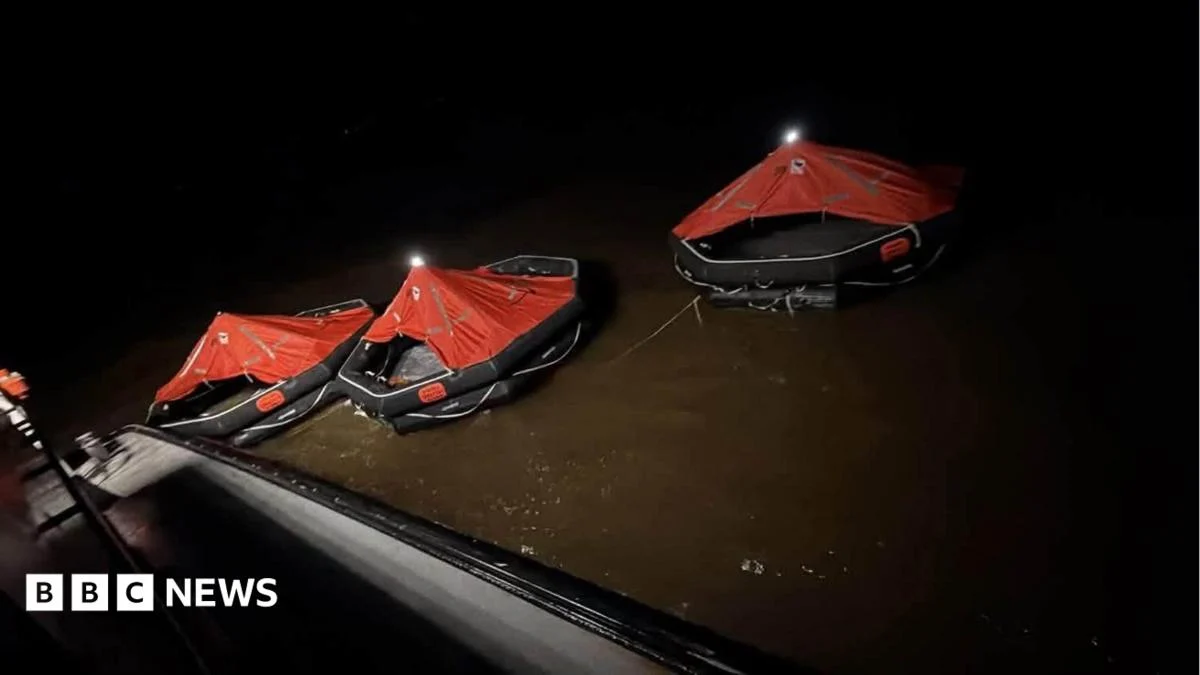
A catastrophic maritime incident unfolded off the coast of Guyana late on Tuesday evening, as the ferry MV Barima, en route from the capital Georgetown to the remote community of Port Kaituma, capsized near the area known as Iron Punt. The vessel, carrying a total of 116 passengers, sent a distress signal at precisely 23:01 local time (03:01 BST on Wednesday), igniting a frantic and complex search and rescue operation that continues to dominate national attention. As of the latest reports from local authorities, 53 individuals have been successfully rescued, leaving a chilling uncertainty regarding the fate of the remaining 63 passengers.
The MV Barima, a vessel with a long and potentially concerning operational history, was built in 1939, making it an artifact of a bygone era of maritime engineering. Its dimensions, according to data available on VesselFinder, are approximately 40 meters (131 feet) in length. While the exact cause of the capsizing remains under investigation, the age of the vessel raises immediate questions about its structural integrity and the maintenance protocols in place. Older ferries, particularly those operating in potentially challenging coastal waters, can be more susceptible to various forms of deterioration, including hull weakness, corrosion, and aging propulsion systems, all of which could contribute to catastrophic failure. The Public Works Minister, Juan Edghill, confirmed the receipt of the distress call and the swift mobilization of resources, stating in a social media post that the operation involved both state-owned vessels and private boats. This collaborative effort underscores the urgency and the scale of the unfolding tragedy.
The immediate aftermath of the capsizing saw a desperate race against time. The waters off the Guyanese coast can present their own set of challenges, with currents and potential weather changes impacting search efforts. The fact that a distress call was received indicates that the crew was aware of the impending danger, though the speed at which the vessel succumbed to the elements or the incident that caused it to capsize is not yet clear. The promptness of the response, however, is a critical factor in maximizing the chances of survival for those plunged into the water. The involvement of both governmental and private maritime assets highlights the severity of the situation and the collective will to mitigate further loss of life.
However, as the hours tick by, the state of the operation is described as "unclear" by local authorities. This ambiguity is deeply concerning, particularly for the families of the missing passengers who are anxiously awaiting any news. The lack of a definitive update on the progress of the rescue efforts, or any indication of whether authorities hold optimism about finding more survivors, fuels a growing sense of dread. The Public Works Minister, while confirming the mobilization of resources, has not yet provided further details on the specific challenges being encountered in the search. Factors such as the time of day (the incident occurred at night), the sea conditions at the time of the capsizing, and the depth of the water in the area could all significantly impact the effectiveness and duration of the rescue mission.
Minister Edghill did, however, provide some details regarding the safety equipment reportedly on board the MV Barima. He stated that the ferry was equipped with 250 life jackets, two rigid life rafts, and six inflatable life rafts. This information, while seemingly reassuring, immediately prompts further questions. Were all passengers accounted for when boarding, and were they adequately instructed on the use of this safety equipment? The number of life jackets, while substantial, needs to be considered in relation to the total number of passengers and crew. If not all passengers were able to access or utilize these life-saving devices, it would significantly diminish their chances of survival. The presence of life rafts is also crucial, but their deployment and the ability of passengers to reach them in a capsizing scenario are critical variables. The fact that the vessel, a passenger ferry, was reportedly carrying 116 individuals suggests a significant demand on its capacity and safety provisions.
The government of Guyana, led by Prime Minister Mark Phillips, is reportedly at the forefront of the response to this maritime disaster. The Prime Minister’s direct involvement signals the national importance placed on resolving this crisis and providing support to the affected families. His leadership is crucial in coordinating the various governmental agencies, ensuring that all available resources are being effectively deployed, and communicating transparently with the public. Maritime accidents, especially those involving passenger vessels, can have profound social and economic impacts on a nation, particularly in regions where ferry transport is a vital link for communities. The response of the Prime Minister’s office will be closely scrutinized, both in terms of its immediate effectiveness and its long-term implications for maritime safety regulations in Guyana.
The incident also brings into sharp focus the state of maritime infrastructure and safety standards in Guyana. As a developing nation with extensive riverine and coastal transportation networks, ensuring the safety and reliability of its ferry services is paramount. The age of the MV Barima is a stark reminder that older vessels may require more stringent inspections and maintenance schedules, or perhaps should be phased out of service altogether. The World Maritime Organization (WMO) and the International Maritime Organization (IMO) set international standards for ship construction, maintenance, and operation, and it is crucial for national authorities to adhere to and enforce these regulations. The circumstances surrounding the MV Barima’s sinking will undoubtedly trigger a review of these practices in Guyana.
The socio-economic context of the route itself is also important. Port Kaituma is a significant community in the Barima-Waini region of Guyana, often accessed by water. The ferry service is likely a lifeline for its residents, connecting them to the capital for trade, essential services, and family visits. The disruption caused by the loss of the MV Barima, and the inherent risks associated with such travel, will have a tangible impact on the daily lives of these communities. This incident underscores the vulnerability of remote populations reliant on maritime transport and the urgent need for safe and dependable services.
Expert perspectives on maritime safety often highlight the importance of several key factors: regular and thorough vessel inspections, comprehensive crew training, adherence to load limits, effective communication systems, and robust emergency response plans. The sinking of the MV Barima will likely lead to investigations into each of these areas within the Guyanese context. Were the inspections of the MV Barima up to par? Was the crew adequately trained for emergency situations? Were the passengers aware of the safety procedures? These are questions that will need to be answered to prevent future tragedies.
The investigation into the cause of the capsizing will be a critical step in understanding what went wrong. Potential causes could range from severe weather conditions, although none were immediately reported as extreme, to mechanical failure, overloading, or even a collision with an unseen obstacle. The structural integrity of a vessel built in 1939 would also be a primary focus of such an investigation. The deep-sea environment, while beautiful, can be unforgiving, and a vessel’s ability to withstand its forces is directly proportional to its maintenance and design.
As the search and rescue operation continues, the focus remains on locating and saving the remaining passengers. The psychological toll on the rescued individuals and the families of the missing is immense. Support services, including counseling and medical assistance, will be crucial in the coming days and weeks. The government’s role in providing this support, alongside the ongoing efforts to uncover the truth behind the sinking, will be vital in the recovery process for the affected communities. The nation of Guyana is collectively holding its breath, awaiting any positive news from the unforgiving waters off its coast, while grappling with the sobering reality of this significant maritime disaster. The coming hours and days will be critical in determining the final toll of this tragic event and in shaping future maritime safety policies in the country.
