
 By Lina Irawan
Thank you for subscribing to Fortune Gulf Brief and being part of our ever-growing community of readers. Given the significant news flow emerging from the Gulf at the start of the week, we recognize the critical need to provide a more complete and timely picture of events. To better serve your need for in-depth analysis and to thoroughly cover the trends and stories that matter most in this vital region, we are pleased to announce that, starting next week, Fortune Gulf Brief will be delivered to your inbox every Wednesday. This expanded frequency reflects our commitment to bringing you comprehensive insights into the evolving geopolitical landscape and dynamic economic shifts shaping the Middle East.
The past week has once again highlighted the precarious balance of power in the Gulf, marked by a fresh cycle of conflicting rhetoric and mixed messages surrounding the U.S.-Iran conflict. This ongoing tension continues to cast a long shadow over global energy markets and regional stability, underscoring the necessity for vigilant reporting and nuanced analysis.
U.S.-Iran Conflict: A Web of Contradictions
Late on Sunday, former President Donald Trump ignited a firestorm of speculation with a post on his Truth Social platform. He claimed that Iran and other unnamed Middle Eastern countries had requested "time to complete a deal that would lead to ‘the Immediate, Complete and Total’ reopening of the Strait of Hormuz." Trump further asserted that negotiations with Tehran were set to commence on Monday, following his decision to halt a plan for the U.S. to launch "the biggest attack since World War II." This dramatic pronouncement, characteristic of Trump’s often unconventional diplomatic style, sent ripples through international capitals, hinting at a potential de-escalation while simultaneously raising alarm bells over the implied threat of massive military action. Analysts were quick to note the extraordinary nature of such a claim, particularly given the lack of official corroboration from either side.
However, the hopes for a swift diplomatic breakthrough were quickly dashed on Monday. Iran’s foreign ministry flatly denied any negotiations with the U.S. or any plans to initiate such talks. Iranian Foreign Ministry spokesperson Esmaeil Baghaei stated emphatically that Tehran was instead engaged in discussions with Oman, focusing on securing a temporary safe route through the Strait of Hormuz. This was not, he clarified, related to the opening or closing of the Strait itself, which he deemed "a separate discussion." This direct contradiction from Tehran served to deepen the confusion, highlighting the profound distrust and communication gaps that continue to define U.S.-Iran relations. The conflicting narratives underscored the perilous nature of relying on informal channels or unverified social media posts for critical geopolitical updates, particularly when the stakes involve global energy security.
The Strait of Hormuz: A Global Chokepoint in Crisis
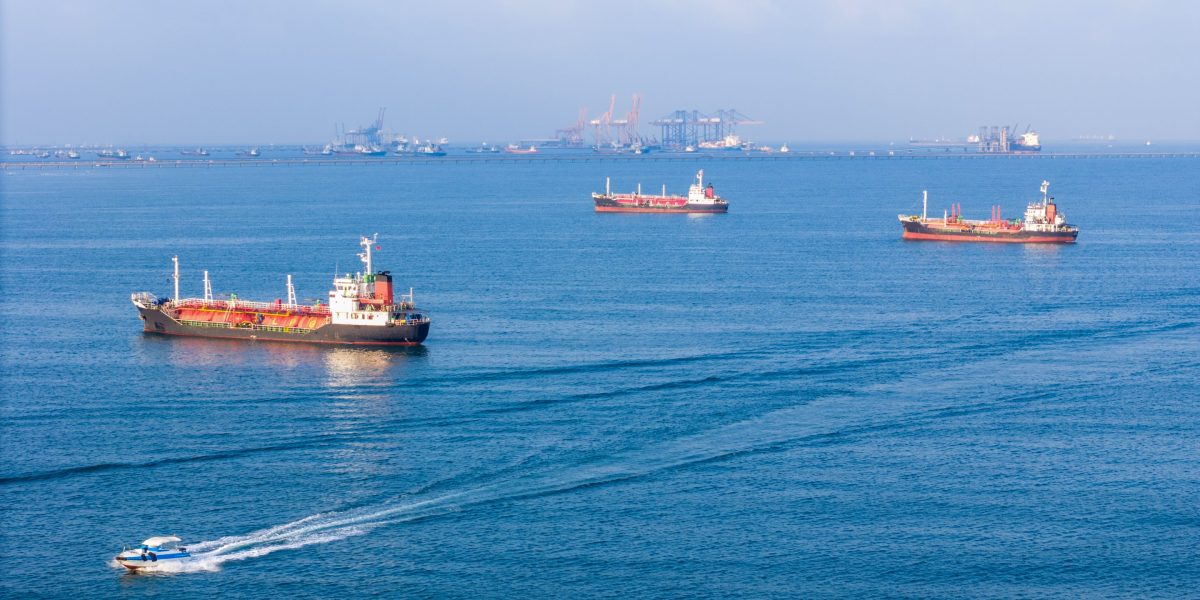
The Strait of Hormuz remains one of the world’s most critical maritime chokepoints, through which roughly one-fifth of global oil supply and a significant portion of liquefied natural gas (LNG) passes daily. Its closure or severe disruption would have catastrophic implications for the global economy, triggering massive spikes in energy prices, disrupting supply chains, and potentially plunging major economies into recession. The ongoing U.S.-Iran tensions have repeatedly brought the threat of such a scenario to the forefront.
Is there any viable path out of this intractable impasse? Perhaps. The United Nations has been quietly developing a "mechanism" designed to reopen Hormuz, an initiative that could potentially resolve many of the complex issues confronting both the U.S. and Iran. John Denton, Secretary General of the International Chamber of Commerce (ICC), provided exclusive insights into the details of this proposal and its practical application.
"What we’ve strived to do in building this mechanism is to ensure that it will be acceptable and usable by that economic ecosystem [the Strait of Hormuz]," Denton explained. "And that requires, obviously, deconfliction of the area, as well as a commitment to the neutral governance of the area." Deconfliction, in this context, would involve clear communication protocols and agreed-upon procedures to prevent accidental clashes between naval forces, while neutral governance would imply an internationally recognized authority overseeing transit and security, potentially bypassing the need for direct bilateral agreements between hostile parties. This "mechanism" aims to create a demilitarized maritime corridor, ensuring safe passage for commercial shipping under international oversight, thereby insulating global trade from regional political volatility.
The concept of neutral governance is particularly challenging given the historical claims and strategic interests of both Iran and Oman over the Strait. However, Oman’s long-standing policy of neutrality and its diplomatic ties with both Washington and Tehran position it uniquely to facilitate such discussions. The involvement of the UN and ICC lends further credibility, suggesting a multilateral approach that could garner broader international support. The intricate details of this plan, including enforcement, dispute resolution, and potential punitive measures for non-compliance, remain subject to ongoing negotiations, underscoring the profound complexities involved in securing one of the world’s most vital economic arteries amidst a simmering conflict. You can read my full interview with John Denton for a fascinating insight into just how complicated the geopolitical and economic landscape in that region has become.
Melissa Hancock
As ever, thanks for reading, and do keep in touch with your thoughts and ideas. See you next week.
[email protected]
Saudi Aramco Profits Jump as Higher Crude Prices Boost Earnings
Amidst the geopolitical tumult, Saudi Aramco, the world’s largest oil producer, delivered a robust financial performance for the second quarter of 2026. The company reported a significant 33% jump in second-quarter profits, with adjusted net income rising to an impressive $33.4 billion, up from $25.2 billion a year earlier. This comfortably beat analysts’ consensus profit estimates of $31.1 billion, demonstrating the company’s resilience in a volatile market. The primary driver for this surge was the dramatic increase in crude prices, which offset a slight reduction in sales volumes attributed to the U.S.-Iran war and OPEC+ production cuts. Aramco sold its oil at an average of $108.10 per barrel in the second quarter, a substantial increase compared with $66.70 per barrel in the same period last year, as reported by Bloomberg.
Aramco President & CEO Amin H. Nasser highlighted the company’s strategic foresight in navigating the "unprecedented supply disruption through the Strait of Hormuz." He noted that Aramco successfully capitalized on its "strategic infrastructure such as the East-West Pipeline, storage capacity, and export terminals" to maintain business continuity. The East-West Pipeline, also known as the Petroline, is crucial as it allows Saudi oil to be transported directly to the Red Sea for export, bypassing the Strait of Hormuz entirely. This infrastructure has proven invaluable in mitigating the risks associated with potential disruptions in the Strait, providing Saudi Arabia with a critical alternative export route and bolstering its energy security.
However, this strategic advantage is not without its own set of emerging challenges. Shipments from Aramco’s Red Sea refineries, while bypassing Hormuz, are now facing growing risks from Houthi attacks. The Houthi rebels in Yemen have escalated their drone and missile attacks on shipping in the Red Sea, targeting vessels they claim are linked to Israel or its allies. These attacks introduce new layers of risk and increased insurance premiums for tankers operating in the region, adding another dimension of geopolitical instability to global energy supply chains. This development underscores the intricate and interconnected nature of regional conflicts, where even seemingly insulated routes can become vulnerable.
Saudi GDP Shrinks, but Higher Oil Prices Ease Fiscal Pain
While Aramco celebrated its profit surge, Saudi Arabia’s broader economy experienced a contraction. The kingdom’s economy shrank by 4.8% in the second quarter, marking its first contraction since 2023 and the sharpest slowdown since the pandemic-induced downturn. This figure, released by the General Authority for Statistics, stands in stark contrast to the 3% growth recorded in the first quarter of the year for the Arab world’s largest economy.
The kingdom’s non-oil economy, a crucial focus of its Vision 2030 diversification strategy, remained a relative bright spot but also showed signs of deceleration. It expanded by 0.6% during the second quarter, a notable slowdown compared with a 2.9% expansion in the previous quarter. This suggests that while diversification efforts are ongoing, they are not yet robust enough to fully offset the headwinds impacting the dominant oil sector or to maintain rapid growth independent of oil market fluctuations.
Overall, the U.S.-Iran war, coupled with OPEC+ production adjustments, has weighed heavily on the kingdom’s oil sector, which saw activity plunge by 24.7% in the April-June quarter. This significant drop in oil production volume was a primary contributor to the overall GDP contraction. However, the accompanying rise in global oil prices has, to some extent, softened the fiscal blow.
Despite the economic contraction, higher oil prices provided a crucial buffer to Saudi Arabia’s public finances. The kingdom posted a budget shortfall of SAR34.3 billion ($9.1 billion) in the second quarter, a considerable improvement compared with a SAR125.7 billion deficit in the first quarter. This substantial reduction in the deficit highlights the direct correlation between oil prices and the kingdom’s fiscal health. Mohamed Abu Basha, head of macroeconomic analysis at investment bank EFG Hermes, projected that if oil prices average around $90 a barrel, Saudi Arabia’s fiscal deficit could narrow to approximately 5% of gross domestic product (GDP) in 2026, a decrease from 5.8% last year. The International Monetary Fund (IMF) echoed this sentiment last week, noting that "higher oil prices are expected to more than offset lower export volumes, generating a revenue windfall." This suggests that while the kingdom is producing less oil, the elevated prices are ensuring sufficient revenue streams to support government spending and ongoing Vision 2030 projects, albeit with a slower pace of overall economic growth.
Debt Down, Investment Up: Oman Speeds Up Economic Diversification
In a demonstration of robust economic planning and strategic investment, Oman has been actively accelerating its infrastructure spending and economic diversification efforts, positioning itself as a stable and attractive destination amidst regional uncertainties. The Sultanate recently agreed to back 74 projects worth $1.9 billion and issued 60 new tenders valued at $949 million during the first seven months of 2026. These significant investments are strategically spread across vital sectors including transport, healthcare, and digital infrastructure, all designed to support the ambitious objectives of Oman Vision 2040, its long-term economic diversification strategy aimed at reducing reliance on hydrocarbon revenues.
Among the most substantial contract awards was a $521 million deal dedicated to the supply of pharmaceuticals, vaccines, and serums, underscoring Oman’s commitment to enhancing its public health infrastructure and domestic capabilities. Another key development is the $410 million expansion of the Muscat Expressway, a critical project designed to alleviate traffic congestion in the capital and support its ongoing urban development and logistical efficiency.
Further bolstering its investment landscape, Future Fund Oman (FFO), an investment vehicle of the sultanate’s sovereign wealth fund, Oman Investment Authority (OIA), unveiled a portfolio of 105 strategic projects and investments worth $1.74 billion in mid-July. This portfolio includes $585 million in commitments directly from FFO and approximately $458 million in local investment, targeting high-growth sectors such such as renewable energy, advanced manufacturing, tourism, healthcare, medical technology, and food industries. Mulham Al Jarf, the deputy president of Investment at the OIA, emphasized the strategic intent behind these initiatives, stating, "This portfolio directs capital toward nationally prioritized sectors and strengthens Oman’s appeal to global investors." This proactive approach is geared towards fostering sustainable economic growth and creating new employment opportunities beyond the traditional oil and gas sector.
Oman’s diligent fiscal management has also yielded impressive results, with the government more than halving its public debt to around 36% of GDP in 2025, a substantial reduction from a peak of 68% in 2020. This remarkable fiscal turnaround has prompted all three major ratings agencies to upgrade the sultanate, successfully restoring its coveted investment-grade status. This improved credit rating significantly lowers borrowing costs and enhances Oman’s attractiveness to international investors.
On July 21, Fitch Ratings issued a report affirming the favorable operating conditions for Omani banks, supported by steady economic growth and relatively high oil prices. Crucially, the report noted that the banking sector’s operating environment is likely to remain resilient despite the ongoing Iran war, as Oman is considered the most insulated Gulf country from the conflict. This insulation stems from Oman’s long-standing policy of diplomatic neutrality and its strategic geographic position outside the immediate choke point of the Strait of Hormuz, providing a degree of stability not shared by all its neighbors.
The Big Number
$1.74 Trillion
The estimated annual value of global trade that transits through the Strait of Hormuz, highlighting its unparalleled economic significance and the catastrophic potential impact of any prolonged disruption.
U.S. Backs UAE’s GlobalFoundries with $300M for AI Chip Innovation
The strategic partnership between the United States and the United Arab Emirates in the technology sector continues to deepen, particularly in the critical field of artificial intelligence. UAE-backed chipmaker GlobalFoundries, in which Abu Dhabi sovereign wealth fund Mubadala holds a commanding 73% majority stake, is set to receive $300 million from the U.S. government. This substantial investment is earmarked for advancing research and development in silicon photonics, a cutting-edge technology aimed at making AI data centers significantly faster and more energy-efficient.
Silicon photonics technology leverages light instead of electrical signals to transmit data, offering immense potential for boosting data transfer speeds to 400 gigabits per second and achieving up to five times greater energy efficiency compared to traditional silicon-based interconnects. This innovation is crucial for powering the next generation of AI infrastructure, where processing vast amounts of data at high speeds with minimal energy consumption is paramount.
This $300 million allocation, announced last week, supplements the $1.5 billion in funding previously awarded to GlobalFoundries in 2024 under the U.S. CHIPS and Science Act. That earlier funding was directed towards expanding GlobalFoundries’ manufacturing facilities in Malta, New York, and Burlington, Vermont, reinforcing the U.S.’s commitment to reshoring semiconductor production and bolstering its domestic supply chain security.
The new funding further solidifies the U.S.-UAE AI partnership, aligning seamlessly with the Trump administration’s broader push to invest aggressively in technologies expected to underpin the next generation of AI infrastructure. This collaboration is a strategic move designed to bolster U.S. competitiveness in the intense global technology race, particularly against China. The U.S. views robust alliances with technologically advanced partners like the UAE as essential for maintaining its leadership in critical emerging technologies.
Just last month, the U.S. significantly eased export restrictions on the UAE, making it much easier for approved UAE organizations to acquire cutting-edge AI chips from leading companies such as Nvidia and AMD. This policy adjustment has opened doors for prominent UAE AI companies like G42 and Core42, which are now no longer required to obtain special licenses for importing advanced AI chips and servers, accelerating their development capabilities.
Further underscoring this deepening economic and technological alliance, Mubadala, the UAE’s sovereign wealth fund, announced on Monday that it is committing a massive $170 billion, or roughly 44% of its entire portfolio, to U.S. interests. These extensive investments span diverse strategic sectors including AI, semiconductors, healthcare, energy, and advanced manufacturing. Ahmed Saeed Al Calily, chief strategy and risk officer for Mubadala, emphasized the significance of this commitment: "That scale is proof of our confidence in the long-term strength of the American economy." This substantial capital deployment highlights the UAE’s long-term vision for diversification and its strategic alignment with the U.S. as a key economic and technological partner.
The 3 things we enjoyed reading this week
- "How the Middle East’s Tech Hubs Are Redefining Global Innovation" – An insightful piece exploring the burgeoning startup ecosystems in cities like Dubai and Riyadh, and their ambition to become global players in AI, fintech, and renewable energy.
- "Oil’s New Geopolitics: Beyond the Strait of Hormuz" – A deep dive into alternative energy routes and strategic oil reserves, analyzing how nations are adapting to reduce their vulnerability to chokepoint disruptions in the Gulf.
- "Oman’s Quiet Rise: A Model for Sustainable Diversification" – A compelling article examining Oman’s measured and effective approach to economic reform, debt reduction, and attracting foreign investment, offering lessons for other resource-dependent economies.
