
 By admin
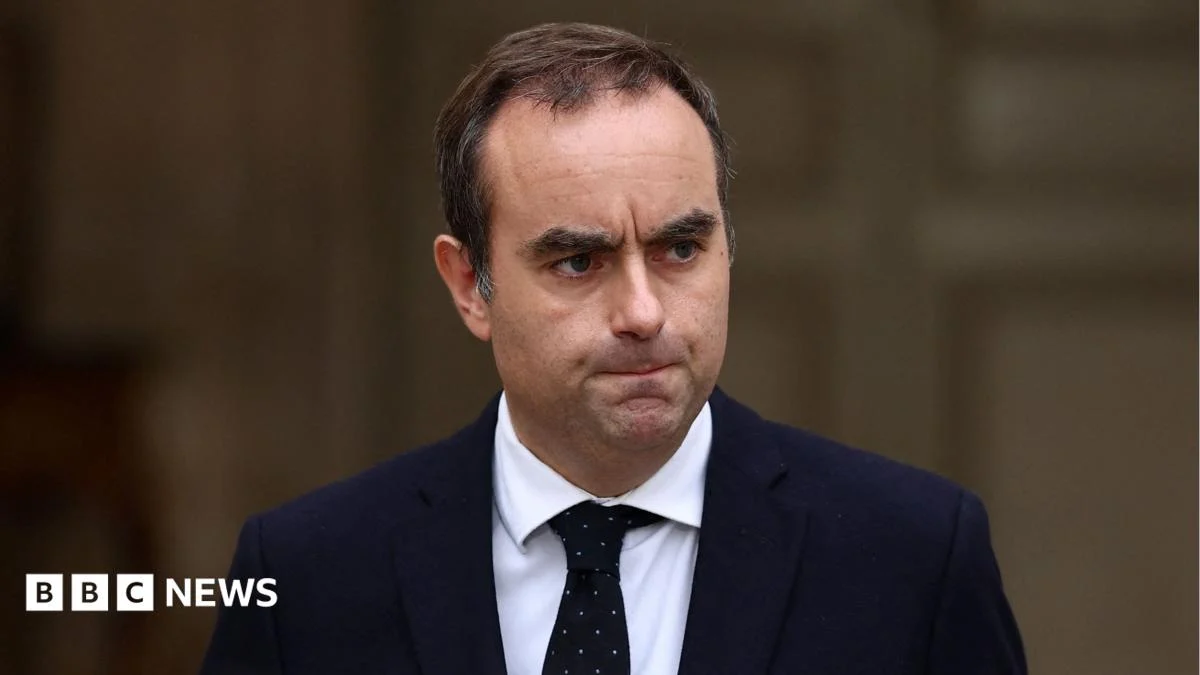
A wave of student protests, initially sparked in Paris and spreading across France, has prompted a stern warning from Prime Minister Sébastien Lecornu, who deemed any further escalation of the unrest "irresponsible." The demonstrations, characterized by high school students blockading their educational institutions for consecutive days, are fueled by a complex tapestry of grievances, including chronic overcrowded classrooms, a pervasive shortage of qualified teachers, and a general sense of neglect within the national education system. The stark reality of these conditions has ignited a passionate response from young people demanding tangible solutions and a significant reallocation of resources.
The gravity of the situation was underscored by Monday’s arrests of 164 individuals, a figure that highlights the increasing intensity and, according to the government, the deteriorating nature of the protests. Prime Minister Lecornu, in a pointed statement posted on the social media platform X, detailed alarming incidents that have accompanied the demonstrations. "Fireworks, fires, violence near high schools: nothing justifies endangering students, staff, or police officers," he declared, unequivocally condemning the destructive elements that have emerged. This strong stance reflects the government’s concern over public safety and the disruption of educational activities, particularly the safety of vulnerable students and educators.
However, this official condemnation stands in stark contrast to the perspective offered by a prominent French union championing the interests of high school students. This union has vociferously defended the ongoing protests, characterizing them as a "legitimate response" to the deeply entrenched and unsatisfactory conditions prevalent in French schools. Their statement implies that the students’ actions, while perhaps disruptive, are a necessary outcry against systemic failures that have been allowed to fester.
The human toll of these confrontations is also significant. Interior Minister Laurent Nuñez provided a sobering account of the injuries sustained on Monday, revealing that 12 members of the security forces, 12 students, and three school staff members were hurt. Furthermore, 180 educational institutions across the country were affected by the demonstrations, underscoring the widespread nature of the unrest. While Mr. Nuñez did not elaborate on the specific details of those arrested, the sheer number indicates a substantial police response to the protests.
The movement, which has gained significant traction in French lycées – the equivalent of sixth form colleges in the UK or high schools in the United States – first gained momentum last week in the Île-de-France region, encompassing the capital city of Paris. Reports of vandalism have surfaced, alongside disturbing accounts of fireworks being deliberately aimed at police officers. These incidents have escalated the tension and have contributed to the rapid spread of the protests to other regions throughout France, transforming a localized issue into a national crisis.
According to the Agence France-Presse (AFP) news agency, the ripple effect of the student discontent has been felt in various parts of the country. Four high schools were reported to have been blockaded in the southern departments of Alpes-Maritimes and Var. The unrest has also manifested in major cities such as Marseille, in the northern Lille area, and Sedan in the northeastern Ardennes region, demonstrating a broad-based dissatisfaction among students from diverse geographical and socio-economic backgrounds.
The Union Syndicale Lycéenne, a key organization representing students, has been a vocal proponent of the protests. In a strong statement disseminated via social media, the union articulated the underlying causes of the student uprising, attributing them to a decade of austerity measures and insufficient investment in public education. "Lack of teachers and staff, dilapidated schools, overcrowded schedules and classes, stress caused by Parcoursup [the web platform used in France for students to apply to the first year of higher education]… These issues are by no means inevitable, but simply the result of 10 years of Macron’s policies and the lack of resources in the national education system," the union declared. This statement directly implicates the current government’s educational policies, framing the student protests as a direct consequence of perceived fiscal irresponsibility and a lack of commitment to the well-being of the education sector.
In a clear call to action, the Union Syndicale Lycéenne urged students to continue their school blockades on Tuesday, framing their participation as a defense of "their rights and against budget austerity." This organizational push highlights the coordinated nature of the student movement and their determination to exert pressure on the government to address their demands.
The student protests are occurring against a backdrop of broader industrial action. On the same day that students were escalating their demonstrations, unions representing teachers, hospital staff, and civil servants also called for a day of walkouts. Their grievances similarly centered on critical issues such as inadequate wages and deteriorating working conditions, suggesting a wider societal discontent with the current economic and social policies of the Macron administration. The convergence of these different protest movements signifies a growing wave of public dissatisfaction that extends beyond the student population.
Prime Minister Lecornu, while acknowledging the validity of student concerns, reiterated his condemnation of the violence. "The difficulties of high schools must be heard and addressed," he stated, offering a sliver of conciliation. However, he immediately followed this with a firm declaration: "but violence must be condemned unequivocally, and its perpetrators must answer for their actions." This dual approach aims to separate the legitimate grievances of the students from the disruptive and dangerous actions of a minority, while also emphasizing accountability for those who engage in unlawful behavior.
Adding a political dimension to the unfolding crisis, Prime Minister Lecornu accused the far-left La France Insoumise (LFI) party of actively encouraging students to expand the scope of the movement. This accusation suggests a political motivation behind the protests, with the government attempting to frame the unrest as being manipulated by opposition parties.
Jean-Luc Mélenchon, the leader of LFI, vehemently denied these accusations, firing back at the government and specifically blaming the Lecornu administration for what he described as having "ordered the crackdown" on the protest. Mélenchon characterized the high school students participating in the demonstrations as "harmless," painting a picture of innocent young people being met with excessive force by the authorities. This exchange highlights the deep political polarization surrounding the student protests, with each side attempting to control the narrative and assign blame.
Minister Nuñez, in his assessment, further characterized the nature of the demonstrations, stating that they were "not very typical protest movements." He elaborated on this point, describing the scene as "much more like urban violence, with a number of individuals who were masked, equipped with fireworks in tubes, equipped with projectiles, who clearly wanted to confront the internal security forces." According to Nuñez, the primary objective of these individuals was not to articulate demands or engage in constructive dialogue, but rather to instigate conflict and engage in "violence in its purest form." This description, if accurate, suggests a concerning element within the protests that transcends legitimate student grievances and veers into outright lawlessness.
The escalating tension has unfortunately led to several reported incidents of violence between students and police officers since the protests began. In one particularly concerning event, a police officer reportedly discharged a round from a grenade launcher, a device typically used for crowd control. This action resulted in the injury of a high school student, as reported by France’s BFMTV. The broadcaster also indicated that investigations have been launched into such incidents, suggesting a commitment to scrutinizing the conduct of both protesters and law enforcement. The potential for escalation remains high, and the outcome of these investigations will be crucial in determining public trust and the future trajectory of the student movement. The government faces the unenviable task of addressing legitimate educational concerns while simultaneously restoring order and ensuring the safety of its citizens. The coming days will likely reveal whether a path towards de-escalation and constructive dialogue can be forged, or if the cycle of protest and repression will continue to dominate the French educational landscape.
