
 By Rifan Muazin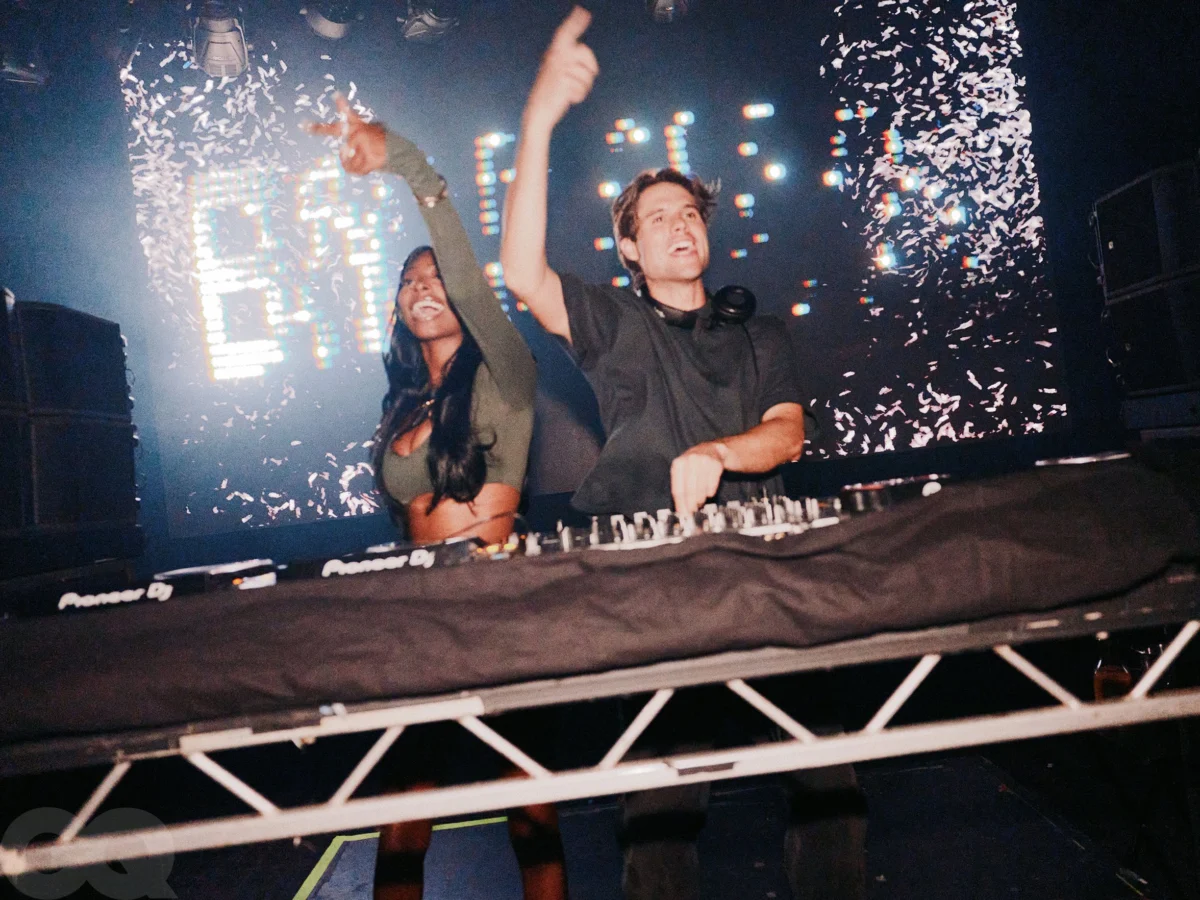
As midnight rolled around on Friday, September 11th, a buzzing line of twenty-somethings began to accumulate in front of Webster Hall, stretching down the block and spilling into the humid New York City night. From the sprawl of the queue alone, passersby would have been forgiven for thinking the legendary East Village venue—a cornerstone of the city’s musical history since 1886—was being headlined by any number of the greats who have played its hallowed halls. This is a stage that has hosted everyone from Mick Jagger and Madonna to Green Day and Jay-Z. However, the name on the marquee this evening represented a different kind of modern phenomenon. The main attraction was someone with whom the world became acquainted just three months ago: DJ, producer, and Love Island USA season 8 winner Bryce Alakai.

The atmosphere was a testament to the accelerating speed of the modern celebrity cycle. During the most recent season of the hit Peacock reality series, the 30-year-old Alakai transformed from a relative unknown into a national fan favorite. His ascent was fueled by a potent cocktail of boy-next-door charm, modelesque looks, and a refreshing willingness to express raw emotion on camera. Unlike the archetypal reality TV "villain" or the stoic "player," Alakai won over millions through his full-blown, unapologetic yearning for his now-girlfriend, Trinity Tatum. Together, the pair navigated the high-stakes emotional landscape of the Fiji villa to emerge as the season’s champions, securing not just the cash prize but a level of cultural relevance that few reality contestants ever truly achieve.

On this particular Friday, Alakai took to the decks at Webster Hall for the same reason he originally entered the Love Island villa: the pursuit of human connection. The intensity of his new reality was evident even before the first beat dropped. Meeting up near the venue shortly before the set, the scene was one of controlled chaos. When two young women spotted Alakai and Tatum, they began to shriek uncontrollably—a level of vocal devotion usually reserved for boy bands or A-list actors. Alakai, dressed in a head-to-toe Golden Goose black ensemble with a leather jacket thrown carelessly over one shoulder and a giant Prada bag dangling from his hand, handled the attention with a mixture of warmth and genuine disbelief. He tilted his head back with an "I can’t believe this" smile, appearing both every bit the star and entirely humbled by the scale of the moment.

The transition from reality TV personality to credible musical artist is a path littered with failed attempts, yet Alakai seems uniquely positioned to bridge the gap. Behind the scenes in his green room, the vibe was more "intimate gathering" than "celebrity hideout." He held court with a gaggle of fans who had paid for a meet-and-greet, engaging in the kind of long, genuine conversations that are rare in the transactional world of modern fame. He asked about their lives, their hometowns, and their journeys to the venue, treating each interaction with a level of presence that explains why he was so successful on a show predicated on social dynamics.

"I get emotional every show, and everybody online makes fun of me for crying," Alakai admitted during a quiet moment before taking the stage. "But it’s like, I can’t help it. It’s the amount of love you feel from everyone, the positivity. Everyone’s just here to have a good time, and it’s so surreal to me." This vulnerability has become Alakai’s trademark. In an industry that often prizes artifice, his brand of "crying-at-the-club" authenticity resonates deeply with a Gen Z and Millennial audience that values emotional intelligence as much as aesthetic appeal.

When Alakai finally took his place behind the booth, he proved that he was more than just a famous face with a playlist. He showed himself to be plenty capable as a technician, deftly mixing house music with a curated selection of contemporary hits. The setlist was a sophisticated blend of underground vibes and mainstream energy, featuring tracks like Tame Impala’s "Dracula," The Dare’s "Girls," and a nostalgic flip of Soulja Boy’s "Pretty Boy Swag." The musical direction leaned heavily into what Alakai describes as a "gray area" between melodic house and tech house—a soundscape he humorously calls "music to drive to after a breakup."

The night served as a microcosm of the Love Island universe’s expanding footprint. A massive majority of the season 8 cast was on hand, not just to support their friend, but to film for the Peacock spin-off Beyond the Villa. The VIP area was a whirlwind of familiar faces, dancing and documenting the night for their millions of followers. The energy in the room reached a fever pitch when Trinity Tatum joined Alakai on stage, a visual confirmation of the relationship that fans had spent the summer rooting for. The screams became even more deafening when the evening took a turn for the surreal: JC Chasez of NSYNC made a surprise appearance, followed by several members of the New York Knicks. It was a fitting crossover for two of the summer’s most talked-about phenomena—the resurgence of New York basketball culture and the dominance of Love Island USA* in the streaming ratings.

Alakai’s journey to this moment is more complex than his "Islander" status suggests. Long before the villa, he was a multi-hyphenate struggling to find his footing in the competitive landscapes of Los Angeles and New York. He has worked as an actor and a model, but he also spent years performing "handyman" labor, including a stint fixing garbage trucks to support his musical ambitions. This blue-collar background provides a grounding counterpoint to his current high-fashion lifestyle. "I’ve always done so much handyman stuff my whole life," he reflected. "I did it to support the DJ thing, because I was pretty broke at the time. It was definitely hard work. But it’s amazing that I could use that as a stepping stone. When I was doing my first DJing gigs, I was getting paid, like, 150 bucks. I would give everything plus more to the video guys, so I would make nothing off my gigs—I just wanted to make sure that I had content."

That dedication to content and craft eventually paid off in a way Alakai didn’t even realize until he returned to the "mainland." Shortly after leaving the villa, his remix of Ty Dolla $ign’s "Blasé" exploded across social media. The track had actually been in the works before his reality TV stint, facilitated by his friend Tony, who tours with Ty Dolla $ign and Leon Thomas. Alakai had sent the remix over, and it was even played at Coachella while he was disconnected from the world in Fiji. "When I came out, Ariana [Madix] came up to me and she goes, ‘Oh, your song is going crazy.’ I was like, ‘What song?’ And then I finally got my phone and looked at TikTok, and I was like, ‘Oh, it’s Blasé.’ I completely forgot about it."

This viral success has validated Alakai’s decision to pivot from acting to music. While he still loves emotional storytelling and character development, he found that his struggles with anxiety often hindered his performance in traditional auditions. Music, however, offered a different outlet. "I could never expose how I felt in an audition," he explained. "I realized that through music, I could share an emotional story better." His inspirations range from the melodic intricacies of Flume to the house mastery of Chris Lake, whom Alakai had the chance to meet just hours before his Webster Hall set.

As the show concluded, the markers of a successful night were everywhere: a high-energy vibe, a unified crowd, and a sense of family among the cast members. For Alakai, the success is shared with Tatum, whom he calls his "lucky charm." One of his first major acts after receiving his Love Island winnings was to buy her a Louis Vuitton purse—her first real designer bag. It was a gesture that mirrored his performance at Webster Hall: a blend of high-end aspiration and genuine, heartfelt connection.

The night at Webster Hall was more than just a DJ set; it was a coronation of sorts. Bryce Alakai has successfully navigated the treacherous waters of reality TV to emerge as a viable player in the electronic music scene. By leaning into his emotions rather than hiding them, and by grounding his newfound fame in a decade of hard-earned musical experience, he is redefining what it means to be a "reality star." As the "Mayor of LA" (a title he earned during the 2016 Tumblr era) takes on the world, he does so with a leather jacket on his shoulder, his girlfriend by his side, and a sound that is uniquely his own. Whether he is playing for 150 dollars or headlining a sold-out legendary venue, Alakai’s goal remains the same: to ensure that, by the end of the night, the vibe is high and the connection is real.
