
 By admin
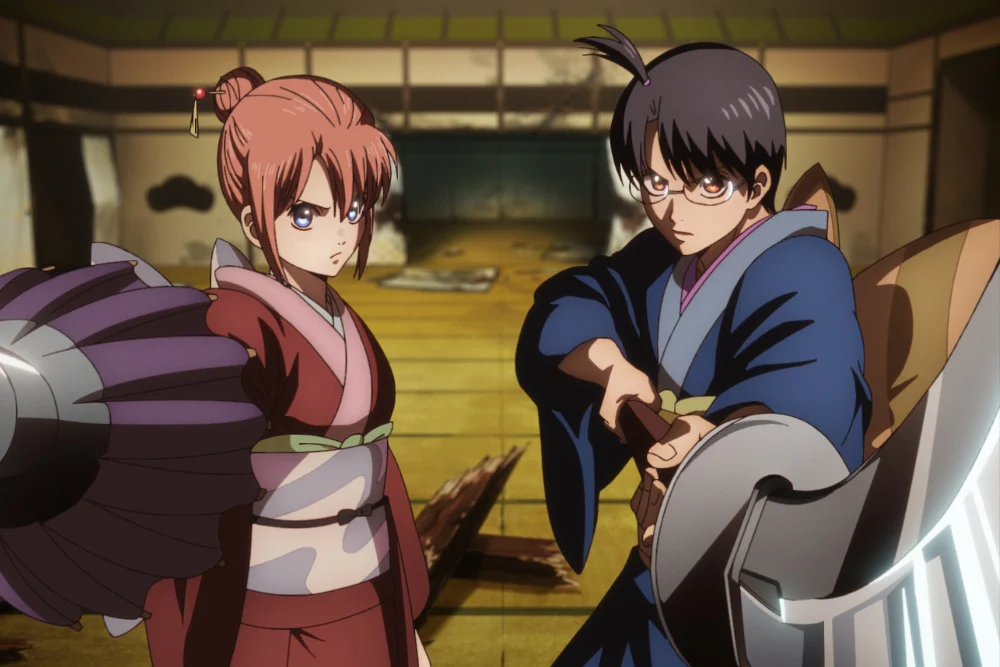
The electrifying world of "Gintama" has officially made its mark on Europe, with "Gintama: Yoshiwara in Flames" receiving its premiere at Lucca Comics and Games, the continent’s most expansive celebration of comic culture. This pivotal screening precedes the film’s theatrical rollout across Italy, signaling a significant expansion of the beloved franchise’s international reach. In an exclusive conversation with Variety, director Naoya Ando and producer Ryo Nakamura offered profound insights into their approach to bringing this iconic narrative to the silver screen, emphasizing their commitment to preserving the series’ distinctive spirit while elevating it for a cinematic experience.
"Gintama" originated as a masterful manga penned and illustrated by the inimitable Hideaki Sorachi. The narrative transports audiences to an alternate late-Edo period Tokyo, where humanity’s history has been irrevocably altered by the arrival of the Amanto, an advanced alien civilization. Against this backdrop of extraterrestrial influence, the story follows the unconventional adventures of Gintoki, a samurai-for-hire, and his loyal, albeit often exasperated, companions. What began as a serialized manga quickly blossomed into a monumental anime series, amassing an impressive 367 episodes, and has since captivated fans through three prior feature film iterations. "Gintama: Yoshiwara in Flames" marks the fourth cinematic installment, building upon a legacy of storytelling that has resonated with a global fanbase.
When questioned about the delicate balance of preserving the franchise’s core essence while crafting a visually compelling cinematic spectacle, Director Naoya Ando articulated a clear vision. "From the initial planning stages of this film, we were acutely aware of the significant action sequences that would be central to the narrative," Ando explained. "Our deliberate choice to utilize the CinemaScope ultrawide aspect ratio, coupled with the integration of 3D animation techniques, was driven by a desire to grant the camera unparalleled freedom of movement. This allowed for a greater variety of shots and perspectives, while also maintaining a strategic distance from the subjects. This distance was crucial for achieving superior framing, enabling the audience to fully appreciate the intricate design of the characters and the richness of the meticulously crafted settings. It was a calculated decision to enhance the visual storytelling."
The "Yoshiwara in Flames" arc itself holds a special place in the hearts of "Gintama" devotees. While a previous iteration of the story in the TV series depicted the district of Yoshiwara, it famously did not burn. This film, however, takes a dramatically different approach. Addressing this pivotal plot point, Ando revealed the internal discussions that led to this fiery transformation. "Our producer, Takashi Maekawa, who also contributed significantly to the television series, was instrumental in this decision. I directly inquired if we would finally see the town consumed by flames this time around. His affirmative response, ‘Yes, this time we’re going to burn everything,’ set the stage for our creative endeavors. We engaged in extensive discussions about how best to realize this vision, and as a creative collective, we made the unified decision to fully commit to the destruction of Yoshiwara." This bold move underscores the filmmakers’ commitment to delivering a heightened, more impactful version of a fan-favorite storyline.
The selection of Lucca Comics and Games as the venue for the film’s European premiere was a strategic move to connect with a burgeoning European audience. Ando expressed his profound gratitude for the opportunity. "Naturally, I am deeply honored and immensely pleased to have been invited to participate in such a prestigious event as Lucca Comics and Games," he stated. "Until this point, we had not formally brought our films to Europe. This time, we made a conscious decision to bridge that gap and introduce ‘Gintama’ to European audiences. Witnessing firsthand yesterday the passion and enthusiasm of Italian fans for the series was incredibly rewarding, and the warmth of their reception left us deeply moved." This sentiment highlights the growing global appeal of Japanese anime and manga, and the strategic importance of events like Lucca in fostering international fan engagement.
Producer Ryo Nakamura elaborated on the challenges and considerations of adapting such a beloved narrative arc for a new medium, especially given the high expectations of the existing fanbase. "As you rightly pointed out, the ‘Yoshiwara in Flames’ arc was immensely popular, both in the original manga and its anime adaptation," Nakamura acknowledged. "However, we felt that we had sufficient time and, importantly, the advantage of working on a different scale for this cinematic endeavor. This allowed us to explore new creative avenues and deliver an experience that, while familiar, offered a fresh perspective." The transition from a long-running television series to a feature film often necessitates a recalibration of narrative pacing, visual scope, and thematic emphasis, a challenge the team embraced.
The evolution from television to the big screen was a central theme in the discussion about the film’s production. Ando explained their strategy for translating the "Gintama" experience to a larger format. "Our primary objective was to identify and amplify aspects that were inherently grand and visually arresting, encompassing both the auditory and visual components," he said. "However, it’s important to note that we concluded the anime series approximately five years prior to commencing work on this film. In those intervening years, technological advancements have been truly remarkable. Consequently, we were eager to leverage these cutting-edge technologies to propel the film in new and innovative directions, with a particular emphasis on the sophisticated application of 3D within the animation. Furthermore, we dedicated significant effort to revitalizing the musical score, incorporating a substantial amount of new and original compositions." This commitment to technological innovation and sonic enhancement underscores the filmmakers’ dedication to delivering a premium cinematic product.
A unique aspect of "Gintama: Yoshiwara in Flames" was the staggered release strategy, with an initial version in Japan followed by a revised September release featuring over a hundred altered shots. Ando shed light on the rationale behind this decision, emphasizing a pursuit of perfection. "We initially released the film in February due to a pressing deadline that we needed to meet; the film was completed and ready for distribution," Ando explained. "However, even at that stage, we were aware of certain shots that, while not fundamentally flawed, could be significantly improved. When the opportunity arose, we seized it to refine these elements. We were genuinely proud of the film we presented in February, but with the subsequent DVD release on the horizon, we saw a chance to revisit the project. This allowed us to meticulously retouch over 200 shots, elevating the overall quality and ensuring that the final product met our highest standards." This iterative approach to filmmaking demonstrates a remarkable dedication to artistic integrity and audience satisfaction.
The extensive list of studios credited in the film’s end titles, spanning from China to Indonesia and Vietnam, raises questions about the complexities of coordinating such a global production. Nakamura addressed this logistical challenge by highlighting the inherent structure of modern animation. "In the realm of animation, the workload is invariably distributed across various specialized teams," Nakamura explained. "Some teams excel in character design, while others are masters of action sequences, and so forth. Our process always involves meticulously selecting collaborators and animators who are best suited for each specific element of the production. This necessitates constant engagement and collaboration with these diverse studios and groups. Crucially, each individual group is led by a team leader who bears the ultimate responsibility for their assigned work, ensuring accountability and quality control throughout the process." This intricate network of global talent is a testament to the interconnected nature of contemporary animation production.
The enduring appeal of "Gintama" is also deeply rooted in its distinctive blend of action, drama, and a generous dose of humor, often venturing into meta-humor and breaking the fourth wall. Ando acknowledged the inherent challenges in crafting effective comedy, particularly across cultural divides. "Humor is an extraordinarily difficult element to execute, and its translation across cultural boundaries presents a particularly formidable hurdle," Ando admitted. "We dedicated a specific director to primarily focus on the comedic aspects of the film. Our core strategy was to avoid explicitly signaling to the audience that a particular moment was intended to be humorous. Instead, we aimed to create situations where the characters themselves engage in witty banter and comedic exchanges, allowing the audience to overhear these interactions and organically appreciate the humor." This nuanced approach to comedy ensures that it feels integral to the narrative rather than a forced addition. The enduring legacy of "Gintama" continues to grow, with each new iteration solidifying its status as a cultural phenomenon, resonating with fans across continents through its unique blend of epic storytelling and unforgettable characters. The success of "Gintama: Yoshiwara in Flames" at Lucca Comics and Games and its subsequent Italian release are clear indicators of the franchise’s burgeoning international appeal and its capacity to connect with diverse audiences through its universal themes and distinctive brand of entertainment.
