
 By admin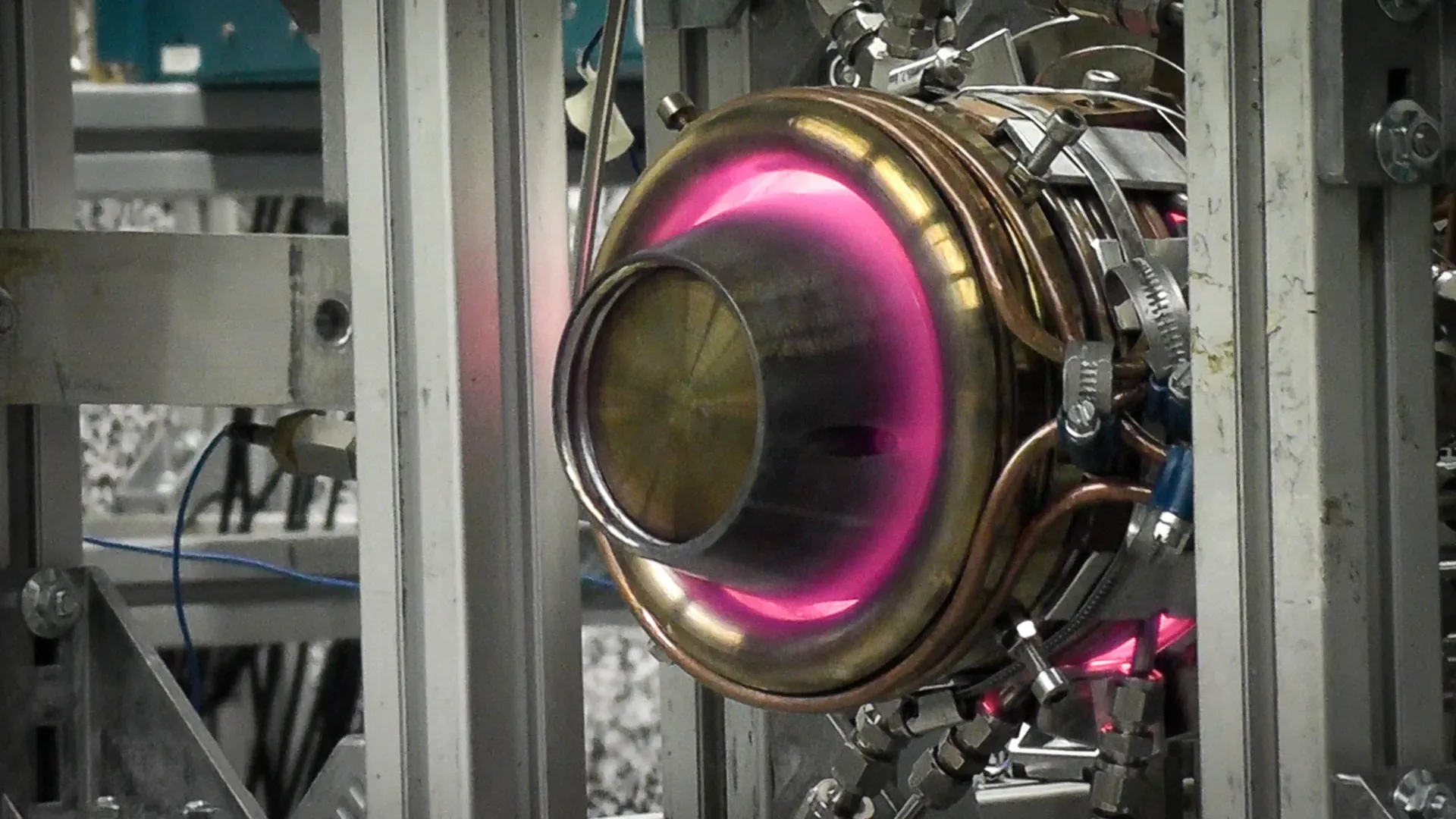
Researchers at the Karlsruhe Institute of Technology (KIT) have marked an extraordinary achievement in the realm of hydrogen power, successfully operating a novel compressorless gas turbine for a record-breaking 303 seconds, or precisely five minutes and three seconds. This monumental run, utilizing an advanced form of pressure-gain combustion, significantly surpasses the previous record of 250 seconds held by NASA, pushing the boundaries of what was once considered theoretical in the pursuit of cleaner energy. This breakthrough not only highlights KIT’s pioneering spirit but also represents a critical leap forward in developing a sustainable, fossil-free energy infrastructure.
The significance of this extended operation cannot be overstated. In the global race towards decarbonization, hydrogen stands out as a promising energy carrier. Unlike conventional fossil fuels such as natural gas, which release carbon dioxide upon combustion, hydrogen can be produced through electrolysis powered by renewable energy sources, resulting in "green hydrogen" with zero greenhouse gas emissions at the point of use. KIT’s latest accomplishment directly contributes to the viability of hydrogen as a mainstream energy solution, demonstrating its potential for efficient and sustained power generation. Earlier this year, the same KIT team further solidified its leadership in the field by becoming the first to successfully generate electricity with a hydrogen gas turbine that completely eschews a mechanical compressor, a component traditionally considered indispensable.
Overcoming the Limits of Conventional Combustion
The journey to achieve this five-minute milestone was fraught with engineering challenges. Previous experiments with similar technologies were severely limited in duration, often lasting only fractions of a second. The primary impediment was the extreme thermal stress within the combustion chambers, which would quickly reach melting temperatures under sustained operation. The intense heat generated by rapid combustion processes, particularly with highly reactive fuels like hydrogen, posed an existential threat to the structural integrity of the components.
Professor Daniel Banuti, Director of the Institute of Thermal Energy Technology and Safety (ITES) at KIT, underscored the importance of this sustained operation, stating, "This is an important step toward highly efficient and flexible hydrogen energy for a fossil-free energy system." His remarks highlight the dual benefits of efficiency and adaptability, crucial characteristics for integrating new energy solutions into complex existing grids and future energy landscapes.
A cornerstone of the KIT design lies in its radical departure from conventional gas turbine architectures. Traditional gas turbines, ubiquitous in power plants and aircraft propulsion, expend a substantial portion of their generated power – often around 50 percent – simply to compress the incoming air to the high pressures required for efficient combustion. This energy expenditure represents a significant parasitic loss, directly reducing the net power output available for electricity generation or thrust. By eliminating this energy-intensive mechanical compressor, the KIT system unlocks a substantial portion of this otherwise lost energy, leading to a theoretically much higher overall system efficiency.
Detonation Waves: The Compressor’s Revolutionary Successor
The innovative core of the new turbine is its reliance on pressure-gain combustion, a concept that replaces the mechanical compressor with a dynamic, self-compressing combustion process. In conventional gas turbines, air is first mechanically compressed, then fuel is added and ignited at constant pressure (Brayton cycle). In contrast, pressure-gain combustion fundamentally alters the thermodynamic cycle by increasing pressure during the combustion process itself, rather than before it. This leads to a higher theoretical thermal efficiency compared to the constant-pressure Brayton cycle.
Specifically, the KIT system leverages the power of detonation waves. Unlike deflagration (subsonic flame propagation) characteristic of conventional combustion, detonation involves a supersonic combustion wave coupled with a leading shock wave. This shock wave compresses the fresh reactant mixture ahead of it, triggering ignition and creating a self-sustaining cycle of combustion and pressure generation. The "detonation waves form through a fluid mechanical instability involving wave and vortex patterns in the flowing gases," as explained by the KIT researchers. This complex interplay of fluid dynamics and rapid chemical reactions creates the necessary high pressure within the combustion chamber, effectively internalizing the compression stage and negating the need for an external mechanical compressor.
The implications of removing the compressor are profound. Beyond the direct energy savings, it translates into a host of engineering advantages. The elimination of a major, complex, and heavy rotating component significantly reduces the overall weight and size of the turbine. This, in turn, can lower manufacturing costs, simplify maintenance requirements, and improve the power-to-weight ratio – a critical metric for applications like aviation. Moreover, fewer moving parts inherently lead to greater mechanical reliability and potentially longer operational lifespans. The reduction in energy losses and the inherent thermodynamic advantages of pressure-gain combustion contribute to a marked improvement in overall system efficiency, making more energy available for useful work.
Hydrogen: The Ideal Fuel for Advanced Combustion
While the underlying technology of pressure-gain combustion can theoretically operate with various fuels, hydrogen emerges as an exceptionally suitable candidate. Its unique chemical properties make it particularly effective for generating the stable and rapid pressure increases essential for the KIT system’s operation. Hydrogen possesses a very high flame speed and wide flammability limits compared to hydrocarbons, meaning it ignites and propagates combustion much more rapidly. This rapid reactivity is crucial for initiating and sustaining the powerful detonation waves that drive the compressorless operation. Its high energy density by mass (though low by volume) also makes it an attractive fuel for high-performance applications.
The rapid kinetics of hydrogen combustion allow for a more compact and efficient combustion chamber design. Furthermore, hydrogen burns cleanly, producing only water vapor as a byproduct, which is a key advantage for environmental sustainability. This contrasts sharply with fossil fuels, which release pollutants like nitrogen oxides (NOx) and carbon monoxide (CO), in addition to carbon dioxide. While challenges remain in the broader hydrogen economy, such as safe storage, transportation, and cost-effective production of green hydrogen, its intrinsic combustion characteristics make it a perfect match for advanced, high-efficiency combustion technologies like KIT’s pressure-gain turbine.
From Concept to Practical Application: Generating Electricity
The leap from achieving sustained detonation to generating stable electricity presented an additional layer of engineering complexity. The very nature of detonation waves – rapid, powerful, and inherently dynamic – makes the transfer of energy to a rotating turbine in a stable and continuous manner an immense challenge. Traditional turbines are designed for steady, high-pressure gas flow. Integrating a system that relies on pulsed or oscillating pressure waves requires innovative turbine designs and sophisticated control mechanisms.
Professor Banuti highlighted this difficulty, stating, "This is extremely difficult because the very fast and intense combustion processes in the chamber make stable energy transfer to the turbine challenging. We are the first to successfully operate such a turbine and generate electricity in the process." This achievement demonstrates not just the viability of the combustion concept but also the practical engineering prowess of the KIT team in translating it into a functional power-generating unit. It likely involved meticulous design of the interface between the combustion chamber and the turbine section, possibly incorporating mechanisms to smooth out the pulsed pressure waves into a more continuous flow, or designing turbine blades capable of efficiently harnessing such dynamic forces. This step is crucial for moving the technology from a laboratory curiosity to a potential real-world power source.
A Future Powered by Hydrogen: Broad Implications
The implications of KIT’s breakthrough resonate across multiple sectors, promising to accelerate the global transition to a sustainable energy future.
1. Power Generation:
For electricity generation, this technology offers a compelling alternative to conventional gas turbines. Its high efficiency, coupled with the ability to use green hydrogen, makes it a zero-emission power source. This could be particularly valuable for grid stabilization, providing flexible and dispatchable power to complement intermittent renewable sources like solar and wind. Compressorless turbines could be deployed in distributed power generation schemes, microgrids, or even as replacements for existing fossil-fuel-fired gas turbines in larger power plants, contributing significantly to decarbonization efforts. The potential for lighter and more compact units could also facilitate deployment in remote areas or where space is at a premium.
2. Aviation:
Perhaps one of the most transformative applications lies in aviation. Aircraft engines are constantly striving for higher efficiency and lower weight. A compressorless turbine could revolutionize aircraft propulsion by drastically reducing engine weight and complexity, leading to more fuel-efficient and potentially faster aircraft. The power-to-weight ratio could see a dramatic improvement, opening doors for novel aircraft designs or enabling longer ranges and heavier payloads. However, the transition to hydrogen fuel in aviation presents its own set of challenges, including the need for cryogenic storage (as hydrogen is a gas at ambient temperatures) and a robust global infrastructure for hydrogen refueling at airports. Despite these hurdles, hydrogen-powered pressure-gain turbines could be a cornerstone of future sustainable aviation.
3. Economic and Environmental Benefits:
The economic benefits are multifaceted. Reduced complexity due to the absence of a mechanical compressor translates to lower manufacturing costs and potentially lower maintenance expenses over the operational life of the turbine. The enhanced efficiency means less fuel is required to generate the same amount of power, leading to operational cost savings. Environmentally, the primary benefit is the elimination of direct carbon emissions when using green hydrogen. This aligns perfectly with global climate goals and efforts to reduce air pollution from power generation and transportation.
4. Challenges and the Road Ahead:
Despite the remarkable progress, the technology is still in its early stages of development. Scaling up the system from laboratory prototypes to industrial-scale power generators or aircraft engines will require significant further research and development. Long-term durability and reliability under continuous operation, especially with the extreme thermal and pressure conditions, will need rigorous testing. Material science will play a crucial role in developing components that can withstand these harsh environments over extended periods. Furthermore, the economic viability of green hydrogen production at a scale sufficient to power such technologies remains a key challenge, necessitating continued investment in renewable energy and electrolysis infrastructure. Regulatory frameworks, safety standards for hydrogen, and public acceptance will also be vital considerations as the technology matures.
A Pivotal Step Towards a Hydrogen Economy
KIT’s achievement of a sustained, record-breaking operation of a compressorless hydrogen gas turbine represents more than just a scientific curiosity; it is a pivotal engineering milestone. It validates the theoretical advantages of pressure-gain combustion and moves the concept closer to practical implementation. Professor Banuti’s vision of "highly efficient and flexible hydrogen energy for a fossil-free energy system" is now tangibly closer to reality.
This breakthrough underscores the potential of hydrogen to not only decarbonize our energy supply but also to drive innovation in engine and power generation technologies. By overcoming long-standing challenges in thermal management and stable energy transfer, KIT has demonstrated a clear path forward for a new generation of power systems that are lighter, more efficient, and inherently cleaner. As the world accelerates its efforts to combat climate change, innovations like this from the Karlsruhe Institute of Technology will be instrumental in forging a sustainable and prosperous energy future. The 303-second run is not merely a record; it is a beacon, illuminating the significant strides being made towards a hydrogen economy and a greener planet.
