
 By admin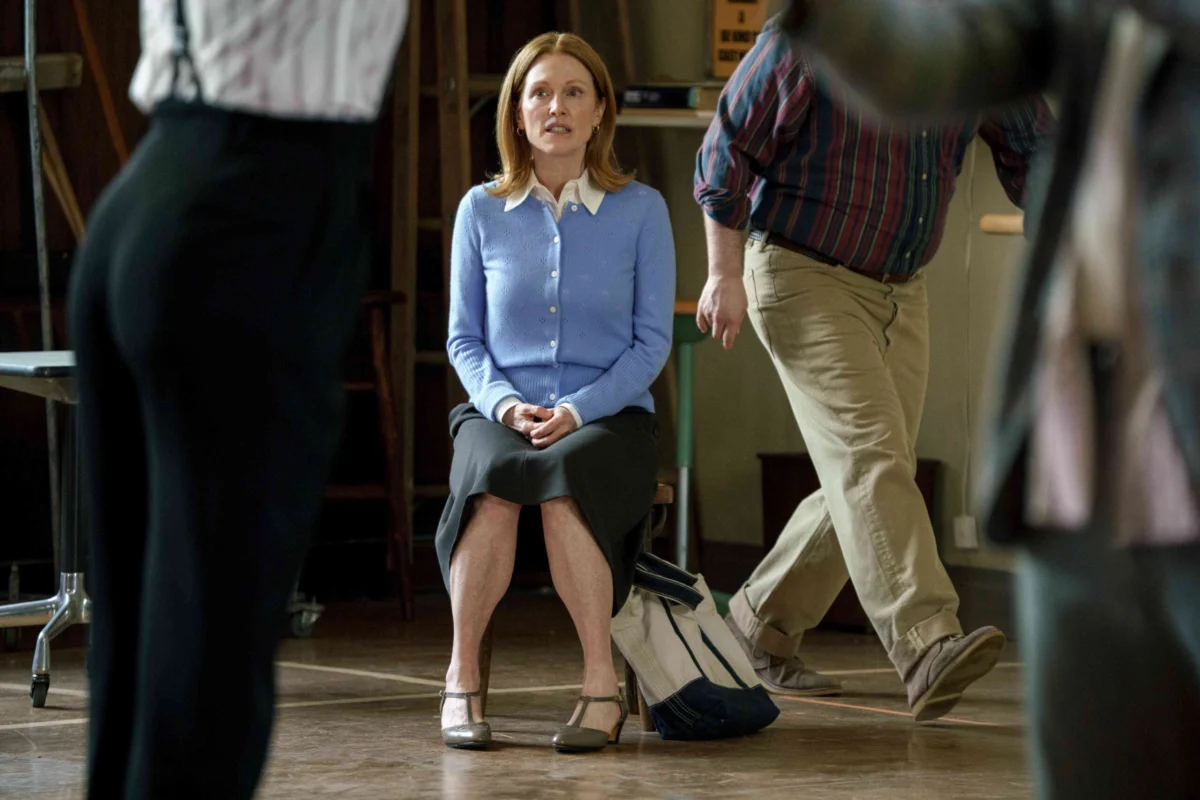
In a cinematic landscape often dominated by sequels and established franchises, Jesse Eisenberg’s third directorial effort, "The Debut," has emerged from the prestigious Telluride Film Festival not just as a promising new film, but as a potent contender for best picture accolades. The film’s central irony is a delicious one: it’s a story about an individual who seizes a minor role with the ferocity of a leading man, and in doing so, Eisenberg has crafted a work that elevates its stars, Julianne Moore and Paul Giamatti, into serious Oscar contenders for the upcoming awards season. The world premiere at Telluride served as the launchpad for this ambitious project, setting the stage for what many are already calling one of the fall’s most compelling cinematic offerings.
The post-premiere Q&A, thoughtfully moderated by Rebecca Keagan of NBC News, provided a fascinating glimpse into the film’s creation and its reception. Notably, for Paul Giamatti, the Telluride screening marked his very first encounter with "The Debut," a testament to the collaborative and perhaps somewhat secretive nature of filmmaking. This initial viewing, for one of its central performers, underscored the immediate impact the film had made, both on its audience and on those involved in its production.
Described as a potent blend of Darren Aronofsky’s psychological intensity in "Black Swan," the driven ambition of "Whiplash," and the mockumentary charm of "Waiting for Guffman," "The Debut" orchestrates a fever dream within the confines of a faux musical, transplanted to the unassuming setting of a New Jersey recreation center. At its heart is Julianne Moore’s Mona Friedman, a seemingly meek housewife whose vocal talents have been dormant since her days in the church choir. Her unexpected casting in a community theater production ignites a transformation, turning her into a zealous method actor, fiercely protective of even the most marginal role. Counterbalancing Moore’s fervent performance is Paul Giamatti as Jerry, the tyrannical director, ironically billed as the undisputed titan of New Jersey community theater. The film navigates a tonal spectrum, moving from laugh-out-loud comedy to raw, almost feral intensity, before ultimately landing on a surprisingly moving emotional core. This narrative arc and character development firmly establish Eisenberg, who previously earned Kieran Culkin an Oscar for his screenplay in "A Real Pain," as a filmmaker with a keen understanding of how to construct potent showcases for actors.
A24, a studio with a proven track record of championing unconventional and critically acclaimed films, has slated "The Debut" for a December 11th release. This strategic date signals a studio confident in the film’s potential for awards season traction, a path A24 knows intimately well. Their impressive history includes transforming unexpected narratives into best picture winners, most notably with "Moonlight," which famously upset the favored "La La Land," and the absurdist multiverse comedy "Everything Everywhere All at Once," a film that defied expectations to claim the top prize. With "The Debut," A24 presents a broad, accessible contender anchored by two of the most revered actors working today.
Julianne Moore, in particular, is emerging as an early frontrunner for the best actress Oscar. A five-time nominee with a single win for "Still Alice" over a decade ago, her portrayal of Mona Friedman is a tragicomic tour de force. It serves as a powerful reminder to voters of her immense talent, potentially reintroducing her to a new generation of Academy members and re-engaging those who have long admired her work. Moore’s performance is described as fearless, operating at a level comparable to Natalie Portman in "Black Swan" or Cate Blanchett at her most commanding. The audience reaction at Telluride, with spontaneous applause erupting during two separate scenes, is a potent indicator of the film’s immediate impact and Moore’s captivating presence.
A sixth Oscar nomination for Moore appears almost a certainty, but the question of a win remains. The recent Academy trends suggest a growing comfort with awarding actors their second, and even third, Oscars. The precedent is clear: Anthony Hopkins secured his second win for "The Father," Emma Stone earned her second for "Poor Things" (interestingly, Stone is also a producer on "The Debut"), and both Frances McDormand and Sean Penn have achieved three-time wins in recent years. A second Oscar for Moore would, therefore, come as little surprise to those who have witnessed her commanding performance in "The Debut."
Paul Giamatti’s Oscar narrative offers a different, yet equally compelling, story. He is a beloved actor of his generation, yet he is still chasing his first Academy Award. The perceived snub for his performance in "Sideways" remains a point of contention for many, and his recent leading turn in "The Holdovers" was ultimately bested by the "Oppenheimer" juggernaut. In "The Debut," Giamatti delivers a role that is both flashier and more quotable. As Jerry, he embodies the archetype of the monstrous mentor, a character akin to J.K. Simmons’ Oscar-winning role in "Whiplash," but infused with a deeper layer of humanity. His delivery of what may be the film’s most memorable line, "That’s where everyone wants to be… center stage," encapsulates the ambition and yearning at the film’s core. Giamatti’s most promising path to Oscar recognition appears to be in the supporting actor category, the very category Kieran Culkin triumphed in for Eisenberg’s "A Real Pain" two years ago. The adage that lightning can strike the same script twice holds a certain appeal here.
The juxtaposition of "The Debut" with "Elsinore" at the Telluride Film Festival also merits attention. Both films represent significant artistic endeavors at the festival, and both, in their own distinct ways, serve as passionate odes to the craft of acting itself. This thematic resonance between two of the year’s most talked-about films suggests a broader cultural conversation about the dedication, obsession, and transformative power inherent in performance.
"The Debut" is not a traditional musical in the vein of a songbook-driven production; rather, it functions as a savage comedy about a musical. The film is set within the world of an original theatrical production, distinguishing it from films that simply feature extensive musical numbers. This nuanced approach allows for a more incisive examination of the theatrical ecosystem and the personalities that inhabit it.
The technical and artistic contributions to "The Debut" further bolster its Oscar potential. Drew Daniels, whose cinematography on "Anora" garnered significant praise, lends his talents to this film. The evocative score is handled by Emil Mosseri, an Oscar nominee for his work on "Minari." The ensemble cast is further enriched by the presence of Broadway luminaries Bernadette Peters and Halle Bailey, adding a layer of authentic theatrical gravitas. Jesse Eisenberg, himself an Oscar nominee for his screenplay in "A Real Pain," has penned another original script that transcends its seemingly modest logline. The film’s DNA appears to be a fascinating blend of Quentin Tarantino’s sharp dialogue and unpredictable narrative turns, infused with the introspective charm of "Stranger Than Fiction." Arriving at Telluride with a solid resume, "The Debut" departed the festival with the undeniable aura of a potential frontrunner.
The timeless theatrical adage, "There are no small parts, only small actors," is recontextualized and elevated into a central thesis in "The Debut." The film boldly challenges viewers to consider the profound impact of dedication and ambition, regardless of the perceived size of the role. As the film prepares for its wide release, it poses a compelling question to the Academy: can they resist the allure of a film that so brilliantly celebrates the very essence of performance and the pursuit of artistic excellence? The stage is set, and the Academy’s move is eagerly anticipated.
