
 By Rifan Muazin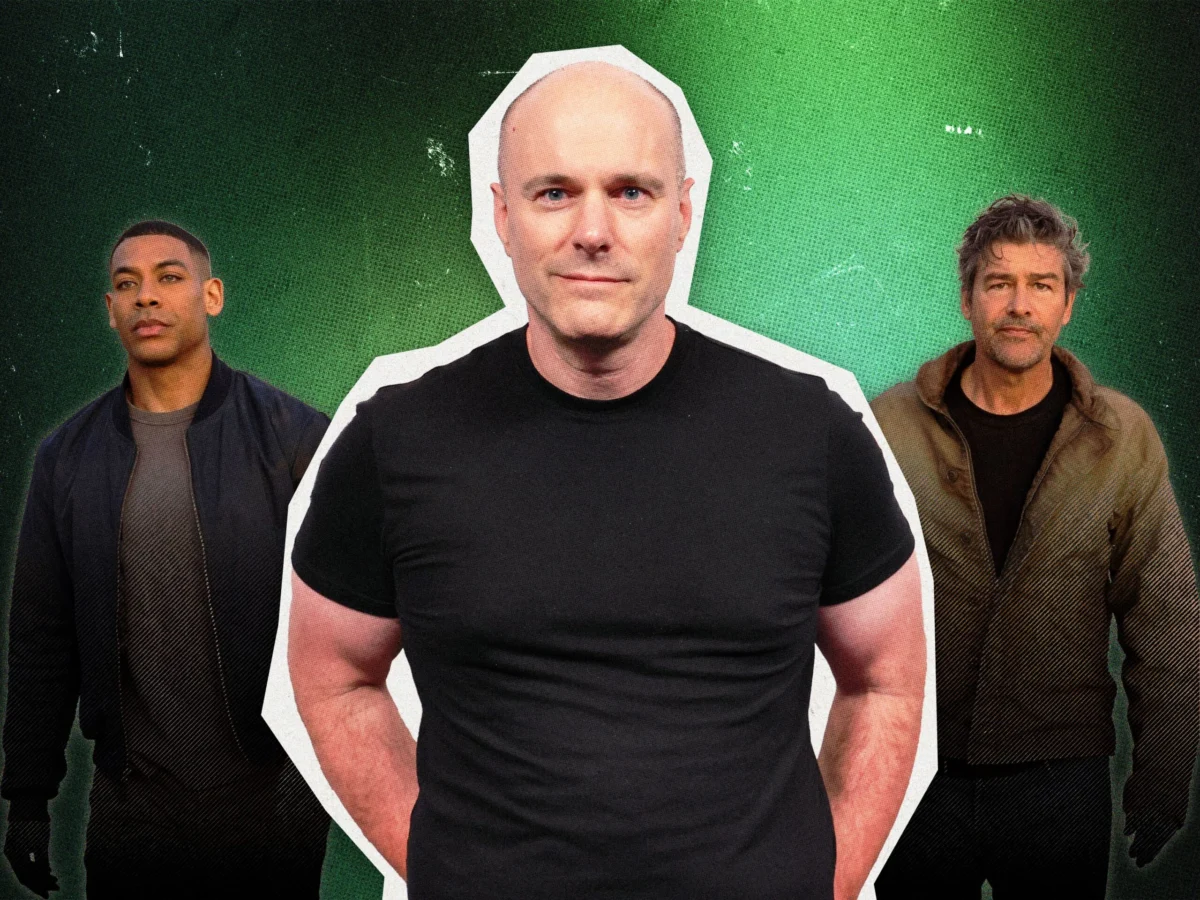
The long-awaited premiere of HBO’s Lanterns has finally arrived, and it has immediately set a new standard for the superhero genre on television by doing the unthinkable: executing the most iconic figure in its own mythology. To understand the gravity of this creative pivot, one must first acknowledge the shadow from which the franchise is emerging. For fifteen years, the Green Lantern brand was synonymous with the 2011 feature film starring Ryan Reynolds—a production widely regarded as a low point for big-screen comic book adaptations. The film was so notorious for its over-reliance on lackluster CGI and a disjointed script that Reynolds himself famously mocked it in a Deadpool 2 post-credits scene, where his character travels back in time to prevent the actor from ever signing the contract. However, under the new leadership of James Gunn and Peter Safran at DC Studios, Lanterns has not only moved past the ghost of 2011 but has fundamentally reshaped what a superhero procedural can be.
The series, which premiered Sunday night to massive critical acclaim, was initially announced as a cornerstone of Gunn’s "Gods and Monsters" slate. From its inception, the premise was designed to subvert expectations. Rather than an intergalactic space opera filled with neon-colored dogfights, Lanterns was pitched as a gritty, terrestrial mystery in the vein of True Detective or Mare of Easttown. The narrative focuses on two legendary ring-bearers, Hal Jordan and John Stewart, who find themselves investigating a gruesome, anomalous murder in the American heartland. This shift from the stars to the soil of Nebraska provides a grounded perspective that the franchise has lacked for decades, trading cosmic spectacle for atmospheric tension and character-driven noir.
The creative pedigree behind the scenes is a "who’s who" of prestige television and modern comic book excellence. The show is helmed by Chris Mundy, the veteran showrunner behind the tension-soaked Ozark; Tom King, the former CIA officer turned award-winning comic book writer known for his deconstructive takes on heroes like Batman and Mister Miracle; and Damon Lindelof, the visionary creator of The Leftovers, Lost, and HBO’s seminal Watchmen series. This "architects’ room," as King describes it, was tasked with building a show that functioned as high-level television first and a superhero property second. By placing the series in HBO’s coveted 9:00 PM Sunday slot, the network signaled that Lanterns is intended to be a serious contender in the landscape of modern drama, rather than a mere extension of a cinematic brand.
The premiere episode wastes no time establishing its high-stakes environment. The story utilizes a non-linear structure, beginning in 2016 with a younger, more idealistic John Stewart (Aaron Pierre) being mentored—and frequently exasperated—by the legendary, reckless Hal Jordan (Kyle Chandler). Their investigation into a bizarre murder involving the Manhunters—the emotionless android predecessors to the Green Lantern Corps—sets the stage for a decade-long mystery. The plot then leaps forward to 2026, where a weary John Stewart is summoned back to the same Nebraska town. The episode concludes with a tectonic shift for the DCU: Hal Jordan has been murdered, and his power ring has been stolen.
This decision to kill Hal Jordan, the man often cited as the "Greatest Green Lantern," is a bold declaration of intent. Tom King, in a deep-dive interview regarding the premiere, noted that the idea was born from a desire to create genuine stakes in a genre where death is often a revolving door. King recalled a moment in the writers’ room where both he and Lindelof arrived at the same conclusion simultaneously. "I wrote ‘Hal is dead’ on a card because I knew Damon was about to say it," King revealed. The goal was to ensure the audience felt that anything could happen—that the safety net of "plot armor" had been removed entirely.
The casting of the lead duo is central to the show’s success. Kyle Chandler, beloved for his portrayal of Coach Eric Taylor in Friday Night Lights, brings a "Maverick-esque" energy to Hal Jordan. He embodies the devil-care-care pilot who has seen too much and fought too many wars. Opposite him, Aaron Pierre—who recently became a household name following his commanding performance in Netflix’s Rebel Ridge—portrays John Stewart with a stoic, disciplined intensity. Their chemistry is the engine of the pilot, providing a friction that feels earned and lived-in. King admitted to some initial hesitation regarding Chandler, wondering if the actor’s inherent Southern warmth fit the West Coast vibe of Hal Jordan, but those doubts vanished the moment Chandler read for the part. "He has that glint in his eye," King said. "He’s the youngest-looking 60-year-old in the world, but he has that perspective of a man who’s been around every corner."
For Tom King, the journey to the premiere of Lanterns at San Diego Comic-Con’s Hall H was a personal milestone. Fifteen years ago, King was a struggling writer in "Artists’ Alley," the furthest corner of the convention center, hand-selling his books to anyone who would listen while the roar of the Avengers cast announcement echoed from the other side of the wall. To return to that same stage as an executive producer of one of the most anticipated shows in the world was, in his words, "surreal and crazy." His background as the "nerd in the room" allowed him to infuse the script with deep-cut lore, drawing inspiration from Christopher Priest’s Emerald Dawn run, which emphasized Hal Jordan’s flaws, recklessness, and the fear that drives his supposed fearlessness.
The series also addresses a logistical mystery within the broader DCU. In James Gunn’s upcoming Superman film, the character Guy Gardner (played by Nathan Fillion) serves as the Green Lantern of Earth. Fans had long wondered why the more prominent Jordan and Stewart were absent from the contemporary superhero landscape. Lanterns provides the answer through its 2026 timeline: one is dead, and the other is haunted by the mystery of that death. This interconnectedness demonstrates the level of planning involved in the new DCU, where television and film serve to enrich one another rather than merely coexist.
Beyond the superhero trappings, Lanterns is an exploration of genre subversion. King and Lindelof, both self-described "alpha dog idea guys," worked to undermine the clichés of the rural cop drama. While the show features familiar tropes—two men in a car, a small-town sheriff, a powerful local rancher—it consistently pivots in unexpected directions. The rancher, for instance, isn’t the stereotypical conservative antagonist but an articulate anti-colonialist. The investigation into the Manhunters serves as a metaphor for the history of policing and the dangers of emotionless justice.
The premiere’s musical cues also highlight the show’s unique tone. A recurring gag involving the song "Brand New Key" serves as a moment of levity that underscores the tension, a choice King credits to Lindelof. When King pointed out that the bit shared DNA with a famous John Mulaney comedy routine, the team leaned into the absurdity, recognizing that the best prestige dramas often balance darkness with moments of surreal humor.
As Lanterns moves forward, the central question remains: who killed Hal Jordan, and what cosmic threat is large enough to necessitate such a sacrifice? By grounding the answer in the red clay of Nebraska rather than the far reaches of Space Sector 2814, HBO has created a series that feels intimate yet expansive. It is a show about high stakes, legacy, and the heavy burden of wearing the ring. For Tom King and the rest of the creative team, the goal was simple: to make a moment that mattered. By the time the credits rolled on the premiere, it was clear they had done exactly that. The DCU has officially entered a new era, one where the heroes are mortal, the mysteries are deep, and the light of the Lantern is more precarious than ever.
