
 By admin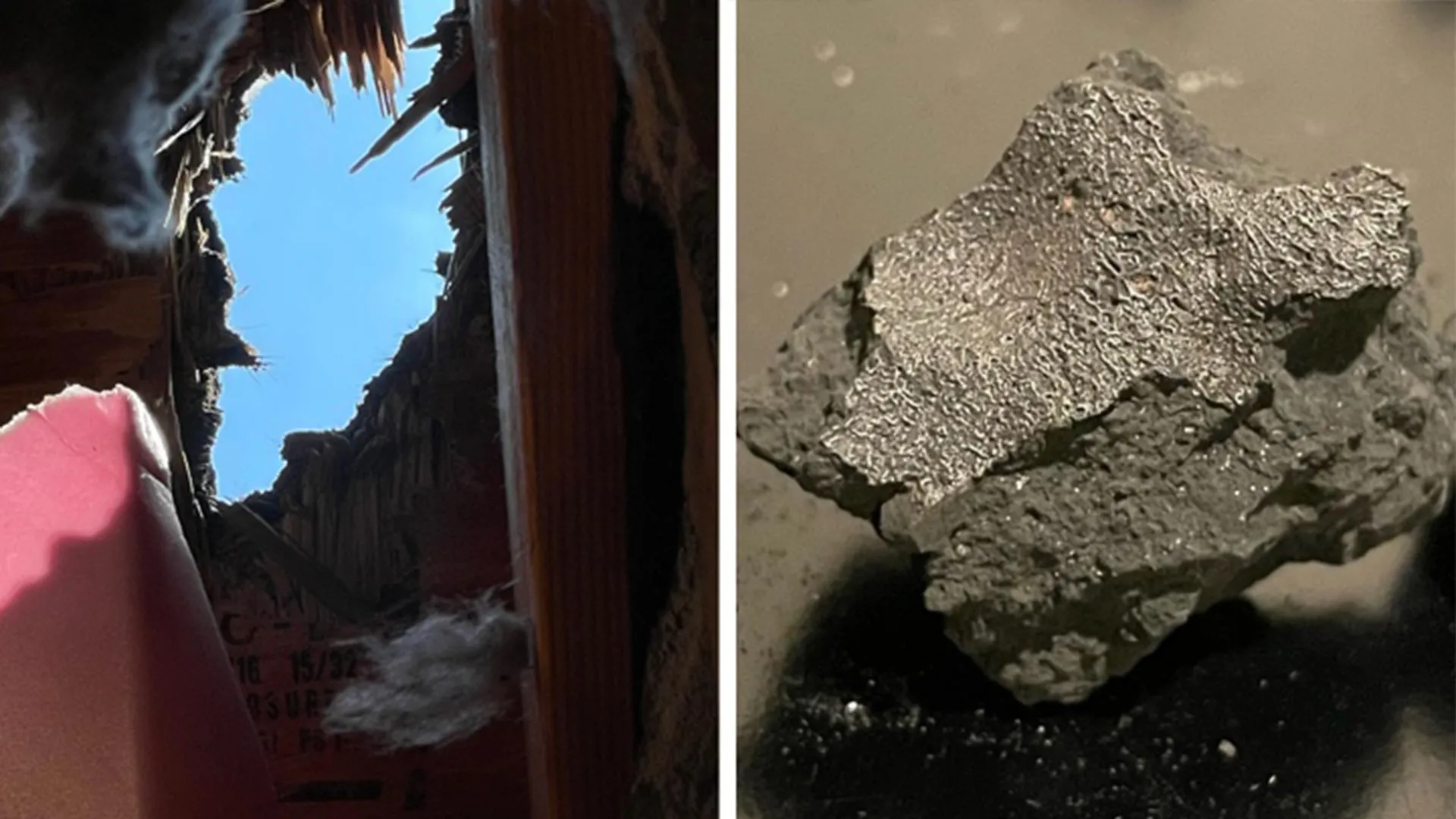
The initial examination of these extraterrestrial fragments has revealed a truly remarkable discovery, challenging previous understandings of proto-planetary worlds. "A forensic study of the fragments revealed that they contained preserved bits from near the surface of a primitive asteroid where it experienced concentrated salty fluids — a process not previously known from this type of proto-planet world," explained lead author Peter Jenniskens, a distinguished meteor astronomer affiliated with the SETI Institute and NASA’s Ames Research Center in California’s Silicon Valley. This discovery of ancient brines, akin to those found in Earth’s oceans, but within the sterile environment of an asteroid, signifies a pivotal moment in astrobiological research, suggesting a more dynamic and water-rich early solar system than once thought.
A Meteor Tracked Across the Northeast with Precision
The celestial object that pierced Earth’s atmosphere on that summer day was estimated to be roughly the size of a standard airline carry-on bag, a deceptively small package for the immense energy it carried. It hurtled through space at an astonishing speed of 32,000 miles per hour (14.4 kilometers per second) before its fiery descent. The spectacle was not lost on the inhabitants of the Northeast; sixty individuals across five states – New York, New Jersey, Connecticut, Rhode Island, and Pennsylvania – promptly reported their sightings to the American Meteor Society (AMS), a testament to the widespread nature of the event. Beyond the visual display, sixteen people in New York and New Jersey also reported feeling the concussive force of the shockwave, a telltale sign of a large meteor breaking the sound barrier.
The AMS played a crucial role in documenting the meteor’s trajectory. "Our cameras in Northford, Connecticut, and Douglassville, Pennsylvania, as well as a doorbell camera in Wayne, New Jersey, captured the meteor, and from that we measured its trajectory," stated Mike Hankey, operations manager for the American Meteor Society. This network of dedicated meteor cameras, augmented by fortuitous civilian recordings, allowed scientists to precisely triangulate the object’s path. Such detailed tracking is invaluable, enabling researchers to trace the meteor’s origin back to its likely source: "The path traced back to low in the asteroid belt," Hankey confirmed, indicating a probable parent body orbiting between Mars and Jupiter. This region is a treasure trove of primordial material, offering clues to the solar system’s genesis.
As the fragile extraterrestrial rock plunged deeper into the atmosphere, the immense pressure and heat caused it to fragment rapidly, a common fate for such objects. It disappeared from direct visual observation at an altitude of approximately 22 miles (35 kilometers). However, its atmospheric journey left another signature: shortly afterward, Doppler weather radar at Newark Airport, a sophisticated system designed to detect precipitation, briefly picked up an elongated cloud of falling pebbles. This radar "signature" extended from Staten Island into New Jersey, providing crucial evidence of the debris field. Hillsborough, New Jersey, by virtue of its location near the far end of this projected debris path, was precisely where the largest, most resistant pieces of the meteorite were expected to reach the ground. The recovery of such material is exceptionally rare, and this instance was largely facilitated by the meteorite’s rather dramatic arrival.
The homeowner, who wishes to remain anonymous, recounted the extraordinary experience: "I was at home at the time, heard a loud crash and found a hole in the ceiling of the master bedroom. I smelled a strong sulfur-like odor and saw many black fragments along with debris and black dust that covered my bed, carpet and surrounding areas." The impact was not merely an auditory and visual shock but also brought a distinct olfactory sensation, often associated with freshly fallen meteorites due to the presence of various sulfur compounds. Recognizing the unusual nature of the event, the homeowner demonstrated remarkable presence of mind. He quickly documented the scene with photographs and took meticulous steps to protect the material from contamination, understanding its potential scientific value. Wearing disposable gloves, he carefully used aluminum foil to collect the meteorite fragments and placed them in clean glass jars, an action that would prove invaluable to the subsequent scientific analysis.
An Exceptionally Rare Primitive Meteorite: A CM1/2 Gem
Laboratory analysis, conducted by an international consortium of experts, confirmed that the recovered rock belonged to a highly significant and primitive meteorite family known as CM-type carbonaceous chondrites. These meteorites are relics from the earliest days of our solar system, essentially unaltered building blocks from which planets formed. The "CM" designation pays homage to the Mighei meteorite, a historically important carbonaceous chondrite that fell in Ukraine in 1889, serving as the prototype for this class.
Further detailed examination by paper coauthor Mike Zolensky, a distinguished meteoriticist at NASA’s Johnson Space Center in Houston, revealed an intriguing anomaly. Certain sections of the Hillsborough meteorite exhibited signs of more extensive alteration by water on its parent asteroid than scientists typically observe in CM2 carbonaceous chondrites, the more common subtype within the CM family. This nuance led to its classification as a CM1/2 carbonaceous chondrite, placing it in an intermediate petrographic category between the highly water-altered CM1 and the moderately altered CM2 types. This intermediate classification is not merely an academic distinction; it signifies a unique history of interaction with liquid water on its parent body, offering a gradient of alteration rarely preserved in terrestrial falls.
The Hillsborough event itself is a statistical rarity, representing only the 22nd observed fall involving a CM-type meteorite. To put this into perspective, while thousands of meteorites strike Earth annually, only a fraction are observed falling, and an even smaller number are recovered. What makes Hillsborough truly exceptional is its classification as a CM1/2 carbonaceous chondrite; it is only the second witnessed fall of this specific, transitional subtype. The first, the Kolang meteorite, fell in North Sumatra, Indonesia, in 2020, making the Hillsborough specimen an immediate scientific peer. Every other witnessed CM fall has exclusively involved CM2 material, highlighting the profound scarcity of the Hillsborough type. Remarkably, a CM1 meteorite fall has never been observed, making the CM1/2 bridge even more critical for understanding the continuum of water alteration in these primitive bodies. Jenniskens underscored the importance of the careful handling: "Thanks to the homeowner’s quick reaction, these are the most pristine CM1/2 meteorites we know of," ensuring that the material’s unique characteristics were preserved for scientific scrutiny.
Evidence of Ancient Asteroid Brines: A Link to Early Earth
Scientists hold a particular interest in understanding the role of water in the chemistry of primitive asteroids, as these bodies are considered potential sources for Earth’s own water and organic molecules. Another major group of primitive carbonaceous chondrites, known as CI-types, with the "I" referring to the Ivuna meteorite that fell in Tanzania in 1938, has long provided insights into water-rich asteroid environments. Crucially, pristine samples related to CI-type materials have also been returned directly from space. JAXA’s Hayabusa2 mission successfully brought material back from asteroid Ryugu, while NASA’s OSIRIS-REx mission returned samples from asteroid Bennu. Both sets of precious extraterrestrial samples contain substantial evidence suggesting that briny fluids — highly concentrated saltwater — once existed just beneath the surfaces of their parent asteroids, creating environments conducive to complex chemistry.
The Hillsborough meteorite now adds a new dimension to this understanding. Zolensky and his colleague JangMi Han made a significant discovery: small CM1 fragments rich in salt embedded within the Hillsborough meteorite. Their findings strongly suggest that this material originated from a region near the surface of its parent asteroid. In such an environment, liquid water would have evaporated over geological timescales, leaving behind increasingly concentrated salts, much like salt pans on Earth. This process implies a dynamic hydrological cycle on the asteroid, with water migrating and interacting with the rocky material.
The researchers are now engaged in the painstaking process of identifying the specific salt minerals present in the Hillsborough meteorite. This identification will allow for direct comparisons with similar materials found in the returned samples from Ryugu and Bennu, offering a comparative planetology perspective on water-rock interactions across different asteroid types. This "salty chemistry" holds profound implications for understanding the chemical conditions that could have facilitated the production of molecules relevant to the origin of life. Highly concentrated brines are known to be exceptional solvents, capable of keeping essential nutrients like phosphate dissolved in solution. Furthermore, they can significantly promote and mediate complex chemical reactions involving organic compounds and minerals that precipitate from solution, creating microenvironments where prebiotic chemistry could flourish.
Organic Molecules and Ingredients for Life: A Cosmic Delivery
Beyond the mineralogical insights, the Hillsborough meteorite also yielded a wealth of organic compounds, reinforcing the hypothesis that primitive carbonaceous chondrites, including CM-types, served as crucial delivery vehicles of organic matter to the early Earth. Cosmochemist Queenie Chan of Royal Holloway University of London, England, and biogeochemist Nana Ogawa of the Biogeochemistry Research Center at the Japan Agency for Marine-Earth Science and Technology, contributed to isotope studies of carbon and nitrogen within the meteorite. Their analyses indicated that "The Hillsborough meteorite contained 1.8% by weight of carbon and 0.07% of nitrogen, and had carbon and nitrogen isotopes typical for CM-type meteorites." These isotopic signatures provide a fingerprint of the meteorite’s cosmic origin and its journey through the solar system.
Moreover, researchers detected a broad and diverse range of soluble organic compounds within the meteorite. The sheer variety and complexity of these compounds provided further compelling evidence that the Hillsborough material experienced a more extensive degree of alteration by water than most other CM-type meteorites. Phil Schmitt-Kopplin, an organic mass spectrometry specialist from Technical University Munich, noted a particularly interesting finding: "A high fraction of compounds were the product of organic chemistry with minerals." He pondered the exact origin of these magnesium organic compounds, asking, "We do not know if these magnesium organic compounds were contributed by brine chemistry or were simply left over from earlier impact shock processes." This open question highlights the ongoing scientific detective work, unraveling the precise mechanisms that shaped these extraterrestrial chemicals. The presence of organometallic compounds is especially significant, given their vital roles in living systems on Earth, including in the intricate processes of blood transport and photosynthesis.
Among the soluble organic compounds, scientists found numerous amino acids – the fundamental building blocks of proteins. These amino acids were chemically similar to those previously detected in CM2 chondrites that had experienced more moderate levels of water alteration. Astrobiologist Danny Glavin of NASA’s Goddard Space Flight Center in Greenbelt, Maryland, alongside researchers in Goddard’s Astrobiology Analytical Lab, concluded that CM-type bodies like the Hillsborough meteorite’s parent asteroid could have supplied the early Earth with a crucial inventory of amino acids, carboxylic acids, and other soluble organic molecules. This cosmic delivery likely contributed significantly to the collection of prebiotic organic material that existed on Earth before life itself emerged. Their detailed analysis further indicated that the meteorite’s complex assortment of amino acids formed not merely by random cosmic processes, but inside its parent body, with briny fluids likely playing a key role in driving at least some of that intricate chemistry.
A Rare Asteroid Sample Preserved for Future Science
In recognition of its unparalleled scientific value, some fragments of the Hillsborough meteorite will eventually be meticulously curated by the American Museum of Natural History in New York City. This careful preservation ensures that this unusual material will be available for future generations of researchers, who may bring new technologies and fresh perspectives to unlock even more secrets from this ancient cosmic messenger. "We are thrilled that nature delivered such a precious asteroid sample on our doorstep," exclaimed curator Denton Ebel, encapsulating the excitement and profound scientific opportunity presented by this serendipitous fall. The Hillsborough meteorite is more than just a rock from space; it is a tangible piece of our solar system’s history, offering invaluable insights into the conditions that fostered the creation of water, organic molecules, and potentially, the very genesis of life itself. Its study continues to illuminate the profound connections between the cosmos and our existence on Earth.
