
 By Lina Irawan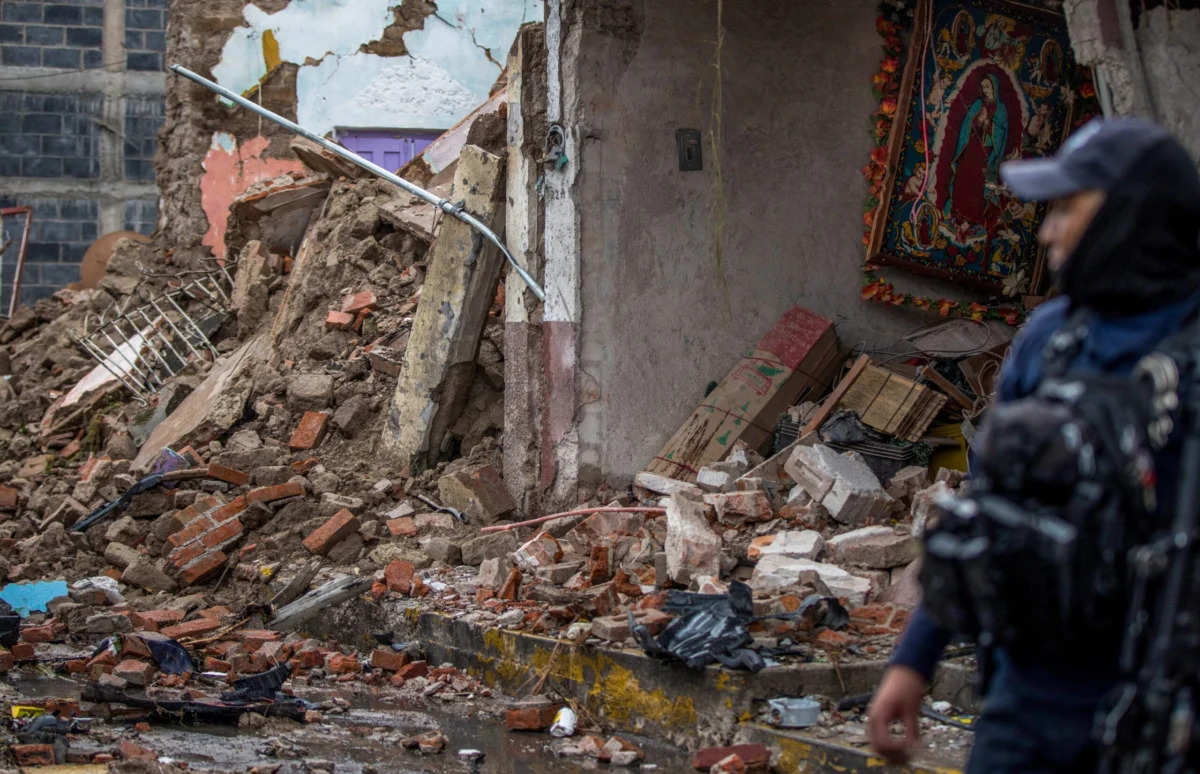
This alarming escalation in tactics by Mexico’s powerful criminal organizations marks a significant shift in the country’s long-running struggle against organized crime, moving beyond traditional shootouts and assassinations to methods reminiscent of conflict zones. The sophisticated deployment of vehicle-borne improvised explosive devices (VBIEDs), or car bombs, alongside drone-borne explosives and buried IEDs, introduces a new dimension of lethality and psychological warfare, raising profound concerns within Mexico and internationally, particularly in the United States.
The latest harrowing incident unfolded on a Sunday night outside a police station in Ojocaliente, a town nestled in the north-central state of Zacatecas, approximately 360 miles (580 km) northwest of Mexico City. While miraculously no fatalities were reported, the sheer destructive power of 200 kilograms (440 pounds) of explosives left 11 people injured and severely damaged over 60 homes in the city center. Mexico’s security chief, Omar García Harfuch, detailed the attack during a recent visit to Zacatecas alongside President Claudia Sheinbaum, underscoring the gravity of the situation. The substantial quantity of explosives used points to a deliberate intent to maximize damage and send a chilling message, far exceeding the typical firepower seen in cartel clashes. Such an amount of explosive material, if deployed in a more confined or populated space, could easily have resulted in mass casualties.
Zacatecas has, unfortunately, emerged as a crucible for this evolving violence. So far this year, the state has recorded a disturbing 23 attacks involving explosives, six of which specifically utilized cars or motorcycles packed with destructive materials, according to state Attorney General Cristian Paul Camacho. This surge is not random; Zacatecas holds immense strategic value for drug trafficking routes and mineral extraction, making it a fiercely contested territory. For years, the Jalisco New Generation Cartel (CJNG) and the Sinaloa Cartel have been locked in a brutal and often public struggle for control over the state, turning its communities into battlegrounds. The introduction of advanced explosive devices into this conflict zone signals a new phase of their territorial war, one that poses an unprecedented threat to both security forces and civilian populations. The intensity of this conflict is reflected in the willingness of these groups to employ tactics previously uncommon in Mexico, pushing the boundaries of conventional organized crime.
While the scale of car bombings in Mexico remains below the devastating levels seen in countries like Colombia during its peak narco-terrorism era, the recent incidents are causing widespread alarm. Experts are scrutinizing the implications of this shift, particularly given the historical rarity of such tactics in Mexico.
Car Bombs: A Rare but Resurfacing Tactic in Mexico
Historically, car bombs were a relatively uncommon weapon in the Mexican cartel arsenal. Victor Manuel Sánchez, a professor at the University of Coahuila who meticulously tracks car bombings in Mexico, notes that an earlier period of such violence included a significant 1994 attack in Guadalajara. This incident, orchestrated by the Tijuana Cartel, specifically targeted Ismael “El Mayo” Zambada, a co-founder of the rival Sinaloa Cartel. Zambada, who was later convicted in the United States, survived the attack, but it showcased an early, albeit isolated, instance of sophisticated explosive deployment. For decades following, cartels largely favored direct confrontations, ambushes, and targeted assassinations, perhaps to avoid widespread public outrage or increased international scrutiny that large-scale indiscriminate bombings might provoke.
However, this restraint appears to be eroding. Sánchez highlights that the Jalisco New Generation Cartel, known for its aggressive expansion and ruthless tactics, has been increasingly integrating explosives into its operations as it extends its formidable reach across Mexico. The CJNG’s rapid growth and audacious challenges to state authority have been characterized by a willingness to adopt novel and more violent methods. Authorities have directly attributed two recent, high-profile bombings in the centers of small cities to the CJNG: a devastating incident in Michoacán in December that claimed five lives, and the recent Ojocaliente attack in Zacatecas. The CJNG’s escalating use of these methods is particularly concerning given its designation as a foreign terrorist organization by the Trump administration, a classification that carries significant implications for potential U.S. intervention.
The Troubling Evolution of Explosive Use
The use of explosives by Mexican cartels has undergone a noticeable and worrying evolution over the past five years. Initially, this shift manifested in the deployment of explosives from drones, primarily to attack security forces or rival cartel strongholds. These rudimentary yet effective aerial attacks allowed cartels to project force from a distance and bypass fortified positions. Simultaneously, cartels began burying improvised explosive devices (IEDs) in the ground, strategically placing them to defend or control contested territories, turning rural roads and pathways into deadly traps. This tactic mirrors insurgency warfare and indicates a significant leap in tactical sophistication.
The statistics paint a grim picture of this escalating threat. In 2023, roadway bombs planted by drug cartels in the western state of Jalisco tragically killed six people and injured 14 others, demonstrating the increasing lethality of these devices. A month after these incidents, the Mexican military publicly acknowledged the growing danger, releasing its first official figures on explosive device seizures. Over the preceding four-and-a-half years, the military had confiscated approximately 2,800 explosive devices nationwide, a staggering number that underscored the pervasive nature of this new threat.
The situation only worsened. In 2024, authorities in Michoacán state alone deactivated nearly 3,200 explosive devices, showcasing the intense operational tempo of cartels in that region and the continuous effort required by security forces to mitigate the danger. The following year, an explosive device in Michoacán resulted in one of the deadliest such incidents in Mexico, killing eight soldiers. The Mexican authorities have not released more recent nationwide figures, leaving the full scope of the current threat somewhat obscured, but regional data strongly suggests a persistent and intensifying problem.
Vanda Felbab-Brown, a prominent organized crime expert at the Brookings Institution, a U.S. think tank, aptly summarizes the situation: “It is all a bad development in Mexico. We are facing steady intensification of violence. This certainly greatly intensifies the atmosphere of fear and retaliation.” Her assessment underscores the qualitative change in cartel violence, moving beyond conventional criminal acts to a more militarized and terror-inducing approach. This escalation challenges the traditional paradigms of law enforcement and national security, demanding a rethinking of strategies.
Despite this alarming trend, President Sheinbaum stated on Friday that the nationwide decline in killings was clear evidence that the government’s strategy against cartels was working. This assertion, while potentially true in terms of overall homicide numbers, faces scrutiny when juxtaposed with the increasing sophistication and impact of the violence, particularly the use of explosives. A reduction in raw fatalities does not necessarily equate to a reduction in the strategic threat posed by cartels, especially when they are deploying more destructive and fear-inducing weapons. The nature of the violence, rather than just its volume, is evolving in a profoundly dangerous direction.
The Strategic Rationale: Spreading Fear and Pressure
Experts contend that cartels employ car bombs and other advanced explosive devices with clear strategic objectives. Foremost among these is the desire to intimidate rivals and authorities. A car bomb sends an unmistakable message of power, ruthlessness, and capability, designed to sow fear among competing groups and deter law enforcement. The indiscriminate nature of such attacks also serves to pressure the government, demonstrating the cartels’ capacity to inflict significant damage and disrupt public order, potentially forcing authorities to negotiate or retreat from certain territories.
Carlos Pérez Ricart, an international studies professor at Mexico’s CIDE university, emphasizes that car bombs also serve as a potent tool for drawing attention. In a crowded media landscape, such dramatic acts guarantee headlines and public awareness, which can be leveraged to pressure authorities into negotiations, particularly when criminal groups feel cornered or under intense state pressure. The psychological impact on the civilian population is immense, creating an atmosphere of pervasive fear that can undermine public trust in government and societal cohesion. When civilians fear for their safety in public spaces, the cartels effectively exert a form of control that extends beyond their direct physical presence. This strategy aims to erode the state’s legitimacy and operational capacity by creating chaos and insecurity.
Cartel Violence or Terrorism? The Contentious Debate
One of the most fraught aspects of this evolving violence is the debate over whether it constitutes "terrorism." Mexico has consistently resisted classifying cartel violence as terrorism, a stance rooted in several critical concerns. Firstly, such a designation could provide a pretext for foreign intervention, particularly military action from the United States. Mexico is acutely aware of its sovereignty and has historically been wary of any actions that could be perceived as a violation of its territorial integrity. Secondly, a terrorism label could severely damage Mexico’s crucial tourism industry and deter foreign investment, both vital components of its economy. The perception of a country plagued by terrorism would be economically devastating.
The official argument put forth by Mexico also hinges on a conceptual distinction: terrorism generally involves political or ideological aims, whereas cartels are primarily motivated by profit. While their actions can be brutal and destabilizing, the ultimate goal, according to this argument, is financial gain through illicit markets, not the overthrow of a government or the imposition of a political ideology.
However, the lines blur when one considers the deliberate targeting of civilians, a hallmark of terrorism. In 2008, grenades thrown into crowds celebrating Independence Day in Morelia, the capital of Michoacán, killed eight people and wounded dozens, an act clearly designed to terrorize. Three years later, gunmen set fire to a casino in northern Mexico, killing 52 people in what was widely seen as an act of extortion-related terror. These incidents demonstrate that while profit may be the ultimate motive, the tactics employed often align with those used by terrorist organizations to instill fear and achieve objectives through violence against non-combatants.
The Trump administration’s designation of eight Mexican cartels as foreign terrorist organizations (FTOs) – including the CJNG – and its use of this framework to justify potential military action, has made the terminology even more consequential. Should Trump return to office, the increasing sophistication of cartel violence, especially the use of car bombs and IEDs, could reignite this debate with renewed intensity. The FTO designation grants the U.S. government broader powers to freeze assets, impose sanctions, and, crucially, consider military options, which could drastically alter the bilateral relationship and potentially lead to highly controversial cross-border operations. The legality and effectiveness of applying counterterrorism strategies to organized crime, however, remain hotly contested.
Pérez Ricart cautions against indiscriminately applying counterterrorism strategies to organized crime. He argues that "the answer to terrorism is the disappearance of the enemy," implying a war of annihilation. In contrast, the drug trade is not simply an armed group to be eliminated but an entire illegal market driven by complex socio-economic factors. A purely military approach, without addressing the underlying market dynamics, corruption, and social conditions that fuel cartel recruitment, could prove counterproductive and lead to an even more entrenched and brutal conflict. A comprehensive strategy, therefore, must balance security operations with social programs, economic development, and institutional strengthening to truly dismantle the cartels’ power structures.
The escalating use of sophisticated explosive devices by Mexican cartels represents a critical inflection point in Mexico’s security crisis. It signifies a qualitative leap in their operational capabilities and a willingness to embrace tactics that maximize fear and disruption. This development not only poses an immediate and profound threat to public safety within Mexico but also strains the already delicate relationship with the United States, particularly under the specter of a potential Trump presidency and his previous threats of military intervention. Addressing this evolving threat will require Mexico to adapt its security strategies, potentially necessitating greater international cooperation and a nuanced approach that moves beyond conventional anti-crime measures to confront what increasingly resembles a low-intensity conflict waged by highly militarized criminal organizations. The path forward demands a delicate balance between robust security responses and comprehensive societal reforms to tackle the root causes of cartel power.
