
 By admin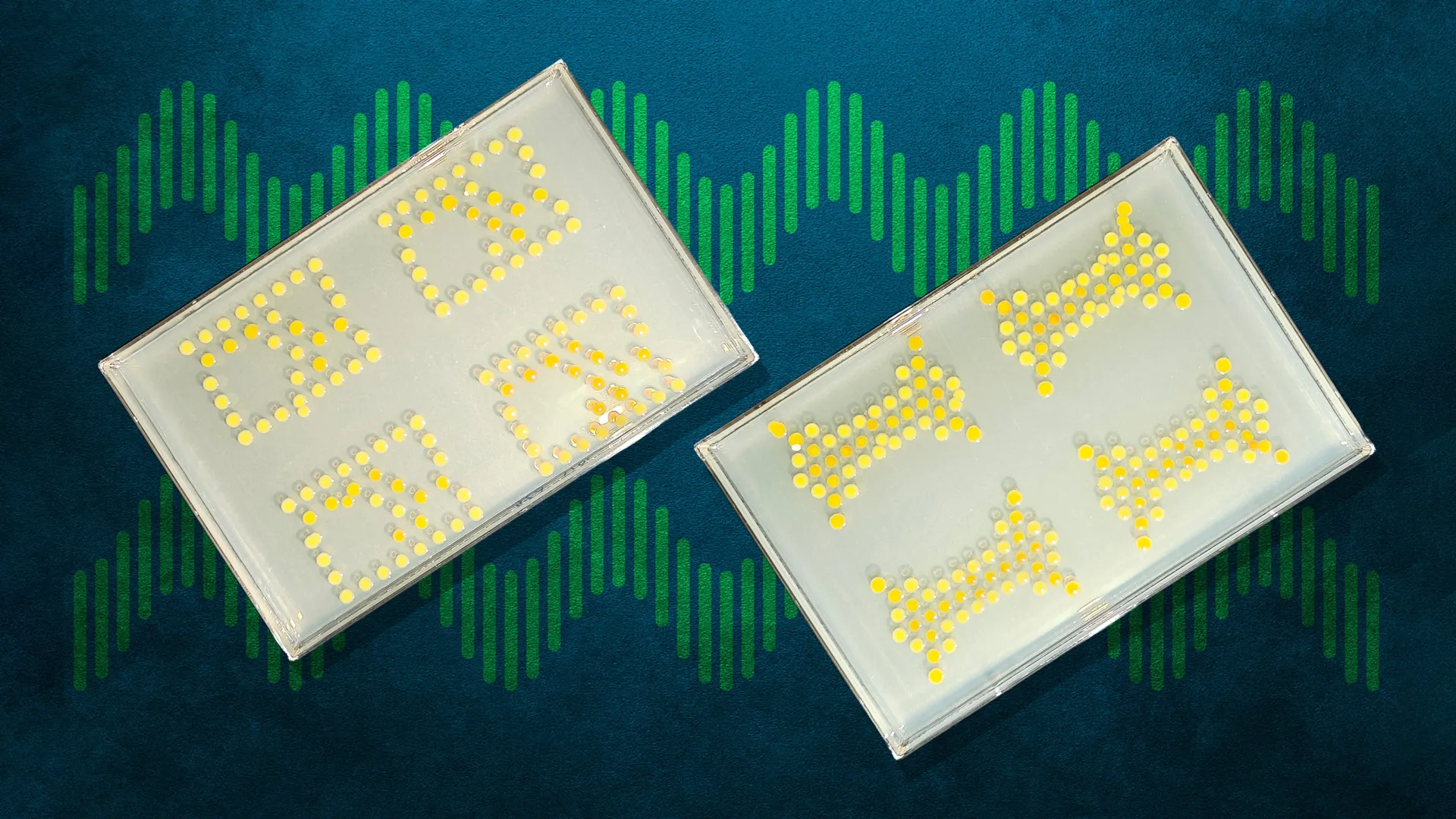
This groundbreaking innovation from the Massachusetts Institute of Technology heralds a new era in synthetic biology, where living cells are not merely biological factories but active computational units. By re-engineering common bacteria, scientists have moved beyond the limitations of traditional genetic circuits confined to single cells, forging a path toward scalable, modular biological computers that could revolutionize fields from agriculture to medicine. The essence of this breakthrough lies in decentralizing computation, allowing individual bacterial cells to act as discrete components, much like the transistors that form the backbone of modern electronics.
In conventional electronics, transistors are semiconductor devices acting as fundamental switches, controlling the flow of electrical current through a circuit. They are the building blocks of microprocessors, memory chips, and nearly every digital device, enabling complex logic operations by switching between "on" and "off" states. In the MIT system, engineered bacterial cells perform a strikingly similar role, but instead of regulating electrons, they meticulously control the movement of small signaling molecules. These molecules then serve as biochemical messengers, carrying information from one bacterial component to another, thereby enabling the execution of complex biological logic.
The MIT team, led by Christopher Voigt, head of MIT’s Department of Biological Engineering and senior author of the study, meticulously crafted two distinct types of bacterial transistors. Complementing these core switching elements, they developed three additional bacterial strains designed to act as relays, bridging the communication gaps between the transistors. Collectively, these five strains constitute a remarkably versatile and modular set of components. This modularity is a critical engineering principle, allowing researchers to arrange and combine these biological building blocks in myriad ways to construct virtually any kind of biological circuit imaginable. In their recent study, published in the prestigious journal Nature Chemical Biology, the team successfully demonstrated circuits capable of performing fundamental arithmetic, such as adding two or three inputs, and also showed circuits that could direct a single input signal towards a selected destination, akin to a data router.
Hamid Doosthosseini PhD ’25, an MIT postdoc and the lead author of the pioneering study, underscored the foundational nature of their achievement. "We’ve built some initial computer architecture components that are commonly used, but any operation can be built with these five strains," he stated, emphasizing the universality of their modular system. This assertion implies that, theoretically, any computational task that can be broken down into discrete logic gates could eventually be performed by these living circuits, albeit with significant differences in speed and scale compared to silicon-based electronics. Former MIT postdoc Haorong Chen also contributed significantly to the paper, highlighting the collaborative effort behind this intricate biological engineering feat.
One of the most compelling potential applications for these living circuits lies in their ability to integrate directly with natural environments. Imagine placing these sophisticated bacterial computers onto the leaves or roots of plants. In such a scenario, the bacteria could continuously process information about local environmental conditions, effectively turning the plant into a "smart" biological sensor. This capability could be transformative for agriculture, enabling plants to autonomously detect and respond to a myriad of stresses, ranging from insidious pest attacks and pathogenic infections to critical shortages of water (drought) or vital nutrients. Such a system could trigger targeted, localized responses, minimizing the need for broad-spectrum chemical interventions and fostering more sustainable farming practices.
Turning Bacterial Cells Into Transistors: Overcoming the Limitations of Traditional Synthetic Biology
The field of synthetic biology has, for years, focused on designing and constructing novel biological functions and systems within living cells. Typically, synthetic biology circuits are engineered by programming cells to produce specific proteins and transcription factors that interact in predictable ways. These intricate molecular networks can be programmed to carry out specific tasks, such as detecting a particular molecular biomarker and subsequently producing a desired response, like a fluorescent protein or a therapeutic compound.
However, this conventional approach, while powerful, faces inherent limitations, particularly when striving for increased circuit complexity. The primary challenge lies in the constrained resources and inherent "cross-talk" within a single cell. Researchers generally require distinct transcription factors for separate operations to prevent signals from interfering with one another. The cellular machinery—ribosomes, RNA polymerases, and metabolic pathways—can also become overwhelmed when tasked with producing too many engineered proteins simultaneously. Furthermore, the number of suitable, orthogonal (non-interfering) transcription factors available for genetic engineering is finite. This practical ceiling on the number of distinct components that can be reliably packed into one cell severely limits how complicated a single-cell circuit can become, making the construction of truly complex, multi-functional biological computers exceedingly difficult.
The MIT team approached this fundamental problem with a radical shift in paradigm: distributed computation. Rather than attempting to cram an entire, complex circuit into the confines of a single bacterial cell, they engineered individual cells to serve as distinct, transistor-like components that could then be connected and arranged in various configurations across a physical substrate. This modular, multicellular approach bypasses many of the limitations associated with single-cell circuit design, opening new avenues for scalability and complexity.
For these foundational components, the researchers selected Pantoea agglomerans, a bacterium known for its robust growth on surfaces, including various plants. This choice was deliberate, as its natural propensity for surface colonization makes it an ideal candidate for "printing" onto growth media and, eventually, integrating with plant systems. They engineered two versions of these bacterial transistors, each designed to respond to a specific signaling molecule called OC 6 (N-hexanoyl-L-homoserine lactone). One type of transistor is programmed to switch "on" when it encounters OC 6, initiating a cascade of internal events. The other type is designed to switch "off" in the presence of OC 6, effectively halting its activity.
Crucially, each of these bacterial transistors also possesses the ability to sense a second target molecule, OC 12 (N-dodecanoyl-L-homoserine lactone). The ultimate output of the bacterial cell—the production of a third molecule, OHC 14 (N-tetradecenoyl-L-homoserine lactone)—is contingent upon a sophisticated interplay: whether OC 12 is present and whether the transistor itself has been activated (or deactivated) by the initial OC 6 signal. This multi-input, conditional output mechanism is precisely what mimics the behavior of an electronic transistor, where multiple electrical inputs determine the final output current. These acyl-homoserine lactone (AHL) molecules are naturally occurring quorum-sensing signals used by many Gram-negative bacteria for intercellular communication, making them ideal candidates for building inter-colony circuits.
Wiring Living Cells Together: The Architecture of Biological Circuit Boards
The true genius of the MIT system lies in its ability to "wire" these individual bacterial components together to form larger, functional circuits. To facilitate this, the team engineered three additional strains of Pantoea agglomerans to function as dedicated relays. These relay cells play a vital role in signal transduction: they receive the OHC 14 output molecule from an upstream transistor and, in turn, convert it into a different output signal that is specifically designed to serve as an input for the next transistor in the sequence. This intricate system of signal conversion and propagation allows for the sequential and directional flow of information across a multi-cellular circuit, mirroring how electrical signals traverse a conventional circuit board.
To visually demonstrate this "wiring" capability, the researchers successfully built a bidirectional switch. This complex circuit utilized two transistors, both engineered to detect the OC 12 molecule. Depending on a separate "switch input" signal, the system intelligently routed information through different relay strains before passing it on to additional transistors for further processing. This elegant demonstration proved that the bacterial components could not only perform logic but also direct information flow, a fundamental requirement for any sophisticated computational system.
The physical assembly of these biological circuits is itself a marvel of bioengineering. The researchers utilized a specialized printing technique to deposit bacterial colonies onto plates containing agar, a nutrient-rich gel that serves as the growth medium. Each colony was meticulously positioned with a precise spacing of approximately 5 millimeters from its nearest neighbor. This seemingly simple detail is, in fact, critically important for the circuit’s functionality. This specific spacing ensures that the chemical signals (the OC 6, OC 12, and OHC 14 molecules) released by one colony diffuse effectively to only the intended next colony in the sequence. This controlled diffusion prevents unwanted signal interference or "cross-talk" between non-adjacent components, thereby maintaining the integrity and directionality of information flow through the circuit. It’s a testament to the precision required to harness the inherently noisy and analog nature of biological systems for digital-like computation.
Building More Complex Biological Circuits: Universal Computation in a Petri Dish
The modularity and versatility of the MIT bacterial transistor system allowed the researchers to demonstrate that a single bacterial transistor component could perform several distinct logic operations depending solely on its position and connections within a larger circuit. This remarkable adaptability was showcased by constructing circuits that embodied fundamental logic gates such as "multi-input" gates (where multiple conditions must be met), "or" gates (where at least one of several conditions is met), and "imply" gates (where one condition implies another). This ability for a single component to assume different logical roles based on context is a powerful engineering principle, simplifying the design and construction of more complex systems.
By connecting multiple transistors and relay strains, the team successfully created significantly more sophisticated computational systems. They built circuits capable of adding two input signals together, demonstrating basic arithmetic capabilities. They also engineered systems that could process several signals simultaneously, showcasing rudimentary parallel processing. Furthermore, they demonstrated a demultiplexer, a crucial component in computer architecture that receives a single incoming signal and intelligently routes it to one of several possible destinations based on a separate control signal. This capability is fundamental for directing data flow in complex computational architectures.
The largest and most complex circuit demonstrated in the study contained an impressive 24 interconnected bacterial colonies, all working in concert. This particular circuit was specifically designed to add two inputs together, a testament to the scalability and combinatorial power of their modular system. This accomplishment is a significant step towards creating truly complex, distributed biological computers.
Reflecting on the potential of this work, Professor Voigt confidently stated, "This work shows that we can get toward more complicated functions by linking up simpler functions in individual cells." He then made a bold, yet scientifically accurate, claim about the computational universality of their system: "Computationally, there’s nothing that your iPhone can do that these circuits couldn’t do." It’s crucial to understand that Voigt’s statement refers to the theoretical computational universality of the system—meaning, in principle, it can perform any computation that a Turing machine (and thus, an iPhone) can. It does not imply comparable performance metrics.
Indeed, there is a major and undeniable difference in speed. Each calculation performed by these bacterial circuits currently takes approximately eight hours to complete. This is an eternity compared to the picosecond-scale operations of an electronic computer. However, for many biological applications, the researchers argue that this pace can still be eminently practical and effective.
As Voigt explained, "We’re not trying to replace computers, but rather put computational control into biology. If you have bacteria on the root of a plant, or the plant itself is doing the computing, running a simple calculation overnight is fast enough relative to a growth season." This perspective highlights the distinct niche that biological computers are poised to fill. Their value lies not in raw speed, but in their ability to seamlessly integrate with living systems, operate in complex biological environments, and potentially offer advantages in terms of energy efficiency and autonomy. Electronic computers are fast and precise, but they cannot grow on a plant root, detect a pathogen at the cellular level, or autonomously produce a biochemical response.
Living Computers for Agriculture and Beyond
The most immediately apparent and impactful application for these living computers lies in agriculture. If these sophisticated bacterial circuits can eventually be successfully deployed on plant roots or leaves, they could be programmed to detect a wide array of environmental stressors with unprecedented sensitivity and specificity. For instance, they could identify the presence of specific drought signals (e.g., abscisic acid), nutrient deficiencies, or even the molecular signatures released by particular insect pests or fungal pathogens.
When the system recognizes a particular signal, it could then trigger a corresponding, highly localized and targeted response. This could involve, for example, producing a specific fungicide directly at the site of a fungal infection, synthesizing growth-promoting hormones to bolster resilience, or modulating the plant’s nutrient uptake mechanisms to optimize resource utilization. Such "smart" plants, equipped with their own internal computing systems, could significantly reduce crop losses, decrease reliance on broad-spectrum pesticides and fertilizers, and foster a new era of sustainable and resilient agriculture, contributing to global food security.
Beyond agriculture, the implications of this research are vast and far-reaching. The modular nature of these bacterial circuits suggests potential applications in biomanufacturing, where smart bioreactors could dynamically adjust their metabolic pathways in response to real-time process conditions, optimizing the production of pharmaceuticals, biofuels, or industrial enzymes. In the biomedical field, similar principles could lead to "smart" probiotics that detect disease markers in the gut and produce therapeutic compounds on demand, or even implantable bio-sensors that monitor health conditions and deliver drugs precisely when and where needed. The ability to create distributed, self-replicating, and environmentally responsive computational systems opens up entirely new paradigms for interacting with and engineering the living world.
However, the path forward also involves significant challenges. Ensuring the long-term stability and reliability of these living circuits in complex, dynamic environments is crucial. Questions of containment, potential ecological impact, and regulatory frameworks for engineered living systems will need careful consideration and public discourse. Further research will also focus on increasing the speed of computation, expanding the library of modular components, and developing more sophisticated methods for programming and interfacing with these biological systems.
This pioneering work by the MIT team, which received funding support in part from the U.S. Defense Advanced Research Projects Agency (DARPA) and the U.S. Intelligence Advanced Research Projects Activity (IARPA) — agencies keenly interested in cutting-edge foundational research with broad security and technological implications — represents a monumental leap in synthetic biology. It not only pushes the boundaries of what is possible with engineered organisms but also fundamentally redefines our understanding of where and how computation can occur. The creation of living "circuit boards" is not merely an academic curiosity; it is a foundational step toward a future where biology itself becomes a programmable medium for information processing, offering elegant, self-sustaining solutions to some of humanity’s most pressing challenges.
