
 By admin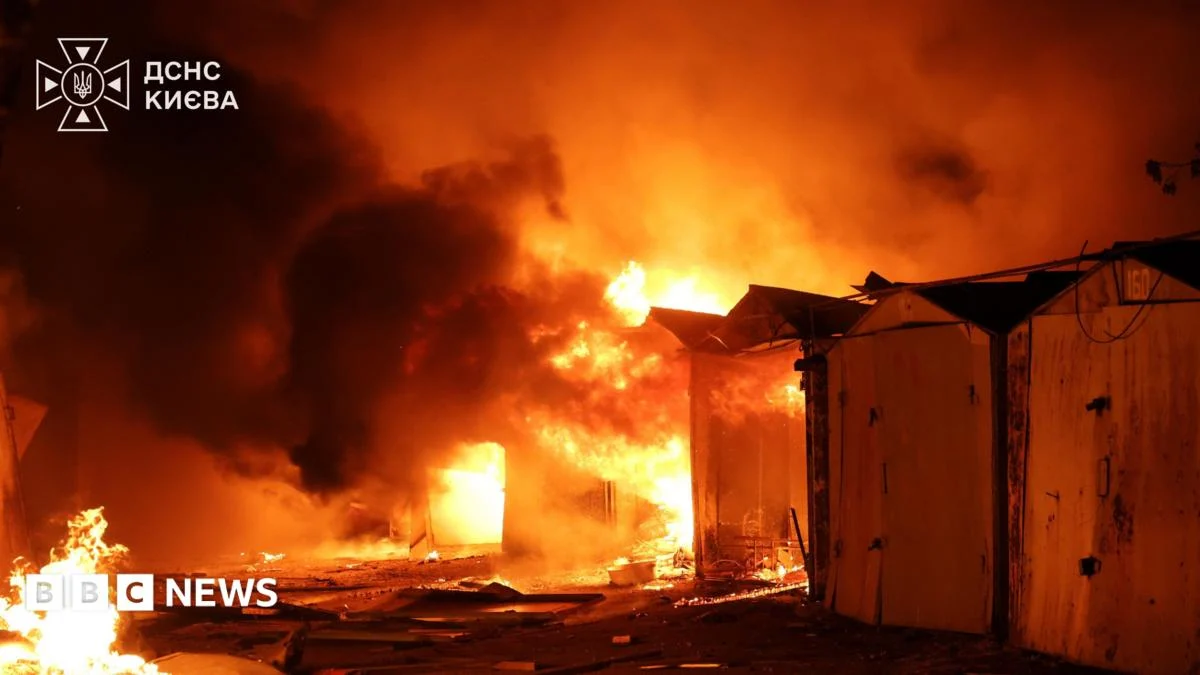
In a grim dawn that cast a pall over the Ukrainian capital, overnight Russian assaults unleashed ballistic missiles east of Kyiv, claiming the lives of at least three individuals, including a young child, and injuring three others, according to a somber announcement by Timur Tkachenko, head of the regional military administration. The devastating strikes, which occurred in the early hours of Saturday, shattered the fragile peace just days after a wider barrage across Ukraine resulted in the deaths of 21 people, underscoring a relentless cycle of violence that continues to grip the nation. Witnesses recounted the terrifying sound of powerful explosions, a stark reminder of the ongoing conflict and its devastating human cost.
The impact of the ballistic missile onslaught was not confined to direct casualties. Falling debris from the aerial bombardment inflicted damage on residential apartment buildings and vehicles, while a separate building was engulfed in flames, painting a picture of widespread destruction. In the capital itself, emergency crews battled blazes at a building and a fuel tank, as reported by Kyiv Mayor Vitali Klitschko via his Telegram channel. The State Emergency Service of Ukraine (DSNS) shared harrowing photographic evidence of garages, a business, and a building consumed by fire in Kyiv, with a grim update stating, "The number of victims is being clarified," hinting at a potentially higher toll.
This latest wave of attacks unfolds against a backdrop of intensified diplomatic efforts and strategic maneuvering by Ukrainian President Volodymyr Zelensky. He has embarked on his first visit to the Serbian capital, Belgrade, a significant diplomatic overture aimed at garnering broader international support for Ukraine. During his stay, Zelensky is scheduled to engage in crucial discussions with Serbian President Aleksandar Vučić, focusing on economic cooperation, security concerns, and the complex relationship between Serbia and the European Union. However, the path to enhanced solidarity is fraught with challenges, particularly given President Vučić’s steadfast refusal to impose sanctions on Russia, a stance that highlights the geopolitical complexities surrounding the conflict.
Serbia, a nation actively pursuing membership in the European Union, has, however, extended aid to Ukraine and pledged assistance in its post-war reconstruction efforts. This dual approach by Belgrade—maintaining economic ties with Russia while seeking EU integration and offering humanitarian support to Ukraine—underscores the delicate balancing act many nations are attempting in the face of the protracted conflict.
President Zelensky’s diplomatic push is intrinsically linked to his urgent calls for enhanced defensive capabilities. Earlier in the week, he directly attributed "horrific casualties and destruction" to what he described as "delays in receiving anti-ballistic systems from partners." He emphasized that a more robust interceptor capacity "could have saved lives" during recent deadly assaults, a poignant testament to the vulnerability of Ukrainian cities and civilians to aerial bombardment. The president later revealed a stark reality, stating that the supply of interceptors from allies had been "significantly reduced" this year, raising concerns about the adequacy of international military assistance in meeting Ukraine’s critical defense needs.
The timing of these Russian attacks also coincides with Ukraine’s own offensive actions, indicating a tit-for-tat escalation between the warring parties. Prior to the Kyiv strikes, Ukraine reported successfully targeting two oil refineries deep within Russian territory, along with Moscow-linked vessels in the Black Sea. President Zelensky framed these operations as a strategic move to curtail Russia’s oil revenues, which he stated are being used to "finance" its war effort in Ukraine. The Ukrainian general staff confirmed on Saturday that the Ilsky and Syzran oil refineries were hit during overnight attacks, resulting in fires at both facilities. This suggests a deliberate strategy by Ukraine to disrupt Russia’s economic capacity to sustain its military operations.
The recent faltering of mediation talks between Ukraine and Russia appears to have paved the way for this intensified exchange of hostilities. The breakdown in diplomatic channels has seemingly emboldened both sides to resort to more aggressive military actions, creating a dangerous spiral of violence that further diminishes the prospects for a swift and peaceful resolution.
The ongoing conflict, now well into its second year, continues to exert immense pressure on Ukraine’s infrastructure and civilian population. The attacks on Kyiv, a strategic and symbolic heart of the nation, underscore Russia’s persistent efforts to destabilize and demoralize Ukraine. The targeting of civilian areas, even if indirectly through falling debris from missile interceptions or strikes, raises serious questions about adherence to international humanitarian law and the principles of distinction and proportionality in warfare.
The international community’s response remains a critical factor in shaping the trajectory of the conflict. While many Western nations have provided substantial military and financial aid to Ukraine, the perceived delays in critical defense systems, as highlighted by President Zelensky, suggest a need for re-evaluation and potentially accelerated delivery of advanced weaponry. The effectiveness of these systems in mitigating civilian casualties and protecting critical infrastructure is a paramount concern.
The economic ramifications of the conflict are also far-reaching. Disruptions to energy supplies, as evidenced by Ukraine’s strikes on Russian oil refineries, have global implications, impacting oil prices and energy security. Russia’s reliance on oil revenues to fund its war effort makes such targets strategically significant for Ukraine.
The diplomatic landscape, as exemplified by President Zelensky’s visit to Belgrade, is a complex web of alliances, strategic interests, and historical ties. Serbia’s unique position, balancing its aspirations for EU membership with its traditional relationship with Russia, presents a microcosm of the broader geopolitical challenges posed by the conflict. President Vučić’s stance, while perhaps aimed at safeguarding national interests, also highlights the difficulties in forging a unified international front against Russian aggression.
Expert analysis of the current situation points to a prolonged conflict with no immediate end in sight. Military strategists observe that Russia’s continued reliance on long-range missile strikes, often targeting civilian areas or infrastructure, suggests a strategy of attrition and psychological warfare, aimed at eroding Ukrainian resilience and international support. Conversely, Ukraine’s counter-offensive actions, including strikes on Russian territory, indicate a determined effort to degrade Russia’s military capabilities and economic war-chest.
The human cost of this escalating violence is immeasurable. The loss of life, the displacement of millions, and the widespread destruction of homes and livelihoods represent a tragedy of immense proportions. The international organizations monitoring the conflict are consistently documenting the humanitarian crisis, calling for unimpeded access for aid and for greater accountability for alleged war crimes.
In conclusion, the overnight Russian attacks near Kyiv, resulting in the tragic deaths of three people, including a child, are a stark reminder of the brutal reality of the ongoing conflict. These events occur amidst a complex tapestry of intensified diplomatic maneuvers, strategic military actions by both sides, and persistent calls for enhanced defensive capabilities. The international community faces the ongoing challenge of navigating these intricate dynamics, providing adequate support to Ukraine, and ultimately seeking a path towards a just and lasting peace. The war’s impact extends far beyond the immediate battlefields, affecting global economies, geopolitical alignments, and the fundamental principles of international order.
