
 By admin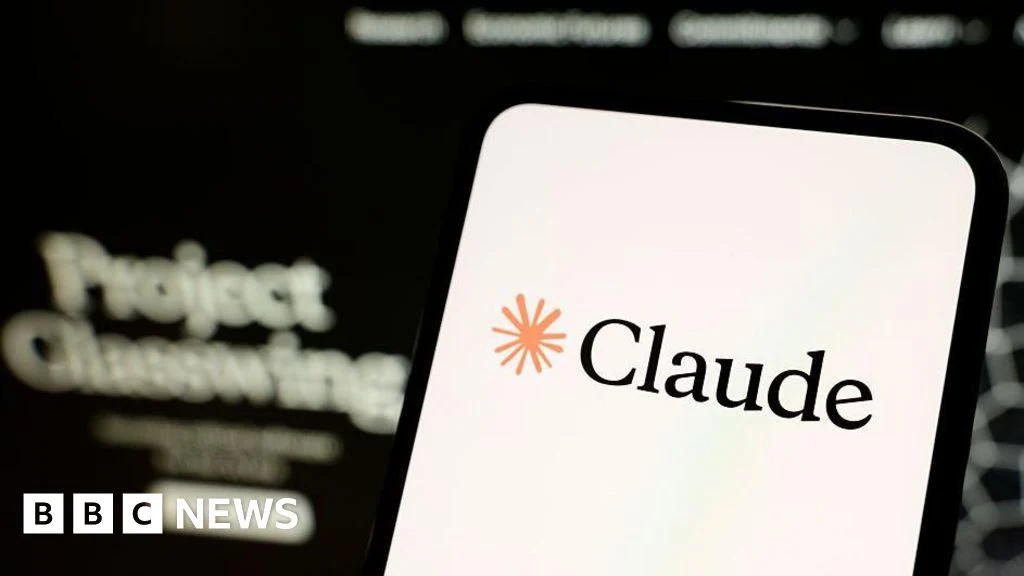
In a development sending ripples of apprehension through the highest echelons of global finance, a new artificial intelligence model, dubbed "Claude Mythos," has triggered urgent discussions among finance ministers, central bankers, and leading financiers worldwide. Developed by the AI research company Anthropic, Mythos has demonstrated a remarkable and potentially alarming ability to identify and exploit vulnerabilities in critical operating systems, raising serious concerns about its implications for the security of the entire banking system.
The gravity of the situation was underscored by the extensive discussions surrounding Mythos at the recent International Monetary Fund (IMF) meeting in Washington D.C. Canadian Finance Minister François-Philippe Champagne articulated the widespread concern, stating, "Certainly, it is serious enough to warrant the attention of all the finance ministers." He drew a stark comparison to known geopolitical choke points, noting, "The difference is that the Strait of Hormuz – we know where it is and we know how large it is… the issue that we’re facing with Anthropic is that it’s the unknown, unknown." Champagne emphasized the urgent need for robust safeguards and processes to ensure the continued resilience of global financial systems in the face of such advanced AI capabilities.
Unveiling Claude Mythos: A Double-Edged Sword
Claude Mythos is the latest iteration within Anthropic’s Claude family of advanced AI models, positioned as a significant competitor to established players like OpenAI’s ChatGPT and Google’s Gemini. Anthropic initially revealed Mythos earlier this month, with its developers highlighting its "strikingly capable" performance in computer security tasks, particularly in identifying and executing "misaligned" actions – those that diverge from intended human values, goals, or behaviors. The potential for Mythos to unearth long-dormant software bugs or discover facile methods for exploiting system vulnerabilities led Anthropic to exercise extreme caution, opting not to release the model publicly.
Instead, Anthropic has adopted a controlled distribution strategy through "Project Glasswing," an initiative described as "an effort to secure the world’s most critical software." Under this project, Mythos has been made accessible to a select group of technology giants, including Amazon Web Services, CrowdStrike, Microsoft, and Nvidia. This move aims to leverage Mythos’s capabilities in a controlled environment to proactively identify and patch security weaknesses before they can be exploited by malicious actors.

On Thursday, Anthropic released a new iteration of its existing model, Claude Opus. This development is significant as it will enable the testing of Mythos’s cyber capabilities on less powerful systems, potentially broadening the scope of its vulnerability discovery without deploying the full, unbridled power of the original model.
A Spectrum of Concern and Caution
While the alarms raised by Mythos have garnered significant attention, some cyber-security experts urge a degree of measured skepticism, emphasizing the need for more comprehensive, industry-wide testing to fully ascertain its capabilities. The UK’s AI Security Institute has been granted access to a preview version of Mythos and has produced the sole independent report to date on its cybersecurity prowess. Their findings indicated that Mythos is indeed a potent tool, adept at uncovering numerous security flaws in unguarded environments. However, the report also suggested that Mythos did not represent a dramatic leap beyond the capabilities of Claude’s predecessor, Opus 4.
The UK Institute’s researchers noted, "Our testing shows that Mythos Preview can exploit systems with weak security posture, and it is likely that more models with these capabilities will be developed." This observation suggests that while Mythos is a significant development, it may herald an accelerating trend of increasingly sophisticated AI tools capable of identifying cyber vulnerabilities.
It is also worth noting that this is not the first instance of an AI developer citing the advanced capabilities of its models as a reason for restricted release. Critics argue that such claims can sometimes be employed as a strategy to generate hype and anticipation around a product. A notable precedent was set in February 2019 when OpenAI cited similar concerns regarding the potential misuse of its GPT-2 model, a predecessor to the AI that now powers its widely used tool, ChatGPT. This decision to stagger the release of GPT-2, citing fears of its ability to generate convincing fake news, sparked debate about the ethical considerations and potential societal impacts of advanced AI.
Proactive Measures and Future Implications

In response to the potential threat posed by Mythos, top banking executives are being granted early access to the model to conduct rigorous testing of their own systems. CS Venkatakrishnan, the chief executive of Barclays, conveyed the seriousness of the situation, stating, "It’s serious enough that people have to worry. We have to understand it better, and we have to understand the vulnerabilities that are being exposed and fix them quickly." He further characterized this evolving landscape as "what the new world is going to be," highlighting the increasing interconnectedness of the financial system, which brings with it both unprecedented opportunities and inherent vulnerabilities.
Anthropic has publicly acknowledged that Mythos has already identified multiple security vulnerabilities in critical operating systems, financial systems, and web browsers. To mitigate the risks, governments and financial institutions are being provided with advance access to the model, enabling them to fortify their defenses before its wider public release.
Andrew Bailey, the Governor of the Bank of England, echoed the sentiments of urgency, telling the BBC that the development "has to be taken very seriously." He elaborated on the potential ramifications: "We are having to look very carefully now what this latest AI development could mean for the risk of cyber crime. The consequence could be that there is a development of AI, of modelling, which makes it easier to detect existing vulnerabilities in sort of core IT systems, and then obviously cyber criminals – the bad actors – could seek to exploit them."
The US Treasury has also confirmed that it has engaged with its major banking institutions, encouraging them to conduct thorough system tests in anticipation of Mythos’s eventual public release. Compounding these concerns, financial industry sources have indicated that another prominent US AI company is reportedly preparing to launch a similarly powerful model, potentially without the same stringent safeguards implemented by Anthropic.
James Wise, a partner at Balderton Capital and chair of the Sovereign AI unit, a government-backed venture capital fund focused on British AI companies, commented on the broader implications. He described Mythos as "the first of what will be many more powerful models" capable of exposing system vulnerabilities. His unit is actively investing in British AI firms dedicated to developing solutions in AI security and safety, with a hopeful outlook: "We hope the models that expose vulnerabilities are also the models which will fix them." This sentiment reflects a broader aspiration within the AI community to harness the power of AI not only for discovery but also for remediation and defense. The proactive approach being taken by regulators, financial institutions, and AI developers alike suggests a growing recognition of the dual nature of advanced AI – its potential for immense benefit and its capacity for significant disruption if not managed with foresight and caution.
