
 By Titik Puspa
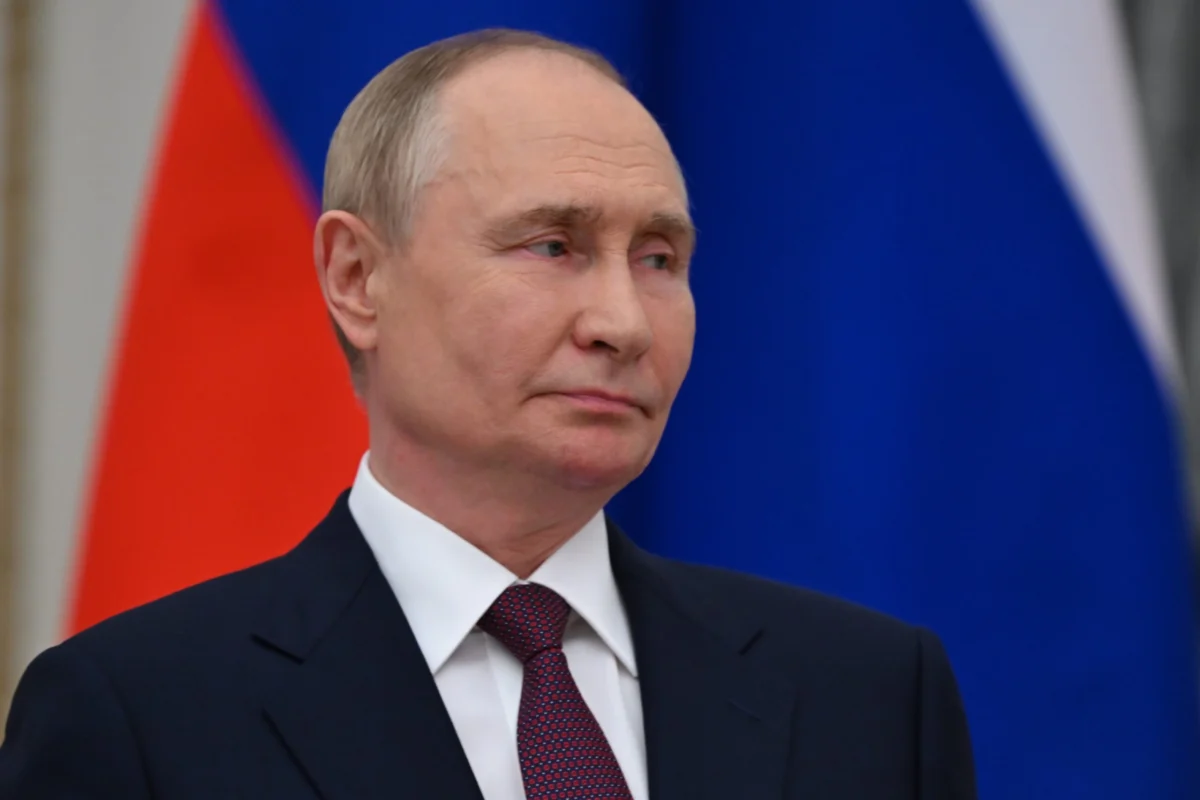
Moscow, Russia – October 29, 2026 – In a development that could significantly reshape the global satellite internet landscape and further complicate ongoing geopolitical conflicts, Russian President Vladimir Putin announced today that he is in "close contact" with SpaceX CEO Elon Musk regarding "Rassvet," Russia’s ambitious answer to Musk’s own ubiquitous Starlink constellation. The statement, made during a press conference at the Russia-Africa Summit, signals a potentially unprecedented level of engagement between the Kremlin and one of the world’s most influential tech entrepreneurs.
Putin, speaking with a characteristic blend of praise and strategic positioning, lauded Musk’s technological prowess. "Elon Musk is a genius, truly a genius," he stated. "He has already had more than 5,000 such satellites in orbit, while we are only taking the first steps." This acknowledgment, while seemingly complimentary, also highlights Russia’s strategic imperative to bridge the technological gap in a domain increasingly vital for both civilian communication and military operations. Rassvet, though in its nascent stages, represents Russia’s determination to establish its own sovereign satellite internet infrastructure, reducing reliance on foreign-controlled networks and asserting technological independence.
The implications of any potential collaboration or even understanding between Putin and Musk are profound, particularly in light of recent events surrounding Ukraine. Musk’s public pronouncements have increasingly revealed a complex and at times fraught relationship with Ukrainian President Volodymyr Zelensky. The Ukrainian military has heavily relied on Starlink, particularly its military-grade variant, Starshield, for critical battlefield communications, drone operations, and intelligence gathering since the full-scale Russian invasion in 2022.
Earlier this month, concerns within Ukraine intensified following reports that the United States was easing sanctions on Russia. These developments coincided with a period of significant connectivity disruptions for Ukrainian drones, raising fears that Kyiv could lose access to a vital technological lifeline. The Wall Street Journal reported that Musk had indeed ordered SpaceX to limit Ukraine’s Starlink access for approximately ten days, citing violations of the service’s terms of service. Musk himself, in a post on his social media platform X, stated that Ukraine had used the technology for "offensive drone strikes to kill people," a claim that underscores the dual-use nature of satellite internet services and the ethical quandaries they present in active conflict zones.
However, the narrative surrounding these disruptions is not entirely clear-cut. Other reports suggested that the directive to limit Starlink access originated from within the White House, adding another layer of complexity to the geopolitical maneuvering. Regardless of the ultimate source of the order, the episode highlighted the precarious dependence of Ukraine on a privately held technology company operating within a highly charged international conflict. Following the disruptions, Starlink service in Ukraine has reportedly resumed normal operations, a development that likely brought significant relief to Ukrainian forces.
Musk’s own pronouncements on the matter have been stark. In a separate post on X, he articulated the critical role Starlink plays for Ukraine’s defense: "Were Starlink to be turned off, the Ukrainian front line would collapse immediately. This is NOT a threat, it is simply a statement of fact." This statement, while framed as an observation, carries immense weight, underscoring the strategic vulnerability Ukraine faces without consistent access to such technology. It also implicitly positions Musk as a pivotal, albeit unofficial, player in the conflict’s dynamics.

The Russian initiative, Rassvet, aims to create a similar, if not competing, network. Russia’s existing GLONASS navigation system, while functional, has not achieved the global reach or diverse application profile of systems like GPS. In the realm of satellite internet, Russia has historically lagged behind Western counterparts. Rassvet, therefore, represents a significant national effort to establish a robust, domestically controlled communication network. The project reportedly involves a constellation of satellites designed to provide broadband internet services across Russia and potentially to allied nations. The development and deployment of such a system are complex and resource-intensive, requiring substantial investment in launch capabilities, satellite manufacturing, and ground infrastructure.
Putin’s public mention of "close contact" with Musk, while vague, could be interpreted in several ways. It might signify an attempt by Russia to leverage Musk’s expertise and potentially his technological innovations, even as it develops its own parallel system. Alternatively, it could be a strategic diplomatic maneuver, designed to sow discord among Western allies or to gauge Musk’s willingness to engage with Russian interests. Given Musk’s often contrarian stance on international affairs and his past criticisms of certain US foreign policy decisions, such overtures from the Kremlin are not entirely unexpected.
The potential for collaboration, or even a tacit understanding, between Russia and Musk on satellite internet technologies raises significant concerns for Ukraine and its Western partners. A scenario where Russia possesses a functioning, independent satellite internet network, potentially bolstered by insights or technologies influenced by Musk, could dramatically alter the information warfare landscape. It could provide Russia with an alternative communication channel, less susceptible to Western sanctions or interdiction, and potentially offer a means to disseminate its own narratives and propaganda more effectively.
Furthermore, the financial and strategic implications of Rassvet cannot be understated. Russia has historically sought to maintain technological parity, or at least strategic autonomy, in key defense and communication sectors. The development of Rassvet aligns with this broader objective. If successful, it could not only serve Russia’s domestic needs but also become a significant export commodity, particularly to nations seeking alternatives to Western-dominated technological ecosystems. The Russia-Africa Summit, where Putin made his announcement, itself serves as a platform for expanding Russian influence and economic ties across the African continent, a region where satellite internet access remains a critical developmental challenge and a potential market for new service providers.
The history of satellite internet development is marked by intense competition and rapid technological advancement. Companies like SpaceX with Starlink, Amazon with Project Kuiper, and OneWeb have poured billions of dollars into building vast constellations of low-Earth orbit (LEO) satellites. These networks promise to deliver high-speed internet to underserved and remote areas, transforming connectivity for billions worldwide. Russia’s Rassvet project is an attempt to enter this increasingly crowded and technologically sophisticated arena, albeit with a clear strategic and geopolitical agenda.
The success of Rassvet will depend on several factors, including Russia’s ability to secure consistent funding, overcome technological hurdles in satellite manufacturing and launch, and navigate the complex regulatory landscape of space operations. International sanctions, while not directly targeting civilian satellite internet development, can indirectly impact access to critical components and technologies. However, Russia has demonstrated resilience in adapting to sanctions and pursuing its strategic objectives through indigenous development and international partnerships outside the Western sphere.
The very fact that Putin chose to publicly acknowledge contact with Musk regarding Rassvet is a testament to the perceived importance of this initiative and the strategic value placed on any potential association with Musk’s endeavors. It is a narrative that will undoubtedly be closely watched by defense analysts, cybersecurity experts, and policymakers globally, as it touches upon critical issues of technological sovereignty, information control, and the evolving nature of international conflict in the digital age. The intersection of geopolitical ambition, cutting-edge technology, and the influence of a high-profile tech magnate presents a complex and unfolding story with potentially far-reaching consequences.
