
 By admin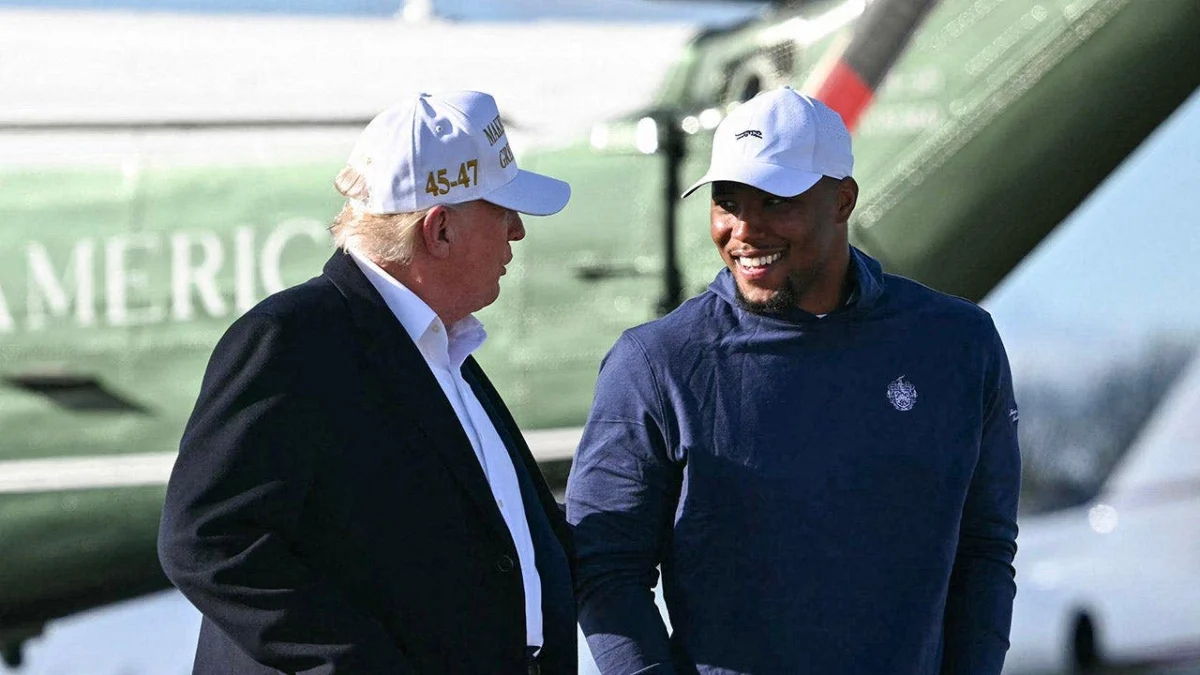
The triumphant return of the Philadelphia Eagles to the White House to commemorate their Super Bowl LIX victory was a moment of celebration for the team and their devoted fanbase. However, for star running back Saquon Barkley, the lead-up to this auspicious event was marked by a different kind of headline, one that placed him squarely in the often turbulent waters of American politics. Days before the Eagles were scheduled to be honored, Barkley found himself at the center of a significant public discussion after a personal excursion that included a round of golf and a flight on Air Force One with then-President Donald Trump. This experience, though seemingly a simple act of engaging with the nation’s highest office, ignited a firestorm of criticism and compelled Barkley to publicly defend his actions and reflect on the delicate balance athletes must strike in an increasingly polarized society.
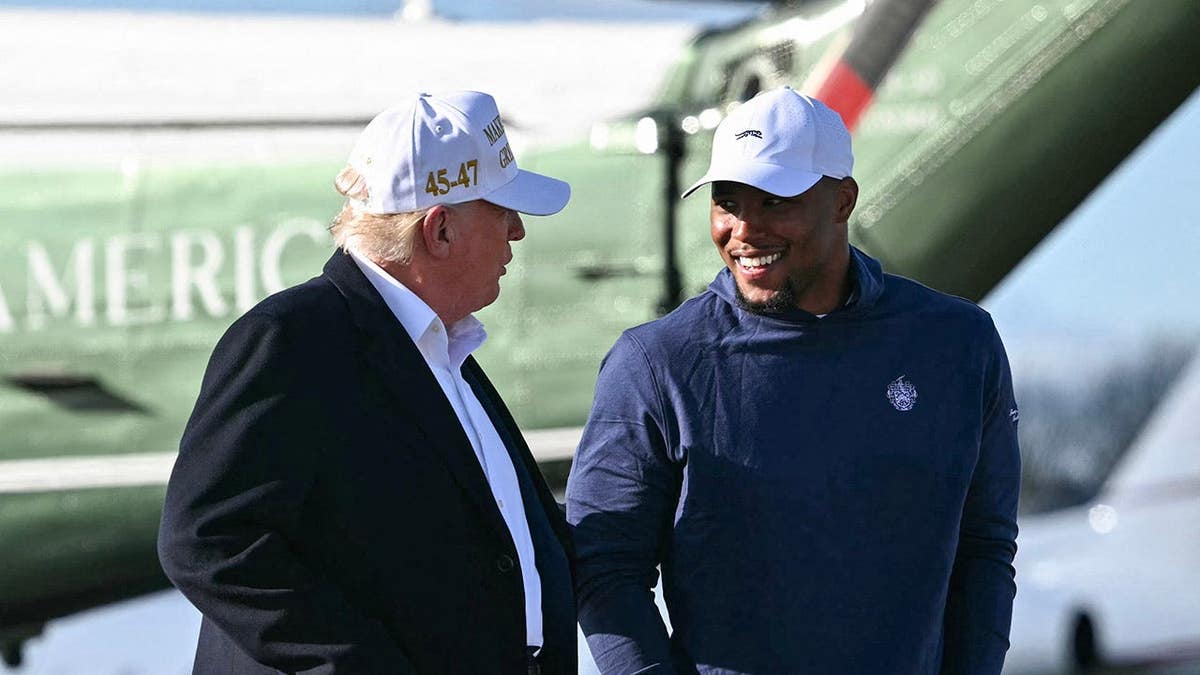
Barkley, fresh off a phenomenal season that saw him amass over 2,000 rushing yards and earn the coveted Offensive Player of the Year award, was at the pinnacle of his athletic career. It was in this context of widespread acclaim and professional success that he accepted an invitation to spend a day with President Trump at his golf course in Bedminster, New Jersey. The visual of Barkley, a prominent figure in the NFL, alongside the sitting president, particularly on Air Force One, quickly circulated and drew immediate attention. For many, the act was perceived as an endorsement of President Trump’s political platform, a stance that proved deeply divisive in the current political climate.
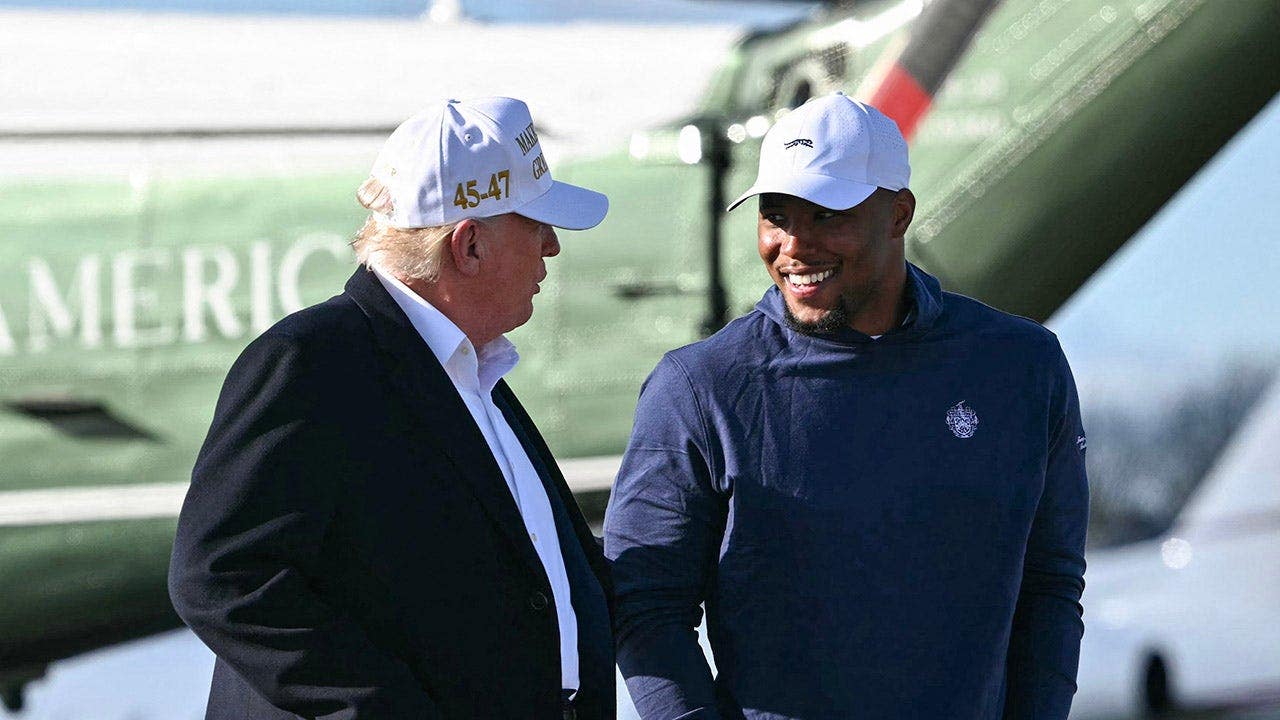
The backlash was swift and intense. Social media platforms buzzed with reactions, ranging from disappointment to outright condemnation. Many questioned Barkley’s judgment, suggesting that his association with a controversial political figure could alienate a significant portion of his fanbase. In response to the mounting criticism, Barkley took to X (formerly Twitter) to address the situation directly. "lol some people are really upset cause I played golfed and flew to the White House with the PRESIDENT," he posted. "Maybe I just respect the office, not a hard concept to understand. Just golfed with Obama not too long ago… and look forward to finishing my round with Trump! Now ya get out my mentions with all this politics and have amazing day." His statement highlighted a desire to separate the act of engaging with the presidency from partisan politics, emphasizing a respect for the institution itself.
Barkley’s experience was not an isolated incident for athletes navigating the intersection of sports and politics. New York Giants quarterback Jaxson Dart had recently faced a similar predicament after introducing President Trump at a New York event in May. Dart, like Barkley, encountered significant criticism, underscoring a broader trend where public figures, particularly athletes, are scrutinized for any perceived political alignment. Barkley, drawing from his own experience, recognized the inherent difficulty of this situation. He shared his perspective in a recent interview with Fox News Digital, stating, "You’re not going to win. I played golf with the president of the United States of America, Mr. Trump, and I played with Barack Obama, and the one day I play with Trump, all these crazy things were said about me, and now I’m this person, I’m that person, and I don’t align – some of the stuff that I don’t even align with. But it’s just, as an athlete, you know, you’re not going to win. You’re not going to win on that…"
Barkley elaborated on the pressures faced by athletes in the current socio-political landscape. He articulated the feeling that society often forces individuals into rigid categories, demanding they choose sides. "That was a decision that I made, and I got a lot of backlash for it. I can understand why I got backlash for it. I don’t think the things that were said about me is true. I know it’s not true. It’s a lot of stuff that – just because, you know, I don’t get into, like, you got to be this way or that way. Just because you played golf with the president of United States doesn’t make you this. Just because you played golf with Barack Obama don’t make you this, but in the world that we live in, the chaos that we live in, you’re either this or you’re that. And that’s just so far from the truth. But at the end of the day, I was blessed with a pretty cool opportunity." This sentiment reflects a growing frustration among public figures who feel their actions are being oversimplified and politicized, leaving little room for nuance or personal discretion.
The tradition of championship sports teams visiting the White House is a long-standing one, dating back to President Theodore Roosevelt. It serves as a ceremonial recognition of athletic achievement and a moment for national pride. However, in recent years, this tradition has become increasingly politicized, with several teams, most notably in the NBA, opting to decline the invitation. For Barkley, the White House visit represented a culmination of his career goals and a continuation of a cherished tradition. He explained his perspective: "You may not get that opportunity again, and it’s no guarantee that we’re going to win a Super Bowl again, and if we win a Super Bowl, growing up my whole life, what do you do? You win a Super Bowl, you go to the White House, you represent your team." This highlights a generational perspective on the significance of the White House visit as a symbol of team accomplishment and national recognition, irrespective of the political climate.
Adding another layer to the narrative, Barkley revealed that he had been offered a position on President Trump’s Council on Sports, Fitness, and Nutrition but ultimately declined. While he did not elaborate on the specific reasons for his refusal, the offer itself further underscored his engagement with the Trump administration beyond the initial golf outing.
The ripple effects of such political engagements can extend beyond the individual athlete. The case of Jaxson Dart and his Giants teammate Abdul Carter serves as a pertinent example. Carter, a defensive lineman, initially expressed disbelief and concern over a video of Dart with President Trump, questioning, "What are we doing man?" This internal locker room tension illustrates how political associations can create divisions even within a team. However, Dart and Carter reportedly addressed the matter directly, discussing their differing perspectives and ultimately reconciling, even sharing a hug. This resolution, documented as they spoke to reporters, emphasizes the importance of open communication and understanding within a team environment, even when faced with divergent views on sensitive issues. Barkley acknowledged this dynamic, expressing his gladness that Dart and his teammates were able to move past the situation and refocus on their sport. "I’m glad him everything that went over there in New York, they put that in the past and get back to ball," Barkley commented.
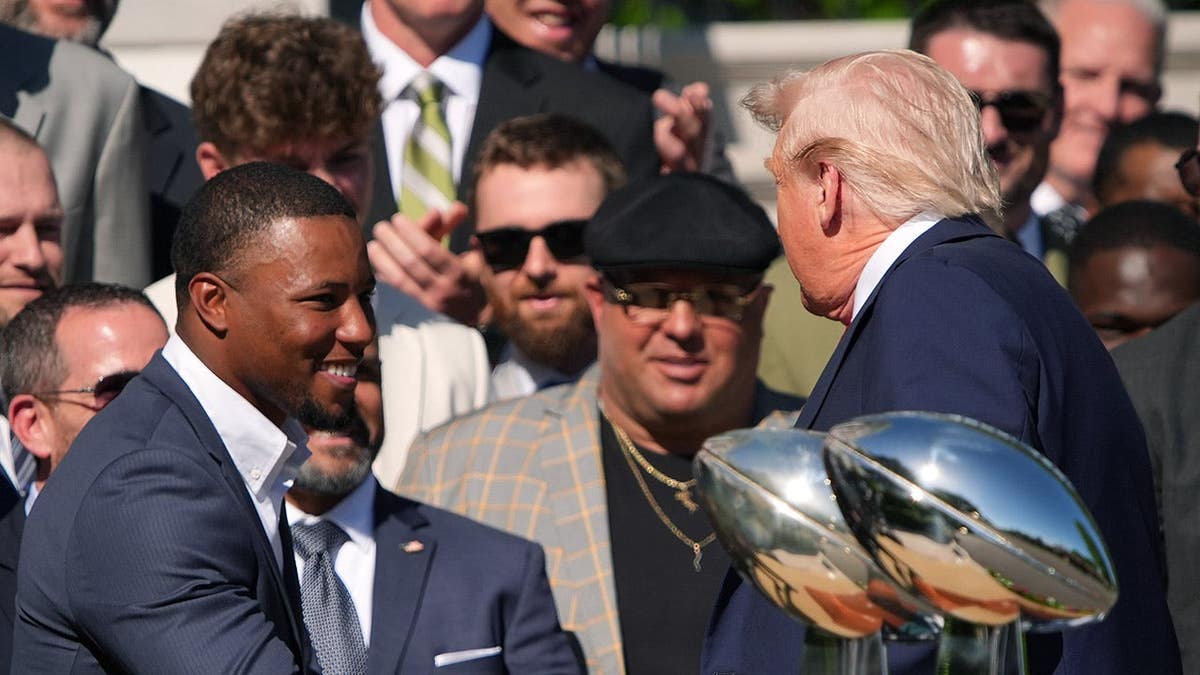
The phenomenon of athletes engaging with political figures, whether intentionally or incidentally, raises broader questions about the role of sports in society. While some argue that athletes should remain apolitical to avoid alienating audiences, others believe they have a platform and a responsibility to engage with social and political issues. Barkley’s reflections suggest a personal philosophy that prioritizes respect for institutions and the pursuit of once-in-a-lifetime opportunities, even when faced with the potential for political fallout. His candidness about the backlash he received and his reasoning behind his actions offers a valuable insight into the complex decisions athletes must make in an era where the lines between sports, entertainment, and politics are increasingly blurred. The enduring message from Barkley’s experience is the challenge of navigating public life in a hyper-polarized world, where even personal interactions can become subject to intense political scrutiny, and the difficulty for athletes to remain purely spectators in the political arena.
