
 By admin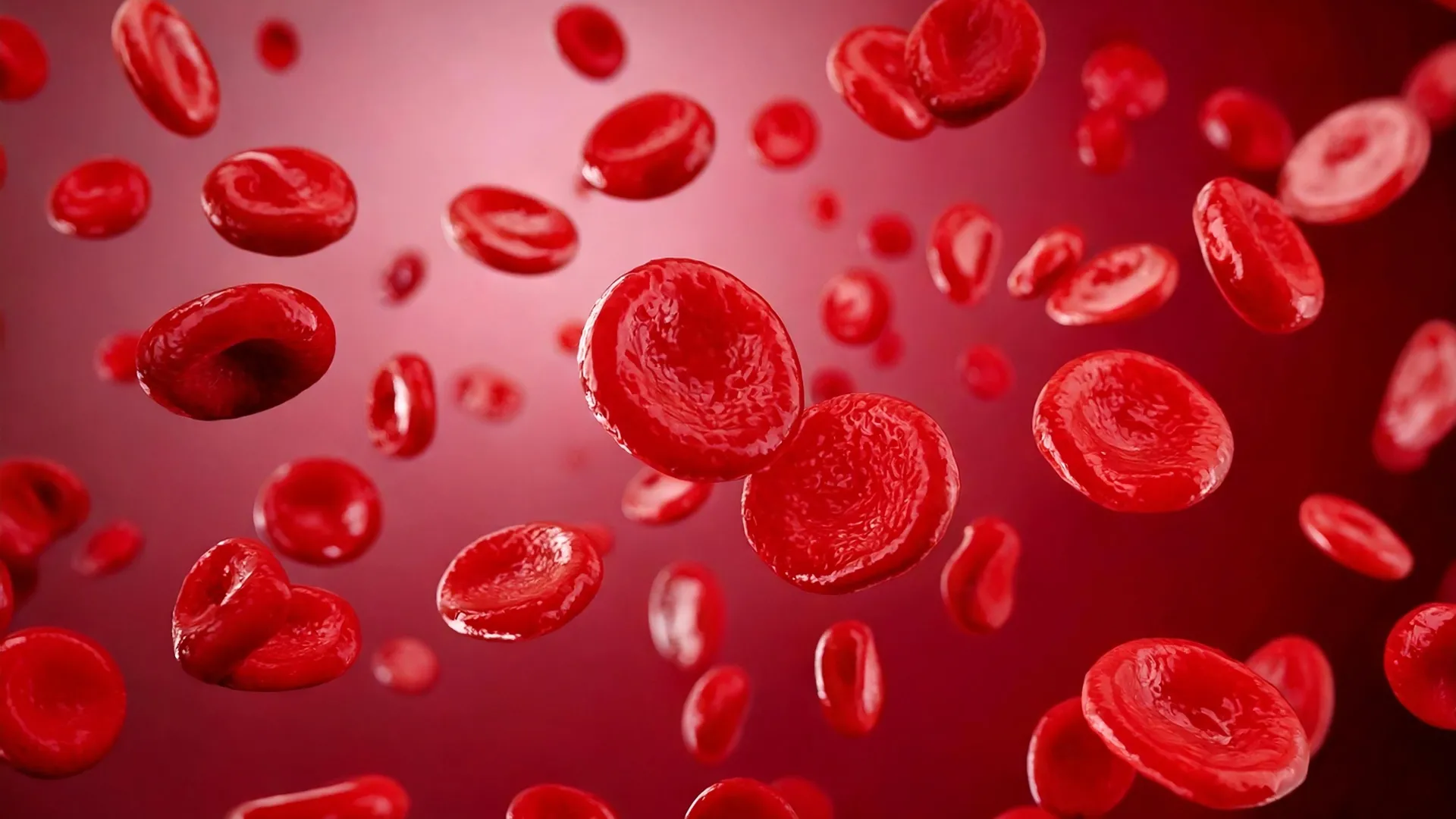
The findings may be particularly important for children and teenagers. Because their bodies are still developing and their physiological systems are more plastic, younger generations are expected to experience the greatest lifetime exposure to elevated atmospheric CO2. This prolonged exposure during critical developmental windows could amplify the observed shifts, potentially leading to cumulative effects on health trajectories over their lifespan. Unlike adults whose physiological systems are largely mature, children’s bodies are still establishing their homeostatic set points. Chronic exposure to novel environmental stressors during these formative years could imprint lasting changes, making them a demographic of particular concern in this emerging field of research. The concept of "lifetime exposure" underscores an issue of intergenerational equity, where future generations inherit not only a warmer planet but potentially a subtly altered internal physiology.
Decades of Blood Data Reveal a Systemic Shift
In a pioneering study published in the esteemed journal Air Quality, Atmosphere and Health, a collaborative team of scientists from The Kids Research Institute Australia, Curtin University, and The Australian National University (ANU) embarked on an ambitious examination of more than two decades of U.S. population health data. Their meticulous analysis uncovered persistent and concerning changes in several crucial measures of blood chemistry that closely mirrored the relentless upward trend in atmospheric CO2 concentrations. This was not a fleeting observation but a consistent pattern emerging from a vast dataset, lending significant weight to their conclusions.
The researchers leveraged the immense power of the U.S. National Health and Nutrition Examination Survey (NHANES), a program of studies designed to assess the health and nutritional status of adults and children in the United States. NHANES combines interviews, physical examinations, and a wide array of laboratory tests, providing an invaluable snapshot of population health over time. Specifically, the team analyzed blood test results from approximately 7,000 individuals, meticulously collected at two-year intervals spanning from 1999 to 2020. This longitudinal approach, tracking changes over more than two decades across a large and representative cross-section of the U.S. population, provided a robust foundation for identifying systemic trends rather than mere random fluctuations.
The most striking finding was the significant increase in average serum bicarbonate levels, which rose by approximately 7 percent since 1999. Bicarbonate (HCO3–) is a critical blood marker, intimately associated with carbon dioxide in the body, and a cornerstone of the body’s intricate acid-base buffering system. Its primary role is to maintain the blood’s pH within a very narrow, healthy range (typically 7.35 to 7.45), preventing it from becoming too acidic or too alkaline. A 7% increase over two decades suggests a sustained compensatory effort by the body. Concurrently, the study also revealed a decrease in average levels of two other vital minerals: calcium and phosphorus. These minerals are essential for a multitude of physiological functions, including bone health, nerve transmission, muscle contraction, and cellular energy production. Their observed decline raises additional questions about the broader systemic impacts of these internal shifts.
These compelling biological trends did not occur in isolation. They unfolded precisely as atmospheric CO2 concentrations climbed steadily from approximately 369 parts per million (ppm) in the year 2000 to surpass 420 ppm today. To put this into perspective, for hundreds of thousands of years before the Industrial Revolution, atmospheric CO2 levels naturally fluctuated between 180 and 280 ppm. The current levels represent an unprecedented concentration in human history, having accelerated dramatically since the mid-20th century due to the burning of fossil fuels and land-use changes. The direct correlation between the external atmospheric changes and internal physiological shifts observed in the blood data strongly suggests a causal link that warrants urgent investigation.
Study author Associate Professor Alexander Larcombe, a leading expert in respiratory health and environmental impacts, articulated the profound implications of these findings. "What we’re seeing is a gradual, yet persistent, shift in human blood chemistry that mirrors the rise in atmospheric carbon dioxide, which is undeniably driving climate change," A/Prof Larcombe stated. He emphasized that these results indicate the human body may already be subtly adjusting, or attempting to adjust, to the altered composition of the atmosphere we inhale daily. This adjustment, while seemingly adaptive in the short term, could have unforeseen long-term consequences.
How the Body Responds to More CO2: A Delicate Balance Under Stress
At the heart of these physiological changes lies the body’s sophisticated system for regulating its acid-base balance, primarily through the carbonic acid-bicarbonate buffer system. When CO2 levels in the blood increase—whether from metabolic processes or, as this research suggests, from elevated ambient atmospheric CO2—it reacts with water to form carbonic acid (H2CO3), which then dissociates into hydrogen ions (H+) and bicarbonate ions (HCO3–). An increase in H+ ions would typically lower blood pH, making it more acidic. To counteract this, the body’s kidneys can retain additional bicarbonate ions and excrete more H+ ions, effectively increasing the concentration of bicarbonate in the blood to "buffer" the excess acidity and help keep blood pH stable within its narrow, life-sustaining range.
"Although this physiological response helps preserve that delicate acid-base balance, maintaining it over long periods, potentially for decades, could impose a chronic physiological burden and have subtle yet significant physiological effects," A/Prof Larcombe explained. The body expends energy and resources to achieve this homeostatic compensation. While resilient, the human body is not infinitely adaptable, particularly when faced with sustained environmental pressures outside its evolutionary norm.
The projections derived from the study’s modeling are particularly concerning. "If current trends continue, our modeling indicates that average bicarbonate levels in the population could approach the upper limit of today’s accepted healthy range within the next 50 years," A/Prof Larcombe warned. Reaching the upper limit, while not immediately indicative of acute illness, signals a state of chronic physiological stress. Persistent elevation of bicarbonate can, in some clinical contexts, be associated with conditions like metabolic alkalosis, which can impact various organ systems, though the gradual, population-level shifts observed here represent a novel challenge. Similarly, the modeling suggests that average calcium and phosphorus levels could reach the lower end of their healthy ranges later this century, potentially impacting bone density, cellular function, and overall metabolic health in the long run. The interplay between these markers – how changes in bicarbonate might influence calcium and phosphorus metabolism – is an area ripe for further mechanistic investigation.
It is crucial to remember that modern humans evolved and thrived when atmospheric CO2 concentrations were remarkably stable, typically hovering around 280 to 300 ppm for hundreds of thousands of years. Our respiratory and circulatory systems, along with our internal buffering mechanisms, are exquisitely tuned to this historical range. However, during the past decade alone, atmospheric CO2 levels have risen by an average of about 2.6 ppm each year, a rate unprecedented in geological history. Alarmingly, 2024 has seen an even sharper increase of 3.5 ppm, indicating an accelerating trend. This rapid and continuous departure from our evolutionary baseline is what poses the fundamental challenge to human physiology.
Fellow author Dr. Phil Bierwirth, a retired environmental geoscientist affiliated with the ANU Emeritus Faculty, offered a crucial scientific caveat. He emphasized that while the study identifies a robust and consistent correlation, it does not, by itself, establish a direct cause-and-effect relationship. This is a standard tenet of observational epidemiological research. However, he stressed that "the sheer consistency and magnitude of these changes across a large, diverse population over two decades warrants serious attention and immediate further investigation." The compelling temporal association and the biological plausibility of the mechanism make the correlation highly suggestive.
Dr. Bierwirth challenged the notion that the body is simply adapting seamlessly. "I actually think that what we are seeing is because our bodies are not adapting in a way that fully compensates for the novel conditions," he contended. "It appears we are adapted to a range of CO2 in the air that may now have been surpassed." He elaborated on the delicate equilibrium within the body: "The normal range maintains a delicate balance between how much CO2 is in the air we breathe, the partial pressure of CO2 in our blood, our breathing rate, and bicarbonate levels in the blood." When atmospheric CO2 rises, the partial pressure of CO2 in the alveoli of the lungs increases, making it harder for the body to efficiently offload CO2. This leads to a higher partial pressure of CO2 in the arterial blood (PaCO2). The body then attempts to compensate, primarily through renal bicarbonate retention, but this compensatory mechanism might itself be indicative of stress.
"As CO2 in the air is now higher than humans have ever experienced in their evolutionary history, it appears to be building up in our bodies," Dr. Bierwirth explained. "Maybe we can never fully adapt such that it is vitally important to limit atmospheric levels of CO2." This perspective highlights the potential limits of human physiological resilience in the face of rapid environmental change, underscoring the urgent need for global action on emissions.
A Potential New Dimension of Climate Risk: Beyond the Obvious
The researchers assert that their results introduce a potential new dimension of climate-related risk, one that is fundamentally different from the more familiar and widely discussed threats such as devastating heatwaves, destructive extreme weather events, and the inexorable rise of sea levels. While these immediate and visible impacts dominate headlines, the subtle, pervasive physiological changes identified in this study represent an insidious, chronic threat that operates beneath the surface of acute awareness.
According to A/Prof Larcombe, the increasing concentration of CO2 in our atmosphere may therefore need to be considered not only as an environmental concern that drives planetary warming but also as a direct, long-term public health factor that demands continuous monitoring and proactive policy intervention. "We’re not saying people are suddenly going to become acutely unwell or experience a sudden catastrophic health event when we cross a certain threshold," he clarified. "But this research strongly suggests there may be gradual, chronic physiological changes occurring at a population level, and that’s something we absolutely should be monitoring as part of future climate change policy and public health surveillance." The cumulative effects of such subtle shifts over decades could, over time, lead to an increased prevalence of various non-communicable diseases or exacerbate existing health conditions, representing a silent burden on public health systems worldwide.
To address this emerging challenge, the researchers recommend the establishment of integrated monitoring systems. Specifically, they advocate for continuously tracking the composition of the atmosphere in conjunction with key biological markers across diverse human populations. This dual surveillance, tracking both environmental inputs and physiological responses alongside established climate indicators like global temperature and sea level, could provide scientists with an unprecedented understanding of how slow, pervasive environmental changes affect human biology over periods spanning decades. Such an interdisciplinary approach, combining atmospheric science, environmental epidemiology, and human physiology, is essential for truly grasping the full spectrum of climate change impacts.
CO2 Reduction Could Have Profound Health Implications
The imperative to cut CO2 emissions remains paramount for limiting global warming and averting catastrophic environmental consequences. However, the findings of this study introduce a powerful new argument for decarbonization: the possibility that lowering emissions could have an additional, direct role in protecting long-term human health at a fundamental physiological level. This adds a critical public health dimension to the economic, environmental, and social justifications for aggressive climate action.
The researchers strongly argue that these potential physiological effects stemming from rising CO2 concentrations should therefore be explicitly considered and integrated into future discussions about climate policy, alongside its widely established environmental consequences. Moving forward, climate policy must be viewed not just through the lens of ecological preservation or disaster mitigation, but also as a crucial determinant of global public health. Understanding and mitigating these subtle biological impacts could provide a more comprehensive framework for valuing climate action and galvanizing political will. It reframes the climate crisis not merely as an external environmental threat, but as an internal, personal health challenge for every individual on the planet.
Associate Professor Larcombe’s work is conducted as part of the Wal-yan Respiratory Research Centre, a collaborative partnership between The Kids Research Institute Australia, Perth Children’s Hospital, and Perth Children’s Hospital Foundation. This affiliation underscores the direct relevance of this research to pediatric health and the long-term well-being of future generations, further emphasizing the urgent need for a deeper understanding of how our changing planet is shaping the very fabric of human life.
