
 By admin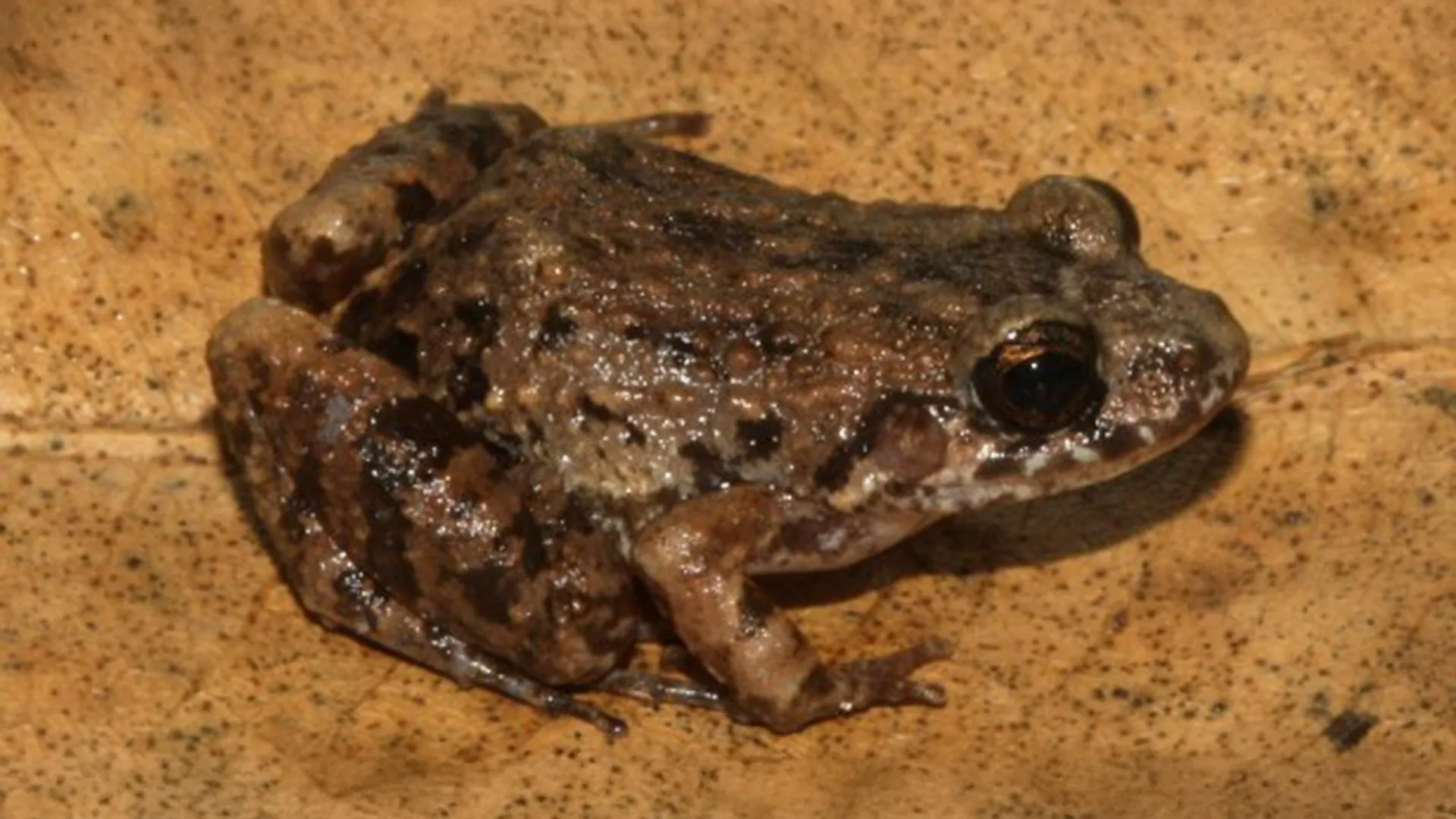
The identification of Adenomera varcena emerged from a meticulous combination of scientific approaches, including advanced DNA sequencing, detailed bioacoustic analysis of its unique mating call, precise morphological comparisons, and an in-depth understanding of its specific habitat. This multi-pronged methodology was essential because, to the untrained observer, A. varcena bears a striking resemblance to several closely related species within its genus, Adenomera. Such instances of cryptic diversity are common in highly speciose ecosystems like the Amazon, making robust, evidence-based identification crucial for accurate biodiversity assessment and conservation planning.
The research team behind this significant finding includes prominent figures in Neotropical herpetology. Among them are Célio F. B. Haddad, a distinguished professor at São Paulo State University (UNESP), and Thiago R. Carvalho, a professor at the Federal University of Minas Gerais (UFMG). Both scientists are integral members of the Center for Research on Biodiversity Dynamics and Climate Change (CBioClima), a Research, Innovation, and Dissemination Center (RIDC) that receives vital funding from the São Paulo Research Foundation (FAPESP). Their collaborative efforts exemplify the interdisciplinary and institutional cooperation necessary to unlock the Amazon’s remaining biological secrets.
The genesis of this discovery lies in extensive field expeditions conducted in the remote Upper Juruá River region of western Acre, a Brazilian state bordering Peru and Bolivia. This frontier area of the Amazon basin is renowned for its immense ecological complexity and relatively underexplored territories. Scientists meticulously surveyed forest fragments situated near the meandering Moa and Crôa rivers, in the vicinity of the city of Cruzeiro do Sul. These regions are characterized by dynamic hydrological cycles, with vast areas experiencing seasonal inundation, creating unique ecological niches. It was within these seasonally flooded forests that the elusive Adenomera varcena was first encountered, clinging to life in an environment that shapes its very existence.
The name varcena itself is a direct tribute to its habitat. It refers specifically to "várzea" forests, a Portuguese term describing the Amazonian floodplain ecosystems that are periodically submerged by nutrient-rich white-water rivers originating from the Andes. These forests are distinct from "igapó" forests, which are flooded by blackwater rivers. The discovery of Adenomera varcena in such an environment is particularly noteworthy because members of the genus Adenomera have historically been associated with drier, non-flooded upland forests, known as "terra firme." This finding dramatically expands our understanding of the ecological breadth of the genus, revealing a previously unknown habitat association and suggesting a greater adaptive capacity than previously hypothesized. It prompts new questions about the evolutionary pathways that allowed this lineage to colonize and thrive in such a distinct, challenging environment.
Pinpointing Adenomera varcena as a novel species required a deep dive into its biological nuances, moving far beyond superficial examination. The research team meticulously compared genetic data, utilizing molecular phylogenetic techniques to establish its evolutionary relationships and confirm its distinct lineage. Alongside this, recordings of its distinctive mating calls were analyzed using bioacoustics, a field that studies the sounds produced by living organisms. These acoustic signatures, often species-specific, play a crucial role in mate recognition and reproductive isolation among anurans (frogs and toads). Morphological analysis, involving detailed measurements and examinations of body shape and external features, further refined the identification process. Finally, habitat information and comparisons with existing specimens housed in scientific collections provided essential context, ensuring the new species was not merely a variant of an already known one.
While Adenomera varcena exhibits a general physical resemblance to its close relatives, subtle yet significant morphological and acoustic features ultimately set it apart. One observable physical difference identified by the researchers is the absence of a distinct dark spot on the underside of its forearm, a trait present in some other Adenomera species. However, it was its unique vocalization that provided one of the most compelling pieces of evidence for its species status. The frog produces a short, pulsed sound characterized by a slow rhythm, coupled with other specific acoustic characteristics such as pulse rate and dominant frequency, which collectively form a distinctive acoustic signature. This "frog song" acts as a species-specific identifier, crucial for conspecific recognition in the dense, often dark, undergrowth of the floodplain forest.
This discovery serves as a powerful reminder of how much Amazonian biodiversity remains undocumented, particularly among species that exhibit cryptic diversity. It underscores that what appears to be a single, widespread species might, upon closer genetic and behavioral scrutiny, reveal itself to be an assemblage of several distinct evolutionary units. The researchers’ investigation also yielded tantalizing evidence suggesting that numerous other Adenomera lineages have yet to be formally described. This implies that scientists have a substantial amount of work ahead to fully comprehend the intricate patterns of diversification and distribution of these amphibians throughout the vast Amazon basin. Each new description is not just an addition to a species list, but a piece of a larger puzzle, helping to build a more complete picture of life’s evolution and distribution.
The long-term survival of Adenomera varcena, like countless other species in the Amazon, is inextricably linked to the stability of its unique habitat, which is increasingly threatened by global climate change. Scientists are still in the early stages of understanding the specific ecological requirements and life history traits of A. varcena, such as its reproductive period and mode. This knowledge gap makes it challenging to predict with certainty the precise impacts of environmental shifts. However, the potential ramifications are clear. As Professor Carvalho articulates, "Since we don’t yet know in detail the species’ ecological requirements and its natural history [reproductive period and mode], it’s difficult to predict the impacts of climate change, which may alter the seasonal flooding patterns of the floodplain forest ecosystem in this region of the Amazon."
The várzea forests, being intrinsically linked to seasonal hydrological cycles, are particularly vulnerable to changes in precipitation patterns, river flow, and extreme weather events exacerbated by climate change. Alterations in the timing, duration, or intensity of seasonal flooding could severely disrupt the delicate balance of these ecosystems. Carvalho warns, "Since the species has a preference for this specific ecosystem, it’s possible to suggest that these changes in flood dynamics may influence – though we don’t know to what extent – the species’ reproductive behavior." Such disruptions could impact breeding success, larval development, and ultimately, the population viability of Adenomera varcena. The specter of species becoming locally extinct even before they are formally recognized by science, through naming and description, looms large in a scenario of accelerated natural habitat loss.
This urgency forms the core of Professor Haddad’s perspective on the ongoing race to catalog Brazil’s unparalleled biodiversity. He laments that "Currently, the pace of ecosystem destruction outpaces the capacity of taxonomic studies to keep up." This alarming imbalance means that countless species, like A. varcena before its description, remain in a state of legal and environmental limbo. They are omitted from official lists of threatened fauna, thereby lacking the critical protections afforded by conservation laws and environmental policies. Haddad stresses, "Thus, describing new species serves as a tool that aids in their protection." Beyond immediate conservation, he adds, "Furthermore, deepening our knowledge of actual biodiversity expands our understanding of the evolution of organisms, consolidating an essential pillar for both pure science and conservation strategies."
Formally identifying and describing a new species carries profound practical consequences for conservation. An unnamed species is, in essence, invisible to conservation efforts. It cannot be included in threatened species lists, such as the IUCN Red List, nor can its habitat be specifically protected under environmental legislation. It is absent from baseline biodiversity assessments and ecological impact studies. This lack of formal recognition renders it legally and environmentally vulnerable, making it susceptible to extinction without ever having been fully acknowledged by humanity. The identification of Adenomera varcena thus does more than merely expand scientific knowledge of Neotropical amphibians; it powerfully illustrates why taxonomy, often perceived as an arcane discipline, remains a fundamental and urgent component of modern conservation. Rare species, or those restricted to highly specific and vulnerable environments like the várzea forests, are especially prone to being overlooked and lost forever if they have not been formally described and documented.
The success of the Adenomera varcena project is a testament to the power of collaborative science. It brought together a diverse consortium of researchers from leading Brazilian and international institutions. These included the Federal University of Minas Gerais (UFMG), São Paulo State University (UNESP), the University of São Paulo (USP), the Federal University of Uberlândia (UFU) in Brazil, and the Pontifical Catholic University of Ecuador (PUCE-Quito). This extensive network of expertise, supported by crucial funding from FAPESP through CBioClima, allowed for the pooling of resources, knowledge, and perspectives necessary to tackle the complex challenges of discovering and describing new species in the vast and intricate Amazonian ecosystem. Such collaborations are increasingly vital as scientists race against time to understand and protect the planet’s rapidly diminishing biodiversity. The discovery of Adenomera varcena is a small but significant victory in this ongoing, global endeavor, illuminating both the enduring mysteries of the Amazon and the imperative to safeguard its irreplaceable natural heritage.
