
 By admin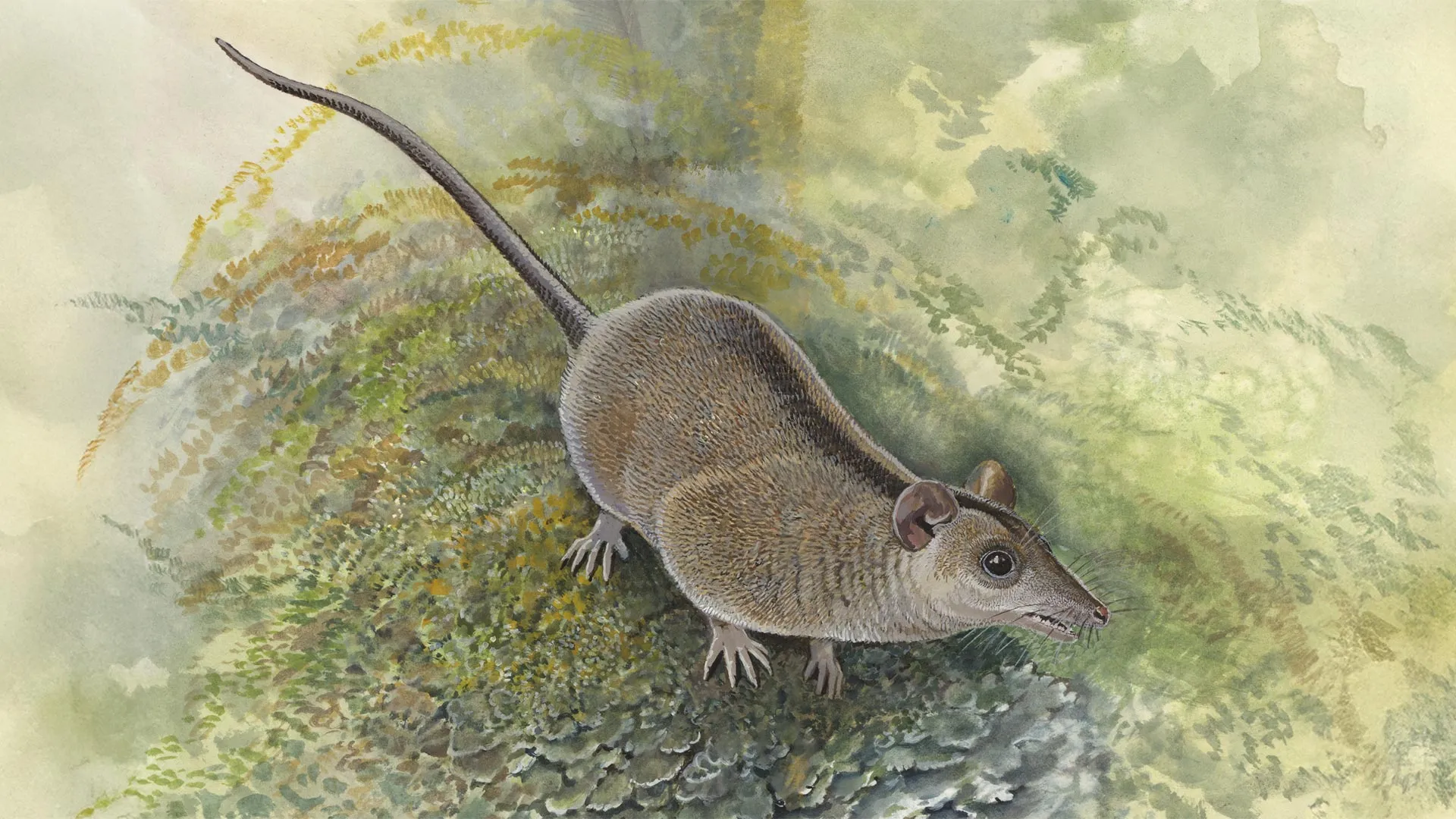
For over 55 million years, since their initial arrival, marsupials have embarked on an extraordinary evolutionary journey across Australia. From a presumed common ancestor, they have radiated into an astonishing array of forms, occupying nearly every ecological niche imaginable. Today, this diverse group encompasses approximately 160 extant species, ranging from the diminutive, thumb-sized pygmy possums (genus Cercartetus) of the High Country, which enter a state of torpor through the cold winter months, to the highly specialized desert dwellers of the Red Centre, such as the fascinating marsupial moles (Notoryctes), tiny creatures with pink fur and no functional eyes, spending their entire lives burrowing beneath the arid sands. This incredible success story, however, has long been shrouded in significant paleontological enigma.
Despite their remarkable diversification and adaptive triumphs, the precise mechanisms and pathways through which marsupials spread and evolved across Australia have remained a profound mystery for scientists. Major gaps in the continent’s notoriously patchy fossil record have obscured vast stretches of their early history, leaving critical periods of their evolutionary development almost invisible to researchers. These lacunae have made it challenging to piece together a comprehensive narrative of their origins and subsequent radiation.
Now, a groundbreaking paper published in the esteemed Journal of Paleontology offers a rare and invaluable glimpse into these formative stages. Researchers from the University of New South Wales (UNSW), led by paleontologist Dr. Tim Churchill, have reported the identification of three newly described species that appear to belong to an ancient and previously unrecognized order of marsupials. This monumental discovery not only adds a completely new chapter to the marsupial family tree but also forces a critical re-evaluation of long-held theories regarding their evolutionary trajectory.
"Not only is it a new order, it could also be the most ancient lineage of all Australian marsupials," declared Dr. Tim Churchill, underscoring the profound significance of the find. His analysis suggests that this newly identified group may represent a very early divergence, a deep branch that predates many of the lineages we recognize today. The implications are far-reaching: "It may be the early ancestor of all our marsupial carnivores," he hypothesizes, suggesting a foundational role in the development of Australia’s formidable predatory marsupial fauna, a group that includes modern quolls, Tasmanian devils, and the extinct thylacine.
A New Branch of the Marsupial Family Tree and the Gondwanan Connection
The prevailing scientific consensus on marsupial dispersal posits a grand migratory saga. The standard explanation suggests that marsupials first reached Australia after an arduous journey from South America, traversing the Antarctic landmass. This epic migration occurred before the ancient supercontinent of Gondwana finally fragmented and drifted apart, a process that commenced roughly 180 million years ago and saw Australia separate from Antarctica around 45 million years ago. This intercontinental hop, facilitated by land bridges or closely proximate landmasses in a warmer, pre-breakup Gondwana, is generally accepted as the broad outline of their arrival.
While the general narrative of a Gondwanan origin is widely accepted, the finer details of this early history have remained elusive and subject to considerable debate. Fossil evidence dating back approximately 55 million years, roughly coinciding with the final separation of Australia from Antarctica, has historically suggested that Australian marsupials might have originated from a single, foundational early lineage. This ancestral group, according to the traditional view, subsequently diversified into the multitude of marsupial groups that populate the continent today.
These established groups are currently classified into five distinct orders, all nested within the superorder Australidelphia. This superorder encompasses all known living and extinct Australian marsupials, with the intriguing exception of a single South American species, the monito del monte (Dromiciops gliroides), which serves as a living testament to the shared Gondwanan ancestry. The five recognized Australian orders are Peramelemorphia (bandicoots and bilbies), Notoryctemorphia (marsupial moles), Dasyuromorphia (carnivorous marsupials like quolls and Tasmanian devils), Diprotodontia (kangaroos, wallabies, possums, koalas, wombats), and Yalkaparidontia (the extinct "thingodonts").
Dr. Churchill’s groundbreaking research now proposes a sixth order, which he has named Keeunamorphia. This proposition is not merely an academic renaming; it represents a fundamental shift in our understanding of marsupial phylogeny. According to his detailed analysis, members of this newly recognized order may have persisted for an astonishing span of around 35 million years, highlighting a remarkable evolutionary stability for such an ancient lineage.
Members of Keeunamorphia were likely small-bodied, agile insectivores, with estimated weights ranging between a modest 25 and 200 grams. Their diet of insects suggests a niche similar to that occupied by many small marsupials today, such as dunnarts or antechinuses. These creatures inhabited the lush, verdant forests of what is now northern Queensland, a region that, in their time, presented a starkly different environmental profile from its contemporary dry, open landscapes. Keeunamorphia appear to have thrived in this environment before their eventual disappearance from the fossil record approximately 15 million years ago.
During the Miocene epoch, when Keeunamorphia flourished, the region of northern Queensland was likely blanketed by wet, dense rainforests. This rich, biodiverse ecosystem supported a profusion of life, including the direct ancestors of many animals still thriving in Australia today. The climate was considerably warmer and wetter, fostering an environment far more conducive to lush forest growth than the seasonal tropics and arid zones that characterize much of the area presently. This paleoenvironment provided abundant resources and complex habitats for a diverse array of fauna, including these early marsupials.
The decline and eventual extinction of Keeunamorphia around 15 million years ago can be contextualized within broader geological and climatic shifts. "Around 14 million years ago is when the region starts to cool again," Dr. Churchill explains. This cooling trend, a significant global climatic event, initiated a dramatic transformation of the Australian landscape. "The dense forest disappears and becomes more open woodland, with more lakes and more grasslands," he notes. This profound habitat alteration would have exerted immense selective pressure on forest-dwelling species like Keeunamorphia, potentially leading to their demise as their specialized niche vanished.
Fossils From Riversleigh: Windows to the Past
The three Keeunamorphia species described by Dr. Churchill, whose remains provide the foundational evidence for this new order, lived approximately 18 million years ago. After their lives ended, their bodies were deposited in shallow cave pools, a unique taphonomic environment that proved ideal for preservation. These ancient pools, rich in minerals, facilitated the fossilization process, preserving fragments of their bodies at what is now the Riversleigh World Heritage Area. Located in northwestern Queensland, Riversleigh is renowned globally as one of the most important and richest fossil sites, offering an unparalleled record of Tertiary Australian vertebrate evolution.
Complete skeletons are exceedingly rare in the fossil record, especially for small, delicate creatures. Consequently, paleontologists often rely on much smaller, yet incredibly informative, clues: teeth and fragments of jawbones. For marsupials, teeth are particularly crucial. Their morphology – the shape, size, and arrangement of cusps and ridges – is highly specialized and often species-specific, reflecting dietary adaptations and evolutionary relationships. From these minute fragments, the research team meticulously worked to determine where these ancient animals fit within the intricate marsupial family tree. The distinct dental patterns of the Keeunamorphia species provided the critical evidence needed to differentiate them from known lineages.
To achieve this classification, the team employed a sophisticated methodology that combined robust fossil evidence with genetic information derived from living marsupial species. This integrated approach, known as total evidence phylogeny, allowed them to construct a comprehensive phylogenetic tree. A phylogenetic tree is a scientific model that graphically represents the evolutionary relationships between different species or groups, mapping their divergence from common ancestors over geological time.
"We’re essentially trying to create a tree that shows both the relationships of all the different species in the tree, while also calculating when those branches probably diverged," Dr. Churchill elaborates. This process involves complex computational algorithms that analyze morphological data from fossils alongside molecular data (DNA sequences) from extant species, using statistical methods to infer the most probable evolutionary pathways and divergence times. The combination of these two independent lines of evidence provides a much stronger foundation for reconstructing deep-time evolutionary history than either method could alone.
Teeth Reveal an Evolutionary Puzzle
The meticulous analysis of the Keeunamorphia fossils revealed a truly perplexing evolutionary puzzle. The phylogenetic tree constructed by the team indicated that these three species lived contemporaneously with several other marsupial lineages that scientists had already studied and classified. However, their dental morphology was strikingly unusual, possessing distinct features that did not align closely with the teeth of the other marsupials found alongside them in the Riversleigh deposits. This immediately suggested that they represented a separate, independent lineage.
Even more remarkably, the teeth of Keeunamorphia bore a strong resemblance to those of Djarthia murgonensis, an enigmatic extinct marsupial that lived approximately 35 million years earlier, around 55 million years ago. Djarthia murgonensis is of immense significance in Australian paleontology, often considered a "prototype" or the earliest definitive Australian marsupial. Its primitive dental and skeletal features have long led scientists to view it as potentially representing the ancestral stock from which all later Australian marsupials diversified.
Dr. Churchill emphasizes that this striking similarity, spanning such a vast temporal gulf, points definitively to a distinct marsupial lineage that had remained unrecognized until now. It suggests that Keeunamorphia may have split off extremely early in marsupial history, perhaps very close to the time of Djarthia, and then persisted for millions of years, largely unchanged in its fundamental morphology, while other marsupial groups rapidly evolved and diversified around it. This phenomenon, known as evolutionary stasis or "living fossils," is rare but not unprecedented, and it offers profound insights into adaptive strategies.
"Whatever these things were, they seemed to be primitive compared to other marsupials at the time, and they seem to have been doing their own thing and surviving well enough alongside them," says Dr. Churchill. This observation challenges the neat, linear progression often depicted in phylogenetic trees, where early groups quickly give rise to more advanced forms. Instead, it paints a picture of co-existence between "primitive" and "derived" forms, each successfully occupying its own ecological niche.
While phylogenetic trees, especially those heavily influenced by molecular data, often depict a single, early ancestral group from which all modern Australian marsupials subsequently arose, the fossil evidence, particularly from sites like Riversleigh, appears less tidy. The discovery of Keeunamorphia underscores that the fossil record, when interpreted carefully, can reveal a more complex and branching pattern of evolution than might be inferred from genetic data alone, especially when dealing with deep evolutionary time and extinct lineages.
A More Complicated Origin Story
According to Dr. Churchill’s interpretation, the earliest members of Keeunamorphia may have appeared not long after the very first marsupials arrived in Australia from Antarctica, an event estimated to have occurred around 55 million years ago. This places their origin at the very dawn of Australian marsupial history.
If this hypothesis is correct, Keeunamorphia could represent one of the earliest marsupial orders to branch off from the main ancestral lineage. This possibility directly challenges the simpler, more parsimonious version of marsupial evolution, which posits a single ancestral group that, once established, then gave rise to the full, spectacular diversity of Australian marsupials we observe in the fossil record and among living species. It suggests that the initial colonization event might have involved more than just one "seed" lineage.
The discovery also raises a profoundly puzzling question for evolutionary biologists: If this primitive group, Keeunamorphia, split off so early in the marsupial family tree, how did it manage to survive for such an extended period—tens of millions of years—while remaining relatively unchanged in its key morphological features, particularly its dentition? This implies a successful, stable adaptation to its environment that obviated the need for significant evolutionary innovation over vast stretches of geological time.
"Evolutionary history is a lot more complex than just one group leading to all of Australia’s marsupials after being left behind when the continent broke off from Antarctica," Dr. Churchill states unequivocally. This revised perspective suggests a richer, more dynamic scenario for early Australian biodiversity. "It’s more likely that when Australia was part of Gondwana it was swarming with all sorts of bizarre, primitive marsupial-like things, and that several of them survived and led to our modern lineages." This vision paints a picture of a continent initially populated by a mosaic of early marsupial forms, some of which thrived and diversified, while others, like Keeunamorphia, persisted as relicts of an earlier evolutionary phase before eventually succumbing to environmental changes.
Hidden Diversity in the Fossil Record and Future Horizons
Much of this early, hidden diversity, including potentially other ancient marsupial lineages, may still be missing from the scientific record. A significant nearly 20-million-year gap exists in the fossil history of Australian marsupials, stretching from approximately 55 million years ago to around 35 million years ago. This vast temporal void leaves ample room for numerous lineages that have yet to be discovered and documented. It is within this gap that the evolutionary trajectories of groups like Keeunamorphia and their relationship to the ancestral Djarthia are particularly critical to explore.
Some of these ancient animals, once unearthed, may indeed be found to share a common ancestor, conforming to the traditional branching model. However, others might emerge from separate, independent lineages that were left in Australia as the supercontinent of Gondwana slowly fragmented and its constituent landmasses drifted apart. This scenario would imply multiple waves of colonization or, perhaps, a greater diversity of marsupial forms present on the Australian-Antarctic landmass prior to its final separation.
Scientists may never be able to fully reconstruct the precise routes that early marsupials took as they spread, adapted, and evolved across a changing continent. The forces of geological time, erosion, and the sheer randomness of fossilization mean that the record will always be incomplete. Yet, each new fossil tooth, each fragment of jawbone painstakingly extracted from Australia’s ancient deposits, adds another crucial clue to this grand narrative. These discoveries continually refine our understanding, making the story of marsupial evolution not just more complex, but infinitely more fascinating and far richer than ever imagined. The ongoing work at sites like Riversleigh promises to unlock even more secrets, continually challenging and expanding our understanding of Australia’s extraordinary evolutionary heritage.
