
 By admin
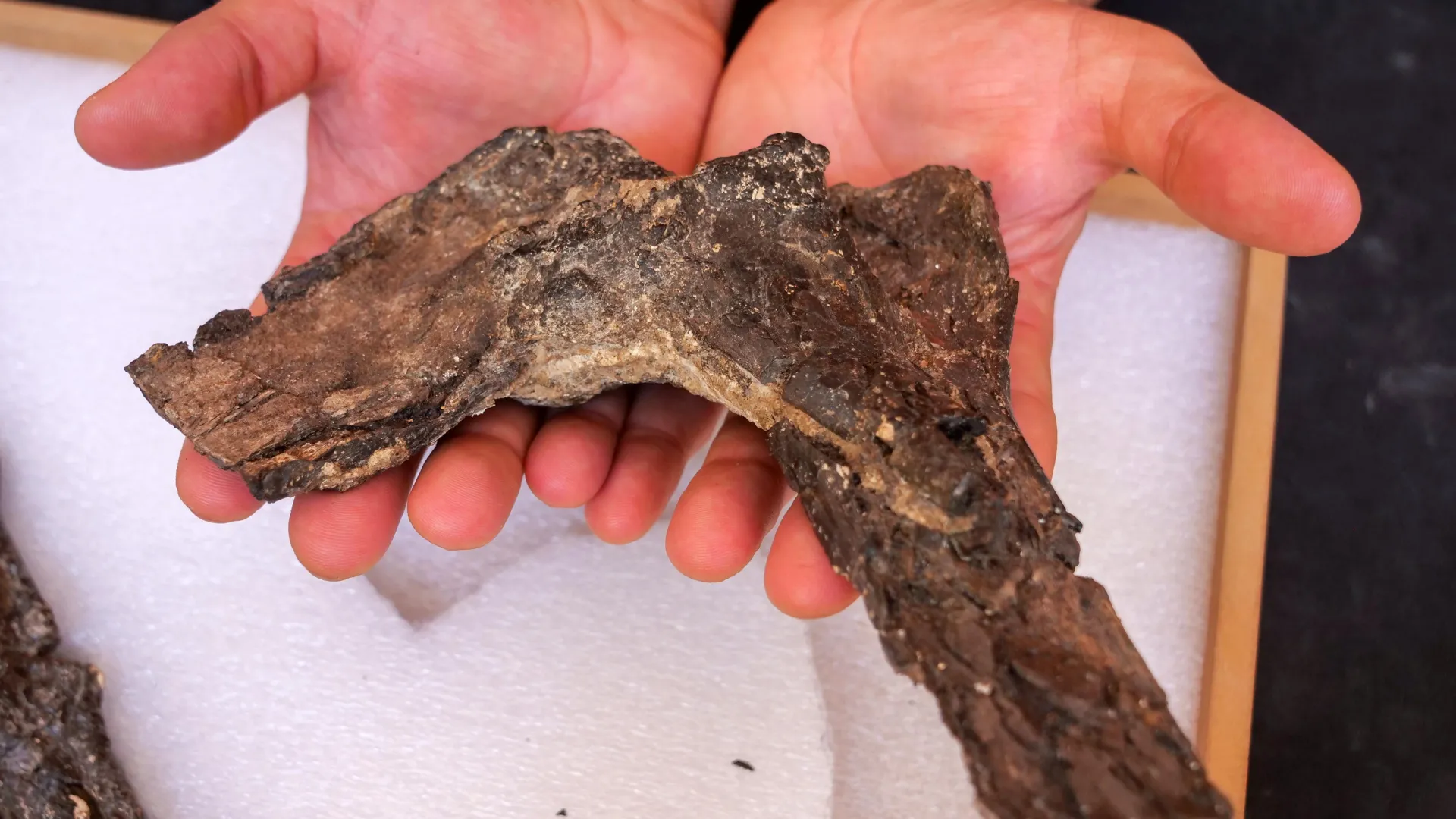
An international team, spearheaded by scientists from Curtin University, has unearthed fossilized red blood cells and definitive chemical evidence of blood molecules, specifically heme-derived compounds, within the remains of Aratasaurus museunacionali. This remarkable theropod dinosaur, a swift, meat-eating ancestor of birds, was discovered in the rich fossil beds of northeastern Brazil. The sensational findings, meticulously detailed and published in the prestigious Proceedings of the National Academy of Sciences (PNAS), also included the detection of amino acids associated with collagen, a crucial structural protein integral to bones, skin, and other connective tissues. This comprehensive molecular fingerprint provides the first incontrovertible chemical confirmation of molecules originating from hemoglobin, the oxygen-carrying protein, unequivocally present within fossilized dinosaur red blood cells.
For decades, the scientific community operated under the assumption that such fragile organic molecules, particularly those involved in cellular functions like blood transport, would degrade entirely over geological timescales stretching into millions of years. Earlier paleontological research had indeed identified structures morphologically resembling blood cells or even soft tissues within ancient fossils, most notably the highly debated finds in Tyrannosaurus rex bones. However, these previous observations often lacked the robust, definitive chemical evidence required to confirm the molecular identity of these remains, leading to ongoing scientific debate and skepticism regarding their true nature and origin. The current study, by providing direct chemical signatures of heme molecules within precisely located red blood cells, decisively bridges this gap, establishing an unprecedented benchmark in the field of molecular paleontology.
The journey to this discovery began with the meticulous examination of the dinosaur’s limb bones. Researchers employed advanced analytical techniques to peer into the microscopic architecture of the ancient bone tissue. What they found within the vascular canals – the minute, intricate passages that once housed the dinosaur’s living blood vessels – were numerous mineralized red blood cells. These cells, though fossilized, retained enough of their original structure to be identifiable. The subsequent and critical step involved sophisticated chemical analysis, which unequivocally revealed the presence of preserved heme molecules. Heme is a fundamental component of hemoglobin, the protein responsible for binding and transporting oxygen throughout the circulatory system of vertebrates.
The detection of these specific molecules provided direct and undeniable chemical evidence that the fossil contained remnants of ancient blood, not merely morphological impressions or secondary mineral formations. This finding shatters the long-held paradigm that biological materials once considered too delicate and prone to rapid degradation could not survive for millions of years. Instead, it demonstrates that under a unique confluence of exceptional preservation conditions, even some of the most fragile biomolecules can remain detectable and offer profound insights into the deep past.
Leading this groundbreaking research was John Curtin Distinguished Professor Kliti Grice, the visionary founding director of Curtin University’s WA-Organic and Isotope Geochemistry Centre and an Australian Research Council Laureate Fellow. Professor Grice, whose expertise lies in understanding the preservation of organic matter in geological contexts, articulated the profound significance of their achievement. "To detect intact heme-derived molecules in 115-million-year-old red blood cells is astonishing: this really is a landmark discovery," Professor Grice stated. "It not only extends the known fossil record of blood, but also offers a direct molecular window into the physiology of long-extinct animals so we may better understand them and the world they lived in." Her words underscore the paradigm shift this discovery represents, pushing the boundaries of what scientists believed was possible in terms of biomolecular preservation in deep time.
The exceptional preservation of these delicate biomolecules, allowing them to endure for a staggering 115 million years, appears to be intricately connected to the presence of a specific mineral: hausmannite. Hausmannite, a manganese oxide mineral (Mn₃O₄), is believed to have played a pivotal role in stabilizing the fossilized blood cells and safeguarding their molecular components, including the amino acids of collagen, over an immense expanse of geological time. In essence, this mineral acted as a natural time capsule, chemically encasing and protecting the microscopic evidence of the dinosaur’s intrinsic biology long after its death. The precise mechanism involves the interaction of manganese ions with organic molecules, potentially forming stable complexes that resist degradation by microbial action or chemical breakdown over geological timescales. This biomineralization process, where minerals grow around and within organic structures, is increasingly recognized as a crucial factor in exceptional fossil preservation.
Beyond the role of hausmannite, researchers hypothesize that the specific environmental conditions surrounding the dinosaur’s burial were also absolutely crucial for such extraordinary preservation. They suspect that the Aratasaurus museunacionali was rapidly covered by fine-grained sediment shortly after its demise. This quick entombment would have occurred in an environment characterized by very low oxygen levels (anoxia) and, paradoxically, abundant microbial activity. Rapid burial helps to isolate the carcass from scavengers and physical disruption, while anoxic conditions severely inhibit the activity of aerobic decomposers, which are typically the primary agents of organic decay. The role of microbial activity in an anoxic setting can be complex; while some microbes cause decay, others can facilitate biomineralization or create local chemical environments conducive to the preservation of certain organic compounds. For instance, sulfate-reducing bacteria thriving in anoxic sediments can create conditions that favor the precipitation of minerals like pyrite, which can encase and preserve organic matter. In this case, the interplay of rapid burial, anoxia, and specific microbial processes likely created the perfect storm of conditions necessary for the molecular time capsule to form.
The Aratasaurus museunacionali itself offers further context to this discovery. Discovered in 2008 in the famous Santana Formation of northeastern Brazil, specifically the Crato Member, this region is renowned globally for its exquisitely preserved Cretaceous fossils. The Crato Member represents an ancient lacustrine (lake) environment, where fine-grained sediments, often rich in carbonates, accumulated rapidly, leading to exceptional preservation of insects, plants, fish, and even small vertebrates. Aratasaurus means "fire lizard" (from Tupian Arata for fire, alluding to the hot climate of the region, and Greek sauros for lizard), and museunacionali honors Brazil’s National Museum. It was a bipedal carnivore, estimated to be around 3.1 meters (10 feet) long, belonging to the Coelurosauria group, which includes tyrannosaurs and birds. Understanding its physiology, now possible at a molecular level, could shed light on the metabolic rates and evolutionary pathways of early theropods.
The international research effort that culminated in this landmark discovery brought together a diverse consortium of scientists from leading institutions across the globe. These included Curtin University’s School of Earth and Planetary Sciences, the Japan Agency for Marine-Earth Science and Technology, the Brazilian National Museum, the Regional University of Cariri in Brazil, and Johns Hopkins University in the United States. Such interdisciplinary and international collaboration highlights the complex nature of modern paleontological research, requiring expertise in geochemistry, paleontology, molecular biology, and mineralogy.
This discovery fundamentally challenges a longstanding assumption in paleontology: that molecules associated with blood, especially the highly complex and reactive heme-derived compounds, could not possibly remain preserved across such immense periods of geological time. The conventional wisdom held that proteins, with their intricate three-dimensional structures and susceptibility to hydrolysis and oxidation, would degrade into their constituent amino acids, which themselves would eventually break down into simpler organic compounds, or be entirely mineralized beyond recognition. The finding of intact heme signatures within cellular structures defies these expectations.
Beyond merely confirming the survival of ancient blood components, the revelation opens exciting new avenues for the field of molecular-level paleontology. It raises the tantalizing possibility that other fossils, previously dismissed as lacking such delicate biological information, may indeed contain molecular data that conventional examinations have simply overlooked or were incapable of detecting. "These findings challenge longstanding assumptions that certain biomolecules such as hemoglobin cannot survive deep time," Professor Grice reiterated, emphasizing the transformative potential of their work. "It opens exciting new avenues for molecular-level paleontology, allowing us to investigate the evolution of blood, metabolism and even activity levels in ancient animals."
Such detailed molecular information could provide unprecedented insights into how extinct animals functioned. For example, understanding the precise chemical composition and structure of ancient hemoglobin could offer clues about oxygen-carrying capacity, which in turn relates to metabolic rate. This could help resolve long-standing debates about whether dinosaurs were warm-blooded (endothermic) or cold-blooded (ectothermic), or somewhere in between. It could also shed light on their respiratory efficiency, their adaptation to ancient atmospheric oxygen levels, and even their general activity levels – aspects of their physiology that are notoriously difficult to reconstruct from skeletal remains alone. Molecular paleontology could move beyond morphology to chemical biology, providing a more complete picture of life in the Mesozoic Era.
The significance of this discovery, however, may extend well beyond the confines of terrestrial paleontology and the study of dinosaurs. Understanding the precise mechanisms by which fragile biological structures and their molecular signatures can survive for millions of years under specific, exceptional conditions could have profound implications for astrobiology – the scientific field dedicated to investigating the possibility of life beyond Earth.
Professor Martin Van Kranendonk, head of Curtin University’s School of Earth and Planetary Sciences, highlighted this broader impact. He noted that the results are fundamentally changing how researchers comprehend the preservation of molecular structures over vast timescales and under potentially harsh conditions. These insights could be invaluable to astrobiology, particularly in the ongoing search for biosignatures, or evidence of ancient life, on other planetary bodies like Mars, or in the subsurface oceans of icy moons such as Europa or Enceladus.
If biological molecules or their distinctive chemical signatures can persist for more than 100 million years on Earth, protected within specific mineral matrices and under certain environmental conditions, then scientists may need to re-evaluate their strategies for where and how they search for evidence of ancient extraterrestrial organisms. For instance, missions to Mars are actively looking for evidence of past microbial life in ancient lakebeds or subsurface environments. Knowing that specific minerals can stabilize biomolecules could guide future sampling strategies, focusing on mineral-rich formations that might act as long-term preservatives for ancient Martian life. Similarly, understanding these preservation pathways could inform the design of more sensitive analytical instruments capable of detecting such subtle molecular remnants in samples returned from other worlds.
"This study exemplifies how coordinated efforts across institutions, continents and scientific disciplines can unlock extraordinary insights into ancient life," Professor Van Kranendonk concluded, underscoring the collaborative spirit inherent in such groundbreaking scientific endeavors. The research was supported by a 2021 Australian Research Council Laureate Fellowship awarded to Professor Grice, a testament to the recognized potential and scientific rigor of her work.
The study, titled "Heme signatures in mineralized red blood cells within vascular canals of a 115- million-year-old dinosaur bone," represents a monumental step forward. It not only deepens our understanding of the physiology of long-extinct dinosaurs but also broadens the horizons for discovering molecular traces of life across vast timescales and potentially across the cosmos. The fossil record, once thought to be limited to macroscopic forms, is now revealing its molecular secrets, promising a new era in understanding the history and potential future of life.
