
 By admin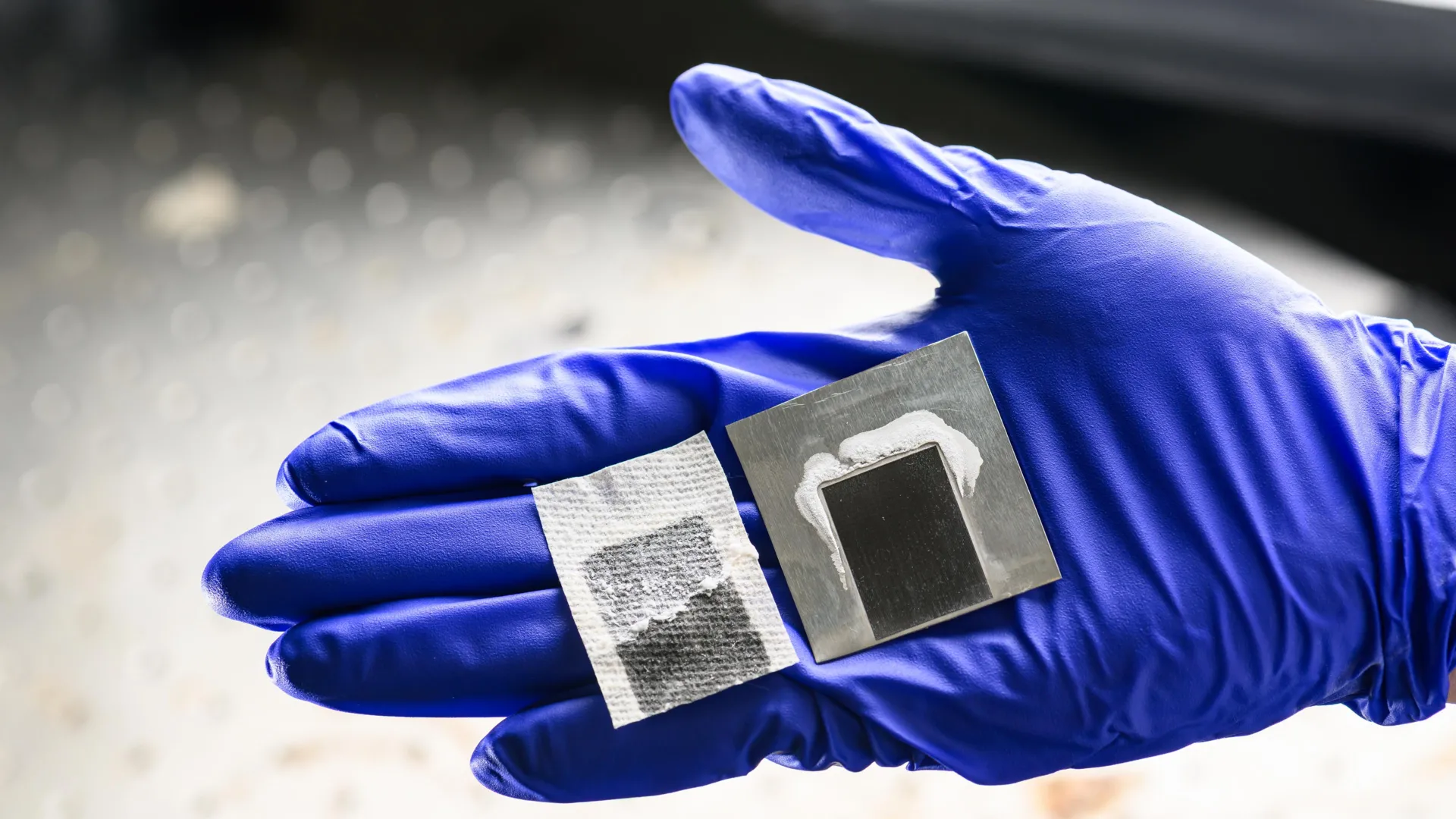
Desalination, while offering a lifeline to water-stressed communities, currently faces significant technological and environmental hurdles. Today’s most common methods, primarily reverse osmosis (RO) and thermal distillation, come with substantial drawbacks that limit their widespread, sustainable adoption. Reverse osmosis, the dominant technology, functions by forcing seawater through semi-permeable membranes under high pressure, effectively filtering out salt ions and other impurities. While more energy-efficient than thermal methods, RO still requires considerable energy, typically consuming between 3 to 10 kilowatt-hours per cubic meter of water produced. Furthermore, the membranes are susceptible to fouling, necessitating extensive pre-treatment of the incoming water with chemicals to prevent clogging and degradation.
Thermal distillation methods, such as multi-stage flash (MSF) and multi-effect distillation (MED), involve heating seawater to produce vapor, which is then condensed into fresh water. These processes are even more energy-intensive, often requiring substantial heat input, though they can sometimes utilize waste heat from power plants. Both RO and thermal approaches invariably generate a highly concentrated salty waste product known as brine. This brine, often laden with residual chemicals from pre-treatment, poses a significant environmental challenge.
When this hyper-saline brine is discharged back into the ocean, it can create localized ecological dead zones. The increased salinity in the discharge area can disrupt the osmotic balance of marine organisms, leading to physiological stress, reduced growth, and even death for species unadapted to such harsh conditions. Studies have shown that brine discharge can lead to a significant reduction in local oxygen levels, further harming marine life and altering delicate ecosystems. These impacts are compounded by the presence of chemicals from the pre-treatment process, which can introduce toxic compounds into the marine environment. The sheer volume of brine is also a concern; for every gallon of fresh water produced, about 1.5 gallons of brine are typically generated, with global brine production estimated to be around 142 million cubic meters per day, according to a 2019 UN Environment Programme report. Managing this waste responsibly is a growing global imperative.
A Solar-Powered Alternative to Conventional Desalination
Addressing these intertwined challenges, researchers at the University of Rochester have developed a groundbreaking approach that could fundamentally transform the landscape of desalination. This innovative method promises to deliver fresh water efficiently while circumventing several critical drawbacks of conventional systems, notably the generation of liquid brine and the reliance on chemical additives for pre-treatment.
Scientists at URochester’s Institute of Optics, led by Chunlei Guo, a distinguished professor of optics and physics and a senior scientist at URochester’s Laboratory for Laser Energetics, have engineered a novel solar thermal desalination system. Their method, detailed in a seminal paper published in the prestigious journal Light: Science & Applications, represents a significant leap forward in sustainable water technology. The core innovation lies in its ability to produce fresh water without creating a liquid brine waste stream, instead extracting salts in solid form, and eliminating the need for costly and environmentally questionable chemical pre-treatments.
Revolutionizing Surfaces with Femtosecond Lasers
At the heart of this transformative technology are specialized solar panels crafted from black metal, meticulously treated with femtosecond lasers. A femtosecond is an unimaginably brief unit of time, equivalent to one quadrillionth of a second (10⁻¹⁵ seconds). The extraordinary precision and ultra-short pulse duration of these ultrafast lasers allow for unparalleled manipulation of material surfaces. When these laser pulses interact with the metal, they create intricate microscopic and nanoscopic structures that dramatically alter how the material interacts with both light and water.
This precise laser treatment endows the metal with two crucial properties. First, it becomes exceptionally effective at absorbing sunlight, converting nearly all incoming solar radiation into heat. This enhanced light absorption is critical for efficient solar thermal evaporation. Second, the treated surface develops superwicking properties. Unlike typical surfaces where water beads up, superwicking means water spreads rapidly and uniformly across the entire surface, forming an extremely thin, continuous film. This combination of high solar absorption and superwicking capabilities is central to the system’s efficiency and novel salt management strategy.
How the Self-Cleaning Surface Works
Each panel incorporates a laser-treated "active region" designed to maximize water evaporation. As seawater is introduced, the superwicking property ensures a very thin layer of water is rapidly drawn across this active surface. The dark, laser-treated metal, acting as a highly efficient solar absorber, rapidly heats this thin film of water, causing it to evaporate quickly and efficiently.
The genius of the system lies in what happens to the salts and other dissolved minerals left behind after evaporation. Instead of allowing these materials to accumulate and form a hard crust where evaporation is occurring—a common failure point in many solar desalination systems—the panel intelligently directs them away. Microscopic grooves and surface topography, precisely engineered by the femtosecond laser, guide the accumulating salts toward untreated areas along the panel’s sides, designated as "passive regions."
This dynamic movement of salts is paramount. Salt buildup, known as fouling or scaling, is one of the biggest and most intractable challenges facing conventional solar desalination systems and even membrane-based systems. If minerals are allowed to crystallize and form a dense, hard layer across the active evaporation surface, they can block water movement, reduce solar absorption, and drastically decrease efficiency, eventually leading to system failure. The Rochester system’s ability to prevent this accumulation through a self-cleaning mechanism is a major breakthrough.
Why Real Seawater Is Much Harder to Desalinate
Professor Guo emphasizes that many previous solar thermal desalination systems have shown promising results in laboratory experiments, but often using simplified, artificial seawater. This artificial seawater typically consists solely of water and sodium chloride (table salt). When sodium chloride crystallizes as water evaporates, it tends to form a relatively grainy and porous structure. This porosity is key: water can still move through these crystals, helping to dissolve accumulated salt and making the surface comparatively easier to clean or manage.
However, real seawater presents a far more complex challenge. Beyond sodium chloride, natural seawater contains a rich cocktail of dissolved substances, including significant concentrations of magnesium, calcium, sulfates, carbonates, and a host of other trace minerals. These compounds behave very differently during crystallization. Magnesium and calcium salts, for instance, are notorious for forming hard, dense, and much less porous deposits—the very kind of mineral scale that gradually builds up inside a shower head, a tea kettle, or industrial pipes. In a desalination system, this challenge is amplified exponentially because seawater contains hundreds of times more dissolved salts than ordinary tap water.
As these complex mineral deposits accumulate, they create an impermeable barrier. Water can no longer flow freely across the surface, significantly reducing evaporation efficiency and eventually leading to the complete clogging and operational failure of the system. Overcoming this "real seawater" challenge is what differentiates the University of Rochester’s technology from many earlier concepts.
Using the Coffee Ring Effect to Move Salt
To tackle the problem of complex mineral accumulation, Guo’s team leveraged an elegant solution rooted in materials science and physics. They meticulously designed the microscopic grooves and surface textures in the black metal to actively push salts and minerals away from the evaporation zone, preventing the formation of a stubborn, efficiency-reducing crust.
Crucially, the researchers ingeniously harnessed a familiar physical phenomenon: the coffee ring effect. Anyone who has spilled coffee and observed it dry has witnessed this effect firsthand. As a coffee droplet evaporates, suspended particles (in this case, coffee solids) migrate towards the edge of the droplet, leaving behind a darker, concentrated ring. This occurs due to differential evaporation rates and capillary flow within the droplet.
"If you drop coffee on a surface, eventually the water evaporates, and there’s a ring left at the outer edge that is the concentrated coffee particles," explains Professor Guo. "We use that same principle to advance the salts to the passive region." Instead of allowing minerals to build up where the sun’s energy is actively driving evaporation, the system intelligently guides them towards the edges of the panel, into the designated passive regions.
To validate their innovative approach, the researchers subjected the technology to rigorous testing using actual seawater samples collected from the Pacific, Atlantic, and Indian Oceans. These real-world experiments confirmed the system’s remarkable efficacy: the surface effectively cleaned itself while continuously producing fresh water, directing the remaining salts and minerals into the passive regions where they could be later collected. Significantly, the accumulation of these minerals in the passive zones did not diminish the panel’s desalination efficiency, proving the robustness of the self-cleaning mechanism.
Turning Desalination Waste Into Useful Materials
Perhaps one of the most compelling advantages of the Rochester system is its revolutionary approach to desalination waste. Unlike conventional methods that produce vast quantities of concentrated liquid brine, which presents a disposal challenge and environmental risk, this system extracts nearly 100 percent of the dissolved salts in solid form.
This paradigm shift transforms what was once a burdensome waste product into a potential resource. The collected solid material is not merely a disposal problem; it could be processed and utilized. Some of it could be refined into common table salt, while more valuable minerals, present in trace amounts in seawater but concentrated by the desalination process, could also be recovered. This opens up entirely new economic avenues for desalination facilities.
One particularly important target for recovery is lithium, a critical element for the global green energy transition. Lithium is a key material in lithium-ion batteries, which power electric vehicles, smartphones, laptops, grid-scale energy storage, and countless other electronic devices. The soaring demand for lithium has put immense pressure on traditional land-based mining operations, which are often environmentally taxing, water-intensive, and geographically concentrated.
In a related and equally significant study published in the Journal of Materials Chemistry A, Guo and his colleagues demonstrated that their superwicking solar panels could be further modified to selectively separate lithium from the complex mixture of other salts produced during desalination. The researchers achieved this by embedding nanoparticles made from hydrogen titanate into the microscopic grooves of the black metal. These specially engineered nanoparticles possess a unique atomic structure and surface chemistry that allows them to selectively isolate lithium ions from the other dissolved salts and minerals.
"Mining lithium from the earth has proven to be very taxing from an energy and environmental standpoint, so pulling lithium directly from saltwater could be a very important future route," states Professor Guo, highlighting the potential for a more sustainable and environmentally friendly source of this crucial metal.
Recovering Lithium From Saltwater
To prove the concept of lithium recovery, Guo’s team tested their modified panels using samples from the Great Salt Lake, a naturally hyper-saline body of water with a higher concentration of lithium than typical ocean water. From the salts left behind after desalination, the team was able to recover approximately 50 percent of the contained lithium. While this is an initial proof-of-concept, it demonstrates the viability of the approach. Further optimization could significantly increase this recovery rate.
This result points toward a future where desalination facilities could serve a dual purpose, evolving beyond mere drinking water production. They could become vital centers for the recovery of commercially valuable materials, transforming waste streams into valuable resources that would otherwise remain unexploited. This integrated approach offers a compelling vision for resource circularity and enhanced economic sustainability.
Path Forward: From Lab to Global Impact
While the technology is still in its early stages, having been demonstrated through proof-of-concept experiments using relatively small devices, its inherent design offers significant promise for scalability. Professor Guo is optimistic that the basic design principles are robust enough to be scaled up to larger, practical applications.
The successful scaling of this approach could simultaneously address two monumental global challenges: expanding access to fresh water for a growing global population and creating more sustainable sources for valuable minerals. This convergence of solutions holds the potential to reduce the environmental burden associated with both conventional desalination waste and traditional mineral extraction.
The journey from a laboratory prototype to widespread commercial deployment will involve further research and development, including optimizing materials, enhancing efficiency, demonstrating long-term durability in diverse environments, and developing cost-effective manufacturing processes for the laser-treated panels. However, the foundational innovation laid by Professor Guo’s team at the University of Rochester represents a pivotal step towards a more water-secure and resource-efficient future.
This groundbreaking research was made possible through the generous support of the National Science Foundation, the Bill & Melinda Gates Foundation, and the Worldwide Universities Network. Professor Guo’s dedicated colleagues from the Institute of Optics who contributed to this significant research include Senior Scientist Subash Singh, alumnus Ran Wei ’24 (PhD), PhD students Luheng Tang and Tainshu Xu, and Mingjiang Ma. Their collective efforts illuminate a promising pathway toward addressing some of humanity’s most pressing environmental and resource challenges.
