
 By admin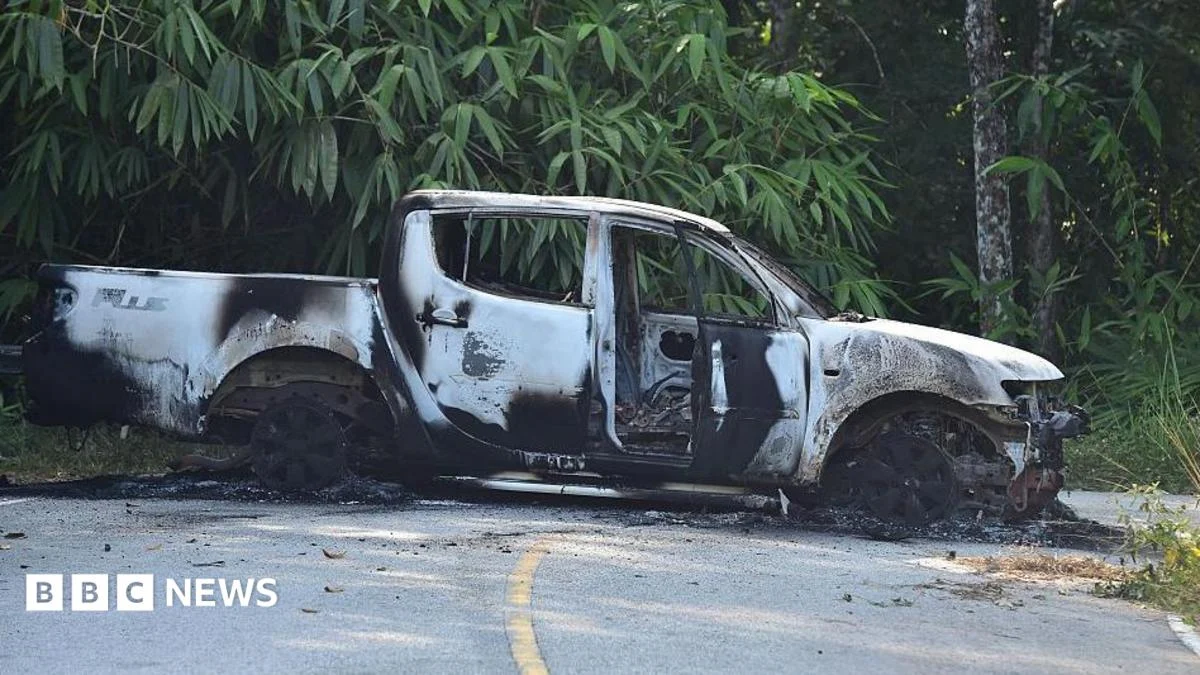
The southern border provinces of Thailand, a region long grappling with a persistent insurgency, were plunged into a night of chaos and fear as more than 50 coordinated arson and incendiary attacks targeted various locations. The Thai military, through its Internal Security Operations Command (ISOC), has unequivocally stated that these acts were deliberately orchestrated "aimed at creating unrest," underscoring the calculated nature of the violence. The widespread and synchronized nature of these attacks, which unfolded between 8:00 PM local time (1:00 PM GMT) and midnight on Saturday, points to a significant escalation in the ongoing conflict and a clear intent to destabilize the region.
The immediate aftermath of the attacks saw at least two individuals sustain injuries, a grim testament to the immediate danger posed by the perpetrators. Among the prominent targets set ablaze were a local government office building, a convenience store, and a stolen vehicle, each representing different facets of community life and infrastructure. The destruction of a government office signifies a direct challenge to state authority, while the targeting of a convenience store highlights the intent to disrupt daily civilian life and instill fear among the populace. The use of a stolen vehicle as an incendiary device further suggests a degree of planning and resourcefulness on the part of the attackers, potentially indicating a network capable of acquiring and repurposing assets for their destructive purposes.
The majority of these brazen acts were concentrated in Narathiwat province, the epicenter of much of the region’s separatist violence. However, the neighboring provinces of Yala and Pattani, also integral to the conflict-ridden Deep South, were not spared, reporting their own share of the coordinated assaults. This geographical spread suggests a well-coordinated effort across multiple fronts, designed to overwhelm security forces and create a pervasive sense of insecurity throughout the entire southern border region. The ISOC’s statement emphasized the synchronized nature of these attacks, implying a central command and control structure orchestrating the violence across different locations simultaneously.
Further details emerged regarding the casualties, with the Bangkok Post reporting that two women were injured when a bomb exploded in the Muang district of Narathiwat province. This incident, occurring in conjunction with the arson attacks, indicates a multi-pronged strategy by the insurgents, employing both incendiary devices and explosive ordnance to achieve their objectives. The indiscriminate nature of such attacks, which can easily harm innocent civilians, underscores the grave human cost of the ongoing conflict.
Adding to the widespread disruption, telecommunication towers were set on fire in several locations across the affected provinces. These vital pieces of infrastructure are crucial for communication, emergency services, and economic activity. Their destruction not only disrupts the flow of information but also hinders the ability of authorities to coordinate responses and for communities to communicate with each other during times of crisis. In response to the potential dangers posed by damaged or compromised infrastructure, security officials issued urgent warnings to residents, advising them to exercise extreme caution and refrain from touching any suspicious objects, a clear indication of the potential for unexploded ordnance or booby traps.
In an immediate effort to restore order and prevent further escalation, authorities imposed an overnight curfew in Narathiwat province. This measure, typically employed during periods of heightened security risk, aimed to restrict movement and limit the ability of individuals to engage in further destructive activities. The curfew was subsequently lifted on Sunday morning, with no further attacks reported on that day, suggesting that the swift imposition of security measures may have been effective in quelling the immediate wave of violence. However, the absence of further attacks on Sunday does not signify an end to the threat, but rather a temporary lull in activity.
Historical Context and the Deep South Insurgency
To fully comprehend the gravity of these recent attacks, it is crucial to understand the long and complex history of the insurgency in Thailand’s southern border provinces. This region, historically comprising the Malay Muslim sultanates of Pattani, Yala, and Narathiwat, has been a site of simmering discontent and armed struggle for decades. The current insurgency, which re-emerged in 2004, is largely driven by ethno-nationalist and religious sentiments, with some groups seeking greater autonomy or outright independence from Thailand.
The insurgency is characterized by a complex web of actors, including various militant groups, some of whom have fluid alliances and differing ideologies. While the precise motivations and affiliations of the groups responsible for the recent attacks remain under investigation, their actions are consistent with tactics employed by insurgent factions seeking to undermine government authority, sow fear, and garner international attention. The historical grievances in the region stem from a perceived lack of cultural and religious recognition, economic marginalization, and forceful assimilation policies imposed by the Thai state following the annexation of the sultanates in the early 20th century.
The conflict has resulted in a devastating human toll, with thousands of lives lost and many more injured since 2004. The violence has disproportionately affected civilians, including government officials, teachers, monks, and ordinary residents caught in the crossfire. The attacks are often asymmetric, with insurgent groups employing tactics such as bombings, shootings, assassinations, and arson against a more heavily armed state security apparatus.
Analysis of the Recent Attacks: A Strategic Escalation?
The scale and coordination of the recent attacks suggest a deliberate attempt by insurgent elements to orchestrate a significant escalation in violence. The targeting of diverse locations – from government facilities and commercial establishments to vital infrastructure like telecommunication towers – indicates a multifaceted strategy aimed at maximizing disruption and psychological impact.
The military’s assertion that the attacks were "aimed at creating unrest" is particularly significant. This suggests a clear intent to destabilize the region, not necessarily through outright territorial control, but by eroding public confidence in the government’s ability to provide security and maintain order. Such a strategy aims to create an environment of fear and uncertainty, potentially alienating local populations and making them more receptive to the insurgents’ narrative.
The concurrent use of arson and incendiary devices, alongside explosive ordnance, highlights the adaptability and resourcefulness of the insurgent groups. These tactics are designed to inflict damage, spread fear, and disrupt daily life. The burning of telecommunication towers, in particular, can be seen as an attempt to sever lines of communication and isolate communities, hindering response efforts and potentially facilitating further attacks.
Expert Perspectives and Potential Motivations
Security analysts and experts who have closely followed the southern Thailand insurgency offer several perspectives on the motivations behind such coordinated attacks. Dr. Piti Srisangnam, a specialist in Southeast Asian security affairs, notes that "these large-scale, coordinated attacks are often a signal of strength or a response to perceived setbacks by the insurgent groups. They aim to demonstrate their continued capacity to operate and inflict damage, thereby maintaining their relevance and potentially attracting new recruits."
Furthermore, Dr. Srisangnam suggests that "the timing of these attacks, if they coincide with any significant political events or anniversaries in the region, could also be indicative of a symbolic intent. Insurgent groups often seek to commemorate key dates in their struggle or to disrupt government initiatives."
Another perspective, offered by a former diplomat involved in peace talks in the region, suggests that "such acts of widespread disruption are also designed to put pressure on the Thai government to return to the negotiating table with more favorable terms. By creating a climate of insecurity, they hope to compel the government to make concessions they might otherwise resist."
The targeting of civilian infrastructure like convenience stores also points to a strategy of "punishing" the local population for perceived collaboration with the state or for simply going about their daily lives under government protection. This can be a tactic to sow division and distrust between communities and the authorities.
Government Response and the Path Forward
The Thai government, through its military and security agencies, faces the formidable challenge of not only neutralizing the immediate threat posed by these attacks but also addressing the underlying causes of the insurgency. The immediate imposition of a curfew in Narathiwat demonstrates the government’s commitment to restoring order and preventing further violence. However, long-term solutions require a multi-faceted approach that goes beyond purely security-oriented measures.
Peace initiatives in the southern border provinces have been ongoing for years, often characterized by periods of dialogue interspersed with renewed violence. These peace processes have faced numerous obstacles, including internal divisions within the insurgent groups, a lack of trust between parties, and the complex socio-economic and political grievances that fuel the conflict.
Experts emphasize the need for a comprehensive strategy that includes:
- Continued Security Operations: Maintaining a robust security presence to deter attacks and apprehend perpetrators is essential. However, this must be balanced with adherence to human rights and the rule of law to avoid alienating the local population.
- Economic Development and Opportunity: Addressing economic disparities and creating meaningful employment opportunities for the youth in the region can help to reduce the appeal of extremist ideologies.
- Cultural and Religious Recognition: Acknowledging and respecting the distinct cultural and religious identity of the Malay Muslim population is crucial for building trust and fostering a sense of inclusion.
- Genuine Dialogue and Political Solutions: Sustained and inclusive dialogue with all relevant stakeholders, including moderate voices within the insurgency, is vital for finding a lasting political solution. This may involve exploring options for greater autonomy or self-governance within the framework of the Thai nation.
- Reconciliation and Justice: Addressing past grievances and ensuring accountability for human rights violations on all sides can contribute to a process of reconciliation.
The recent wave of over 50 coordinated arson and incendiary attacks serves as a stark reminder of the enduring challenges in Thailand’s Deep South. While the immediate security response is necessary, the path to lasting peace and stability will undoubtedly require a deeper engagement with the historical, social, economic, and political complexities that have fueled this protracted conflict for generations. The international community will be closely watching to see how Thailand navigates this critical juncture and whether it can forge a path towards a more secure and prosperous future for its southern border provinces. The intent to "create unrest" is clear; the challenge now lies in dismantling the conditions that allow such unrest to fester and in building a foundation for sustainable peace.
