
 By admin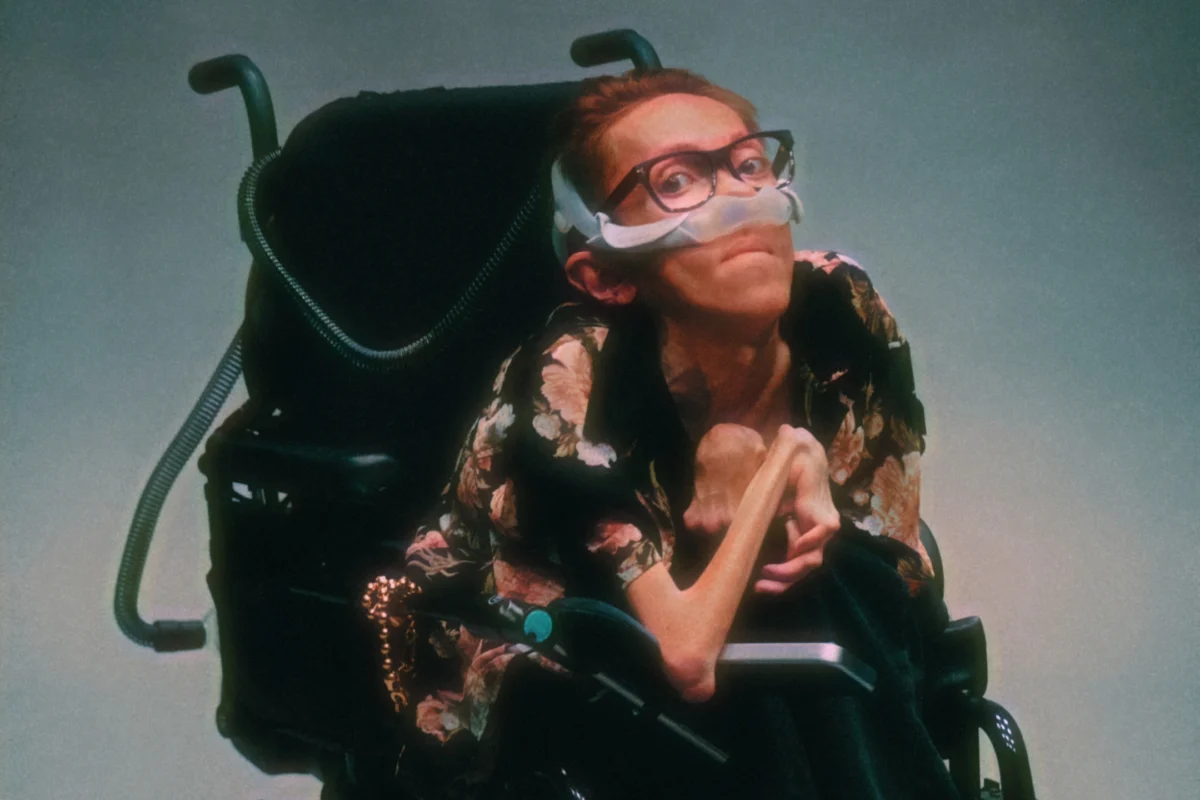
It’s uncommon to meet an actor bold enough to call Ari Emanuel, the executive chairman of WME Group and one of the most powerful people in Hollywood, a “prick” on the record. But it’s also uncommon to interview an actor as unfiltered as Steve Way. At 35, Way possesses a sharp wit and a refreshingly direct approach to his career and the industry that has, at times, felt determined to marginalize him. "I want an agency to whore me out," he declares, his voice resonating with a mix of humor and earnest ambition. "Let’s make a ton of money together. Let’s change the world." He playfully imagines the fallout of relaying these exact words to the industry’s major players. "Just get Ari on the phone," he retorts when teased about potential repercussions. "Ari loves me. Except he won’t hire me." It’s in this moment, with a wry smirk and a subtle mutter of the "p-word" for plausible deniability, that Way underscores the frustrating paradox of his career: admired for his talent, yet seemingly overlooked by the very gatekeepers who could propel him further. A light blue Labubu clipped to his motorized wheelchair offers a knowing wink as he rolls away, a silent testament to his enduring spirit.
Way’s frustration is understandable, and his delivery is honed by 15 years of stand-up comedy. Yet, the industry’s tendency to overlook individuals like him is a persistent challenge. While best known for his impactful recurring role in Ramy Youssef’s critically acclaimed dramedy series, "Ramy," and now delivering a standout supporting performance in Hulu’s "Furious," Way currently navigates the professional landscape without an agent or manager. "And we know why," he states, his gaze direct, alluding to his wheelchair, ventilator, and the muscular dystrophy diagnosis he received at age 4. This diagnosis has shaped his life and, consequently, his career trajectory, presenting unique hurdles in an industry that has historically struggled with authentic and comprehensive representation of disabled individuals.
"I don’t have representation. And it’s frustrating, because I used to," Way laments. His early experiences with representation were disheartening, yielding "nothing. Just nothing." A subsequent move to a new agent ended when that agent transitioned to another firm, leaving Way behind. This lack of consistent, dedicated representation highlights a systemic issue where disabled talent may not always be prioritized or actively championed. The industry’s reliance on established networks and a tendency towards comfortable archetypes can create significant barriers for actors whose lived experiences differ from the norm.

The narrative of Way’s career has been significantly shaped by his close childhood friendship with Ramy Youssef. For years, Way harbored doubts about his ability to secure roles independently of Youssef’s direct involvement. However, the opportunity to star in "Furious" provided something many actors only dream of: a role meticulously crafted for him. This bespoke creation by showrunner Elizabeth Meriwether, renowned for her work on "New Girl" and "The Dropout," marked a pivotal moment. Way first encountered Meriwether in 2025 during a WGA panel discussing on-screen caregiving. In a moment of candid, albeit slightly inebriated, honesty—a side effect of unwinding after a stand-up tour as Youssef’s opener—Way declared his availability: "I’m unemployed. If anyone wants to put me in their stuff, [I’ll join] gladly." Meriwether, it turned out, took his off-the-cuff remark to heart. "Two months later, I got an email from her people saying she wrote a part for me. That was it." This serendipitous encounter underscores the power of genuine connection and the potential for unexpected opportunities to arise from authentic, unscripted moments.
In "Furious," Way embodies Alden, the love interest of Lola Petticrew’s character, Catherine, a serial killer. To the outside world, Catherine is a sociopath, but to Alden, she is a compassionate in-home health aide with a few undisclosed secrets. Their relationship unfolds with a delicate balance of care and complicity. As Catherine tends to Alden’s needs with tenderness and warmth, he offers her the benefit of the doubt regarding her clandestine activities. Faced with a worsening health prognosis, Alden, wanting to make the most of his remaining time, proposes to Catherine using his late mother’s engagement ring. He then becomes an active accomplice in her crimes, a testament to the profound bond they forge.
While the role carries an inherent sadness, "Furious" masterfully integrates Way’s signature humor. He commends Meriwether for crafting a disabled character who confronts his mortality with depth and retains a vibrant identity beyond his condition, including a sharp sense of humor. "When I read my first line – ‘You little slut!’ – I thought, ‘How does Liz know I would say that?’" Way recalls with a smile. "Right away, I knew that she would do the character justice." This immediate connection to the dialogue signifies Meriwether’s keen understanding of Way’s comedic timing and persona, allowing him to infuse Alden with authenticity and wit.
The series explores themes of love, caregiving, and the complexities of human connection, particularly through Alden’s defiant defense of Catherine. When Detective Danny (Scoot McNairy) suggests Catherine is manipulating Alden, he vehemently rejects the notion. "I don’t fucking care," Alden asserts. "You think love is only when people do everything that you want them to do. That’s fucked up." This dialogue resonates deeply with Way’s personal philosophy. "Everything is transactional," he observes. "And as a disabled person, it’s very empowering to understand that. Caregiving is a two-way street. It has to be in order to work." He extends this perspective beyond the dynamics of disability and caregiving, arguing that society has perpetuated harmful myths about disabled individuals being a burden. "It’s not true," Way insists. "And to understand that is to accept that everyone, at some point in their life, receives care." He illustrates this point by highlighting the societal infrastructure that facilitates daily life: "When you take the subway, you don’t do that alone. Someone’s driving. When you get DoorDash, that’s a level of care. So when Alden says that to Scoot’s character, in a way, he’s trying to radicalize him. Like, ‘You don’t get it, man.’" He further elaborates on the unique intimacy of relationships forged through care, quoting his friend Danny Kurtzman, another actor with muscular dystrophy: "’Disabled love is the best love.’ Because of how intimate it is. How close you have to be."

"Furious" also stands out for its commitment to disability accommodations, a direct result of the presence of an on-set accessibility coordinator. "She made sure I was OK and advocated for me when I was really in the zone," Way explains. "Not once did I ever feel unsafe or not taken care of. It allowed me to just focus on the character. I wanted to feel the love and trust, to find our routines. Like, how would she would shower me? But also something as delicate as: How do we sit across from each other? How do we face each other lying down in a bed?" This proactive approach to accessibility not only ensured Way’s comfort and safety but also enabled him to deliver a more nuanced and emotionally resonant performance. While some scenes presented physical challenges, such as prolonged periods of lying down, Way viewed these discomforts as a necessary sacrifice for the art. "I was locked in. Nothing else mattered; I just turned it off. The only thing that matters is the art that we’re operating here. That was my temporary. Yeah, the art. That’s it. The right thing for art, you know. That’s something that I realized no one can take away from me."
Before "Furious," Way harbored lingering doubts about whether his three-season tenure on "Ramy" had sufficiently demonstrated his acting prowess to the wider industry. "I was scared people wouldn’t take me seriously. One time could be a fluke," he admits. "But twice? I’m pretty good at this." This self-doubt is a testament to the immense pressure faced by actors, particularly those from underrepresented groups, to constantly prove their worth.
Despite his growing success, Way continues to encounter systemic obstacles in his pursuit of new opportunities. He has twice collaborated with studios to develop series he would create and star in, only to have both Apple TV and NBCUniversal ultimately pass. These projects were envisioned as insightful explorations of life within a disability facility, featuring an entirely disabled cast and highlighting the challenges of insufficient caregiving and administrative oversight in a country that often falls short in supporting its disabled citizens. "It’s about the inner workings of a facility for disabled people," he explains. "We want to have a full disabled cast and show what it’s like to live in one building with not enough caregivers, with an administration who has no idea what they’re doing, in a country that doesn’t treat us the best. I think a lot of people will relate to it, and they’ll see the absurdity in our day-to-day." With a sly grin, he adds, "Shoutout Netflix!" signaling his hope for a more receptive platform.
His aspirations extend to his stand-up comedy career as well. Way dreams of headlining his own tour, though the search for accessible venues remains a significant hurdle. He has already prepared and taped a full hour of material, feeling ready to share it with the world. The challenge now lies in finding a platform willing to produce it as a special. "Shoutout HBO!" he exclaims, voicing his hope for a network that champions unique comedic voices.

This pattern of facing rejection is, for Way, a familiar experience. "I’m numb to the noes," he states matter-of-factly. "Because the noes have never stopped. And that’s OK. That’s just life; it’s no one’s fault. But it’s tough, because I have these big opportunities, and I don’t trust them." The lingering skepticism stems from past disappointments, including his initial disbelief that "Furious" would even materialize until his first day on set. "So when I hear that someone is interested in my show, I’ll take a meeting, but I don’t expect anything." This cautious optimism, born from hard-won experience, allows him to engage with potential opportunities without setting himself up for further disappointment.
Despite the setbacks, Way has achieved more than he ever imagined during his youth. "I didn’t think I could have a career of any kind, because everyone told me I wouldn’t live long," he reflects. "I almost died when I was 14, and I wasn’t supposed to live past 18. Then, when I was 25, my doctors told me I’m good. I was like, ‘Fuck! What now?’ I wasn’t good at anything besides telling jokes." This near-death experience and subsequent prognosis shift profoundly altered his perspective, forcing him to redefine his future and embrace his passion for comedy as a potential career path.
He remains steadfast in his commitment to his craft. "The only thing that’s gonna stop me is my heart," he declares, a poignant acknowledgment of his physical condition and his unwavering drive. The newfound support of a publicist, a direct result of his role in "Furious," has been a welcome development. "It’s nice to respond to emails for once instead of initiating them, which is what I do every day," Way shares. Without a dedicated team, the onus of actively seeking out the limited roles available to disabled actors falls squarely on his shoulders. "It’s tiring," he admits. "Espresso helps. Vodka helps. But I can’t run on that stuff forever." This candid admission highlights the immense effort and resilience required for him to navigate the industry, underscoring the need for greater systemic support and industry-wide change to foster more inclusive and equitable opportunities for all actors.
