
 By admin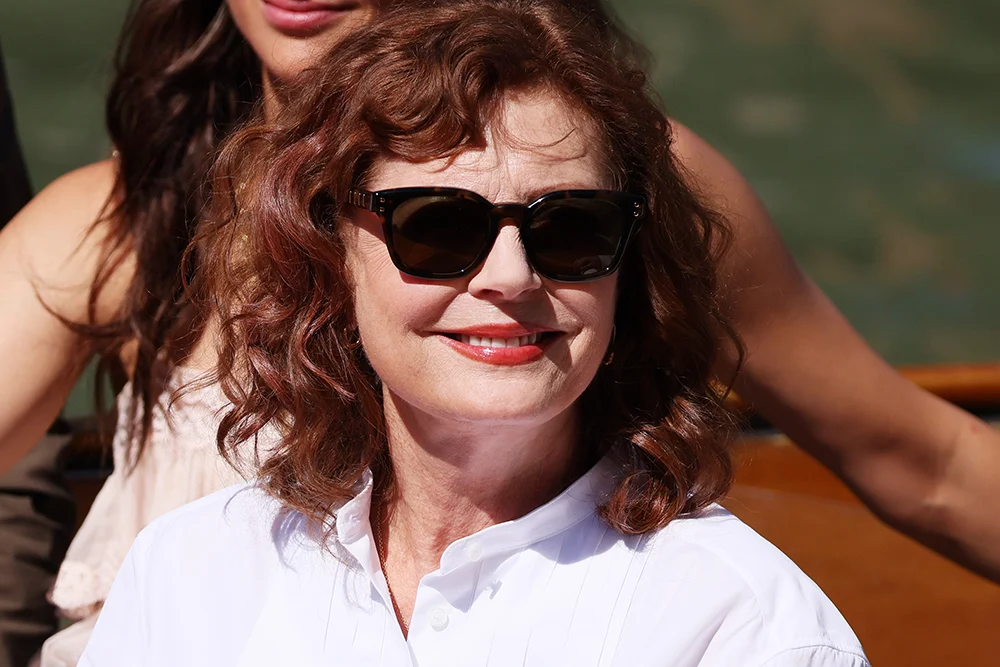
Veteran actress Susan Sarandon has revealed that her outspoken support for Palestine has led to continued professional repercussions within the Hollywood industry, stating she has "still had movies taken away recently" due to agencies advising against her hiring. The Oscar-winning actress made these candid remarks during a press conference at the Venice Film Festival on Sunday, where she was promoting her new film, "The Echo Chamber."
The discussion at the festival naturally gravitated towards the ongoing conflict in Gaza and whether Hollywood’s narrative surrounding it is shifting. Sarandon’s past actions have made her a prominent figure in this conversation. In 2023, she was reportedly dropped by her agency, UTA, following her participation in a pro-Palestinian rally. Earlier this year, she publicly expressed a feeling of being "shunned by the industry" for her calls for a ceasefire in Gaza, a sentiment she reiterated and expanded upon in Venice.
"I think that the narrative has completely changed in terms of historical relevance of Palestine and the ties of Zionists with America and our politics, that has been a major revelation for people," Sarandon stated, addressing the broader public’s evolving understanding of the situation. She specifically highlighted the lack of widespread public awareness regarding the extent of financial aid provided by the United States to Israel. "How much money the United States gives to Israel, nobody really understood that," she elaborated, suggesting a growing public consciousness about the geopolitical and financial underpinnings of the conflict.
This burgeoning public awareness, however, has not entirely translated into a more welcoming environment for Sarandon within her own industry. "I’ve still had movies taken away recently because there are agencies that are telling people not to hire me still," she confessed, underscoring the persistent influence of certain factions within Hollywood. Despite these professional setbacks, Sarandon drew a distinction between the industry and a broader audience. "But that’s the power structure. I think within the people, certainly internationally, I feel welcome," she said, indicating a sense of solidarity and acceptance from global audiences and perhaps a more progressive international film community.
"The Echo Chamber," directed by Italian filmmaker Andrea Pallaoro, is a romantic drama that was filmed in Italy and Belgium. The film holds particular significance as it features what is reportedly Bernardo Bertolucci’s final screenplay. Sarandon stars in the project alongside Italian actor Luca Marinelli and Swedish actress Alicia Vikander.
The challenges Sarandon has faced are not merely speculative. She revealed that director Andrea Pallaoro was actively warned against collaborating with her. "I thank Andrea for that, because he doesn’t listen to the warnings," she said, expressing her gratitude for Pallaoro’s decision to proceed with her involvement despite the alleged pressure. This anecdote further illustrates the alleged efforts by some in the industry to ostracize individuals who deviate from a perceived mainstream narrative.
Sarandon concluded her remarks by acknowledging the ongoing divisions within Hollywood. "There has been a change in term of the general public, but there are still positions in my industry that are held by Zionists who have not relaxed their feelings towards me," she stated. Despite these persistent professional obstacles and the emotional toll they may carry, Sarandon conveyed a sense of personal resilience and belonging. "But I found my family, I found my people and I’m OK," she affirmed, suggesting that she has cultivated a supportive network outside the immediate confines of the Hollywood power structure that she feels has turned against her.
The situation faced by Susan Sarandon is emblematic of a broader debate occurring within the entertainment industry regarding freedom of speech, political activism, and the potential for professional consequences. Her experience highlights the complex interplay between artistic integrity, personal conviction, and the economic realities of Hollywood. While public discourse on geopolitical issues like the Israeli-Palestinian conflict continues to evolve, the ramifications for individuals who voice dissenting opinions, particularly those with significant public profiles, remain a contentious and closely watched aspect of the industry. The Venice Film Festival provided a prominent platform for Sarandon to share her perspective, offering a stark reminder of the challenges faced by those who navigate the intersection of their activism and their careers in the public eye.
The conflict in the Middle East has deeply divided global public opinion, and Hollywood, often seen as a reflection of societal trends, has not been immune to these divisions. For decades, the industry has been a powerful engine for shaping cultural narratives, and as such, the stances taken by prominent figures can have a significant impact. Sarandon, a respected actress with a long and decorated career, has consistently used her platform to advocate for various social and political causes. Her current focus on the situation in Palestine has placed her at the forefront of a particularly sensitive and often polarized debate.
The historical context of the Israeli-Palestinian conflict is deeply complex, involving decades of territorial disputes, political grievances, and humanitarian concerns. Understanding the "historical relevance of Palestine," as Sarandon put it, involves acknowledging the ongoing displacement of Palestinians, the occupation of Palestinian territories, and the broader implications for regional stability and human rights. The strong ties between the United States and Israel, including substantial financial and military aid, have also become a focal point of discussion for those questioning American foreign policy and its role in the conflict. Sarandon’s observation that "nobody really understood" the extent of this financial support suggests a growing desire among the public for greater transparency and critical examination of these international relationships.
The concept of being "shunned by the industry" is not unprecedented in Hollywood. Throughout history, actors, directors, and writers who have held controversial political views or engaged in activism have faced periods of professional marginalization. The blacklist era of the 1950s, which targeted individuals with alleged communist sympathies, serves as a stark historical example of the severe consequences that can arise from perceived political dissent within the film industry. While the current situation may not mirror the systematic persecution of the blacklist era, Sarandon’s experience points to a subtler, yet still impactful, form of professional reprisal. This can manifest through subtle exclusion from projects, difficulty in securing representation, and a general chilling effect on open discourse.
The role of agencies in Hollywood is crucial. Talent agencies like UTA represent actors and negotiate their contracts, acting as gatekeepers and intermediaries. When an agency reportedly advises clients or studios against hiring a particular individual, it can have a profound effect on that person’s career trajectory. Sarandon’s assertion that "there are agencies that are telling people not to hire me still" suggests a coordinated effort by some within the industry to limit her professional opportunities. This raises questions about the ethical responsibilities of these agencies and their potential role in suppressing diverse viewpoints.
Conversely, Sarandon’s comment about feeling "welcome" internationally and finding her "family" and "people" highlights the potential for a more inclusive and receptive environment in other parts of the world or within different artistic communities. The global nature of filmmaking and the international film festival circuit, like the one in Venice, can offer alternative avenues for artists whose views may not align with prevailing sentiments in Hollywood. This suggests that while a particular industry may exert significant influence, it is not the sole determinant of an artist’s success or sense of belonging.
The fact that director Andrea Pallaoro proceeded with casting Sarandon despite alleged warnings speaks to his artistic independence and commitment to his creative vision. It also suggests that there are individuals within the industry who are willing to challenge established norms and resist perceived pressures. This act of defiance, as Sarandon described it, offers a glimmer of hope for those who believe in the importance of artistic freedom and the ability of artists to engage with complex social and political issues.
Ultimately, Susan Sarandon’s statements at the Venice Film Festival offer a compelling insight into the ongoing tensions within Hollywood regarding political expression and its professional consequences. Her experience serves as a reminder that even established figures can face significant challenges when their activism intersects with deeply entrenched political and economic interests. While the public discourse surrounding the Israeli-Palestinian conflict continues to evolve, the reverberations within the entertainment industry, and the personal cost for those who engage with it, remain a critical aspect of the contemporary cultural landscape. Her resilience and assertion of finding her community outside the perceived confines of industry opposition underscore the enduring human need for solidarity and belonging, even in the face of professional adversity. The ongoing debate is likely to continue, with figures like Sarandon playing a significant role in shaping the conversation and challenging the status quo.
