
 By admin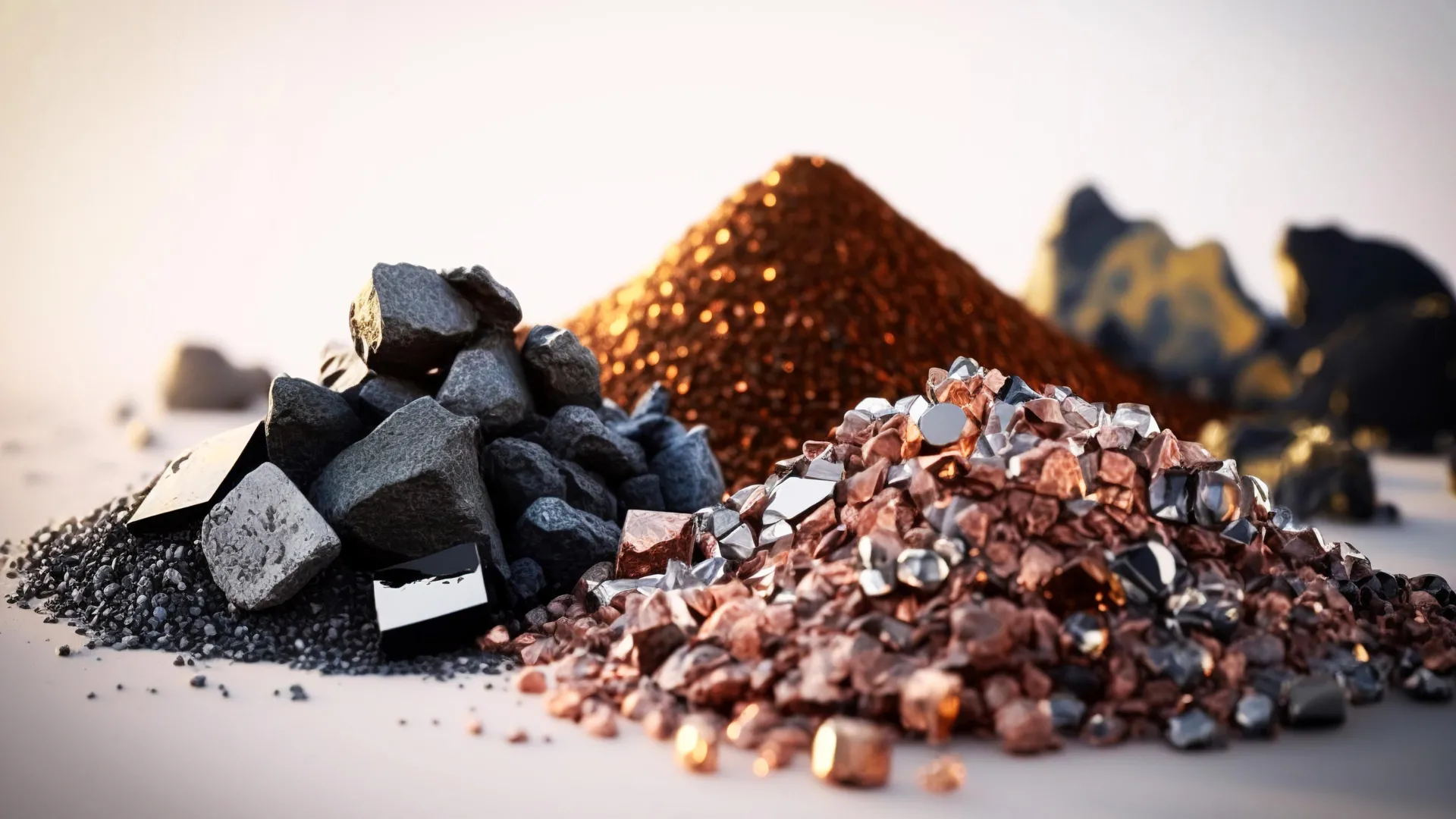
Sweden is embarking on a pivotal journey to redefine the global landscape of rare earth element (REE) production and magnet manufacturing. At the forefront of this ambitious endeavor, researchers within the "Sustainable materials and material flows" area are meticulously exploring how the nation’s rich mineral resources could underpin a significantly cleaner, more environmentally responsible, and geopolitically secure production chain for rare earth elements and the powerful magnets critical to modern technology. Martin Sahlberg, a key figure in this research at Uppsala University, is spearheading efforts to determine if Sweden’s mineral deposits can indeed form the bedrock of a truly sustainable and strategically independent magnet industry. This initiative is not merely about extracting raw materials; it represents a fundamental rethinking of the entire value chain, from geological discovery to advanced material engineering.
The global demand for materials essential to cleaner energy systems and advanced technologies continues to surge, yet their production often comes with a substantial environmental footprint. Rare earth magnets, indispensable components in everything from wind turbines and electric vehicles to smartphones and medical devices, exemplify this dilemma. The vast majority of these magnets are currently manufactured in China, a nation that has historically dominated the supply chain, accounting for an estimated 85-90% of global refined rare earth production. This concentration of production has led to concerns regarding environmental practices, which frequently diverge from the stringent regulations and industrial standards upheld in countries like Sweden and the broader European Union. The environmental costs associated with current REE extraction and processing are significant, involving extensive land disturbance, generation of acidic wastewater, release of heavy metals, and the management of naturally occurring radioactive materials (NORM) that are often co-located with REE deposits. These processes typically rely on energy-intensive steps and a cocktail of hazardous chemicals, contributing to air and water pollution, and posing long-term challenges for waste disposal.
Rare Earth Magnets: A Geopolitical Chessboard and Environmental Challenge
"It’s undoubtedly a geopolitical problem," asserts Martin Sahlberg, Professor of Materials Chemistry at Uppsala University, highlighting the strategic vulnerabilities inherent in the current global supply structure. The past decade has witnessed several instances where the concentration of REE production has been leveraged for geopolitical advantage, causing significant market disruptions and prompting a global scramble for supply chain diversification. Sahlberg points to recent events: "In the last year with the trade war and the US tariffs, we’ve seen that China halted exports of rare earth elements. We can also mention Trump’s move on Greenland – a region with significant REE potential – and the Ukraine-United States Mineral Resources Agreement as other examples of geopolitical conflicts illustrating the strategic importance of these materials." These incidents underscore the urgent need for Western economies, including the European Union, to secure resilient and ethical supply chains for critical raw materials, with REEs topping the list. The EU has explicitly identified rare earth elements as critical raw materials, crucial for its green and digital transitions, and has set ambitious goals for domestic sourcing and processing to reduce external dependencies.
Beyond the geopolitical implications, the very act of producing rare earth materials is environmentally taxing. The chemical separation and purification of individual rare earth elements from their mineral ores typically involve complex and multi-stage processes. The most common method, solvent extraction, requires vast quantities of acids, bases, and organic solvents, leading to significant volumes of wastewater that must be carefully treated to prevent contamination. Furthermore, rare earth minerals are frequently found alongside thorium and uranium, which are naturally radioactive elements. This means that the mining and processing of REEs often generate radioactive byproducts and waste, necessitating specialized handling and long-term storage solutions, adding another layer of environmental and safety complexity. "It’s rather a dirty business today," Sahlberg concludes, summarizing the inherent challenges of conventional rare earth processing.
Rare Earth Elements: Abundant Yet Challenging to Extract
Despite their name, which might suggest extreme scarcity, rare earth elements are not inherently rare. In fact, elements like cerium and lanthanum are more abundant in the Earth’s crust than copper or lead. The moniker "rare" stems from their geological characteristic of rarely being found in large, concentrated, and easily minable deposits. They tend to be widely dispersed and occur together in various mineral forms, making their economic extraction and subsequent separation into individual elements the real challenge.
These seventeen elements – scandium, yttrium, and the fifteen lanthanides – are indispensable for a vast array of high-tech applications. They are critical for displays, catalysts, polishing agents, and, most notably, in the creation of powerful permanent magnets. These magnets, predominantly containing neodymium, praseodymium, dysprosium, and terbium, are foundational to the transition to a more sustainable society, powering electric vehicle motors, wind turbine generators, and energy-efficient consumer electronics. The real hurdle lies in identifying deposits where these elements occur in sufficient concentrations and in a mineralogical form that makes their extraction economically viable and technologically feasible.
"In Sweden our possibilities for extracting REE, even when compared internationally, are relatively good," Sahlberg notes with optimism. Sweden possesses several known rare earth mineral deposits that hold significant promise. These include the iron ore region of Kiruna, where LKAB recently announced the discovery of Europe’s largest known deposit of rare earth oxides at Per Geijer; the historical mining district of Bergslagen, known for its diverse mineralisation; and Norra Kärr outside Gränna, an alkaline intrusion rich in heavy rare earth elements, though its development has faced past environmental scrutiny due to the presence of radioactive elements. Sahlberg’s research is specifically designed to lay the scientific groundwork necessary to extract these valuable resources domestically, not just as raw materials, but to integrate them into the development of new, high-performance functional magnets.
The innovative core of the Swedish approach lies in a paradigm shift: instead of attempting to force Swedish minerals into existing, often environmentally intensive, manufacturing formulas, the researchers aim to design magnets whose chemical composition is inherently aligned with the materials naturally present in local deposits. This "resource-driven design" strategy represents a radical departure from conventional practices. By understanding the specific mix of REEs and other co-occurring elements within a given Swedish deposit, scientists can formulate new magnet recipes. This tailored approach could dramatically reduce the amount of complex and energy-intensive processing required, thereby lowering the overall environmental impact of both the purification stages and the subsequent magnet manufacturing processes.
Sweden also boasts several inherent advantages that make it an attractive location for such an industry. "Today, China basically has a world monopoly, but we not only have deposits but also good access to water and relatively cheap energy from hydropower. There is also a strong political and societal interest in leading the green transition here in Sweden," Sahlberg emphasizes. These factors—abundant clean energy, readily available water for processing (a critical resource in REE separation), a highly skilled workforce, and a robust research and innovation ecosystem—provide a compelling foundation for developing a competitive and sustainable domestic rare earth value chain.
Taking Inventory of Sweden’s Mineral Resources: The "Fridge" Analogy
This ambitious, interdisciplinary effort is projected to span many years, reflecting the complexity and long-term vision required to establish such an industry. One of the initial and most critical priorities is to develop a comprehensive and detailed understanding of the rare earth minerals available across Sweden’s diverse geological landscape. This isn’t just about identifying deposits; it’s about characterizing their precise mineralogy, elemental composition, and potential processing challenges.
"It’s a bit like the TV show What’s in Your Fridge," Martin Sahlberg offers, providing an accessible analogy to illustrate this intricate process. "Historically, we have mined for a specific metal – iron, copper or maybe gold. We’re taking a broader approach here to find out what elements there are in the deposits and in what proportions. We make an inventory of ‘what’s in the fridge’ so that we can use all these elements in the most efficient way possible. We’re creating new ‘magnet recipes’ based on the elements we have available," he explains. This metaphor beautifully encapsulates the holistic and resource-efficient philosophy driving the research. Instead of selectively targeting a single valuable metal and discarding the rest as waste, the researchers plan to examine the full spectrum of elements within each deposit. The ultimate goal is to maximize the utilization of all available materials, developing magnet formulas that are specifically tailored to the unique geological resources at hand. This approach aligns perfectly with circular economy principles, minimizing waste and maximizing resource value.
Building a Cleaner Path From Rock to Magnet: An Interdisciplinary Symphony
The journey from raw mineral deposit to finished, high-performance magnet is multifaceted and demands a truly interdisciplinary approach. Materials theoretical physicists, geologists, and materials engineers are collaborating closely to identify the most sustainable and efficient route. Their combined expertise is crucial for evaluating every stage of the process:
- Geologists contribute by mapping and characterizing the mineral deposits, understanding their formation, and assessing the variability in composition. They provide the fundamental understanding of "what’s in the fridge."
- Materials theoretical physicists and chemists work at the atomic and molecular level, designing novel magnet compositions, predicting their properties, and developing innovative, greener chemical separation and purification processes that are less energy-intensive and produce less waste. They are the "chefs" creating the new "magnet recipes."
- Materials engineers focus on the practical aspects of processing and manufacturing, developing scalable techniques for transforming the refined materials into functional magnets. They bridge the gap between scientific discovery and industrial application.
This collaborative synergy ensures a holistic evaluation of the entire value chain, from the initial understanding of the geological context to the final design and manufacturing of the magnets. Sahlberg aptly describes this ambitious undertaking as application-inspired basic research. While the work delves deep into fundamental scientific questions – exploring new material chemistries, understanding complex mineral interactions, and developing novel processing methodologies – it is inextricably linked to real-world applications. The technological implications are profound and could become increasingly vital for Sweden’s economic future, its role in the global green transition, and the broader European Union’s strategic autonomy in critical raw materials.
"What we are doing is basic research but in an area that is technologically incredibly important," Sahlberg reiterates. This dual focus on fundamental scientific discovery and its direct applicability to critical technological needs is what makes the Swedish initiative particularly promising. By investing in this comprehensive, long-term research, Sweden aims not only to unlock its own mineral wealth sustainably but also to contribute significantly to global efforts in creating a cleaner, more secure, and ethically sound supply chain for the essential materials that power the modern, sustainable world. This endeavor could position Sweden as a global leader in sustainable rare earth magnet production, fostering new industries, creating high-value jobs, and bolstering its commitment to a greener future.
