
 By Lina Irawan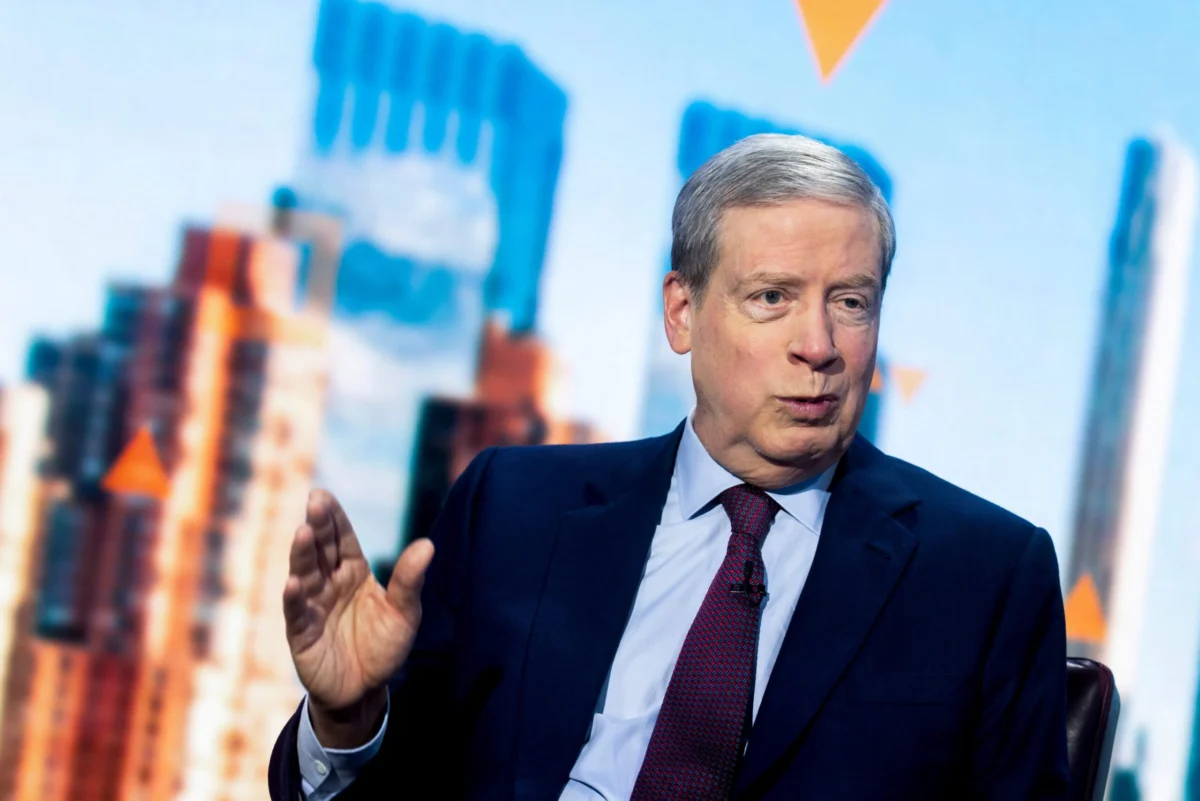
Weeks ago, a seismic tremor rippled through the financial and media worlds when legendary hedge fund investor Stanley Druckenmiller published an op-ed in The Wall Street Journal. The piece was a sharp, public critique of Treasury Secretary Scott Bessent’s decision to increase government purchases of long-term Treasury bonds, a strategy aimed at suppressing yields. What made the article particularly explosive was not just Druckenmiller’s formidable reputation or the fact that he was publicly rebuking a former protégé, but the widespread suspicion that the text had been drafted with the assistance of artificial intelligence.
The whispers quickly escalated into a roar as curious readers subjected the op-ed to AI-detection tools, with Pangram notably confirming their suspicions. The ensuing backlash was swift and vitriolic. Critics derided the piece as "Claudeslop," a biting portmanteau referencing the AI model Claude, and openly questioned the extent of Druckenmiller’s personal contribution, if any. The controversy also ignited a fervent debate among media ethicists and the public: did the opinion editors at The Wall Street Journal, a bastion of traditional journalism, have a duty to prevent AI-generated content from gracing their prestigious pages?
Yet, contrary to expectations of a retraction or an apology, both Druckenmiller and The Wall Street Journal staunchly defended their use of AI. Druckenmiller, a figure known for his blunt candor, declared he was "not embarrassed about having used AI," framing it as a mere tool. The editor of the Journal’s opinion section echoed this sentiment, asserting that while the writing might not have been entirely his own, the ideas conveyed in the op-ed were undeniably Druckenmiller’s. This defense ignited a crucial discussion about authorship, intellectual property, and the evolving nature of content creation in the age of generative AI.
Indeed, the practice of public figures relying on external assistance to articulate their thoughts is far from new. Throughout history, leaders, authors, and intellectuals have employed speechwriters, editors, researchers, and ghostwriters to refine their messages and bring their ideas to fruition. From ancient scribes to modern-day political consultants, the act of "writing" has often been a collaborative endeavor, with the credited author providing the core concepts and others handling the stylistic execution. In this light, the argument that AI is merely another sophisticated tool, akin to a high-tech ghostwriter, holds a certain logical weight. Did anyone truly believe that a billionaire financier, whose time is measured in millions, was painstakingly crafting every sentence of an op-ed without some form of professional assistance?
However, acknowledging this reality compels us to confront a stark and increasingly problematic double standard regarding AI use. For a prominent financier like Druckenmiller, employing AI to articulate his economic views appears to be largely acceptable, even defensible. Yet, for countless others across various professions, the undisclosed use of AI can quickly morph into an embarrassing scandal, threatening careers and reputations. This uneven application of ethical scrutiny highlights a profound societal discomfort with AI, particularly when it encroaches upon domains traditionally associated with human creativity, originality, and intellectual labor.
Over the past several months, numerous writers, academics, and content creators have faced intense public scrutiny and severe repercussions for their suspected or admitted use of AI. The literary world, in particular, has been a battleground. Alex Preston, a reviewer for The New York Times, found himself in hot water after a book review he penned exhibited striking similarities to another published critique. Preston eventually admitted that these contentious sections were incorporated with the aid of an AI tool, prompting the Times to append an editor’s note clarifying that this constituted a violation of their journalistic standards, a severe blow to his credibility.
Similarly, Steven Rosenbaum, author of a nonfiction book about artificial intelligence itself, was found to have included fabricated quotes attributed to real individuals – a cardinal sin in nonfiction. This embarrassing error was subsequently linked to his reliance on AI in the writing process, raising questions about the rigor of his research and the integrity of his work. The world of online content has not been immune either. Hank Green, a popular YouTuber and science communicator revered for his authenticity and intellectual curiosity, faced significant backlash from his devoted fanbase. After a video featured what appeared to be a generic, stock AI phrase, Green later confessed to a growing dependence on ChatGPT for generating scripts for his widely watched videos. These incidents are but a few examples where a tell-tale slip, an obvious error, or an astute reader’s detection revealed previously undisclosed AI assistance.
The shadow of AI suspicion has even fallen upon those who have made no obvious errors and have not admitted to its use, with devastating consequences. Novelists Mia Ballard and Jerry Falade, for instance, both saw lucrative book deals vanish into thin air after being accused of using AI to compose their manuscripts. The evidence? Audits from AI detection tools like Pangram. The prestigious literary magazine Granta took the drastic step of ceasing to publish winners of the Commonwealth Short Story Prize after its most recent recipient faced widespread criticism and accusations of AI involvement, underscoring the deep unease within the literary establishment.
What’s particularly notable in many of these cases is the role of AI detection tools like Pangram, which analyze text to estimate the likelihood of it being machine or human-generated. While these tools have become instrumental in uncovering suspected AI use, their reliability remains a subject of intense debate. This was vividly illustrated in the case of H.M. Wolfe, a science fiction romance writer. After successfully self-publishing a best-selling novel, Wolfe secured a seven-figure deal with publishing giant Simon & Schuster. Shortly thereafter, she was hit with accusations of AI use, with Pangram audits again presented as evidence. However, unlike her peers, Wolfe’s firm denials, coupled with the unwavering support of her devoted fanbase and a broader skepticism about the infallibility of AI-detection algorithms, ultimately saved her from suffering the same professional fate. This outcome highlights the precariousness of relying solely on current AI detection technology and the significant role of public perception, personal brand, and community support in weathering such storms.
The disparate treatment of AI use also reflects deeply ingrained cultural attitudes and contextual norms. A hedge fund investor like Druckenmiller, whose primary audience consists of clients and readers more concerned with his astute financial insights than the precise phrasing of his arguments, faces a different set of expectations. The opinion pages of the Journal evidently concluded that the integrity of his ideas superseded the question of his writing process. Indeed, the use of AI in writing appears to be significantly less taboo, and perhaps even expected, in certain contexts, particularly within the business and technology sectors. Journalist Taylor Lorenz’s recent analysis, which ran posts from top Substack newsletters through Pangram, revealed that technology was the category with the highest proportion of AI-generated writing. This finding suggests a greater willingness among tech-savvy audiences to engage with, and perhaps even embrace, content that has been co-created with AI, valuing efficiency and information delivery over perceived human authorship.
These wildly inconsistent standards for who is permitted to use AI in the public sphere, and the manner in which such use must be disclosed, underscore the vast spectrum of views held by audiences and the public at large. When Anthropic, the developer of the Claude AI model, announced in early August that it would embed an invisible watermark in its generated text, reactions were sharply divided. Some observers lauded the feature as a commendable step toward greater transparency, a vital mechanism for accountability. Others protested vehemently, arguing that such watermarks would unfairly cast suspicion on the work of individuals who use Claude for what they consider legitimate and ethical purposes, such as editing, brainstorming, or proofreading, rather than outright text generation. This dichotomy highlights the complexity of establishing universal norms when the very definition of "legitimate AI use" remains fluid and contentious.
We stand at a critical juncture. The "genie" of generative AI has unequivocally been released from the bottle, and there is no putting it back. Our imperative now is to learn to coexist with this powerful new tool, to integrate it ethically, and to apply consistent standards across all users. The current selective punishment, where some are lauded for efficiency while others are ostracized for perceived deception, is unsustainable and detrimental to public trust.
As such, a paradigm shift towards radical AI transparency is not merely desirable, but essential. Instead of engaging in a perpetual game of "AI Detective" every time a piece of content is published, selectively penalizing those "caught in the act," we urgently need to establish a new, universal standard of disclosure. Imagine a world where every op-ed, every reported feature, every novel manuscript, every college essay, is accompanied by a comprehensive bibliography. This bibliography would not only cite traditional sources like books, studies, and articles but would also meticulously detail how AI participated in the article’s creation.
The ultimate success of content, regardless of its origin, should rest on its intrinsic merit and the audience’s willingness to engage with it, armed with full awareness of whether and how AI tools were employed in its genesis. Every publisher, every platform, every educational institution should publicly articulate its stance on AI usage. This clarity would empower the free market of ideas, allowing readers, consumers, and students to make informed choices about the content they consume and the sources they trust.
This new kind of bibliography I envision is what I term "proof of sweat." It serves as a clear indicator to readers of the degree to which a piece of work is the result of human intellectual effort and creative endeavor. It aims to answer crucial questions: Where did the core ideas originate? What specific functions did AI perform in the creation process (e.g., drafting, editing, researching, summarizing, brainstorming)? And, most importantly, what critical thinking, synthesis, and unique perspective did the human author contribute?
The reluctance of creators to disclose AI use is understandable; many fear that such transparency will lead to audience rejection or devaluation of their work. However, fostering an atmosphere of suspicion and uncertainty through obfuscation is ultimately more damaging. Instead, creators and publishers have an unprecedented opportunity to cultivate trust and goodwill among their audiences by embracing radical transparency. By openly declaring if and how AI was utilized, and by taking full responsibility for the content produced, they can demonstrate integrity and commitment to ethical practices.
Encouragingly, some platforms have already begun to move in this direction, albeit imperfectly. Steam, the world’s largest digital distribution platform for PC video games, now mandates AI disclosure from developers listing games. Their requirements are quite specific, distinguishing between "Pre-Generated" AI content (e.g., AI-created art assets, voice lines) and "Live-Generated" AI content (e.g., dynamic NPCs, procedural storytelling). Developers must also clarify any "guardrails" implemented to manage AI behavior and allow players to report illegal content generated by live AI. While these disclosures, as acknowledged, can still be vague and allow publishers to sidestep full transparency, they represent a significant step forward, reflecting a clear and growing demand from audiences to understand the role of AI in their entertainment.
As long as legitimate ethical questions persist regarding the methods by which AI companies acquire resources, train their models on vast datasets (often including copyrighted work without explicit permission or compensation), and the profound ways in which AI is reshaping the contours of our society and economy, a segment of the public will inevitably remain wary of, or outright shun, AI in any form. But even in this landscape of skepticism, transparency, rather than evasion, offers a powerful mechanism to demand greater accountability from all stakeholders in the AI sector. AI detectors, while useful tools, are ultimately no substitute for a robust and mandatory AI disclosure framework that applies universally – whether one is a billionaire investor penning an op-ed for a global financial newspaper or a graduate student crafting a seminal research paper. Rather than expending our collective energy in a never-ending game of "gotcha" and playing AI detective, it is time we heed the implicit lesson from Stan Druckenmiller’s saga and "fess up." The hope, of course, is that next time, such disclosure will precede publication, fostering an era of trust and clarity in the age of intelligent machines.
