
 By admin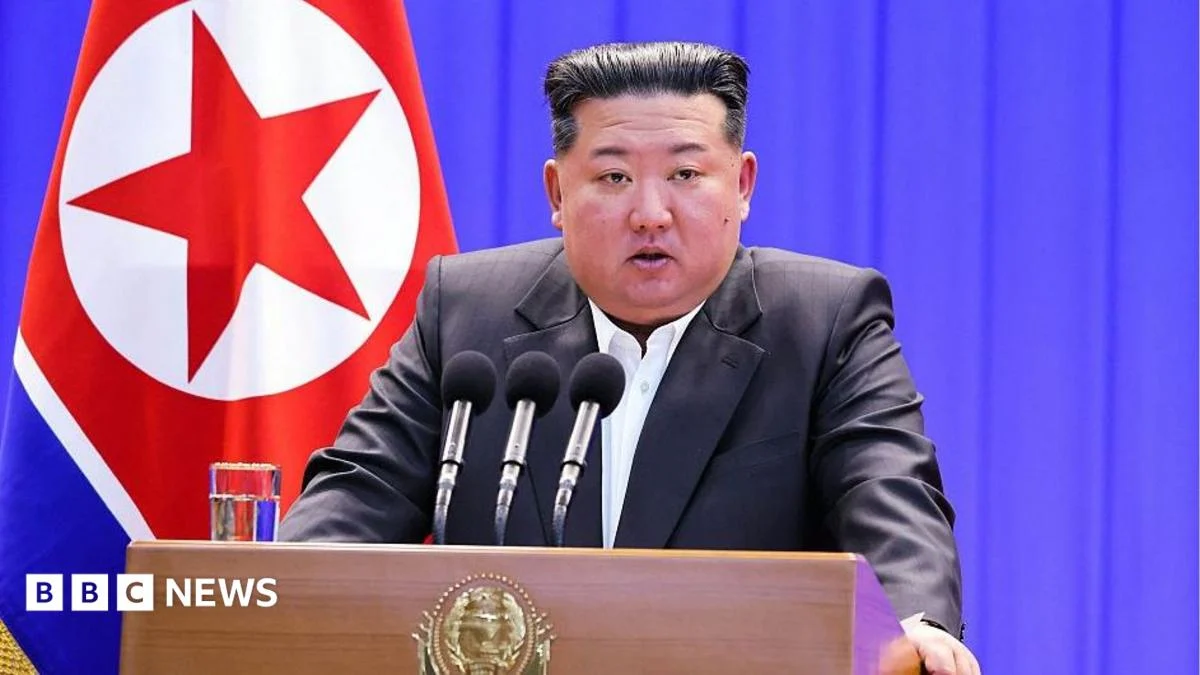
The world’s nuclear watchdog has sounded a grave warning this week: North Korea has constructed a new two-storey uranium enrichment facility at its primary Yongbyon nuclear complex, a development described as a cause for "serious concern." This revelation, coupled with ongoing expansions at other enrichment sites, underscores a consistent and alarming trajectory of growth in the reclusive nation’s sanctioned nuclear infrastructure. The International Atomic Energy Agency (IAEA), which has been unable to conduct on-site inspections in North Korea since its expulsion in 2009, is forced to rely heavily on satellite imagery and open-source intelligence to monitor Pyongyang’s clandestine activities.
The newly identified building at Yongbyon is reportedly designed to house up to 28 centrifuge cascades, the sophisticated machinery essential for enriching uranium to levels suitable for both nuclear power and weapons. This indicates a tangible increase in the country’s capacity to produce fissile material. Late last month, a comprehensive report from the IAEA detailed that Pyongyang had also initiated operations at an expanded annex at another enrichment site, further cementing the picture of a nation actively bolstering its nuclear capabilities. These findings collectively paint a stark picture of a nation relentlessly pursuing its nuclear ambitions, in direct contravention of numerous United Nations Security Council resolutions.
In a statement earlier this week, IAEA Director General Rafael Grossi articulated the international community’s deep apprehension, stating, "The continuation and further development of the DPRK’s nuclear programme are clear violations of relevant UN Security Council resolutions and are deeply regrettable." The existence of the new building at Yongbyon had been initially alluded to by the agency in June, with Director General Grossi having raised the possibility of such a development earlier in the year.
Further compounding these concerns, in June, the IAEA reported that North Korean leader Kim Jong Un had visited a "newly inaugurated nuclear materials production factory" on June 3rd, which was subsequently identified as the Yongbyon enrichment facility. During this visit, Kim Jong Un reportedly lauded the country’s "greatly expanded production capacity," suggesting that this enhanced capability would "offer the possibility of carrying out larger plans." This statement, as captured in the agency’s report, reveals a strategic intent behind the expansion, hinting at ambitions that extend beyond mere maintenance of existing capabilities.
Despite leading one of the world’s most impoverished nations, Kim Jong Un has consistently allocated substantial resources, reportedly in the millions of dollars annually, towards the development of a highly secretive nuclear arsenal. A 2022 report by a prominent non-proliferation think-tank estimated this annual expenditure to be as high as $640 million. This significant investment highlights the paramount importance North Korea places on its nuclear program, even at the expense of its population’s basic needs.
The opacity surrounding North Korea’s nuclear program presents a formidable challenge to international security. Edward Howell, a lecturer at the University of Oxford, speaking to the BBC, emphasized this point: "What makes North Korea’s nuclear programme so concerning is that many of its facilities are unknown, concealed, and thus difficult to target." He further elaborated on the strategic implications of this secrecy, stating, "Beyond Yongbyon, we know that other facilities exist: Kangson, for instance. The embeddedness of North Korea’s nuclear doctrine within its foreign and domestic policy means that we should expect there to be more concealed production sites." This suggests a deliberate strategy of decentralization and concealment, making a comprehensive understanding and potential deterrence of Pyongyang’s nuclear activities exceptionally difficult.
The IAEA’s latest findings also indicate that operations have commenced at another enrichment facility located in Kangson, a site situated near the capital, Pyongyang. Indications of these operations emerged in January of this year. An annex at the Kangson site had reportedly been constructed in 2024, further contributing to the growing network of North Korean nuclear facilities. This expansion at Kangson, distinct from Yongbyon, amplifies the concerns about the breadth and depth of North Korea’s nuclear development.
Earlier in April, the IAEA had already signaled its growing unease, reporting that North Korea appeared to be significantly enhancing its capacity to produce nuclear bombs. At that time, the agency announced it was closely monitoring the apparent expansion of the Yongbyon complex. This consistent reporting of escalating capabilities over several months underscores a sustained and determined effort by Pyongyang to advance its nuclear weapons program.
Under Kim Jong Un’s leadership, North Korea’s nuclear program has experienced a dramatic acceleration. This period has been characterized by a record number of missile tests, including numerous intercontinental ballistic missiles (ICBMs) since the country began testing its long-range systems in 2017. These tests are not merely displays of technological prowess but are widely interpreted as crucial steps in developing a credible nuclear deterrent. The nation has conducted six nuclear weapons tests to date, with the most recent occurring in September 2017, a test that reportedly involved a device with a yield significantly larger than previous detonations.
The international community’s response to North Korea’s escalating nuclear activities has been a complex tapestry of sanctions, diplomatic efforts, and condemnations. The UN Security Council has imposed a stringent array of sanctions aimed at curtailing Pyongyang’s access to funding and materials necessary for its weapons programs. However, the effectiveness of these sanctions has been debated, with North Korea demonstrating a remarkable ability to circumvent restrictions and continue its illicit activities.
The implications of North Korea’s expanding nuclear capabilities are far-reaching. For regional security, it poses an immediate threat to South Korea, Japan, and potentially other neighboring nations. The development of more sophisticated delivery systems, such as ICBMs, increases the potential reach of North Korean nuclear weapons, extending the threat to continental United States and its allies. This escalating threat necessitates continuous vigilance and a robust strategic response from the international community.
Furthermore, the proliferation risk associated with North Korea’s nuclear program remains a persistent concern. While Pyongyang has historically maintained a high degree of secrecy, the potential for the transfer of nuclear materials or expertise to other state or non-state actors, however remote, cannot be entirely discounted. This underscores the importance of international cooperation in preventing any such illicit transfers.
The IAEA’s role as the primary monitoring body for nuclear activities globally is critical, yet its limitations in North Korea highlight the challenges of enforcing international norms in the face of a determined and secretive state. The agency’s reliance on satellite imagery, while valuable, provides an incomplete picture. The lack of on-the-ground verification means that assessments are inherently subject to interpretation and can be outpaced by clandestine developments.
The current situation demands a multifaceted approach. Diplomacy, while often fraught with difficulty, remains a crucial avenue for de-escalation and potential denuclearization. However, sustained diplomatic engagement must be coupled with robust verification mechanisms and a clear understanding of the red lines that North Korea must not cross. The international community faces the enduring challenge of balancing the imperative to prevent nuclear proliferation with the need to avoid actions that could inadvertently escalate tensions.
The continuous expansion of North Korea’s uranium enrichment facilities, as highlighted by the IAEA, serves as a stark reminder of the persistent threat posed by the country’s nuclear ambitions. The international community must remain united in its resolve to address this challenge, utilizing all available tools – from sanctions and diplomacy to intelligence gathering and strategic deterrence – to ensure global security and prevent the further proliferation of nuclear weapons. The silence from North Korea on these developments, coupled with the ongoing construction and operation of these facilities, speaks volumes about its unwavering commitment to its nuclear future, a future that continues to cast a long shadow over international peace and stability.
