
 By Rifan Muazin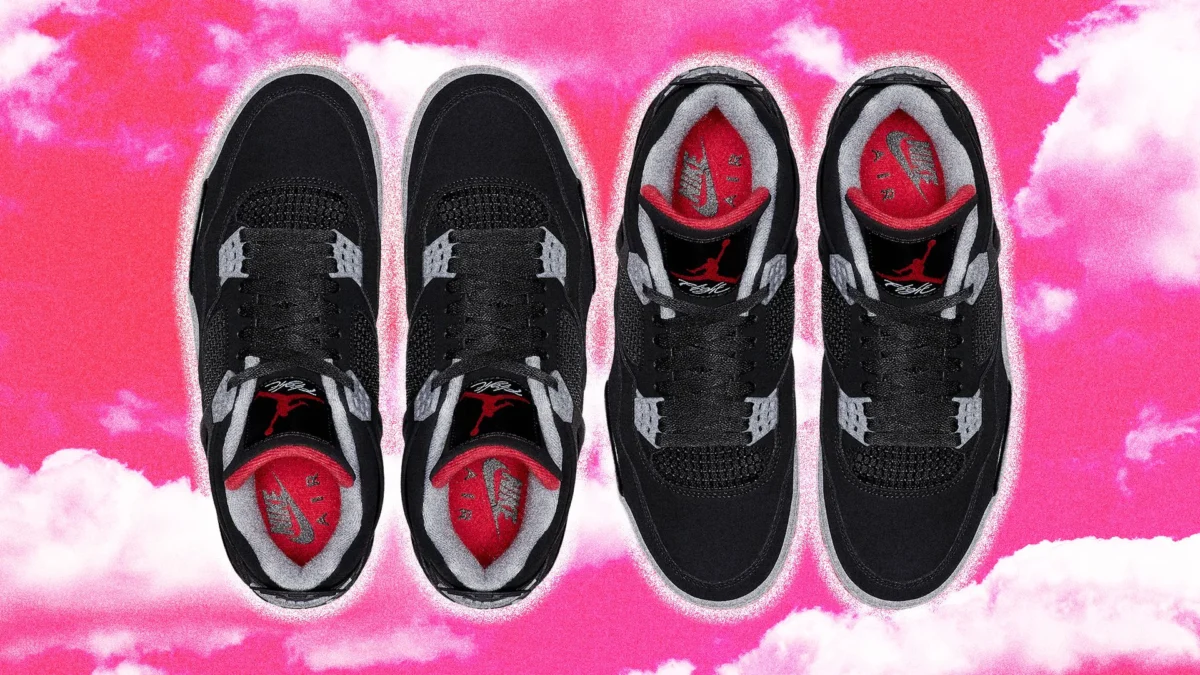
The news has sent ripples through the global sneaker community, signaling a return to form for one of the most iconic pieces of footwear history. In an era where "sneaker culture" often feels like a relentless cycle of collaborations, limited-edition colorways, and experimental "reimagining," the announcement that Jordan Brand will return to the classic nubuck construction of the Air Jordan 4 ‘Bred’ in 2026 feels less like a simple product release and more like a restoration of the natural order. For enthusiasts who have watched the silhouette undergo various transformations over the last three decades, this news is a validation of the "if it ain’t broke, don’t fix it" philosophy.
To understand why the return of the nubuck ‘Bred’ 4 is such a seismic event, one must look back to 1989, a year that redefined the intersection of performance basketball and street fashion. The Air Jordan 4 was the second masterpiece designed by Tinker Hatfield, the visionary architect-turned-designer who is widely credited with saving the Jordan line. Following the immense success of the Air Jordan 3, Hatfield faced the daunting task of topping a shoe that many considered perfect. His solution was to lean into a more utilitarian, aggressive aesthetic. The Air Jordan 4 introduced several "firsts" for the brand, including the use of over-molded mesh paneling for breathability and the iconic "wings" that allowed for custom lacing patterns.
The ‘Bred’ colorway—a portmanteau of "black" and "red"—was the flagship version of this design. Cloaked in a deep, matte black synthetic nubuck (often referred to as Durabuck), the shoe featured "Cement Grey" eyelets and "Fire Red" accents on the tongue and outsole. While the design was revolutionary, it was Michael Jordan’s performance on the court that cemented its legendary status. On May 7, 1989, during the deciding Game 5 of the first-round NBA Playoff series against the Cleveland Cavaliers, Jordan executed what is now simply known as "The Shot." With seconds on the clock, Jordan hung in the air over Craig Ehlo, sinking a mid-range jumper to clinch the series. In every photograph of that gravity-defying moment, the black and red Air Jordan 4s are visible on his feet. That single play transformed the sneaker from a piece of athletic equipment into a symbol of clutch performance and historical greatness.

The journey of the ‘Bred’ 4 through the decades has been a study in the evolution of the "retro" market. Following its original 1989 run, the shoe remained in the vault until 1999. The 1999 retro is still spoken of in hushed, reverent tones by collectors because it was the last time for twenty years that the shoe featured the original "Nike Air" branding on the heel—a detail that purists insist is the only acceptable logo for a legacy model. In 2008, the ‘Bred’ returned as part of the "Countdown Pack," paired with the Air Jordan 19, but this version replaced the "Nike Air" logo with the Jumpman, a change that reflected Nike’s effort to distinguish Jordan Brand as its own autonomous entity. The 2012 release followed suit, though it was criticized by some for the quality of the synthetic materials used, which lacked the plush feel of the originals.
The narrative took a significant turn in 2019. To celebrate the 30th anniversary of the silhouette, Jordan Brand released a "Remastered" version of the ‘Bred’ 4. This release was a triumph; it brought back the "Nike Air" heel tab and utilized a more accurate shape that mimicked the 1989 mold. It was widely considered the definitive modern retro of the shoe. However, the brand took a controversial detour in early 2024 with the release of the "Air Jordan 4 Retro Reimagined Bred." As part of the "Reimagined" series—which seeks to put a "twist" on classic colorways (such as the aged look of the "Lost and Found" Jordan 1)—the 2024 Bred 4 swapped out the traditional nubuck for a premium tumbled leather upper. While the shoe was a commercial success, selling out instantly and commanding high prices on the secondary market, it left a segment of the community longing for the original texture. Leather, while durable and easy to clean, lacks the "stealth" aesthetic and the specific way light interacts with the matte nubuck of the 1989 original.
The 2026 release is a direct response to that longing. Reports indicate that the upcoming version will return to the "OG" specifications. This means a return to the black nubuck upper that defines the shoe’s silhouette. From a technical standpoint, nubuck is a top-grain cattle hide leather that has been sanded or buffed on the grain side to give it a velvet-like surface. In the context of the Air Jordan 4, this material provides a depth of color that leather cannot replicate. The 2026 model will also feature the "Nike Air" branding on the heel, the signature "Flight" script on the tongue, and the original outsole branding. It is, essentially, a "time machine" release, designed to look as though it were pulled straight from a 1989 retail shelf, but with modern manufacturing standards that ensure better longevity.
Market analysts suggest that Nike’s decision to bring back the "true" Bred 4 just two years after the "Reimagined" leather version is a strategic move to stabilize the brand’s momentum. In recent quarters, Nike has faced increased competition and a cooling of the sneaker resale market. By returning to the "Holy Grails" of the catalog in their most authentic forms, the brand is tapping into the deep-seated nostalgia of its most loyal consumers. The Air Jordan 4, in particular, has seen a massive surge in popularity over the last three years, often eclipsing the Air Jordan 1 as the most sought-after silhouette in the lineup. Its chunky, "dad-shoe adjacent" yet aggressive profile fits perfectly with current streetwear trends that favor wider trousers and bold footwear.

Expert perspectives on the 2026 release highlight the cultural weight the shoe carries. "The Bred 4 isn’t just a sneaker; it’s a piece of Americana," says one veteran footwear historian. "When you wear a pair of nubuck Bred 4s, you aren’t just wearing a shoe; you’re wearing ‘The Shot,’ you’re wearing the spirit of 80s Chicago, and you’re wearing Tinker Hatfield’s peak design era. The leather version was a nice experiment, but nubuck is the soul of that shoe." This sentiment is echoed across social media platforms and sneaker forums, where the consensus is that the 2026 release represents a "course correction" for the brand.
Logistically, the release is expected to follow the tradition of major Jordan Brand "tentpole" drops. The scheduled date of November 27, 2026, places the release on Black Friday. This is a deliberate choice; Black Friday has historically been the window for Jordan Brand’s most significant releases of the year, dating back to the late 2000s. It is the day when the highest volume of consumers is looking to spend, and the Bred 4 is the perfect product to anchor that demand. The release will likely be managed through the Nike SNKRS app, as well as high-tier boutique retailers and global flagship stores. Given the demand for previous iterations, industry insiders predict a retail price in the neighborhood of $215 to $225, reflecting the "premium" nature of the OG restoration.
Beyond the hype and the financial projections, there is a poetic element to the return of the nubuck Bred 4. It serves as a reminder of the power of design. In 1989, Tinker Hatfield didn’t just want to make a pretty shoe; he wanted to make a shoe that looked like a piece of high-performance machinery. The mesh, the plastic lace locks, and the nubuck were all chosen to push the boundaries of what a basketball shoe could be. Decades later, those same elements are what make the shoe a masterpiece of industrial design.
As 2026 approaches, the anticipation will only grow. For the older generation of "heads" who remember seeing Jordan play in the originals, it is a chance to reclaim a piece of their youth. For the younger generation of collectors, it is an opportunity to own a faithful recreation of a legend they only know through YouTube highlights and archival photos. In the volatile world of fashion, where trends disappear as quickly as they arrive, the Air Jordan 4 ‘Bred’ remains a constant. Its return to nubuck isn’t just a release; it’s a celebration of a legacy that refuses to fade. Nature, indeed, is healing, and the king of the court is coming home in its true armor.
