
 By Rifan Muazin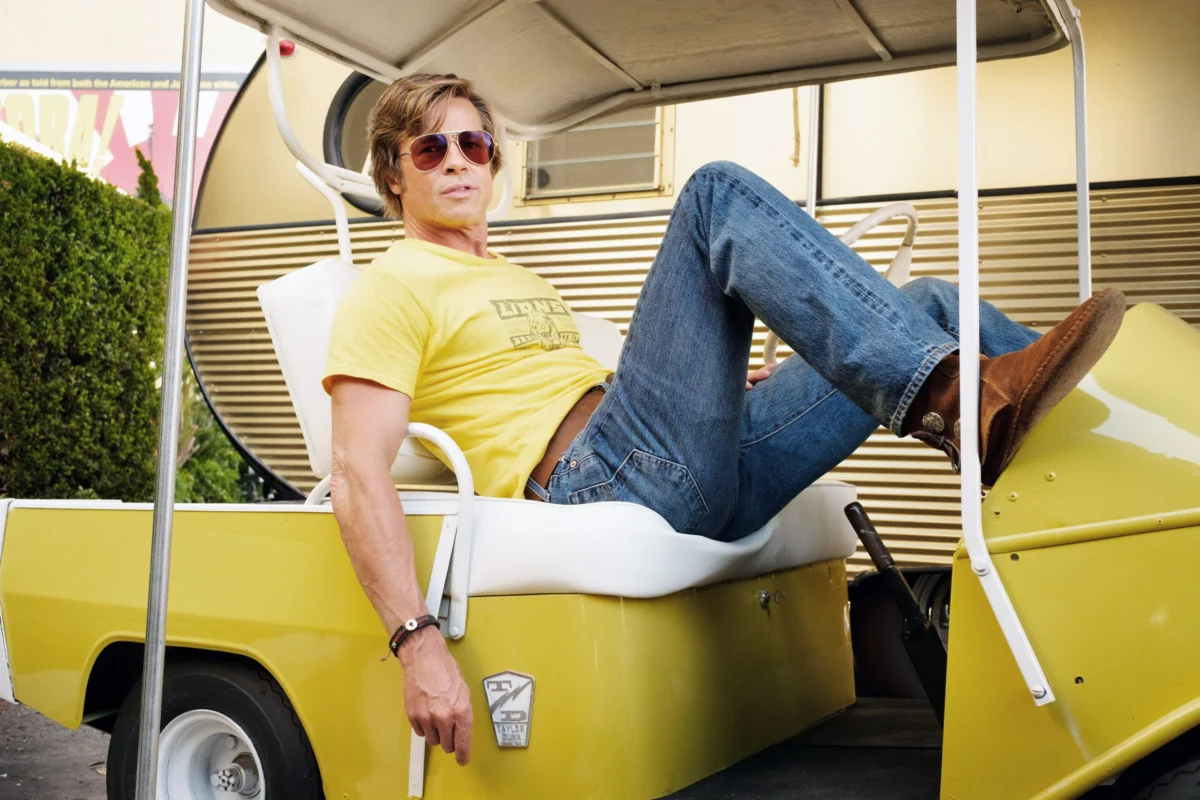
The partnership between Tarantino and Fincher is nothing short of a cinematic anomaly. While they are contemporaries—Fincher is famously just seven months older than Tarantino—their aesthetic philosophies often seem diametrically opposed. Tarantino is the poet of the "hangout" movie, a director who prioritizes rhythmic dialogue, foot-fetishism, and a chaotic, sprawling sense of historical revisionism. Fincher, conversely, is the master technician, known for his cold, precise framing, digital fluidity, and an obsession with the darker, procedural aspects of the human psyche. This "handoff" of a sequel, written by Tarantino but executed by Fincher, creates a fascinating creative tension. Reports from the set suggest that Tarantino was a constant presence, often seated in a high chair directly adjacent to Fincher’s monitor. This proximity has fueled a subset of fan theories suggesting that Tarantino may be "shadow directing" the film to circumvent his self-imposed ten-movie retirement mandate. However, those familiar with Fincher’s rigorous process understand that a Fincher film is unmistakably his own; he is a director who does not merely execute a script but dismantles and reconstructs it through his specific lens of psychological tension.

For Tarantino, the project serves as a bridge between his directorial career and his burgeoning life as a full-time man of letters. Since the release of the original Once Upon a Time in Hollywood, he has increasingly turned toward literature, publishing a deep-dive novelization of the film in 2021 and a seminal work of film criticism, Cinema Speculation. By handing this script to Fincher, Tarantino continues his tradition of being an unpredictable provocateur. It has been nearly thirty years since he wrote a feature-length script for another director to helm—the last being 1996’s From Dusk Till Dawn, directed by Robert Rodriguez—and this move allows him to expand the "Tarantino-verse" while technically keeping his directorial tally at nine. His focus has already shifted toward his upcoming stage play, The Popinjay Cavalier, a swashbuckling comedy set in the 1830s, which he has hinted could eventually serve as his final cinematic bow if it transitions to the screen.

The character of Cliff Booth himself provides fertile ground for this transition from Tarantino’s sun-drenched 1969 Los Angeles to the seedier, more cynical L.A. of 1977. Inspired by the real-life relationship between Kurt Russell and his stunt double, and informed by the stories of legendary, "indestructible" stuntmen like those who worked with Bing Russell, Cliff Booth was always the most dangerous element of the original film. While the 2019 movie painted him as a loyal, laid-back companion to Rick Dalton, the novelization revealed a much darker interiority. In the prose version of the story, Booth is a confirmed war hero—a Green Beret who mastered the art of the silent kill in the Pacific theater—and a man who has gotten away with multiple murders in civilian life, including the infamous killing of his wife with a shark gun. By moving the timeline forward to 1977, the sequel appears poised to lean into this darkness. The teaser trailer suggests a man who has drifted away from the relative stability of being an actor’s "gopher" and into the periphery of the city’s underworld.

The year 1977 is a deliberate and masterful choice for the film’s setting. It was a year of profound transition for both Hollywood and the American psyche. It was the year George Lucas’s Star Wars and Steven Spielberg’s Close Encounters of the Third Kind signaled the end of the "New Hollywood" era of gritty, director-driven realism and the dawn of the blockbuster age. For a cinephile like Tarantino, this inflection point is rich with thematic potential. It was also the year of the Roman Polanski scandal; in the alternate history established by Once Upon a Time in Hollywood, where Sharon Tate survived the Manson Family’s attack, the trajectory of Polanski’s life and the cultural impact of his crimes would be fundamentally altered. The film seems prepared to explore this "what if" scenario with surgical precision. Furthermore, the 1977 backdrop allows the production to tap into the "smutty" aesthetic of the era—the rise of disco, the burgeoning adult film industry, and the gritty, neon-soaked streets of Hollywood Boulevard that would eventually inspire films like Hardcore and Taxi Driver.

The cast assembled for The Further Mis-Adventures of Cliff Booth reflects this shift in tone. Brad Pitt, reprising his Oscar-winning role, appears in the teaser with a weary mustache and a visible scar, nursing a wound with a bag of frozen peas—a direct callback to the injuries sustained during the Manson home invasion. The trailer shows him working as a bartender, suggesting that his days on film sets may be behind him, yet he is also seen slamming an Oscar down on a desk, hinting at a lingering connection to the industry’s elite. Timothy Olyphant returns as Jim Stacy, the real-life actor who starred in the series Lancer. In a tragic nod to real history, Stacy is depicted with a stiff gait, likely referencing the 1973 motorcycle accident that cost the real Stacy an arm and a leg. This blend of historical tragedy and fictional narrative is a hallmark of the Tarantino-Fincher ethos.

New additions to the cast bring a fresh energy to the sequel. Elizabeth Debicki appears to occupy a central role, seen behind a desk in a sequence that evokes the classic "femme fatale" or "client" tropes of film noir, questioning Cliff about his past. Yahya Abdul-Mateen II is featured as a star of the Blaxploitation genre, a "movie-within-a-movie" element that serves as an homage to the era of Shaft and Super Fly. The inclusion of veteran character actors like Peter Weller and Barry Livingston—the latter reportedly playing a "disco kingpin"—further enriches the film’s textural authenticity. Weller, iconic for his role in RoboCop, is seen near the Normandie casino, a legendary L.A. card room, adding a layer of gravitas to the film’s exploration of the city’s gambling underbelly. Even the smaller roles, like Lauren Glazier as a mud-wrestling officiant, point toward a film that is deeply invested in the fringe cultures of the late 70s.

Stylistically, the teaser trailer suggests that Fincher has traded the warm, golden-hour hues of the first film for a colder, more high-contrast palette. Shots of demolition derbies, walk-in freezers, and shadowy nightclubs suggest a narrative that is less about the "romance" of Hollywood and more about its "residue." The film appears to be a procedural of sorts, following Cliff as he navigates a job that likely involves the "shady, seemingly indestructible" characters that Tarantino has spent decades obsessing over. By placing these characters in the hands of Fincher, the master of the modern thriller, the project promises to be a rigorous exploration of violence, loyalty, and the passage of time.

Ultimately, The Further Mis-Adventures of Cliff Booth is more than just a sequel; it is a dialogue between two masters of the craft. It represents a rare moment where the "Strong Authorial Voice" of a writer like Tarantino meets the "Strong Visual Will" of a director like Fincher. Whether the film serves as a loophole for Tarantino’s retirement or a genuine evolution for Fincher’s filmography, it stands as a testament to the enduring power of the Cliff Booth character—a man who, much like the celluloid he inhabits, is both a hero and a ghost, a relic of a bygone era and a lethally relevant force in the present. As the November 25 release date approaches, the industry remains on high alert, waiting to see how this collision of styles will redefine the legacy of one of modern cinema’s most iconic anti-heroes.
