
 By Titik Puspa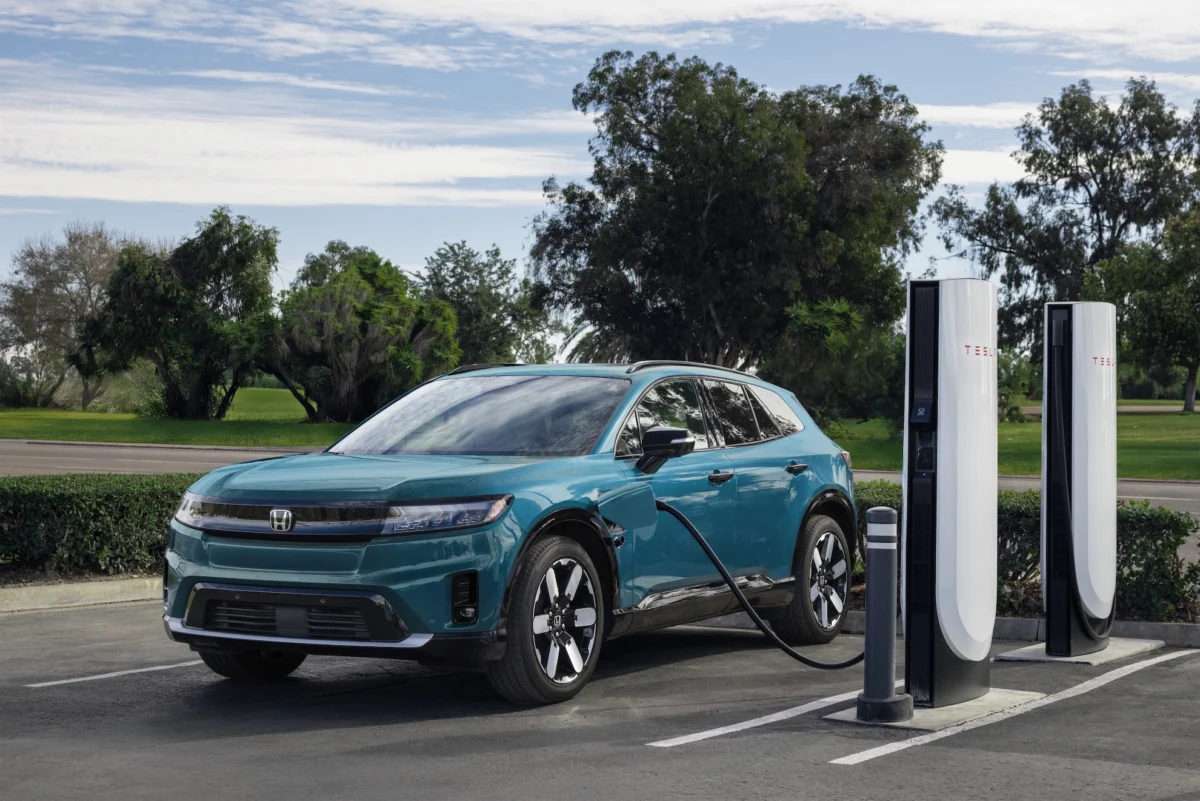
The automotive landscape in the United States is experiencing a significant shift, marked by a palpable retreat from the all-electric vehicle (EV) segment by several prominent manufacturers. The recent confirmation from Honda that the Prologue, their last remaining fully electric offering in the U.S., is officially dead, serves as a stark indicator of this broader industry trend. This departure signals more than just Honda’s recalibration of its EV strategy; it mirrors a wider pattern of EV market contraction in the U.S., a phenomenon that stands in sharp contrast to the burgeoning global EV market.
This wave of EV departures from the American market prompts a critical examination: which electric vehicles have ceased their U.S. presence, and what forces are driving this exodus? While the expiration of the $7,500 federal tax credit at the end of fall 2025 undoubtedly played a significant role in dampening EV sales, it is by no means the sole catalyst. A confluence of factors, including evolving consumer preferences, rising production costs, strategic shifts in corporate priorities, increasingly stringent regulatory landscapes, and the imposition of tariffs, are collectively contributing to the thinning ranks of available EVs. Data released in July by Kelley Blue Book and Cox Automotive paints a somber picture: in the second quarter of 2026, EV sales accounted for approximately 5.8% of the total market, with 247,226 units sold. Although this represents a quarter-over-quarter increase from the first quarter of 2026, it remains a decline compared to the same period in the preceding year, and significantly lower than sales figures before the federal tax credit was phased out.

Despite these challenges, it’s crucial to acknowledge that American consumers are still purchasing EVs, and new entrants, such as the highly anticipated Rivian R2, continue to emerge. There are even nascent signs of a slow recovery. While fourth-quarter 2025 sales were a considerable 36% lower than the same period in 2024, this gap has narrowed in 2026. For instance, Q2 2026 EV sales were 20.5% lower than Q2 2025, indicating a gradual, albeit still below-par, rebound. Nevertheless, even with this tentative recovery underway, a considerable number of automakers are opting to discontinue or significantly curtail their EV model lineups in the U.S. This article will delve into the specific vehicles that have exited or are exiting the U.S. market in 2026, providing context and analysis for each departure.
Afeela: A Promising Concept That Never Reached Production
The Afeela brand, a joint venture between Japanese tech giant Sony and automotive stalwart Honda, represents a poignant case of an EV that generated significant buzz but ultimately failed to materialize into a production vehicle. The genesis of Afeela can be traced back to Sony’s Vision S prototype, first unveiled at the Consumer Electronics Show (CES) in 2020. This futuristic concept car garnered considerable attention, positioning Sony as a potential disruptor in the automotive industry. Honda officially joined forces with Sony in 2022, solidifying the partnership and leading to the unveiling of an Afeela-branded prototype at CES the following year.

Throughout the subsequent months and years, the Afeela was a frequent topic of discussion, seemingly omnipresent in industry news and even making appearances at events like TechCrunch Disrupt. Despite this sustained marketing effort and the high expectations it generated, the Afeela never progressed beyond the prototype stage. In March 2026, the joint venture officially dissolved, signaling the end of the road for the two planned Afeela-branded EVs. This decision coincided with Honda’s announcement just two weeks prior to cancel three other EV models slated for the U.S. market, further underscoring the company’s significant reevaluation of its electric vehicle strategy.
Honda (and Acura): A Strategic Pivot Amidst Shifting Market Dynamics
Honda’s EV ambitions, once boldly proclaimed with its "0 Series" lineup, have undergone a dramatic overhaul. Just a few years ago, the automaker showcased a mid-sized SUV prototype at CES 2025, alongside the sleek Saloon and Space-Hub concepts at CES 2024, hinting at a robust future for its electric offerings. The planned production of the SUV at Honda’s "EV Hub" factory in Ohio was anticipated for the first half of 2026. However, in a significant strategic shift announced in March 2026, Honda halted the development of the Acura RDX, Honda 0 sedan, and SUV. The company cited U.S. tariffs and intensifying competition from Chinese manufacturers as primary reasons for this abrupt pivot.

The murmurs surrounding the potential discontinuation of the Honda Prologue gained traction around the same time, but it wasn’t until July 16, when CarBuzz first reported the program’s conclusion, that the news was officially confirmed. TechCrunch subsequently verified with Honda that the Prologue was indeed ceasing production. While the demise of the Series 0 models is difficult to quantify as they never entered production, the Prologue represented a more tangible and immediate product for U.S. consumers. A product of a partnership with General Motors, the Prologue was built at GM’s Ramos Assembly Plant in Mexico and shared its platform with the Chevrolet Blazer EV. It experienced moderate success for a period, selling approximately 33,000 units in 2024 and 39,000 in 2025. However, the cessation of the federal tax credit led to a sharp decline in sales, ultimately contributing to its discontinuation.
Hyundai Ioniq 6: A Victim of Tariffs and Market Realignment
Hyundai, a manufacturer that has generally performed well in the U.S. EV market, has also made adjustments to its electric vehicle lineup in response to changing economic conditions. In March 2026, the company announced that it would cease sales of the Hyundai Ioniq 6 sedan in the United States. This decision is widely believed to be closely linked to U.S. tariffs on vehicles imported from South Korea. The Ioniq 6 is manufactured in South Korea and then imported to the U.S. In contrast, Hyundai’s other popular EV models, the Ioniq 5 and the upcoming Ioniq 9, are assembled at the company’s factory in Georgia, making them less susceptible to such tariffs. Despite the discontinuation of the standard Ioniq 6, Hyundai has indicated that it will continue to import the higher-priced, lower-volume N-model of the Ioniq 6 for performance enthusiasts.

Nissan Ariya: A Promising Debut Fades
Nissan, an early pioneer in the electric vehicle space with its venerable Leaf, has decided not to produce a 2026 model year of its all-electric Ariya SUV for the U.S. market, and its return appears unlikely. The Ariya, first unveiled in 2020 with plans for a Japanese launch the following year, represented Nissan’s ambitious stride into the modern EV era. As the brand’s first all-electric offering since the Leaf, it was intended to be a key player in the burgeoning crossover segment. However, market dynamics and perhaps a reassessment of its EV strategy have led Nissan to withdraw the Ariya from U.S. showrooms for the upcoming model year.
Polestar: Navigating Geopolitical and Regulatory Hurdles

The Swedish EV manufacturer Polestar, owned by Chinese automotive giant Geely, has found itself in a precarious position in the U.S. market due to the country’s evolving stance on Chinese-connected vehicle technology. Polestar requires specific authorization from the U.S. Department of Commerce to continue importing and selling its vehicles in the United States. Without this approval, the company has faced effective import restrictions. Polestar has stated its intention to continue selling its existing stock of Polestar 3 and Polestar 4 vehicles in the U.S. and to maintain customer support, including access to its service network. The Polestar 3 was notably produced at a factory in South Carolina as well as in Chengdu, China. In a contrasting development, Volvo Cars, Polestar’s sibling company also under Geely’s ownership, did receive the necessary authorization to continue selling its connected vehicles in the U.S., highlighting the nuanced and sometimes inconsistent nature of these regulatory decisions.
Tesla Model S and Model X: A Shift Towards Autonomy and Robotics
In a move that surprised many in the automotive world, Tesla announced in January that it would be ending production of its flagship Model S sedan and Model X SUV. The company’s rationale for this decision centers on its vision for the future, which it believes lies not in traditional electric sedans and SUVs, but in advancements in artificial intelligence, autonomy, and robotics. This strategic pivot suggests a reallocation of resources and manufacturing capacity towards these emerging technologies. It’s also worth noting that sales of the Model S and Model X have seen a steady decline over the years, as consumers increasingly gravitated towards Tesla’s more affordable and higher-volume offerings, the Model 3 and Model Y. The final Model S and X vehicles rolled off the assembly line in Fremont, California, this spring, making way for the production of Tesla’s Optimus robots.

Volkswagen: Reassessing the ID.4 and ID. Buzz
Volkswagen has also initiated a pullback from certain EV models in the U.S. In April, the German automaker announced that it would cease production of the ID.4 electric SUV at its U.S. factory in Chattanooga, Tennessee. This decision signals a strategic shift back towards high-volume gasoline-powered SUVs, such as its upcoming Atlas model. Volkswagen indicated that U.S. customers would still be able to purchase the ID.4 until current inventory is depleted, a supply that is expected to last into 2027.
Regarding the ID. Buzz, Volkswagen has stated that the electric microbus is merely on a hiatus and is slated for a return in 2027, meaning there will be no 2026 model year available. However, self-driving versions of the ID. Buzz are currently undergoing testing in the United States. Volkswagen subsidiary MOIA America, in partnership with Uber, began testing autonomous microbuses in Los Angeles in April, in anticipation of a robotaxi service scheduled to launch in late 2026. Initially, these services will operate with human safety operators onboard.

Volvo EX30: A Subcompact Exit Amidst Larger Ambitions
In March, Volvo made the decision to withdraw its subcompact EX30 electric SUV and its EX30 Cross Country variant from the U.S. market. The company announced that production for the U.S. would conclude after the summer. The EX30 had generated considerable excitement prior to its official U.S. entry in 2025, positioning itself as Volvo’s more affordable EV option. Despite this departure, Volvo plans to continue offering its larger, all-electric EX60 and EX90 SUVs in the United States, indicating a focus on larger, potentially more profitable, segments of the EV market.
The collective departures of these electric vehicles from the U.S. market paint a complex picture of an industry grappling with evolving consumer demands, economic pressures, and shifting technological priorities. While the road ahead for EVs in America may be more challenging than initially anticipated, the ongoing innovation and the continued presence of some key players suggest that the transition to electric mobility is far from over, albeit perhaps on a different trajectory than many had envisioned.
