
 By Rifan Muazin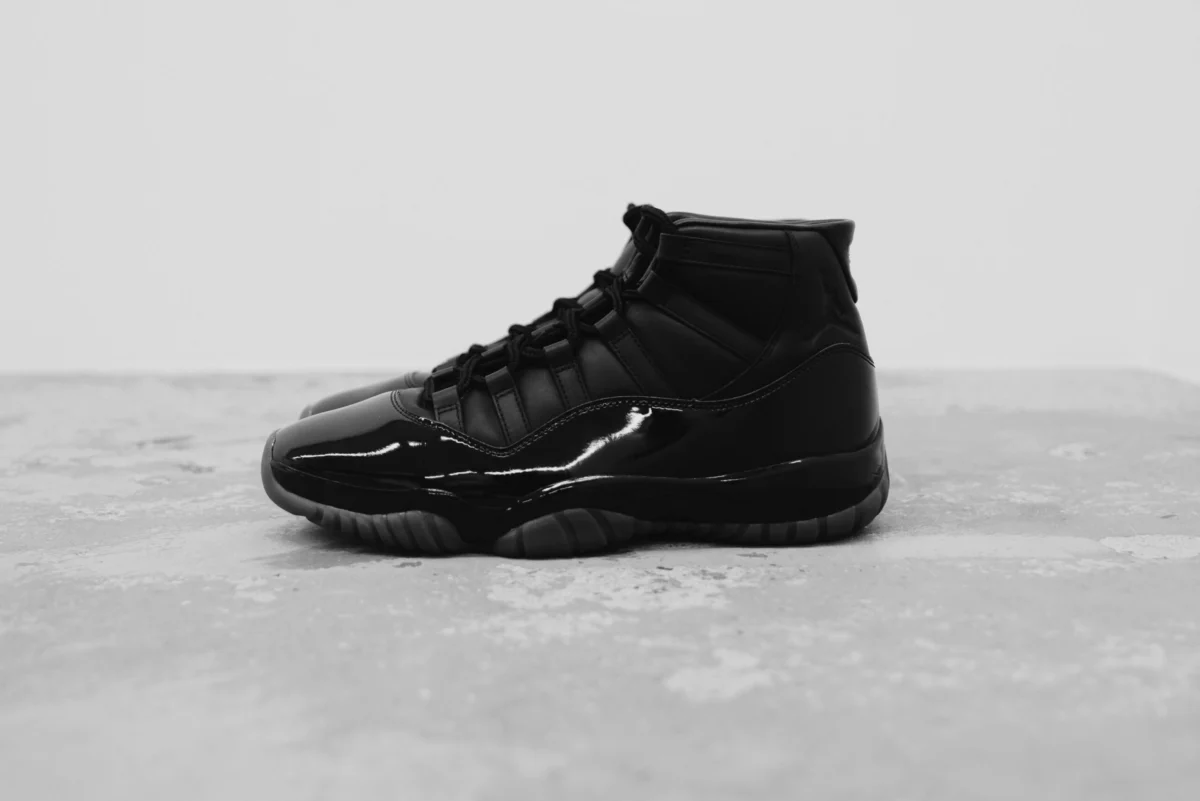
The Air Jordan 11 was born from the mind of legendary designer Tinker Hatfield during a period of profound uncertainty. At the time of its inception, Michael Jordan was famously pursuing a career in professional baseball, and many within Nike believed the signature line should be retired. Hatfield, however, remained convinced that Jordan would return to the hardwood. He designed the AJ11 with the goal of creating a performance sneaker that could also be worn with a tuxedo—a radical concept in the mid-90s. The result was a masterpiece of industrial design, featuring a first-of-its-kind patent leather mudguard, a full-length carbon fiber spring plate, and a ballistic mesh upper. When Jordan finally returned to the NBA and debuted the "Concord" colorway during the 1995 playoffs against the Orlando Magic, the world was stunned. The shoe looked like nothing else on the court. It was sophisticated, futuristic, and undeniably premium.
Because of this storied heritage, the Air Jordan 11 has remained largely "untouchable" in terms of external collaboration. While Jordan Brand has frequently partnered with artists, designers, and boutiques like Travis Scott, Virgil Abloh’s Off-White, and A Ma Maniére to rework other models, the AJ11 was always kept in-house. It was a silhouette reserved for the purest expressions of the brand’s DNA. This is why the announcement of the Comme des Garçons Homme Plus x Air Jordan 11 is more than just a product launch; it is a fundamental shift in Jordan Brand’s operational philosophy. By handing the keys to the AJ11 to Rei Kawakubo’s legendary Japanese label, Jordan Brand is signaling a new era for its most prized asset.
.jpg)
The choice of Comme des Garçons (CDG) as the inaugural collaborator for the AJ11 is both strategic and poetic. Rei Kawakubo, the founder of CDG, has spent decades dismantling the traditional boundaries between high fashion and streetwear. Her "anti-fashion" philosophy and avant-garde approach to construction have made CDG one of the most respected entities in the global fashion industry. The relationship between Nike and CDG is one of the longest-running and most successful partnerships in footwear history. Over the years, CDG has put its fingerprints on everything from the Nike Air Foamposite One—famously adding a circular, topographical texture to the shell—to the Air Max 95 and the Air Force 1. There is a deep-seated level of trust between the two brands. Jordan Brand knew that if anyone could handle the AJ11 with the necessary combination of respect and innovation, it was Kawakubo and her team at Homme Plus.
In typical CDG fashion, the approach to the Air Jordan 11 is one of sophisticated restraint rather than loud, disruptive changes. The collaboration features two monochromatic colorways: an all-black version and an all-white version. This minimalism allows the architecture of the shoe to speak for itself while highlighting the subtle, luxurious material shifts that define the partnership. The most significant modification is the replacement of the traditional ballistic mesh upper. In its place, CDG has utilized a premium, full-grain leather. This change is monumental for AJ11 purists. The mesh upper was originally chosen for its breathability and durability on the court, but by swapping it for high-end leather, CDG has fully leaned into the "tuxedo" aesthetic that Tinker Hatfield originally envisioned. The leather upper creates a textural dialogue with the iconic patent leather mudguard, offering a more cohesive, high-fashion finish that feels more at home on a Paris runway than a Chicago blacktop.
Furthermore, the design team applied a gloss finish to the midsole, a departure from the matte phylon typically used on the silhouette. This creates a visual continuity that extends the shine of the patent leather further down the shoe, giving the entire lower half of the silhouette a uniform, polished look. On the heel tab, where fans are accustomed to seeing Michael Jordan’s "23" or "45," the Comme des Garçons Homme Plus branding appears in a typeface that mirrors the original numerical styling. It is a subtle "if you know, you know" detail that signifies the shoe’s exclusive status without screaming for attention.
.jpg)
This collaboration arrives at a time when Jordan Brand is clearly experimenting with the AJ11’s market presence. Last year, the brand broke its long-standing tradition of the singular holiday drop by releasing a wider array of new colorways and variations. Some critics argued that this could lead to the "dilution" of the model’s prestige, but the CDG collaboration serves as a powerful counter-argument. Instead of diluting the brand, this partnership elevates it. It places the Air Jordan 11 in the context of global luxury, proving that the silhouette has the range to exist alongside the world’s most prestigious fashion houses. It is a validation of the shoe’s design as a piece of art, not just a piece of sports equipment.
The retail strategy for this release further emphasizes its exclusivity. Priced at $358, the sneaker sits at a premium point that is significantly higher than the standard $225-$230 retail price of a general release AJ11. This price reflects both the luxury materials used and the prestige of the CDG name. The release is being funneled through Dover Street Market (DSM) locations worldwide—London, Tokyo, Los Angeles, New York, and Paris—as well as the DSM web store and select CDG boutiques. Dover Street Market, founded by Kawakubo and her husband Adrian Joffe, is the epicenter of the curated fashion world. By limiting the release to these specific doors, Jordan Brand ensures that the shoe lands in the hands of a fashion-forward audience that appreciates the nuance of the collaboration.
From a market analysis perspective, the Comme des Garçons Homme Plus x Air Jordan 11 is likely to become a high-value collector’s item. While it may not possess the immediate "hype" of a Travis Scott collaboration with its backwards swooshes and earthy tones, it possesses a "legacy value" that is rare in today’s fast-paced sneaker culture. It is a historical marker—the first time the "protected" AJ11 was shared with an outside partner. For serious collectors, this makes it an essential piece of the Jordan timeline.
.jpg)
The impact of this release will be felt long after the initial September 5 launch. It opens the door for what could be a series of high-level collaborations on the AJ11 in the years to come. Now that the seal has been broken by CDG, the question is no longer if Jordan Brand will collaborate on the 11, but who is next. Will we see a Virgil Abloh-inspired "The 20" version of the 11? Could a house like Dior, which already worked on the Air Jordan 1, take a stab at the 11? The precedent has been set, and it has been set with a level of class and sophistication that honors the shoe’s legendary status.
Ultimately, the Comme des Garçons Homme Plus x Air Jordan 11 is a masterclass in collaborative design. It respects the history of the 1995 classic while pushing it into new territory. It proves that even the most "sacred" items in culture can be reimagined when the right partners are involved. As Michael Jordan once bridged the gap between sport and global icon status, this sneaker bridges the gap between the basketball court and the highest tiers of luxury fashion. It is a fitting tribute to the most beloved sneaker in the world, and a historic moment that will be discussed by sneakerheads and fashion historians for years to come.
