
 By Rifan Muazin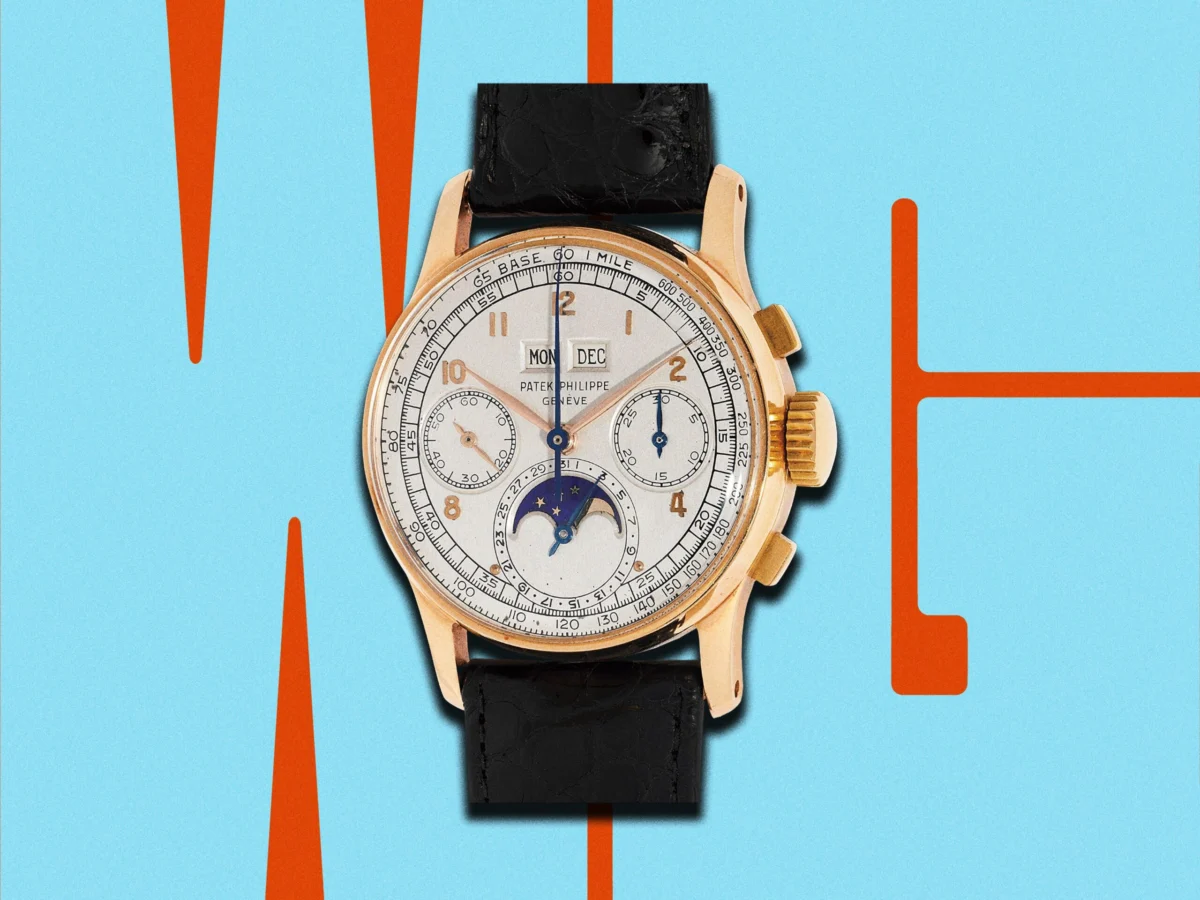
In the rarefied atmosphere of high horology, few achievements carry as much weight as the marriage of a perpetual calendar and a chronograph. While many brands today boast of their technical prowess, Patek Philippe stands alone as the architect of this specific lineage. In 1941, an era defined more by global conflict than by luxury, the Genevan maison achieved a feat of "Katie Ledecky-style" dominance by releasing the first serially produced wristwatch to combine these two disparate and incredibly complex functions. Over the ensuing eight decades, this "alchemy" has become the definitive benchmark for the brand, serving as a living history of Swiss watchmaking, shifting collector tastes, and the evolution of mechanical engineering. To understand the Patek Philippe perpetual calendar chronograph is to understand the soul of the watch industry itself.
Ref. 1518: The Genesis of a Legend (1941–1954)
The introduction of the Reference 1518 in 1941 was nothing short of a seismic shift in the horological landscape. Before its arrival, a perpetual calendar—a mechanism capable of accounting for the varying lengths of months and the quadrennial intrusion of a leap year—was almost exclusively the province of pocket watches or unique, piece-unique commissions for the world’s most opulent titans of industry. To miniaturize this "Quantième Perpétuel" (QP) and integrate it with a stopwatch function (chronograph) was a challenge that few dared to undertake.
The 1518 was born during the era of établissage, a traditional Swiss production model that stands in stark contrast to the modern obsession with "in-house" movements. In this period, the Swiss watch industry functioned as a sophisticated cottage industry. Specialized workshops produced specific components—dials, cases, hands, and movement blanks (ébauches)—which were then finished, modified, and assembled by the grand maisons. For the 1518, Patek Philippe utilized the Valjoux 13”’ movement blank as a foundation. However, Patek’s watchmakers didn’t merely case the movement; they transformed it into the Caliber 13”’ 130 Q, applying exhaustive hand-finishing, adjusting it to the highest chronometric standards, and integrating their proprietary perpetual calendar module.

With a case diameter of 35mm—considered standard, if not slightly large, for the 1940s—the 1518 established the aesthetic DNA that would persist for generations: twin apertures for the day and month at 12 o’clock, a moon phase and date sub-dial at 6 o’clock, and two chronograph registers at 3 and 9 o’clock. Only 281 examples were ever produced, mostly in yellow and rose gold. The existence of four known examples in stainless steel has created a holy grail for collectors; one such steel 1518 shattered records in 2016, selling for over $11 million, and the market continues to view this reference as the ultimate "blue chip" investment.
Ref. 2499: The Pinnacle of Mid-Century Design (1950–1985)
If the 1518 was the breakthrough, the Reference 2499 was the perfection of the form. Released in 1950, the 2499 remained in production for 35 years, yet Patek Philippe produced only 349 pieces—less than ten watches per year on average. This scarcity, combined with its evolved proportions, has led many scholars and enthusiasts to label the 2499 as the greatest wristwatch ever made.
The 2499 increased the case size to 37.5mm, a "sweet spot" that remains remarkably modern by today’s standards. Over its three-and-a-half-decade run, the reference evolved through four distinct series, each reflecting the design trends of its time. The first series featured square chronograph pushers and applied Arabic numerals, echoing the 1518. The second series introduced round "pump" pushers and a tachymeter scale. The third series removed the tachymeter for a cleaner, more minimalist dial, and the fourth series introduced sapphire crystals, marking the transition toward the modern era.
Mechanically, the 2499 continued to refine the Valjoux-based architecture. It represented a period where Patek Philippe was not focused on reinventing the wheel but on polishing it to an impossible luster. The stepped lugs and the balance of the dial layout made it a favorite of icons like John Lennon, who was famously photographed wearing one. Today, any 2499 appearing at auction is a global event, with prices for rare configurations regularly climbing into the mid-seven figures.
.jpg)
Ref. 3970: Defiance in the Face of the Quartz Crisis (1986–2004)
The mid-1980s were a perilous time for mechanical watchmaking. The "Quartz Crisis" had decimated the Swiss industry, as cheap, accurate battery-powered watches from Japan flooded the market. Many brands pivoted to quartz or folded entirely. Patek Philippe, under the leadership of Philippe Stern, chose a different path: they doubled down on mechanical complexity.
The Reference 3970, launched in 1986, was a bold statement of faith in traditional horology. Interestingly, Patek chose to downsize the case to 36mm, a move that emphasized elegance over the burgeoning trend of oversized sports watches. This reference also marked a shift in movement suppliers, moving from Valjoux to an extensively modified Lemania 2310 base (designated as the Caliber CH 27-70 Q).
The Lemania movement was a masterpiece of architecture, allowing Patek to add new layers of information to the dial, including a leap-year indicator and a 24-hour day/night display. Despite being produced in larger numbers than its predecessors (roughly 4,000 units over 18 years), the 3970 is highly coveted for its "neo-vintage" appeal. It represents the bridge between the old world of handmade components and the new world of standardized high-precision manufacturing. For many modern collectors, the 3970 offers the best value proposition in the lineage, providing the prestige of a Patek grand complication in a wearable, classically sized package.
Ref. 5970: The Modern Masterpiece (2004–2011)
When Thierry Stern took the reins of the company, one of his first major contributions was the Reference 5970. Released in 2004, the 5970 is often cited as the perfect synthesis of vintage charm and modern presence. At 40mm, it addressed the contemporary demand for larger watches without sacrificing the brand’s signature proportions.
.jpg)
The 5970 retained the Lemania-based movement—making it the last Patek Philippe perpetual calendar chronograph to use a sourced ébauche. This "last of its kind" status has given the 5970 an almost legendary reputation. It brought back the tachymeter scale and square pushers, nodding to the 1518 and early 2499s, while introducing a bolder, more muscular case design. With a production run of only seven years and approximately 2,800 examples, it is rarer than the 3970 and has seen its value skyrocket in recent years as collectors recognize it as the final chapter of Patek’s "outsourced" era.
Ref. 5270: The In-House Era (2011–Present)
The year 2011 marked a turning point in Patek Philippe’s history with the debut of the Reference 5270. For the first time in the 70-year history of the complication, the movement was designed and manufactured entirely in-house. The Caliber CH 29-535 PS Q was a response to a changing industry where "in-house" had become the ultimate marker of prestige and where movement suppliers like the Swatch Group (which owned Lemania) were tightening the supply of blanks to external brands.
The 5270 is a technical tour de force, featuring six patented innovations in the chronograph mechanism alone. At 41mm, it is the largest of the lineage, offering a grand stage for its complex dial. While early versions of the 5270 faced some criticism from purists for certain dial design choices—such as the "double chin" created by the date scale overlapping the tachymeter—Patek quickly refined the design.
Today, the 5270 is available in a variety of breathtaking iterations, from classic yellow gold to platinum versions with "salmon" dials or even green lacquered finishes. It represents the modern face of Patek Philippe: a brand that respects its 1941 origins while utilizing 21st-century technology to push the boundaries of accuracy and reliability.

The Legacy of the Grand Complication
The Patek Philippe perpetual calendar chronograph is more than just a watch; it is a cultural touchstone. Its presence on the wrists of cultural icons like Jay-Z, who famously wore a rare 6300G (a related grand complication), or Kevin Hart and Sylvester Stallone, underscores its status as the ultimate symbol of success and taste.
While competitors like Vacheron Constantin, Audemars Piguet, and A. Lange & Söhne have since developed their own spectacular versions of this complication, Patek Philippe retains the "crown" because of its 80-year head start and its unbroken lineage. Each reference—from the 1518 to the 5270—is a chapter in a story of survival, innovation, and an unwavering commitment to the idea that a mechanical object can track the infinite dance of time with poetic precision. For the serious collector, these watches are not merely timekeepers; they are the high-water marks of human ingenuity.
