
 By admin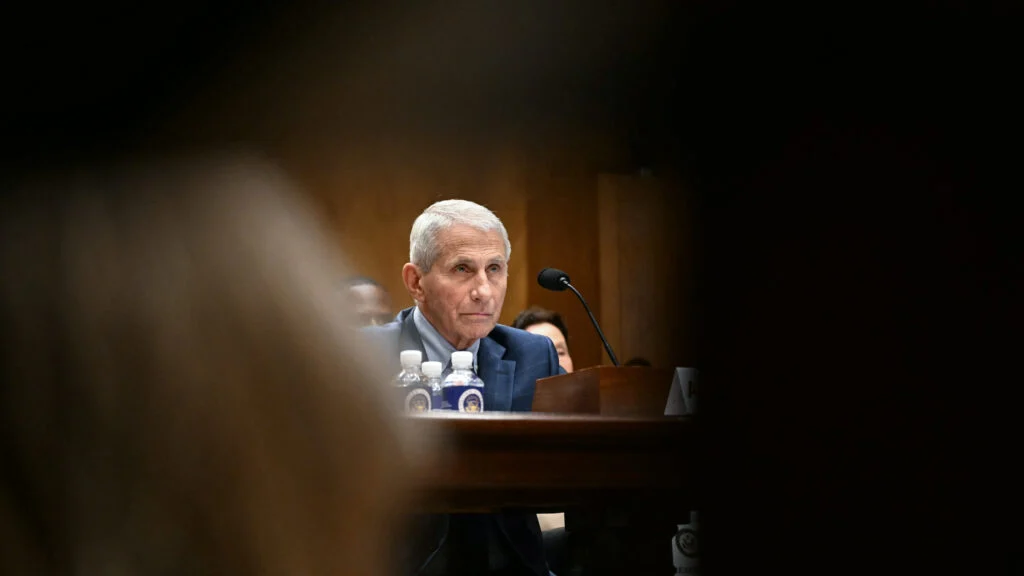
The Senate committee hearings held in early August 2026 regarding the origins of the Covid-19 pandemic have served as a stark reminder of how political theater can systematically obstruct the pursuit of public health and national security. In a move that many legal and medical experts view as the culmination of years of partisan targeting, the committee recently voted to hold Dr. Anthony Fauci in contempt of Congress. This escalation occurred after Fauci invoked his Fifth Amendment rights before a committee led by lawmakers who have publicly called for his imprisonment, creating a legal and political spectacle that distracts from the fundamental questions of global pandemic preparedness. To understand the gravity of this moment, one must look past the domestic political fray and examine the systemic failures of international transparency, the historical patterns of viral emergence in East Asia, and the biological realities of the virus that changed the world.
The core of the current controversy lies in the unresolved mystery of how SARS-CoV-2 first crossed the species barrier into humans. While the Senate committee has focused its ire on American public health officials, the reality is that the answers to these questions remain locked behind the borders of the People’s Republic of China. From the earliest days of the outbreak in Wuhan, the Chinese government engaged in a multifaceted campaign of information suppression. In late 2019 and early 2020, as hospitals in Hubei province began to fill with patients suffering from an unidentified viral pneumonia, the state’s primary response was not transparency, but containment of information. Whistleblowers like Dr. Li Wenliang, who attempted to warn his colleagues about a SARS-like virus, were detained and forced to sign confessions for "spreading rumors." This suppression denied the international community—including the World Health Organization (WHO) and the U.S. Centers for Disease Control and Prevention—precious weeks that could have been used to implement border controls and diagnostic protocols.
Once the virus had breached China’s borders and ignited global clusters, the obfuscation shifted from local suppression to international resistance. The Chinese government repeatedly frustrated the WHO’s efforts to conduct an independent, peer-reviewed investigation into the pandemic’s origins. When international investigators were finally allowed into Wuhan in early 2021, their movements were tightly controlled, and their access to raw data, laboratory logs, and early patient records was severely restricted. Reports surfaced of WHO representatives being confined to their hotel rooms under the guise of quarantine protocols, while state-sponsored narratives began promoting the specious theory that the virus had actually been imported into China via frozen food shipments from abroad. This lack of cooperation was not merely a diplomatic snub; it was a catastrophic blow to the scientific community’s ability to map the "spillover" event that triggered the crisis.
To analyze the current situation, one must compare it to the 2002–2004 outbreak of the original SARS coronavirus (SARS-CoV-1). That outbreak, which eventually claimed nearly 800 lives across 29 countries, also originated in China—specifically in Guangdong province. At that time, the Chinese government waited months before reporting the outbreak to the WHO, allowing the virus to reach international travel hubs like Hong Kong, Toronto, and Singapore. The eventual discovery that the virus had jumped from horseshoe bats to masked palm civets in "wet markets" provided a blueprint for zoonotic transmission. Following that crisis, China pledged to reform its public health infrastructure and increase transparency. However, the events of 2019 proved that the institutional reflex toward secrecy remained unchanged. Eighteen years after the first SARS outbreak, the world witnessed a tragic repetition of history: a respiratory pathogen emerging in a region known for high-risk animal husbandry and wildlife trade, followed by a state-ordered blackout on epidemiological data.
The scientific debate regarding the origin of Covid-19 generally falls into two categories: zoonotic spillover from a live animal market and a laboratory-associated incident. The zoonotic theory is supported by the historical precedent of SARS-1 and MERS, as well as the initial clustering of cases around the Huanan Seafood Wholesale Market in Wuhan. This market was known to sell wild animals that are susceptible to coronaviruses, creating an ideal environment for "spillover" events. Conversely, the "lab leak" hypothesis points to the proximity of the Wuhan Institute of Virology (WIV), a world-class facility conducting gain-of-function research on bat-derived coronaviruses. The fact that WIV researchers had traveled to bat caves in southern China—some 800 miles away—to collect samples adds a layer of circumstantial complexity. However, the critical point that the Senate committee often ignores is that both theories lead back to the same source of information: the Chinese state. Whether the virus emerged from a market or a lab, the records that could confirm either path are held by Chinese authorities who have refused to share them.
In this context, the decision to hold Dr. Anthony Fauci in contempt of Congress appears less like an act of oversight and more like an act of political scapegoating. Fauci, who served as the Director of the National Institute of Allergy and Infectious Diseases (NIAID) for nearly four decades, has advised seven U.S. presidents through crises ranging from HIV/AIDS to Ebola. To suggest that Fauci is responsible for the lack of clarity regarding a virus that emerged in a sovereign, adversarial nation is a logical fallacy. It is akin to blaming a detective in Washington, D.C., for failing to solve a crime in a closed city halfway across the world where he has no jurisdiction, no access to the crime scene, and no ability to interview witnesses. The conflation of Fauci’s domestic public health recommendations—such as mask mandates and social distancing—with the geopolitical mystery of the virus’s origin serves only to muddy the waters of public discourse.
Furthermore, the legal pressure placed on Fauci ignores the climate of hostility that has come to define the intersection of science and politics. When a public servant is told by a presiding committee chair that they "should go to prison" before a single piece of evidence of criminal wrongdoing is presented, the invocation of the Fifth Amendment is a standard legal protection, not an admission of guilt. The politicization of the pandemic has created a dangerous precedent where scientific experts are treated as political combatants. This environment discourages future generations of researchers from entering public service, fearing that their career-long contributions to medicine could be dismantled by a single cycle of partisan fervor.
If the United States is truly concerned about the origins of Covid-19, the focus must shift toward international diplomacy and the strengthening of global health surveillance. The reality is that the answer to the pandemic’s origin may never be known with 100% certainty unless there is a fundamental shift in the Chinese government’s approach to transparency. In the meantime, the world remains at significant risk. China’s animal husbandry practices, particularly the density of its poultry and swine operations and the persistence of wildlife trade, remain a "tinderbox" for the next zoonotic leap. Experts in epidemiology have long warned that the next pandemic is not a matter of "if" but "when." By focusing resources on the persecution of domestic health officials, the U.S. government is wasting valuable time that should be spent on pandemic early-warning systems, vaccine platform development, and international biosecurity agreements.
The "Washington Band Plays On," a phrase echoing the tragic delays in the response to the HIV/AIDS epidemic in the 1980s, is an apt metaphor for the current state of affairs. While lawmakers engage in televised bickering and legal maneuvers against a retired scientist, the underlying threats to global health remain unaddressed. The next pathogen will not care about congressional subpoenas or partisan affiliations. It will exploit the same gaps in international cooperation and the same delays in information sharing that SARS-CoV-2 exploited. To protect the health of U.S. citizens, the nation needs a strategy rooted in scientific reality and international accountability, not domestic political retribution. The contempt charge against Fauci may make for a dramatic headline, but it does nothing to prevent the next virus from crossing our borders. Only a clear-eyed assessment of the risks—and a recognition of where the true information gaps lie—can ensure that the lessons of Covid-19 are not lost to the annals of political theater.
