
 By admin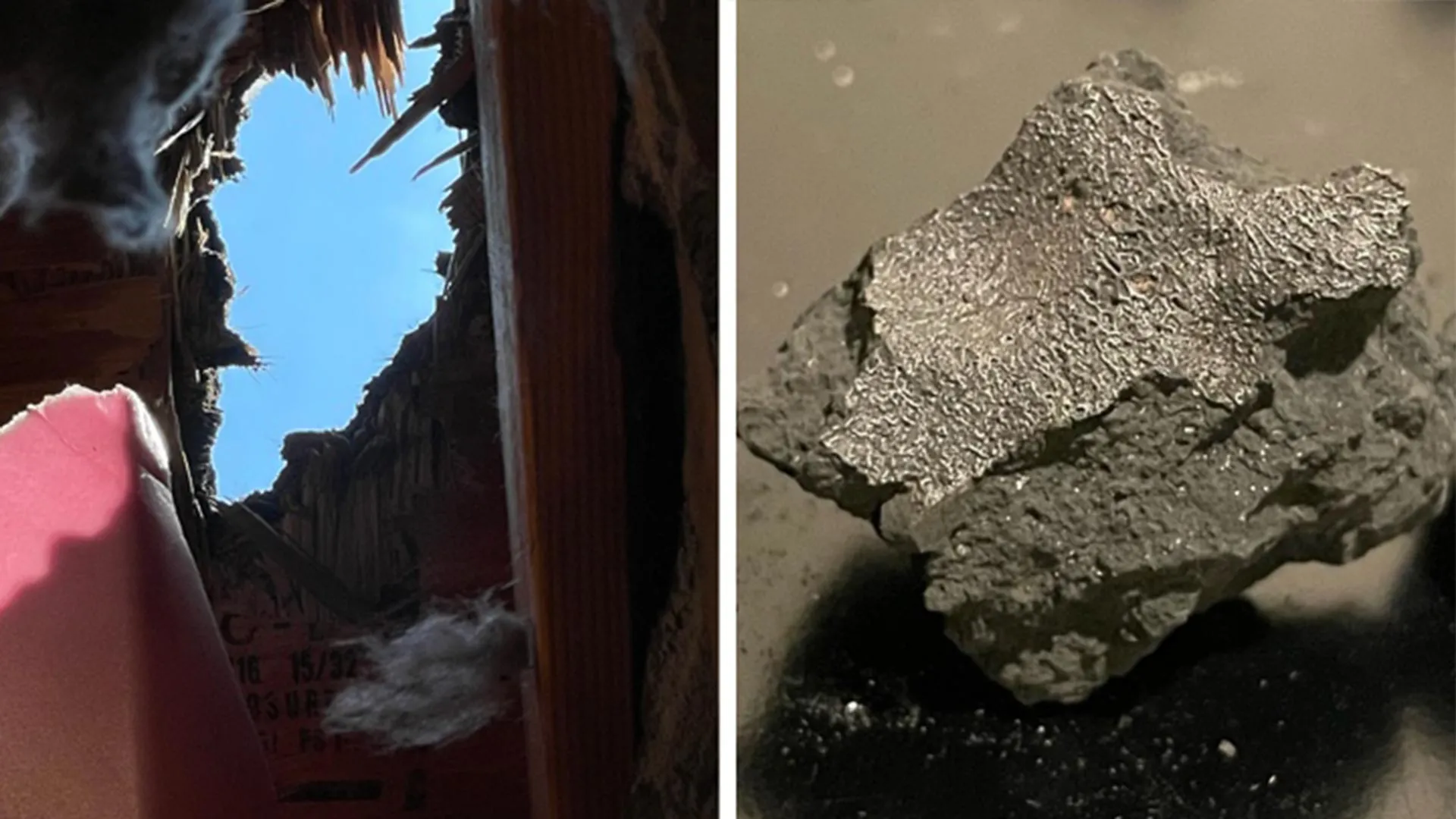
This dramatic celestial event, captured by multiple cameras and witnessed by dozens across the Northeast, delivered an exceptionally rare specimen of a primitive carbonaceous chondrite, a type of meteorite that offers crucial insights into the early solar system and the origins of life. The subsequent forensic study of the fragments has unveiled a surprising detail: they contain preserved bits from near the surface of a primitive asteroid where it experienced concentrated salty fluids – a process not previously known from this specific type of proto-planet world. "A forensic study of the fragments revealed that they contained preserved bits from near the surface of a primitive asteroid where it experienced concentrated salty fluids – a process not previously known from this type of proto-planet world," stated lead author and meteor astronomer Peter Jenniskens of the SETI Institute and NASA’s Ames Research Center in California’s Silicon Valley, highlighting the unique nature of this cosmic delivery.
A Meteor Tracked Across the Northeast with Startling Clarity
The object that spectacularly entered Earth’s atmosphere on that summer day was initially estimated to be roughly the size of a heavy airline bag, a substantial piece of cosmic rock. It was traveling at an astounding velocity of 32,000 miles per hour (approximately 14.4 kilometers per second) – a speed nearly 16 times faster than a rifle bullet and significantly exceeding the orbital velocity of the International Space Station. Its trajectory brought it directly over one of the most densely populated regions in the United States, making it a highly visible, albeit fleeting, spectacle.
The daytime appearance added to its rarity; while meteors are common, bright daylight fireballs are less frequently observed due to the sun’s glare. Nevertheless, sixty individuals across a wide swath of the Northeast, spanning New York, New Jersey, Connecticut, Rhode Island, and Pennsylvania, reported seeing the meteor to the American Meteor Society (AMS). The passage was so forceful that sixteen people in New York and New Jersey also reported feeling the shockwave – a powerful sonic boom generated as the object broke the sound barrier, then intensified as it fractured. The sonic boom, often described as a thunderous clap or rumbling, signals the intense energy release during atmospheric entry.
The American Meteor Society played a pivotal role in reconstructing the event. "Our cameras in Northford, Connecticut, and Douglassville, Pennsylvania, as well as a doorbell camera in Wayne, New Jersey, captured the meteor, and from that we measured its trajectory," explained American Meteor Society operations manager Mike Hankey. This network of cameras, combined with eyewitness accounts, allowed scientists to precisely plot the meteoroid’s path. Crucially, this analysis traced its origin back to a region "low in the asteroid belt," the vast doughnut-shaped region between the orbits of Mars and Jupiter where millions of asteroids reside. Pinpointing the origin helps scientists understand the conditions and processes in that specific part of the early solar system.
As the fragile extraterrestrial rock plunged deeper into the atmosphere, the immense friction and pressure caused it to heat rapidly and break apart quickly. It fragmented violently, transforming from a single solid object into a stream of smaller pieces, disappearing from view at an altitude of 22 miles (35 kilometers). Shortly afterward, a sophisticated Doppler weather radar system at Newark Liberty International Airport, designed to detect precipitation, briefly picked up an unusual signal: an elongated cloud of falling pebbles extending from Staten Island, New York, into central New Jersey. This radar detection was critical, as it confirmed the fragmentation and provided a direct measurement of the debris field, guiding the subsequent search. Hillsborough, New Jersey, a town located near the far end of this calculated debris path, was precisely where the largest fragments were predicted to reach the ground. True to prediction, only one significant meteorite was recovered, largely because its dramatic arrival – a direct hit on a residential property – made its presence impossible to overlook.
The Impact and a Pristine Recovery
The homeowner, who prefers to remain anonymous, recounted the startling experience: "I was at home at the time, heard a loud crash and found a hole in the ceiling of the master bedroom. I smelled a strong sulfur-like odor and saw many black fragments along with debris and black dust that covered my bed, carpet and surrounding areas." The sulfurous smell is characteristic of freshly fallen meteorites, often resulting from the reaction of sulfur-bearing minerals within the meteorite with Earth’s atmosphere and moisture.
Recognizing the unusual nature of the event, the homeowner demonstrated remarkable presence of mind and scientific responsibility. He quickly documented the scene with photographs and, crucially, took steps to protect the extraterrestrial material from contamination. Wearing disposable gloves, he meticulously used aluminum foil to collect the meteorite fragments and placed them in clean glass jars. This careful and immediate collection was paramount, as it preserved the meteorite in its most pristine state, minimizing exposure to terrestrial contaminants like soil, water, and human touch, which can alter its delicate chemistry and compromise scientific analysis.
An Exceptionally Rare Primitive Meteorite Unveiled
Laboratory analysis, conducted by an international team of experts, quickly confirmed the extraterrestrial origin of the recovered rock. It was classified as belonging to a primitive meteorite family known as CM-type carbonaceous chondrites. These meteorites are considered "primitive" because they have undergone minimal alteration since their formation in the early solar system, making them time capsules from approximately 4.5 billion years ago. The "carbonaceous" designation refers to their relatively high carbon content, while "chondrites" indicates the presence of chondrules – tiny, spherical, once-molten droplets of silicate minerals that solidified in the protoplanetary disk. The "CM" refers to the Mighei meteorite, which fell in Ukraine in 1889 and serves as the type specimen for this subgroup.
Paper coauthor Mike Zolensky, a distinguished meteoriticist at NASA’s Johnson Space Center in Houston, made a particularly significant finding: some parts of the Hillsborough meteorite had experienced more extensive alteration by water on its parent asteroid than scientists usually observe in typical CM2 carbonaceous chondrites. CM chondrites are categorized based on their degree of aqueous alteration, with CM1 representing the most altered (wettest) and CM2 representing less altered (drier) material. The Hillsborough meteorite’s unique characteristics placed it between these two categories, leading to its classification as a CM1/2 carbonaceous chondrite. This intermediate petrographic classification suggests a complex history of water interaction on its parent body.
The Hillsborough event itself is remarkably rare, representing only the 22nd observed fall involving a CM-type meteorite. Even more astonishing is its specific classification: it is just the second witnessed fall of a CM1/2 carbonaceous chondrite. The only other recorded instance was the Kolang meteorite, which fell in North Sumatra, Indonesia, in 2020. In contrast, every other witnessed CM fall has involved CM2 material, indicating a less intense history of aqueous alteration, and no CM1 meteorite fall has ever been observed directly. "Thanks to the homeowner’s quick reaction, these are the most pristine CM1/2 meteorites we know of," Jenniskens emphasized, underscoring the invaluable nature of its uncontaminated state for scientific inquiry.
Evidence of Ancient Asteroid Brines and the Cradle of Life
Scientists are profoundly interested in how water influenced the chemistry of primitive asteroids, as these processes are directly relevant to understanding the chemical conditions that might have led to the emergence of life. Another major group of primitive carbonaceous chondrites, known as CI-types (with the "I" referring to the Ivuna meteorite that fell in Tanzania in 1938), have long provided evidence of extensive aqueous alteration.
The advent of space missions has further illuminated this field. JAXA’s Hayabusa2 mission successfully brought material back from asteroid Ryugu, while NASA’s OSIRIS-REx mission recently returned samples from asteroid Bennu. Critically, these pristine samples from asteroids Ryugu and Bennu contain substantial evidence that briny fluids – concentrated salt solutions – once existed just beneath the surfaces of their parent asteroids. These missions provided direct, uncontaminated samples from the asteroid environment, validating earlier meteorite studies.
In a significant parallel, Zolensky and his colleague JangMi Han discovered small CM1 fragments rich in salt inside the Hillsborough meteorite. Their findings strongly suggest that this material originated from a region near the surface of its parent asteroid, where liquid water evaporated over time, leaving behind increasingly concentrated salts. This process, analogous to the formation of salt flats on Earth, indicates a surprisingly dynamic watery environment on a primitive asteroid. The researchers are now meticulously identifying the specific salt minerals present in the Hillsborough meteorite, with the aim of comparing them directly with similar materials found in the samples returned from Ryugu and Bennu. This comparative analysis will provide invaluable context for understanding the commonality and variability of aqueous alteration processes across different primitive asteroids.
This newly uncovered salty chemistry has profound implications for understanding the chemical conditions that helped produce molecules relevant to the origin of life. Highly concentrated brines are not just passive solutions; they can actively influence chemical reactions. For instance, they can keep phosphate, a crucial component of DNA, RNA, and ATP (the energy currency of cells), dissolved in solution, making it available for reactions. Furthermore, brines can promote chemical reactions involving organic compounds and minerals that precipitate from solution, acting as microscopic reactors that facilitate the formation of more complex molecules.
Organic Molecules and Ingredients for Life: A Cosmic Delivery Service
The Hillsborough meteorite is a treasure trove of organic chemistry. "Isotope studies of carbon and nitrogen suggest that primitive carbonaceous chondrites, including CM-types, delivered organic matter to the early Earth," stated cosmochemist Queenie Chan of Royal Holloway University of London, England, and biogeochemist Nana Ogawa of the Biogeochemistry Research Center at the Japan Agency for Marine-Earth Science and Technology. Their analysis revealed that the Hillsborough meteorite contained 1.8% by weight of carbon and 0.07% of nitrogen, with carbon and nitrogen isotope ratios that are typical for CM-type meteorites, reinforcing its primitive nature and its role as a potential conveyor of life’s building blocks.
Beyond elemental composition, researchers also detected a broad and diverse range of soluble organic compounds within the meteorite. The sheer diversity of these compounds provides further compelling evidence that the Hillsborough material experienced more extensive alteration by water than most other CM-type meteorites, suggesting a prolonged and active aqueous phase on its parent body. "A high fraction of compounds were the product of organic chemistry with minerals," commented organic mass spectrometry specialist Phil Schmitt-Kopplin of Technical University Munich. He added a crucial nuance, noting, "We do not know if these magnesium organic compounds were contributed by brine chemistry or were simply left over from earlier impact shock processes." This highlights the ongoing scientific detective work required to fully unravel the meteorite’s history. Organometallic compounds, like the magnesium organic compounds found, are particularly intriguing because they play vital roles in living systems on Earth, including in processes like blood oxygen transport (e.g., hemoglobin) and photosynthesis (e.g., chlorophyll).
Among the array of soluble organic compounds, scientists also found numerous amino acids – the fundamental building blocks of proteins. These amino acids were similar to those previously detected in CM2 chondrites that experienced more moderate water alteration, but their presence and diversity within the CM1/2 Hillsborough sample provide new context. Astrobiologist Danny Glavin of NASA’s Goddard Space Flight Center in Greenbelt, Maryland, and researchers in Goddard’s Astrobiology Analytical Lab concluded that CM-type bodies, like the parent asteroid of the Hillsborough meteorite, could have supplied the early Earth with a significant inventory of amino acids, carboxylic acids, and other soluble organic molecules. This constant delivery from space may have substantially contributed to the collection of prebiotic organic material that existed on Earth before life itself emerged. Their analysis further indicates that the meteorite’s complex assortment of amino acids formed in situ – directly within its parent body – and that briny fluids likely played a crucial role in driving at least some of that complex chemistry.
A Rare Asteroid Sample Preserved for Science and Posterity
The extraordinary journey of the Hillsborough meteorite, from the asteroid belt to a New Jersey bedroom, culminates in its preservation for future generations of scientists. Some fragments of this invaluable material will eventually be curated by the American Museum of Natural History in New York City, ensuring its long-term accessibility for research. This curation is vital, as it allows for the application of ever-advancing analytical techniques and serves as a permanent record of this unique cosmic messenger.
"We are thrilled that nature delivered such a precious asteroid sample on our doorstep," exclaimed curator Denton Ebel, articulating the profound excitement within the scientific community. The Hillsborough meteorite is not merely a rock from space; it is a pristine, direct sample of a primitive asteroid, offering an unparalleled window into the watery conditions of the early solar system and the complex organic chemistry that might have sown the seeds of life on Earth. Its dramatic arrival and meticulous recovery have provided an unexpected gift to science, promising continued discoveries for years to come.
