
 By Titik Puspa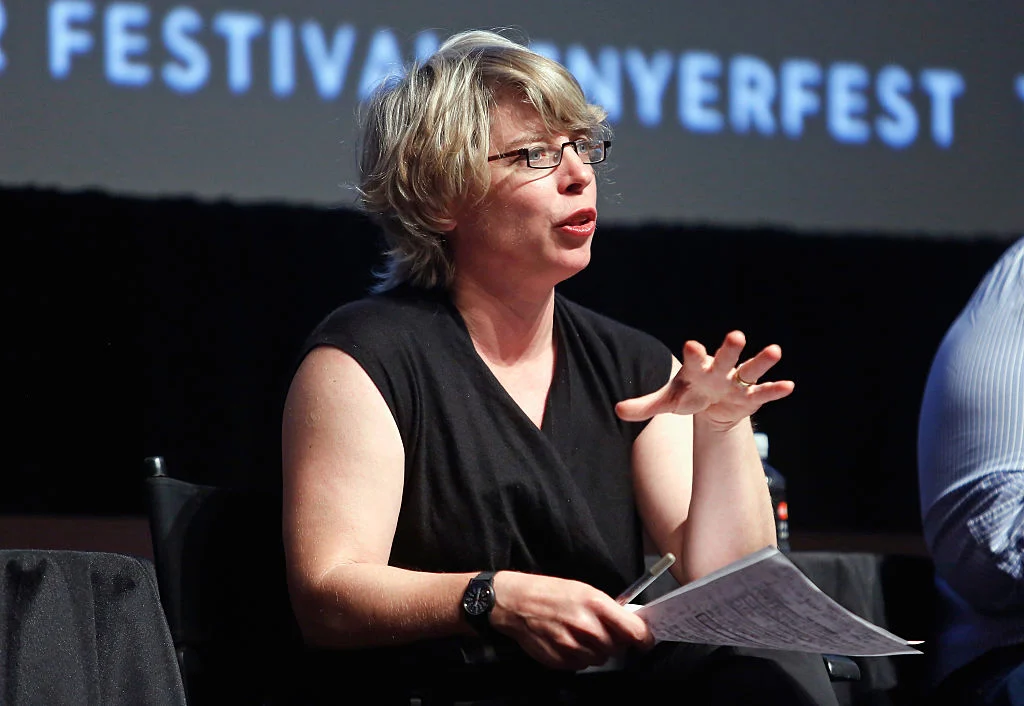
In her forthcoming book, "The Rise and Fall of the Artificial State," acclaimed Harvard historian and Pulitzer Prize winner Jill Lepore issues a stark warning: powerful technology companies are systematically supplanting the essential functions of democratic government. This profound shift, she argues, signals "a return to tyranny and mystification in the form of rule by algorithms, corporations, machines." Lepore articulated these concerns during a recent appearance on TechCrunch’s "Equity" podcast, where she explored the evolving concept of living under an "artificial state" – a governance model driven by machines and corporate entities.
Lepore, whose previous work includes a comprehensive history of the U.S. Constitution, emphasized that her critique is not an indictment of technology itself. "I’m not an anti-technologist," she clarified. "My beef is the ways in which private corporations have increasingly taken on the functions of the state." While her book delves into historical technocratic philosophies stretching back centuries, Lepore contends that many contemporary Silicon Valley leaders, notably Elon Musk, are inadvertently drawing inspiration from misconstrued science fiction and comic book narratives to shape a future governed by artificial intelligence and corporate power. She even pointed out the irony that Musk’s preferred fictional universes often contradict his stated political beliefs.
The conversation also touched upon the enduring legacy of Apple’s iconic "1984" Macintosh advertisement, the problematic notion of labeling platforms like Twitter as digital town halls, and the growing public resistance to data center expansion. Lepore’s analysis traces the historical roots of the "artificial state" idea, examining how the concept of governance by machines has evolved from speculative fiction to a tangible reality. She posits that this transition represents a fundamental departure from the principles of liberal democratic nation-states, both in the United States and globally.
Lepore defines the "artificial state" as a construct and an idea that is progressively displacing the traditional liberal democratic nation-state. Her book meticulously charts the emergence of the belief that humanity should be governed by machines and algorithms, while simultaneously exploring the historical precedents and fictional portrayals that suggest the inevitable failure of such a system. She views this development with significant concern, framing it as a potential end to centuries of democratic progress and equal rights, leading to a regressive state characterized by algorithmic control and corporate dominance.
Despite her critical stance, Lepore reiterated her non-anti-technological position, highlighting her personal connections to the field and her enthusiasm for current intellectual revolutions. Her primary objection lies with the appropriation of state functions by private corporations, a phenomenon that has occurred without explicit public consent. This gradual, often unintentional, transformation of governance began in the United States and has since spread globally. Initially, these technological integrations into government operations were driven by a desire for efficiency, speed, and cost reduction. However, Lepore argues that over the past two to three decades, these decisions have become more deliberate, reflecting a calculated effort to usurp the role of the nation-state. This assertion is supported by the public discourse of prominent tech entrepreneurs who openly advocate for moving beyond the nation-state model, a sentiment that has roots in the libertarian futurism of the 1990s, which sought to leverage the internet to dismantle national boundaries.
The question of separating the technology from the underlying philosophies and corporate influence is crucial. Lepore, as a historian, is less interested in predicting the future and more focused on understanding the historical pathways and alternative trajectories that were not taken. She points to the 1990s discussions surrounding the internet’s future and the subsequent passage of the 1996 Telecommunications Act, influenced heavily by figures like Newt Gingrich, as a pivotal moment where policy choices, though perhaps not intentionally sinister, led to significant negative outcomes. Revisiting these historical junctures, she believes, offers valuable insights into the potential for different internet architectures and governance models.
The genesis of the idea that advanced computer technology could foster better democracies is often traced back to Apple’s 1984 Super Bowl advertisement for the Macintosh. This ad, drawing on Orwellian themes, positioned mainframe computers as instruments of totalitarianism and the personal Macintosh as a liberator. While a masterful piece of advertising, Lepore doubts that Apple truly envisioned the personal computer as a direct tool for civic empowerment. Instead, it was perceived as an exciting and fun tool.
However, the narrative has evolved dramatically. By 2026, we see instances like Facebook’s creation of an "Oversight Board" (akin to a Supreme Court) in response to criticism, Anthropic hiring a moral philosopher to draft a "constitution" for its AI, and Sam Altman suggesting on Joe Rogan’s podcast that an AI president would be a positive development. These examples, while sometimes appearing absurd, illustrate a trend where tech companies and their leaders are adopting the trappings and functions of the nation-state. Lepore characterizes this as a superficial, almost cartoonish, imitation of governance, driven by individuals who may lack sophisticated political philosophies but wield immense power. While the 1984 ad was a clever marketing campaign, figures like Altman seem to have transformed that imaginative concept into a self-serious, almost delusional, pursuit.
The allure of the "Twitter revolution" and its promise of democratizing influence is also examined. Lepore contends that Twitter, in its nascent stages, was not conceived as a world-saving or democracy-enhancing platform. It began as a casual communication tool. The shift occurred when politicians recognized its potential to amplify their messages, connect with younger audiences, and maintain constant contact with constituents. This led to Twitter’s own internal narrative evolving, portraying itself as a digital town hall, a notion Lepore dismisses as "bananas." Her analysis reveals that at its peak, only a small fraction of users actively participated in political discourse, and the majority of political tweets came from an even smaller, highly engaged, and partisan segment of the population. This skewed representation offered politicians a distorted view of the electorate, essentially creating a "distortion machine." While Twitter’s intention was business growth, its unintended consequences significantly impacted political discourse and public perception.
Lepore’s book is structured to explore this evolution through two main lenses: the history of technology and ideas, and the role of science fiction. This dual approach arose from her observation that science fiction has frequently anticipated the advent of the artificial state, often serving as a cautionary tale. She identifies a literary tradition she terms the "parable of the artificial state," where increasingly sophisticated machines take over human functions, including governance, ultimately ruling or even destroying humanity. These narratives, originating in the mid-19th century, reflect anxieties about industrialism and its potential consequences.
A prevailing contemporary belief, particularly among younger generations, is that technological advancement equates to progress, and indeed, is the sole form of progress. Lepore traces this notion to the 19th century, a period marked by accelerating technological change and the concurrent development of Darwin’s theory of evolution. This confluence created a powerful, yet potentially misleading, association between technological progress and evolutionary progress, overshadowing earlier conceptions of progress centered on moral or social improvement. The dominant 19th-century perspective posits that all technological change is inherently progress, regardless of its actual impact on human well-being.
This worldview, where technological advancement is seen as an unstoppable force, fuels the anxiety that machines might eventually surpass human capabilities in all aspects. This fear has been a recurring theme in science fiction, from E.M. Forster’s 1909 novella "The Machine Stops" to more contemporary works. Forster’s story depicts a future where humanity lives in isolated rooms, entirely dependent on a complex machine for survival and communication, leading to a profound disconnect from the natural world and a loss of human capacity. The story’s climax, when the machine ceases to function, serves as a powerful metaphor for the fragility of such technologically mediated existences. Lepore notes that this narrative feels remarkably prescient, resonating with the isolating experiences of modern digital life, even resembling the diary of an unhappy YouTuber more than pure science fiction.
Lepore draws a direct line from these science fiction narratives to contemporary tech leaders, suggesting that figures like Elon Musk and Sam Altman are, in effect, "very bad science fiction readers." They tend to interpret cautionary or ambivalent tales as blueprints for action. While acknowledging the technocratic, libertarian thread within science fiction that figures like Jeff Bezos might draw upon (citing Robert Heinlein as an influence), Lepore finds Musk’s embrace of certain fictional worlds particularly contradictory, as the narratives he favors often undermine his stated political ideologies.
Crucially, Lepore asserts that the artificial state, in its current manifestation, is inherently incomplete and destined for failure. This prediction is deeply rooted in the science fiction she analyzes. The underlying tension in these stories, and in the real-world phenomenon, lies between the artificial state and the natural world. To establish and maintain an artificial state, humanity is forced to alienate itself from nature, often through its destruction. However, the artificial state remains fundamentally dependent on the resources of the natural world to sustain its operations. This inherent contradiction—destroying the very environment it relies upon—renders it unsustainable in the long term. The science fiction scenarios consistently predict that a habitable planet cannot coexist with the full realization and reliance on the devices of the artificial state.
While Lepore does not offer a prescriptive "playbook" for dismantling the artificial state, her historical perspective emphasizes the foundational principle of democracy: governance through consultation with the governed. She notes that this democratic ideal is increasingly challenged by corporate decisions that impact communities without genuine public input. The proliferation of data centers, for instance, often faces local opposition, a phenomenon exacerbated by the decline of local journalism, which has been a casualty of social media. Residents question the environmental impact, energy consumption, and job creation associated with these projects, yet their concerns are frequently overridden by political representatives, as seen in the Utah data center backlash. Lepore suggests that this disconnect between representatives and the electorate will eventually have political consequences, though the extent to which democratic mechanisms remain intact to facilitate such accountability is uncertain.
Lepore’s critique of the "artificial state" builds upon her earlier work, particularly a 2014 New Yorker article that deconstructed Clayton Christensen’s theory of disruptive innovation. At the time, she argued that disruptive innovation was a narrow theory about business failure, not a universal law of historical change. Ten years later, she stands by her assessment, lamenting the lack of engagement from academic historians with such influential concepts. Her critique of Christensen’s work stemmed from her perception that it presented itself as a theory of history, yet lacked rigorous historical methodology. She believes that a more robust dialogue between historians and technologists is essential, not merely for historians to offer pronouncements, but for a genuine exchange of ideas about the nature of change, the consequences of innovation, and the historical precedents that can inform present-day decisions. She envisions a future where such conversations lead to the development of guardrails and a deeper understanding of how society adapts to transformative technologies, drawing parallels to the societal adjustments made in response to the automobile’s advent.
