
 By Rifan Muazin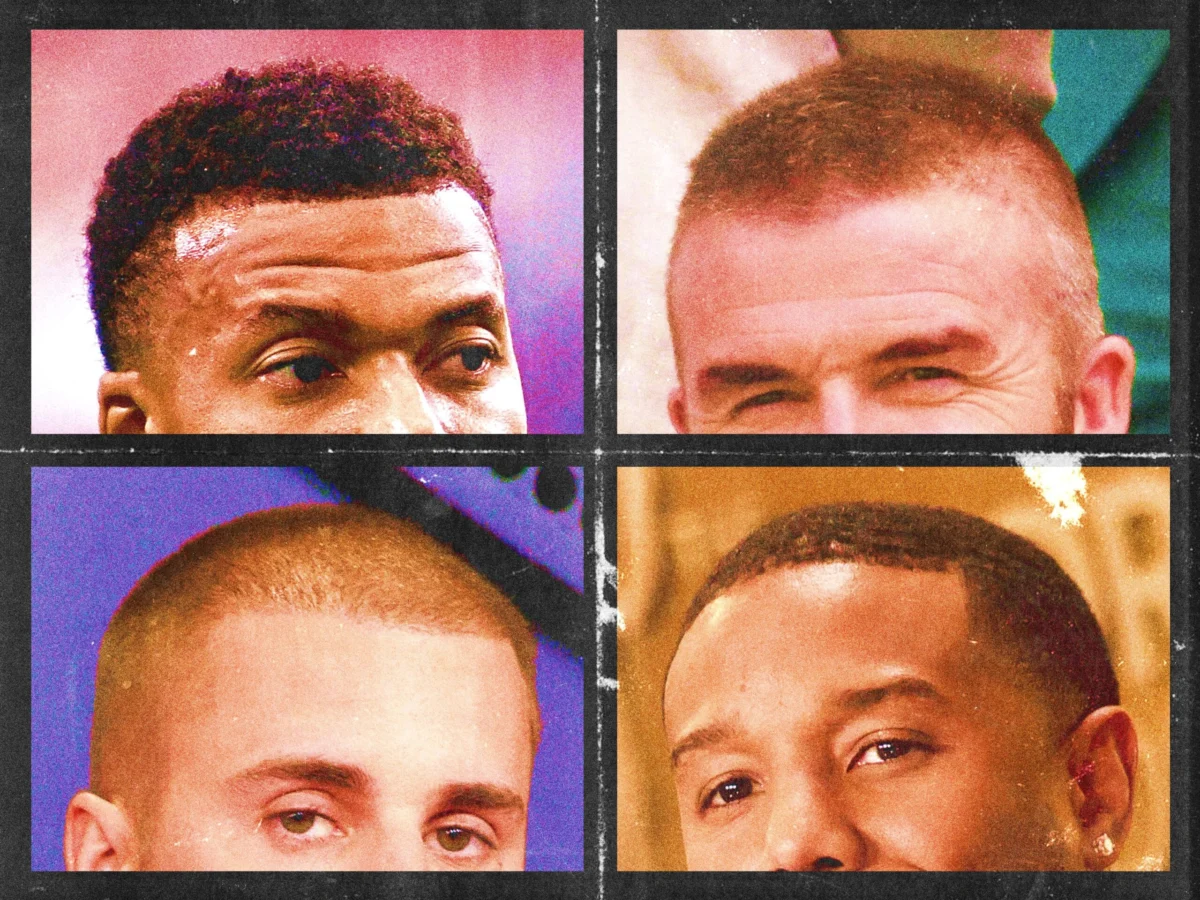
Ask any barber for a fade, and they’ll almost immediately get straight to work. Operative phrase: almost immediately. You see, the fade isn’t just one singular type of haircut; it is a masterclass in geometry, shadow, and personal branding. While the general technique remains constant—that is, gradually making the hair shorter as it goes down the side and back of the head—there are many variations on the form, each carrying its own cultural weight and aesthetic baggage. The type of fade you choose should depend on your face and head shape, desired vibe, personal preferences, and hair texture. It is a precision-engineered look that has transcended its military and subcultural roots to become the most requested service in barbershops globally.
“From a barber’s perspective, the biggest difference is where the graduation begins,” explains Aaron Chan, cofounder of the renowned Kings Domain barbershop in Melbourne, Australia. “The higher you move the fade, the more contrast you create.” This contrast is the engine of the haircut’s visual power. By manipulating the "weight line"—the point where the hair transitions from dense to skin—a barber can effectively reshape a man’s entire silhouette. The four most common styles are a low fade, mid fade, high fade, and taper fade. There are of course variations within those general categories—drop fades and burst fades, for example—but for a classic look, that foursome is what you’ll want to stick to.
To understand the fade is to understand the history of modern masculinity. Originally gaining massive popularity in the 1940s and 50s within the U.S. military, the fade was a pragmatic solution to the need for a neat, "high and tight" appearance. However, it was the Black barbershop culture of the 1980s and 90s that elevated the fade into an art form. From the sharp "box fades" of the Golden Era of Hip Hop to the seamless "bald fades" of the early 2000s, the haircut has always been about more than just hygiene; it is about precision and status.

Though longer hair might be the trend now—as demonstrated by the recent hairstyles of numerous A-listers like Connor Storrie, Oscar Isaac, and Jay-Z—the fade remains a reliable standby that can be modified to play off of shifting trends. Even as the "mullet renaissance" and the "shaggy mod" look take over Hollywood red carpets, the fade acts as the foundational architecture for many of these hybrid styles. But the key to getting a really good one is to know exactly what to ask for. To navigate the complexities of the clipper, we asked experts to break it down by style.
The Low Fade: Subtlety and Structure
A low fade provides a “softer, more classic finish,” says Joey Scandizzo, another cofounder of Kings Domain. This style of fade starts right above the ear and follows the hairline around the back of the head. It is the most conservative version of the cut, making it ideal for corporate environments or for men who are trying a fade for the first time.
The low fade is particularly well-suited for those with longer or narrow face shapes. Because the blending is done towards the lower portion of the hair, it leaves more hair on the sides of the head. This adds visual width, helping to create a fuller, more balanced face shape for those whose heads are more narrow. Celebrity icons like Michael B. Jordan often opt for variations of the low fade to maintain a polished, leading-man look that emphasizes his features without distracting from them. In terms of technical execution, a low fade requires a barber to have an expert hand at "tapering the edges," ensuring that the transition from skin to hair happens within a very narrow window of real estate—usually no more than an inch above the natural hairline.
The Mid Fade: The Universal Standard
Often cited as the most flattering style of fade, the mid fade starts the blending around the temple or the midpoint of the sides. It is the "Goldilocks" of haircuts: not too aggressive, not too subtle. Scandizzo recommends the mid fade for those with textured crops, side parts, pompadours, or pretty much any longer hair style because it’s not as dramatic of a look as its higher counterpart.

The mid fade “creates enough definition without becoming the focus of the haircut,” he says. It provides a sharp, clean-cut appearance that frames the eyes and cheekbones perfectly. As Aaron Chan notes, the mid fade is the most versatile for a variety of hair textures. Whether you have the dense, coily hair of a French footballer like Kylian Mbappé or the straighter, finer hair of a classic Hollywood actor, the mid fade offers more flexibility when tailoring to the style of a client. It allows for enough length on top to play with volume, while the sides remain tight enough to eliminate any "bulk" or "puffiness" that can occur as hair grows out.
The High Fade: High Contrast, High Impact
Usually reserved for super-short hairstyles like the buzz cut or the crew cut, the high fade is the most dramatic of the category. In this variation, the hair is cut short from the top of the sides and back, creating a more apparent contrast between the skin and the hair. This style is better suited for rounder faces because it creates the illusion of a longer head by removing all weight from the sides and focusing the viewer’s eye on the height at the top.
The high fade was wildly popular five or ten years ago, particularly during the height of the "undercut" craze. However, Scandizzo notes that they’ve become slightly less common recently because of a wider shift towards “more natural-looking blends.” Modern style icons like Justin Bieber have frequently cycled through high-fade looks, often pairing them with bleached tops or aggressive textures. However, the high fade is a high-maintenance mistress. Because the hair is cut so close to the crown, the "grow-out" period is very noticeable. Within a week, the sharp line of the fade can begin to look fuzzy. Scandizzo adds that, among his clients, there’s now a greater desire to have hair that grows out well, requiring fewer touch-ups so that the hair “feels effortless rather than overly sculpted.”
The Taper Fade: The Professional’s Choice
“Taper fades work beautifully for clients wanting a polished, professional look without dramatically changing their silhouette,” Scandizzo says. To the uninitiated, the terms "taper" and "fade" are often used interchangeably, but in the barbering world, they are distinct. A taper gradually changes the hair length from the top to the bottom, but it usually leaves hair around the ears and at the nape of the neck. A taper fade, however, specifically targets the sideburns and the neckline, fading them down to the skin while leaving the rest of the perimeter slightly longer.

This is the most subtle of them all. It is the preferred choice for style veterans like David Beckham, who often opts for a look that keeps the natural shape of the hairstyle intact while providing a slight graduation in length along the sidelines. It is the antithesis of the mullet; it is neat, tidy, and intentional. The taper fade is excellent for men who want to keep their hair long enough to tuck behind their ears but want to avoid the "scruffy" look that comes with an unkempt neckline.
The Science of the Blend: What Makes a Great Fade?
The quality of a fade depends entirely on the "blur." In the industry, a "blurry fade" is the highest compliment. It means there is no noticeable point on the scalp where there’s a stark difference in length. If there’s a distinct line separating the hair where the top is longer and the bottom is shorter—unless it’s an intentional "disconnected" look—then that’s not a great fade. This is where the technical skill of blending comes into play.
“The blending phase is where the magic happens,” Chan says. Barbers use a combination of clipper guards, "clipper-over-comb" techniques, and thinning shears to achieve this. The process often involves "flicking" the wrist to pull the clipper away from the head at the right micro-second. “I don’t rush removing guidelines because every small adjustment affects the final result,” Chan continues. “I’ll also spend extra time checking the haircut from multiple angles under different lighting because what looks perfect from one side may reveal imperfections from another.”
Lighting is the secret enemy of a good fade. In the harsh fluorescent lights of a barbershop, a fade might look perfect, but in the natural sunlight, "dark spots" (areas where the hair is denser) can appear. A master barber understands the "canvas"—the bumps, dips, and ridges of the human skull—and adjusts the clipper length to compensate for those shadows.

Tailoring the Cut to the Man
Nowadays, the culture of the barbershop has shifted. People requesting a fade are less likely to pick a number and a haircut off a board and more willing to let their barber tailor the overall cut to their specific anatomy. This evolution mirrors the "quiet luxury" trend in fashion—the move toward bespoke, individualized aesthetics over mass-produced looks.
That shouldn’t stop you from taking a picture of a fade you like—maybe even from this article—to show your stylist. Visual aids are the most effective way to bridge the communication gap between what you want and what the barber hears. However, a dose of reality is necessary. Remember: what looks good on the longer, symmetrical face of Justin Bieber may come out totally different on your own dome. Factors like hair density (how many hairs per square inch), hair caliber (how thick each individual hair is), and cowlicks all play a role in how a fade will sit.
Don’t be afraid to have a conversation with your barber. Ask them, "Based on my head shape, where should the fade start?" or "How will this grow out over the next three weeks?" A great barber is as much a consultant as they are a technician. In an era where the "death of the fade" is occasionally whispered about in fashion circles, the reality is that the fade isn’t dying—it’s just becoming more sophisticated. It remains the ultimate tool for the modern man to look sharp, feel confident, and maintain a sense of groomed order in an increasingly chaotic world.
