
 By admin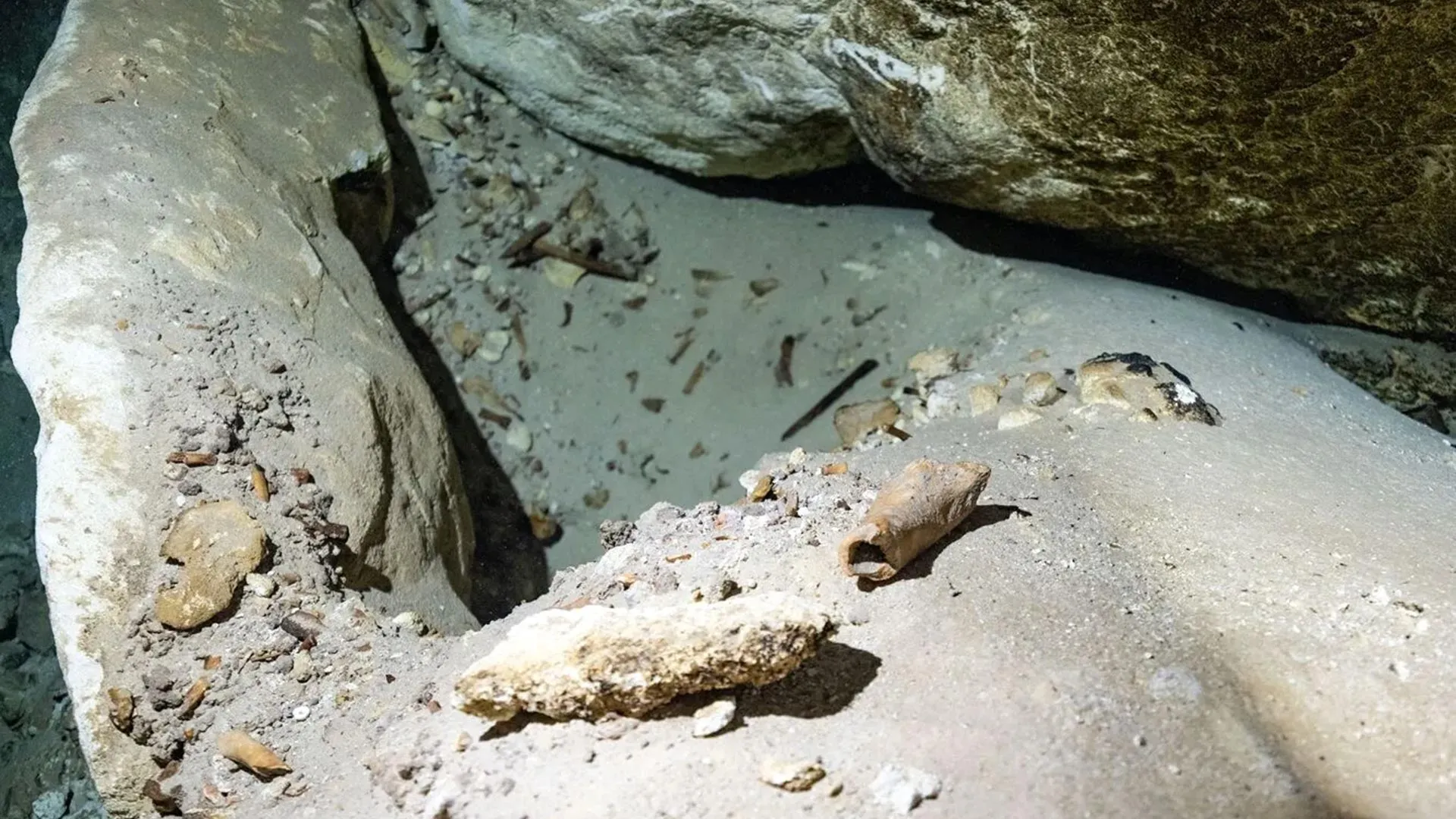
A groundbreaking new study led by Griffith University has finally provided researchers with a comprehensive framework for "reading" the subtle, yet distinct, evidence preserved on these submerged bones. This novel approach promises to unlock invaluable insights into ancient ecosystems, climate change, and the history of life on Earth, particularly concerning the enigmatic megafauna that once roamed vast landscapes. The research, spearheaded by a team from the Australian Research Centre for Human Evolution (ARCHE), addresses a critical gap in our understanding of how vertebrate remains undergo taphonomic processes in these unique environments, paving the way for more accurate interpretations of fossil assemblages found within watery depths.
Decoding the Taphonomic Fingerprints on Cave Bones
The core of this transformative research lies in its ability to identify specific "preservation fingerprints" left on skeletal remains by different underwater cave environments. As explained by Meg Walker, a PhD Candidate at Griffith University, supervised by ARCHE Director Professor Julien Louys, the team meticulously analyzed animal bones recovered from two distinct underwater cave systems in South Australia. "By analyzing animal bones from two underwater cave systems in South Australia, we have revealed how different cave environments leave distinct preservation ‘fingerprints’ on skeletal remains," Walker stated, underscoring the innovative nature of their findings.
The methodology employed was robust and multifaceted. The researchers utilized radiocarbon-dated bones, allowing them to establish precise timelines for the accumulation and modification of skeletons within these submerged environments over decades and centuries. This chronological anchoring was crucial for understanding the dynamic processes at play. To provide a comparative baseline, these underwater findings were contrasted with skeletal remains recovered from dry caves, which are subject to entirely different taphonomic agents and processes.
The investigative techniques spanned a remarkable range of scales, from macro-level observations to micro-analytical examinations. "Using a range of methods, from the macro to the micro, we looked at features associated with wet and dry caves," Walker elaborated. At the macro level, the team examined the spatial distribution of bones within the caves, noting whether they were scattered, aggregated, or aligned in specific patterns – clues that can indicate how an animal entered the cave (e.g., accidental fall, flood event) or the influence of water currents. They also scrutinized the macroscopic surface features of the bones, looking for evidence of abrasion, bioerosion, or mineral coatings.
Moving to the micro-scale, the researchers delved into the elemental compositions of the bones and analyzed the survival of proteins trapped within ancient cells, such as collagen. This microscopic analysis provided a wealth of information about the chemical interactions between the bone and its surrounding water, as well as the activity of various microorganisms. The elemental composition, for instance, could reveal the uptake of specific minerals from the water, or the degree of diagenetic alteration, where the original bone material is replaced by new minerals. Protein analysis, particularly of collagen, offers insights into the preservation state at a molecular level and can even inform about the species of the animal or potential dietary information, if preserved well enough.
Crucially, the analysis consistently showed that underwater caves possess an extraordinary capacity for skeletal preservation. In many instances, the bones retained their original structural integrity and remarkably finely detailed surfaces, including delicate features like muscle attachment sites or even microscopic striations. This level of preservation is often unparalleled in terrestrial environments, where bones are typically subjected to rapid decomposition, weathering, and fragmentation. However, this excellent preservation came with a caveat: submerged cave environments also imparted distinctive chemical and biological marks. The specific type of evidence found on each bone was not uniform but depended critically on two primary factors: the amount of light penetrating the surrounding water and the specific community of organisms thriving within those particular light zones.
Light, Algae, and the Abyss: Environmental Signatures
The study meticulously delineated how varying light conditions within the cave systems directly influenced the taphonomic processes and the resulting "fingerprints" on the bones. Near the brightly lit cave entrances, where sunlight could penetrate the water column, a diverse array of photosynthetic organisms flourished. Several kinds of algae, along with various aquatic plants, colonized the surfaces of the submerged bones. These organisms, through their growth and subsequent decay, left behind recognizable biological signatures. These might include microscopic etchings from algal filaments, the deposition of calcareous algal crusts, or specific elemental traces indicative of their metabolic processes. The presence of these phototrophic organisms suggests a relatively dynamic environment with access to light and possibly higher oxygen levels due as a byproduct of photosynthesis.
Conditions, however, shifted dramatically in the deeper, "midnight regions" of the caves. These areas, characterized by perpetual darkness, receive no sunlight whatsoever. Consequently, photosynthetic plants and algae cannot grow there, creating a fundamentally different biological and chemical environment. In these aphotic zones, the bones often remained remarkably pristine, largely untouched by the bioerosive activities observed in the lighter zones. The stable, dark, and often anoxic or hypoxic conditions prevalent in these deeper sections significantly retard decomposition, preventing the growth of many terrestrial and even some aquatic decomposers that rely on oxygen or light. This extreme stability and lack of biological activity are key contributors to the exceptional preservation potential of these deep-cave environments, where even delicate structures or organic molecules can persist for millennia.
In stark contrast, bones preserved in dry caves displayed an entirely different suite of taphonomic changes. Lacking any aquatic signatures, these remains bore the hallmarks of terrestrial processes. Land-based bacteria and fungi, thriving in the presence of oxygen and varying moisture levels, actively consumed parts of the bones, leading to characteristic pitting, etching, and internal dissolution. Furthermore, plant roots, seeking nutrients and moisture, often grew over and into the bones, carving long, winding grooves across their surfaces or even causing structural damage through mechanical pressure and chemical secretion. These distinct sets of alterations—aquatic signatures in submerged environments versus terrestrial bioerosion and weathering in dry caves—form the basis of the new framework, allowing researchers to differentiate the depositional and post-depositional histories of skeletal remains with unprecedented clarity.
Animal Remains from South Australian Karst Systems
The research relied on historical animal bones meticulously collected from Green Waterhole and Gouldens Sinkhole, two prominent underwater cave systems located near Mount Gambier in South Australia. This region, known as the Limestone Coast, is famous for its extensive karst topography—a landscape shaped by the dissolution of soluble bedrock, primarily limestone, leading to the formation of sinkholes, caves, and underground rivers. This geological setting provides the perfect conditions for the formation of the submerged cave systems that are the focus of this study. The collection effort itself was a significant undertaking, requiring specialized expertise and equipment. The research team included highly skilled specialist cave divers from the Cave Divers Association of Australia (CDAA), whose proficiency in navigating and working within these hazardous underwater environments was crucial for the safe and methodical recovery of the specimens while preserving their contextual integrity.
The recovered remains represented a diverse array of both native and introduced animal species. These included large grazers like cows and sheep, often introduced by European settlers, alongside native Australian fauna such as kangaroos, emus, dingoes, rabbits (also introduced), possums, quolls, and swamp rats. The presence of both native and introduced species provided a unique opportunity for the researchers. Some of these specimens may date back to the earliest periods of European settlement in the region, coinciding with the establishment of the city of Mount Gambier during the 1840s. This relatively recent age for some specimens was not a limitation but a distinct advantage.
By examining how these more recent bones were deposited, modified, and preserved, the researchers could develop and test their taphonomic framework under known historical conditions. This "neotaphonomic" approach—the study of recent taphonomic processes—provided a crucial analogue for understanding "paleotaphonomic" events involving much older, extinct animals. The ultimate goal was to understand how ancient fossils belonging to Australia’s iconic extinct megafauna—giant marsupials, reptiles, and birds that roamed the continent tens of thousands to millions of years ago—may also have entered and been preserved within these underwater caves. Furthermore, the evidence gleaned from these bone signatures could reveal the precise environmental conditions that surrounded those ancient remains, offering snapshots of past climates, water levels, and ecological dynamics.
A New Tool for Megafauna Research and Paleoenvironmental Reconstruction
The implications of this study are profound, particularly for megafauna research. "This study has delivered the first framework for interpreting how megafauna fossils formed, survived, and changed in underwater caves," Miss Walker affirmed. This framework represents a transformative advancement, providing paleontologists and archaeologists worldwide with a powerful new tool for reconstructing past environments and histories in these notoriously challenging and often inaccessible conditions.
Prior to this research, the interpretation of megafauna fossils found in underwater caves was largely speculative, lacking a systematic method to decipher their taphonomic history. Questions like whether an animal fell into a sinkhole during a drought, was washed in by floodwaters, or died seeking refuge in the cave, could not be definitively answered. Now, by identifying specific taphonomic fingerprints—such as the presence of particular algal growths, the patterns of mineral deposition, or the absence of terrestrial bioerosion—researchers can infer these events with greater confidence. For instance, evidence of extensive algal growth might suggest the animal’s remains lay in a shallow, sunlit pool before being submerged deeper, while pristine preservation in an aphotic zone might indicate rapid burial or deposition in a perpetually dark environment.
This new interpretive tool extends beyond simply understanding how fossils ended up in caves. It also empowers scientists to reconstruct the ancient environments that existed around those animals. Changes in water chemistry reflected in bone composition, or the presence of specific aquatic microorganisms, can provide proxy data for past water levels, salinity, oxygenation, and even temperature fluctuations. For regions like Australia, which experienced dramatic climate shifts and the extinction of its megafauna during the late Pleistocene, such insights are invaluable for understanding the interplay between environmental change and faunal turnover.
The global applicability of this framework is also significant. Underwater cave systems exist across the world, from the cenotes of Mexico’s Yucatan Peninsula, which have yielded ancient human remains and megafauna, to the submerged caves of Florida and the Bahamas. Researchers working in these diverse locales can now adopt and adapt this framework, systematically interpreting the unique preservation signatures specific to their local cave environments. This could lead to a wave of new discoveries and reinterpretations of existing collections, revealing previously hidden chapters of Earth’s biological and environmental history. The study also opens avenues for future research, including the potential for applying advanced molecular techniques like ancient DNA analysis to exceptionally preserved bones from anoxic underwater caves, further expanding our understanding of extinct species and ancient ecosystems.
The study, titled "Neotaphonomic characteristics of vertebrate site formation in underwater caves," has been published in the peer-reviewed journal PLOS One, marking a significant contribution to the fields of taphonomy, paleontology, and archaeology. It underscores the critical importance of interdisciplinary research, combining geology, biology, chemistry, and specialized diving expertise, to unlock the secrets held within the planet’s most enigmatic subterranean watery realms.
