
 By admin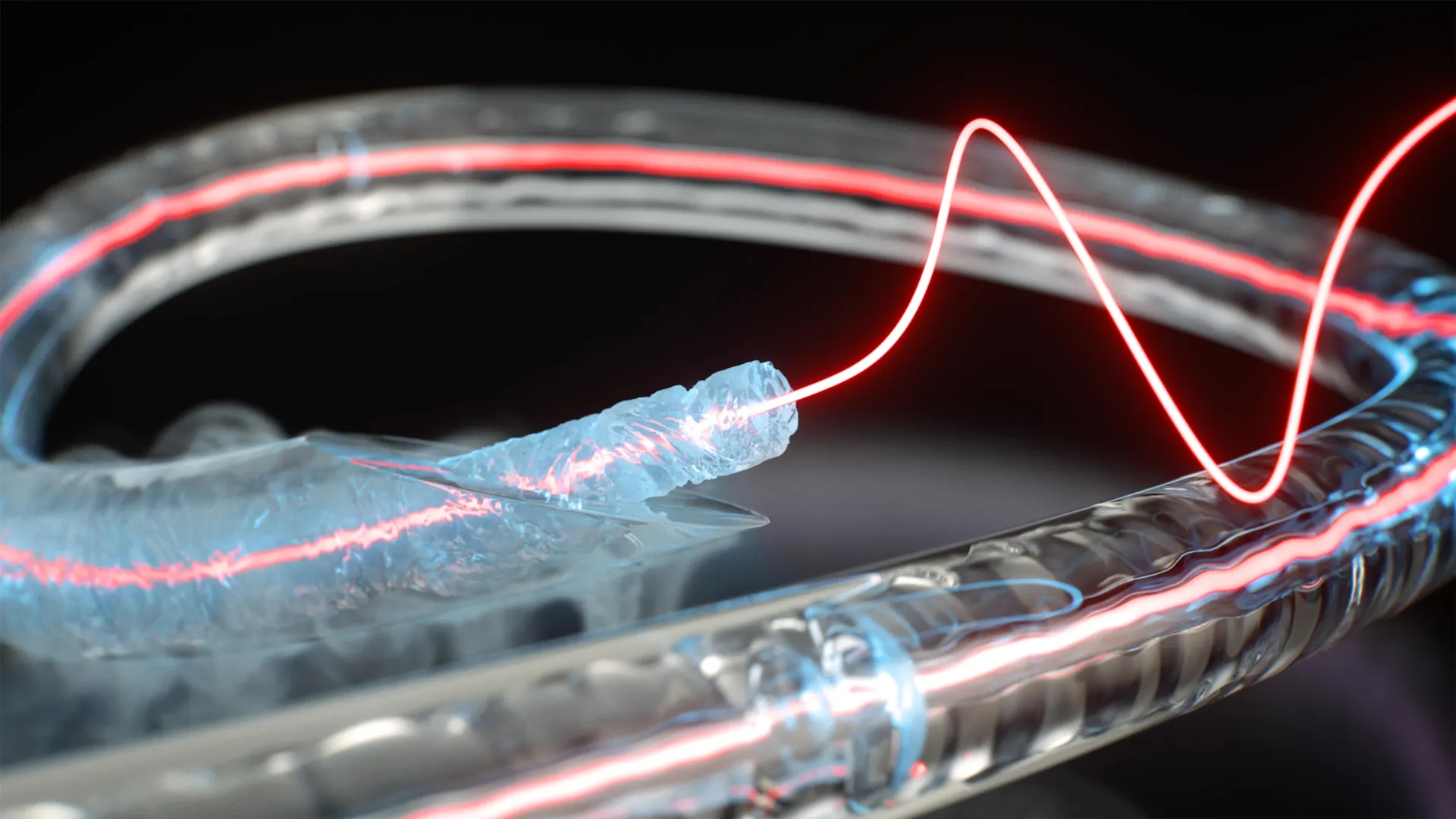
The ability to precisely control and manipulate matter at the atomic and molecular level to achieve desired properties is a hallmark of modern engineering. In the realm of photonics, this control has led to the development of optical fibers, indispensable conduits for information in the digital age. The manufacturing process of these fibers is a testament to sophisticated materials science. It typically begins with a glass preform, a meticulously crafted, oversized rod of ultra-pure silica glass. This preform is then heated to temperatures exceeding 2,000 degrees Celsius, rendering its structure sufficiently pliable and viscous. Under these extreme conditions, the preform can be drawn, or stretched, into extraordinarily thin fibers, often just slightly thicker than a human hair, while maintaining its microscopic structure.
At the heart of an optical fiber’s utility is its capacity to guide light. A fiber consists of a central core, made of glass with a slightly higher refractive index, surrounded by a cladding layer with a lower refractive index. This refractive index difference is crucial for the phenomenon of total internal reflection, which traps light within the core, allowing it to travel over vast distances with minimal loss. This elegant principle has made optical fibers the backbone of modern telecommunications, enabling the rapid and efficient transmission of vast amounts of data across continents and under oceans, powering the internet, global communication networks, and countless digital services. The sheer bandwidth and speed achievable with fiber optics far surpass traditional copper wiring, revolutionizing how information moves around the globe.
Beyond their pervasive role in telecommunications, scientists and engineers have continuously pushed the boundaries of fiber optic technology, developing specialized fibers tailored for a multitude of advanced applications. Fiber lasers, for instance, utilize the fiber itself as the gain medium, offering superior beam quality, high power, and excellent efficiency for applications ranging from precision material processing in manufacturing to medical surgery. Fiber endoscopes, with their incredibly thin and flexible structures, have transformed medical diagnostics and minimally invasive surgery, allowing physicians to visualize internal organs with unprecedented clarity and access. Fiber sensors leverage the sensitivity of light transmission to external stimuli, enabling highly accurate measurements of temperature, strain, pressure, and even chemical compositions in environments where conventional electronic sensors would fail, such as in strong electromagnetic fields or harsh chemical surroundings.
A particularly innovative class of specialized fibers includes hollow-core fibers (HCFs). Unlike conventional solid glass fibers, HCFs feature a central channel that can be left empty or filled with various gases or liquids. This unique architecture offers several advantages, including significantly lower optical losses and faster light propagation due to the absence of solid glass in the core. When filled with specific substances, these hollow cores transform into miniature laboratories. For example, by filling them with gases whose optical properties are sensitive to temperature, HCFs can precisely map temperature distributions along their length. Similarly, introducing liquids allows for intricate chemical reactions or spectroscopic analyses to be conducted within the confines of the fiber, paving the way for "lab-on-fiber" technologies that integrate complex analytical processes into compact, robust platforms.
Freezing a Liquid Core at Extreme Temperatures: A New Frontier in Optoacoustics
Building upon the versatile foundation of liquid core optical fibers (LiCOFs), a pioneering collaboration between researchers from the Max Planck Institute of the Science of Light (MPL) in Erlangen, the Leibniz University Hannover (LUH), and the Leibniz Institute for Photonic Technologies (IPHT) in Jena has ventured into an entirely new and unexpected direction. Their groundbreaking work explores the behavior of LiCOFs under extreme cryogenic conditions, pushing the boundaries of what these unique photonic structures can achieve.
The team’s central innovation involved taking LiCOFs and subjecting the liquid within their cores to exceptionally low temperatures. Specifically, they utilized liquid nitrogen, which maintains a temperature of -196 °C (77 Kelvin), to cool the fiber. This dramatic temperature drop caused the liquid material confined within the fiber’s core to undergo a phase transition, transforming from its liquid state into a solid. The material chosen for the liquid core was carefully selected for its optical properties and its behavior upon freezing, ensuring it would form a stable, low-scattering solid.
What was truly remarkable and, to some extent, surprising to the researchers, was that despite the core material solidifying, the fiber retained its fundamental ability to guide light. Conventional wisdom might suggest that the freezing process could introduce significant scattering centers, internal stresses, or phase separation, all of which would typically lead to severe optical losses and prevent efficient light propagation. However, the meticulous design of the LiCOFs and the specific properties of the chosen liquid allowed the frozen core to maintain a sufficient refractive index contrast with its surrounding cladding, thereby preserving the conditions for total internal reflection. This unexpected resilience of light guiding opened up unprecedented avenues for exploration.
Moreover, the team discovered that not only did the frozen section of the LiCOF continue to guide light, but both the liquid and the frozen sections of the fiber were also capable of guiding hypersonic sound waves. Hypersonic sound waves are acoustic vibrations occurring at extremely high frequencies, typically in the gigahertz (GHz) range. The co-propagation of light and sound waves within such a tightly confined and optically active medium is a prerequisite for powerful optoacoustic interactions, a phenomenon that the researchers were particularly interested in exploring.
"The key point is that the frozen section of the LiCOF retains its ability to guide light," explains Simon Seiderer, one of the three lead authors of the article and a researcher in the "Quantum Optoacoustics" research group led by Prof. Dr. Birgit Stiller, who heads the project. "Not only that, but both the liquid and the frozen section of the fiber also guide hypersonic sound waves." This dual guidance capability—for both photons and phonons—is what makes this new platform so exciting, setting the stage for advanced light-sound interactions.
Unprecedented Light and Sound Interaction: Over 1,000 Times Stronger Brillouin-Mandelstam Scattering
The true power of this frozen LiCOF platform lies in its capacity to dramatically enhance the interaction between light and sound waves, a phenomenon known as Brillouin-Mandelstam scattering (BMS). BMS is a fundamental nonlinear optical process where light waves interact with acoustic phonons (quantized sound waves) within a medium. In conventional optical fibers, this interaction is typically weak but forms the basis for various sensing and signal processing applications, where a small fraction of the incident light is scattered with a slight frequency shift corresponding to the acoustic frequency.
However, the frozen liquid core of the LiCOF creates an environment of exceptional density and tight confinement. When the liquid solidifies under cryogenic conditions, it forms a highly homogeneous and acoustically dense medium within the nanoscale dimensions of the fiber core. This unique set of conditions leads to an astonishing enhancement of the Brillouin-Mandelstam scattering. The researchers demonstrated that the interaction between light and sound in these frozen LiCOFs becomes more than 1,000 times stronger than what is observed in standard, solid-glass optical fibers.
This dramatic increase in optoacoustic coupling is a game-changer. It arises from several synergistic factors:
- High Acoustic Impedance: The frozen material likely possesses a high acoustic impedance, meaning it efficiently transmits acoustic energy.
- Strong Photoelastic Effect: The photoelastic effect describes how a material’s refractive index changes in response to mechanical strain. The specific frozen liquid material may exhibit a significantly stronger photoelastic coefficient compared to silica glass, leading to more pronounced refractive index modulations by the sound waves.
- Tight Confinement: The extremely small diameter of the fiber core ensures that both the optical and acoustic modes are tightly confined and spatially overlap almost perfectly. This maximizes their interaction volume and efficiency.
- Low Acoustic Damping: At cryogenic temperatures, acoustic damping (energy loss) can be significantly reduced in certain materials, allowing the sound waves to propagate further and interact more effectively with light.
The unprecedented strength of this light-sound interaction allowed the team to achieve a critical demonstration: optoacoustic memory. This concept is a cornerstone for advanced photonic computing paradigms. It capitalizes on the vast difference in speed between light and sound. Light travels at approximately 300,000 kilometers per second in a vacuum, making it ideal for rapid information transmission. Sound, however, travels orders of magnitude slower, typically in the range of kilometers per second.
In an optoacoustic memory, information initially carried by a fast-moving light wave can be transferred to a much slower sound wave. This transfer effectively "stores" the information in the acoustic domain, where it can be temporarily retained for a period. After the desired retention time, the information can then be converted back into a light wave, retrieving the data. This process is analogous to buffering or caching data, but operating entirely within the optical and acoustic domains.
Such efficient optoacoustic memory is a key component that could revolutionize photonic neuromorphic computing inside fibers. Neuromorphic computing aims to mimic the architecture and functionality of the human brain, moving away from traditional Von Neumann architectures where processing and memory are separate. Photonic neuromorphic systems use light to perform computations, offering the potential for unparalleled speed, parallelism, and energy efficiency compared to electronic counterparts.
The ability of the frozen LiCOF to enable such efficient and strong interaction between light and sound means that these systems could provide new ways to sharply reduce the amount of energy required by future photonic computing systems. The energy consumption of artificial intelligence (AI) and high-performance computing is a growing concern, and photonic solutions that can perform complex operations with minimal power dissipation are highly sought after. By temporarily storing information in low-energy sound waves rather than constantly manipulating light, these systems could achieve significant power savings, addressing one of the major challenges in the future of computing.
A New Platform for Photonic and Quantum Technology
This seminal work is not an isolated discovery but builds upon a long-standing and fruitful collaboration with Prof. Markus Schmidt and Prof. Mario Chemnitz from the IPHT Jena, who have been pioneers in the field of liquid core optical fibers. Their foundational research laid the groundwork for understanding the unique properties and potential of LiCOFs, from their tunable optical characteristics to their enhanced nonlinearities. The addition of the cryogenic freezing step by Stiller’s team represents a crucial evolutionary leap, pushing the nonlinear effects achievable within the fiber to an entirely new level.
"By freezing the liquid core, we have created an entirely new physical platform that provides extreme nonlinearities while being easy to handle," states Prof. Birgit Stiller. This statement underscores the multifaceted impact of their innovation. The "new physical platform" refers to the unique combination of a liquid core, cryogenic temperatures, and the resulting highly enhanced light-sound interaction, a configuration not previously explored to this extent. The term "extreme nonlinearities" highlights the vastly amplified optoacoustic coupling, opening doors to phenomena that are either impossible or prohibitively inefficient in conventional fibers. Furthermore, the "easy to handle" aspect is critical for practical applications, suggesting that despite the extreme conditions, the experimental setup and operation remain manageable, paving the way for broader adoption and further research.
While demonstrating a highly efficient optoacoustic memory is a "fantastic first step," as Stiller puts it, the implications of this level of light-sound coupling extend far beyond neuromorphic computing. This technology holds immense promise for several cutting-edge fields:
-
Quantum Information Processing: The ability to strongly couple light and sound waves at the quantum level could enable the development of novel quantum memories, quantum transducers (for converting quantum information between different physical carriers, e.g., photons and phonons), and even the generation of entangled states of light and sound. These are crucial components for building robust quantum computers and quantum communication networks.
-
Microwave Photonics: This field focuses on using light to generate, transmit, and process microwave signals. Enhanced Brillouin scattering in frozen LiCOFs could lead to the development of highly efficient microwave photonic filters, oscillators, and signal processors, offering superior performance in terms of bandwidth, tunability, and low noise compared to purely electronic systems.
-
High-Precision Sensing: The extreme sensitivity of the light-sound interaction to subtle changes in the material properties of the frozen core makes this platform ideal for ultra-high-precision sensing. Minute variations in temperature, pressure, strain, or even the presence of specific chemical species could be detected through changes in the Brillouin frequency shift or the strength of the scattering. This could lead to a new generation of fiber sensors with unprecedented resolution and sensitivity, applicable in fields ranging from environmental monitoring to biomedical diagnostics.
The collaborative spirit driving this research, combining expertise from materials science, nonlinear optics, and quantum physics across multiple institutions, exemplifies the interdisciplinary nature of modern scientific breakthroughs. This work not only provides a deeper understanding of fundamental light-matter interactions under extreme conditions but also lays a robust foundation for an entirely new class of photonic devices. As researchers continue to explore different liquid compositions, alternative freezing methods, and diverse operational parameters, the frozen liquid core optical fiber is poised to become a transformative technology, unlocking novel capabilities in computing, communication, and sensing that were previously beyond reach.
