
 By admin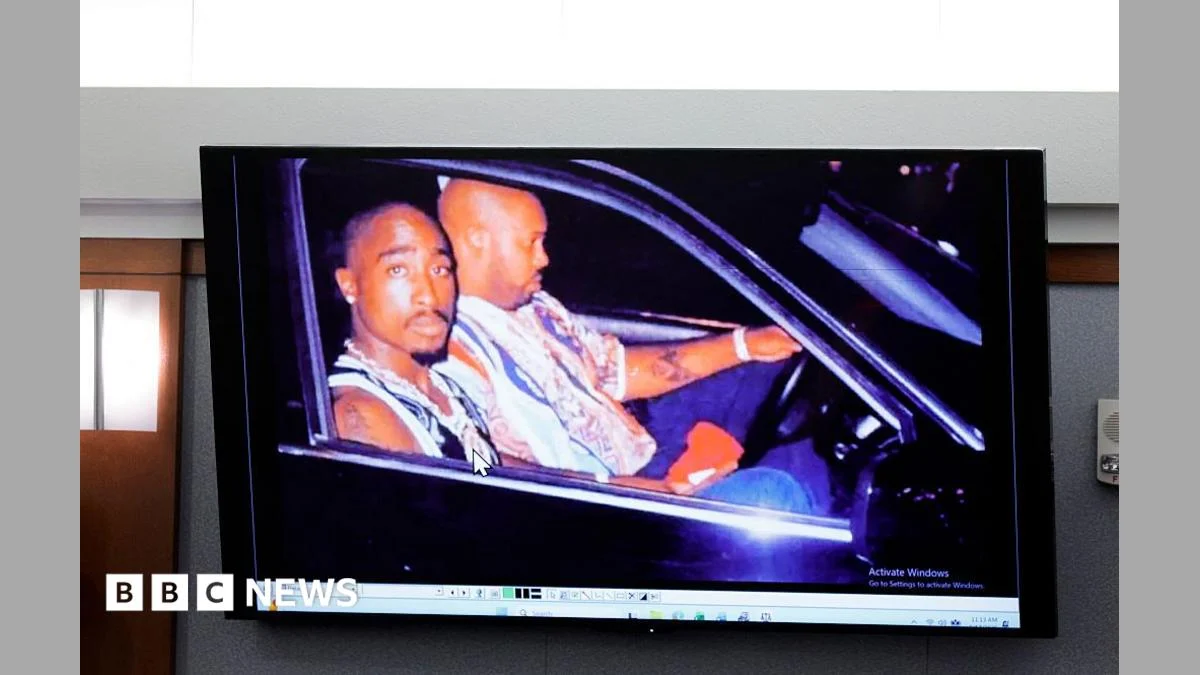
The long-awaited trial into the 1996 murder of rap icon Tupac Shakur commenced Monday, with prosecutors meticulously laying out their case, painting a vivid picture of the East Coast-West Coast rap rivalry and the street gang warfare that allegedly fueled the fatal shooting. At the heart of the prosecution’s narrative stands Duane "Keffe D" Davis, accused of orchestrating the assassination of the 25-year-old artist, who died six days after being gunned down following a Mike Tyson boxing match in Las Vegas on September 7, 1996.
The initial testimony came from Garry Dale, a former officer with the Las Vegas Metropolitan Police Department. Dale recounted his harrowing experience riding in an ambulance with a critically wounded Shakur. Despite being in close proximity to the dying rapper, Dale testified that Shakur steadfastly refused to provide any information about his assailant or the events leading up to the shooting. "We’ll take care of it," Shakur reportedly told the officer, a statement that underscored the pervasive code of silence within the circles of guns and gangs, a code prosecutors emphasized to the jury as a key factor in the case’s protracted coldness. This code, where "silence means survival," was presented as the primary reason why no formal criminal charges were ever filed against anyone for decades.
Prosecutors allege that Davis, a former leader of the South Side Compton Crips street gang, was the "on-ground, on-site commander" who "ordered the death" of Shakur. The motive, they contend, stemmed from a violent altercation hours earlier that day, where Davis’s nephew, Orlando Anderson, was involved in a physical fight with Shakur. According to the prosecution, Davis believed this assault on his nephew could not "go unanswered," setting in motion a chain of events that would tragically end Shakur’s life.
The prosecution meticulously detailed the events of that fateful night. They described how Davis allegedly acquired a firearm and organized two vehicles to travel to a Las Vegas club. One of these vehicles, a white Cadillac, carried three other men, including Anderson. According to prosecutor Preston Palal, the group initially intended to "get some booze and go back to the Vegas strip and party." However, their plans took a sinister turn when they encountered a caravan of cars, recognizing Shakur and Death Row Records co-founder Marion "Suge" Knight in one of the vehicles. This sighting prompted Davis and his associates in the Cadillac to execute a U-turn, intending to confront Shakur and Knight. Palal recounted how Davis, seated in the passenger seat, allegedly passed a gun to Anderson, who then fired into Shakur’s car.
Further corroborating the prosecution’s account was the testimony of Ingrid Stokes, who was present that night. Stokes and her friends were driving around Las Vegas when they encountered Knight and Shakur. A friend of Stokes knew Knight, who invited them to follow them to a club. As they drove through the city, Stokes noticed a vehicle aggressively trying to maneuver in front of them. Concerned by the persistent pursuit, they stopped at a traffic light and pulled over to switch drivers. It was during this vulnerable moment, as they were removing their seatbelts, that the gunshots rang out. "All hell broke loose," Stokes testified, describing the sudden descent into chaos.
The murder case had largely remained unsolved for nearly three decades, a testament to the challenges investigators faced. The police have long pointed to a general lack of cooperation from individuals close to Shakur as a major impediment to their investigation. However, members of Shakur’s entourage have countered these claims, accusing authorities of initially treating them as suspects rather than witnesses and of failing to pursue crucial leads. This mutual distrust and perceived mishandling of the investigation have fueled decades of speculation and frustration.
A pivotal development that reignited the investigation and brought Davis to the forefront was his own public admissions. In 2019, Davis published a memoir and participated in various interviews where he claimed to have been a passenger in the vehicle that fired upon Shakur’s car. He further asserted in his book that he provided the murder weapon to his nephew, Anderson, who then fired the fatal shots. This confession, however, has become a double-edged sword. While prosecutors see it as a damning admission, Davis’s defense attorneys have vehemently argued that the memoir is a work of fiction and should not be admissible as evidence in a criminal trial dating back 30 years. Despite their objections, a judge ruled that the book could be used in court, recognizing its potential relevance to the case.
The defense team has mounted a vigorous challenge to the prosecution’s narrative, highlighting numerous alleged shortcomings in the original investigation. They have pointed to missing police reports, disputed evidence, and what they describe as "biased, sloppy, and incomplete" detective work. The defense has also attacked the credibility of the prosecution’s witnesses, alleging that they relied on "unreliable people with criminal records, financial motivations and inconsistent statements." Furthermore, the defense has argued that key witnesses have altered their testimonies over time, potentially influenced by financial incentives, media attention, or information fed to them by investigators. This strategy aims to sow seeds of doubt about the reliability of the evidence and the integrity of the investigation.
The trial is expected to be a lengthy process, with opening statements having commenced on Monday after a week of jury selection. Over the coming weeks, the court will hear testimony from a wide array of individuals, including witnesses who were present at the time of the shooting, forensic experts, law enforcement investigators, and potentially even some celebrity figures who were connected to the hip-hop scene of the 1990s. The prosecution’s presentation of their case aims to demonstrate that Davis, driven by gang loyalties and a desire for retribution, meticulously planned and executed the murder of one of music’s most influential artists.
The backdrop of the East Coast vs. West Coast rap rivalry and the intense turf wars between the Bloods and Crips street gangs, immortalized in rap lyrics and news reports of the 1990s, provides a crucial context for understanding the alleged motivations behind Shakur’s assassination. This era was marked by escalating tensions, public feuds, and a culture of violence that permeated certain segments of the music industry and the communities from which these artists emerged. The prosecution’s case hinges on proving that Davis was not merely a participant but the architect of a plot that irrevocably altered the course of hip-hop history and left a profound void in the music world. The defense, in contrast, will strive to dismantle the prosecution’s claims by exposing perceived flaws in the investigation and questioning the credibility of the witnesses, ultimately seeking to prove Davis’s innocence or, at the very least, create enough reasonable doubt to secure an acquittal. The coming weeks promise to be a deep dive into a tumultuous period of American culture and a gripping legal battle to uncover the truth behind a crime that has captivated and haunted the public imagination for decades.
