
 By admin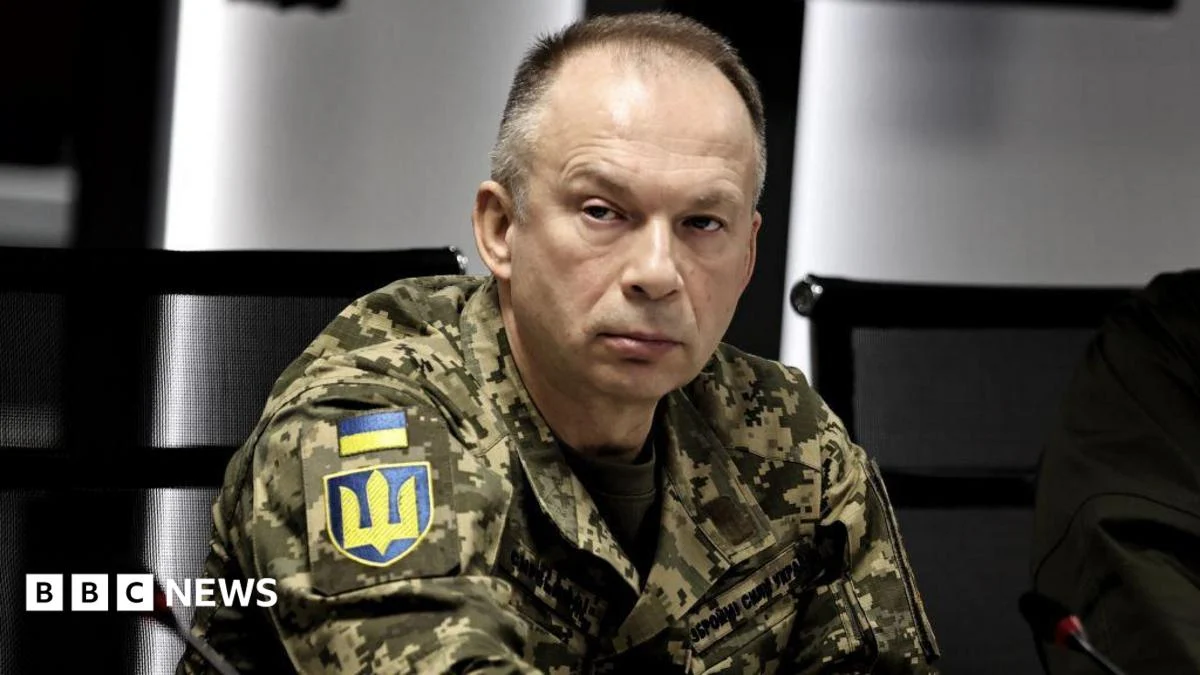
In a seismic shift within Ukraine’s military leadership, President Volodymyr Zelensky has officially dismissed Oleksandr Syrskyi, the country’s army commander-in-chief. This significant personnel change, announced late Tuesday, follows closely on the heels of the removal of popular Defence Minister Mykhailo Fedorov, a move that ignited widespread street protests across Ukraine. Initial whispers of a potential conflict between Fedorov and Syrskyi have now been largely confirmed, painting a picture of internal friction that has culminated in these high-level dismissals.
Mykhailo Fedorov, a dynamic figure at just 35 years old, had garnered widespread acclaim for his transformative impact on the Ministry of Defence. His tenure was marked by a vigorous drive to energize the armed forces, implement modernization initiatives, and wage a resolute campaign against corruption. In stark contrast, Oleksandr Syrskyi, 60, was often perceived by many within Ukraine as a commander steeped in Soviet-era doctrines, exhibiting a reluctance to embrace the radical changes deemed necessary for the nation’s defense. His replacement by Mykhailo Drapatyi, a 43-year-old battle-hardened general, signals a clear preference for a more dynamic and potentially innovative leadership.
In a video address shared on social media, President Zelensky extended his gratitude to Syrskyi for his contributions to the nation’s military campaigns, notably acknowledging his crucial role in the successful defense of the capital, Kyiv, during the initial, harrowing days of Russia’s full-scale invasion in February 2022. Zelensky also disclosed that he had met with Fedorov earlier in the day, extending an offer for a "worthy position in power." However, the specifics of this offer and whether Fedorov has accepted it remain undisclosed, adding an element of suspense to the unfolding political landscape. Last week, Fedorov was succeeded by Yevhenii Khmara, a former high-ranking official within Ukraine’s Security Service (SBU). Zelensky concluded his video statement by noting, "All decisions will be formalised tomorrow," indicating that further official announcements are imminent.
Meanwhile, Mykhailo Fedorov publicly congratulated Mykhailo Drapatyi on his new role, characterizing the appointment as a "new hope in the fight of free people for freedom and justice." He articulated that this decision represented "the voice of change that could not be ignored." Fedorov also revealed that he had personally contacted Syrskyi to express his appreciation for the defense of the Kyiv region and other "historic battles." However, Fedorov stressed the imperative for continued progress, stating, "But we need to move even faster and write new chapters correcting all previous mistakes."
Fedorov, despite his brief stint as Defence Minister since January, had already made a significant mark. His innovative approach, particularly his adept use of data analysis to enhance front-line performance, drew considerable praise. A former Minister of Digital Transformation, Fedorov had been actively engaged since the outset of the full-scale invasion, spearheading the creation of a volunteer "IT Army of Ukraine" to conduct cyber-attacks against Russia. Subsequently, he spearheaded the highly successful "Army of Drones" fundraising campaign and introduced elements of "gamification" into the war effort, establishing a system that awarded Ukrainian military units with credits for successfully targeting Russian assets. This forward-thinking strategy demonstrated a departure from traditional military procurement and engagement.
The dismissal of Fedorov had triggered a wave of widespread protests that spanned six days, placing immense pressure on President Zelensky to also remove Syrskyi. Zelensky’s decision to replace Syrskyi with Drapatyi appears to be a direct response to this public outcry. Drapatyi is widely regarded as a younger, more innovative commander, and is also believed to share a close personal relationship with Fedorov. This perceived alignment between Fedorov and Drapatyi is likely to play a crucial role in de-escalating the political crisis that has gripped the nation over the past week.
For the time being, Yevhen Khmara continues to serve as acting Defence Minister. President Zelensky has tasked both Khmara and Drapatyi with the urgent development of a new defense strategy. This strategy is expected to address critical areas such as the reform of the military corps system, the optimization of weapons supply chains, and the integration of drone technology into operational planning.
Oleksandr Syrskyi has yet to issue a public statement regarding his dismissal. However, in an op-ed published on the Militarny website on Monday, he reflected on his relationship with Fedorov, describing it as purely "a working one." He added, "If I offended anyone, Mykhailo Albertovych [Fedorov], I’m sorry." Addressing the recent protests in various Ukrainian cities, Syrskyi contended that the complex issues surrounding military contracts, procurement, and mobilization, which had been reduced to simplistic slogans by protesters, were far more intricate than generally perceived. He emphasized that "Decisions on which people’s lives depend are not made with slogans. Real work, not the public drama surrounding it, wins the war," he stated in his commentary.
Despite Syrskyi’s remarks, many protesters remain keen to see Fedorov installed in a position of substantial authority, where he can continue to champion innovation within Ukraine’s ongoing struggle against Russia. If President Zelensky succeeds in reinstating Fedorov to such a pivotal role, it could help to mend the immediate damage caused by the recent political turmoil. Nevertheless, for a significant segment of the Ukrainian populace, Zelensky’s initial decision to remove Fedorov will likely be viewed as a misstep that will not be easily forgotten.
The implications of these leadership changes extend beyond the immediate personnel shifts. The dismissal of Syrskyi, a veteran commander, and the potential return of Fedorov to a significant role, signals a potential pivot towards a more agile and data-driven military strategy. Fedorov’s background in digital transformation and his innovative approach to warfare, including the utilization of cyber warfare and drone technology, could prove invaluable in Ukraine’s protracted conflict with Russia. His emphasis on utilizing real-time data for operational analysis and his successful implementation of gamified reward systems for military units underscore a commitment to modernizing the Ukrainian armed forces.
The protests that followed Fedorov’s ousting were not merely a reaction to his removal but also a reflection of a broader public desire for transparency, efficiency, and innovation within the military apparatus. The slogans adopted by protesters often encapsulated deep-seated concerns about procurement processes, contract allocation, and the overall effectiveness of military leadership. Syrskyi’s response, while acknowledging the complexity of these issues, was perceived by some as dismissive of the public’s legitimate concerns.
The appointment of Mykhailo Drapatyi, a general with extensive combat experience and a reputation for his leadership on the front lines, is likely to be viewed positively by many soldiers. His perceived closeness to Fedorov could also foster a more collaborative working relationship between the military command and the Ministry of Defence, potentially bridging the gap that may have existed between Syrskyi and Fedorov. This synergy is crucial for effective military operations, particularly in a protracted conflict where resource allocation, strategic planning, and troop morale are paramount.
The upcoming days will be critical in determining the long-term impact of these decisions. The formalization of new appointments and the unveiling of the revised defense strategy will provide a clearer picture of President Zelensky’s vision for Ukraine’s military future. The ability of the new leadership to address the concerns raised by the public, implement meaningful reforms, and maintain a high level of operational effectiveness will be under intense scrutiny. The international community will also be closely observing these developments, as Ukraine’s resilience and strategic capabilities remain a vital component of global security. The coming weeks will undoubtedly reveal whether these leadership changes represent a decisive step towards strengthening Ukraine’s defense or a temporary reprieve in a complex and ongoing political and military struggle. The emphasis on "real work" over "public drama," as Syrskyi himself articulated, will ultimately be judged by tangible results on the battlefield and a sustained commitment to the principles of reform and innovation.
